
April 14, 2026

The Kremlin’s Open Season on Pashinyan (AI generated)
With Armenia’s parliamentary election set for June 7, 2026, Moscow has moved beyond its customary displeasure with Yerevan and into something resembling an all-out campaign to remove Prime Minister Nikol Pashinyan from power. The tools are familiar — state media invective, economic threats, curated street protests, and electoral interference — but the intensity is not. What makes the moment additionally curious is that Moscow’s talking points on the U.S.-brokered TRIPP corridor are being faithfully echoed by parts of the Armenian-American diaspora.
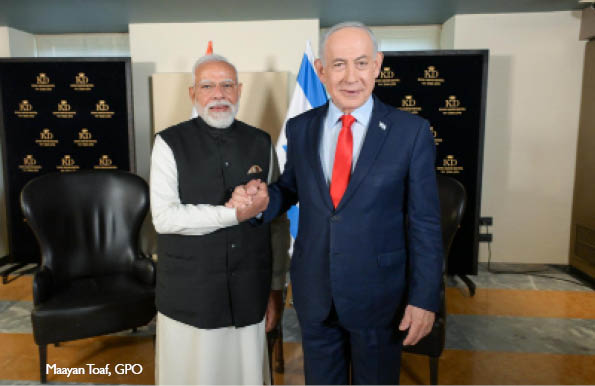
Prime Minister Narendra Modi’s visit to Israel in February 2026 was not just another diplomatic stopover. It represented a strategic reset that consolidates a shift from a procurement-based relationship to a model of systems integration. This shift positions India as a strategic rear and capability partner for Israel in a changing threat environment that now entails a saturation threat (UAVs, loitering munitions, multi-layer attacks), terrorism as policy, supply-chain vulnerability, and intensifying great-power technological competition. In this context, elements usually treated as “economic” – AI, quantum, digital public infrastructure, a free trade agreement – are no longer peripheral civilian add-ons. They are part of the infrastructure of national resilience, standard-setting, supply-chain endurance, and operational advantage. The core test after the visit is whether the strategic intent is translated into durable mechanisms like projects, standards, co-production, and standing working groups.

Accessibility Toolbar