PSCRP-BESA Reports No 72 (July 25, 2024)
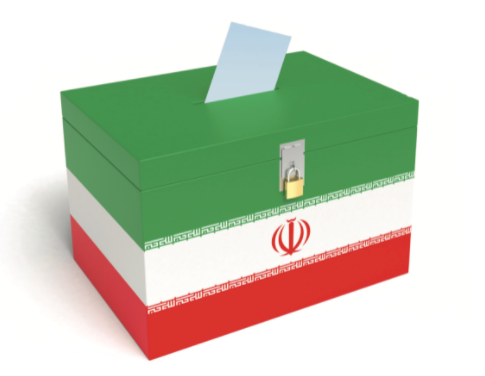
There is a well-known observation that foreign policy is a continuation of domestic policy. However, it is often the other way around, and in general this division is unnecessary. The example of Iran today proves this. To say that Pezeshkian’s victory came as a surprise to most Iranian experts is to say nothing. Everyone expected Parliament Speaker Mohammad Bagher Ghalibaf to become president. Moreover, some even saw the dark shadow of this son of the Islamic Revolutionary Guard Corps behind the plane crash that took place in the mountains of West Azerbaijan Province. But, as it turned out, not everything is so clear cut. The speaker remained a speaker, not even making it to the second round. And even the war hero, veteran invalid, ultra-conservative Saeed Jalili had to experience the bitterness of defeat against a unique, modest doctor from Tabriz, Masoud Pezeshkian.
However, speaking about the modest doctor, I have somewhat exaggerated. Of course, even before his election, Masoud Pezeshkian was a prominent political figure — he is a former Minister of Health and a former Deputy Speaker of Parliament. However, this does not even come close to the regalia of the political heavyweights among his competitors. Now evil tongues can say as much as they like that Rahbar, facing eternity, needed a politically weak president, who under no circumstances could not only compete (Jalili could not have done that either), but also interfere in the process of transfer of supreme power, which will inevitably come sooner or later. Rahbar looked quite cheerful during the elections, though, but the Iranian political elites decided to hedge their bets.
To say that political weakness is the only reason for Masoud Pezeshkian’s victory would be grossly unfair. The system for admitting presidential candidates is strictly regulated: the Guardian Council can reject anyone on the basis of any carelessly spoken word. This initial screening allows for a relatively fair election later on, since all undesirable candidates are already weeded out at the initial stage. But even against this background, Pezeshkian stood out. The only reformer, as much as one can be a reformer in Iran, the only representative of an ethnic minority (at least among those who do not hide it in public). To what extent Azerbaijani Turks are an ethnic minority in Iran, though, is debatable. But that is not what is at issue here.
The presidential election in Iran is both a kind of barometer of public opinion and an answer to the question of what the active part of the public wants. This time, the active part of the public really wanted change, despite the fact that the two previous attempts to bring such desires to fruition, under Presidents Khatami and Rouhani, can hardly be called successful. The reforms of these reformers were too superficial, if they can be called reforms at all. Time will tell how deep the changes will be this time, but one way or another, we are dealing with a new political reality in Iran, and this reality directly affects all of Iran’s neighbors, including the countries of the South Caucasus.
Azerbaijan
Perhaps, the only people who were also satisfied by Masoud Pezeshkian’s victory were Azerbaijanis. But we are talking about the public emotion. And it is not only because Pezeshkian is an ethnic Azerbaijani. After all, Rahbar himself is an ethnic Azerbaijani. But in the case of Pezeshkian, another thing is important: the president-elect not only does not hide his Azerbaijani origin, but also emphasizes it, and even publicly takes pride in it. By the way, his opponents tried to use this against him, accusing him of Turkism during the elections, but the effect was the opposite.
The enthusiasm of the general public is pretty high: on the “News of Caucasus” channel during a live broadcast I was even asked whether Iran would join the Organization of Turkic States. At the same time, the general opinion of experts can be described as restrained optimism. It is clear why it is restrained – the very nature of the Iranian state considers Azerbaijan, a country with a Shiite majority, as a “legitimate” target for promoting of the Islamic revolution, in other words, Iranian interventionism. However, the optimism is no less understandable. The fact that Iran’s top political leadership has allowed a candidate like Pezeshkian to win is evidence of Iran’s willingness to settle relations with its northern neighbor, which have been very problematic in recent years.
The normalization of relations began under former Iranian President Raisi, who in fact died while returning from a meeting with Azerbaijani President Ilham Aliyev. And Raisi, as is well known, was neither a Turk nor a reformer. In the current situation, it is imperative for Iran to take advantage of the new geopolitical realities in the South Caucasus. All previous schemes were destroyed after the 44-day war. And nothing new has emerged yet. However, Armenia’s stubbornness in the issue of the Zangezur corridor (a 40-kilometer stretch of road linking the Nakhchivan Autonomous Republic with the rest of Azerbaijan) has allowed Iran to propose a similar corridor through its own territory, along the right bank of the border river Aras. Agreements have already been reached and work has already begun on the road route, which is part of a large-scale set of works to develop transportation infrastructure linking Iran and Azerbaijan, launched by Baku after the 44-day war in 2020. The construction of the Rasht-Astara section of the railroad, in which Russia is extremely interested and which Iran has been sabotaging for more than a decade, is another matter. And while Pezeshkian’s support for the construction of roads along the Aras is unquestionable, things may not be so clear-cut in the case of the Rasht-Astara section. After all, Pezeshkian has been a prominent figure in the Iranian-Turkish friendship community for years. Nothing is yet known about Pezeshkian’s attitude toward Russia.
It must be noted that, the voices in Iran that are constantly talking about the “Zionist Baku Republic” will now have to, if not fall silent, then significantly diminish. However, so far we are only talking about the potentialities, but time will show what they will turn into.
Armenia
The formula “the friend of my enemy is my enemy” does not always work in politics, but it is never neglected. In this sense, Armenia is no exception: everything that pleases Azerbaijanis almost immediately becomes a matter of concern for Armenians. Especially when it comes to a country like Iran.
For thirty years after independence, Russia has been Armenia’s main security guarantor, but Iran was always perceived as a reliable safety net. After the defeat in the 44-day war in 2020 and the special operation in September 2023, when frustration with Moscow peaked in Armenia, many opinion polls pointed to a military alliance with Iran as the most reliable security format. This is despite the fact that the society as a whole is oriented toward the West. This is not surprising: Europe is far away, the U.S. is even farther away, and Iran is close by.
A colleague of mine who recently returned from Armenia told me that Yerevan was very concerned about Aliyev’s invitation to Tehran, to which I reasonably objected that Aliyev had also invited Pezeshkian to Baku. This is not a fundamental issue, but it is very revealing. However, one should not draw far-reaching conclusions. For Iran, Armenia remains an extremely important country that ensures the balance of power in the region and the possibility, albeit potential, of a presence in the South Caucasus. In this sense, Armenia has nothing to worry about: if necessary, Iran will provide it with gas and will gladly fill the void left by Russia. Although hopes for escalation, especially military escalation, between Azerbaijan and Iran will have to be abandoned for now. Both Tehran and Baku are well aware of the cost of such a scenario, so they will try to make the most of the Pezeshkian factor.
Georgia
Georgia is the only country in the South Caucasus that does not border Iran. In Georgia there is little interest in what is happening in Iran, not only among the general public, but also among political analysts and politicians. TV channels give a very simplified picture of events in this country, and Iranians are perceived only as tourists who come to Georgia as the nearest Western country to get away from the realities of their regime.
However, if Georgia is not interested in Iran, it does not mean that Iran is not interested in Georgia. First of all, it is interested in Georgian Azerbaijanis as a target audience for ideological influence. It should be said that over the last thirty years Iran has managed to achieve serious success in this field. A small but organized group of population has been created for whom Shiism is a priority marker of identity (which, by the way, does not prevent them from being loyal and even patriotic citizens of the country). This group is referred to as “religiozniks” in areas populated by ethnic Azerbaijanis; this term is not widespread elsewhere. The organization and cohesion of this group is so great that in recent years political parties have become seriously engaged in them, hoping to get their votes in elections. In addition, this ethnic minority provides a disproportionate number of opinion leaders: its members lead in industries such as journalism, teaching, and politics.
Naturally, in the areas populated by ethnic Azerbaijanis the elections were followed very closely and their results were received with great enthusiasm. Otherwise, the only episode related to Iran, which got the media attention, was the trip of the Prime Minister of Georgia Irakli Kobakhidze to the funeral of the President of Iran. The pro-governmental media covered this trip quite neutrally, while the opposition media presented it as a marker of Georgia’s foreign policy U-turn from the West. Which, by the way, is not groundless. And yes, today Georgia can hardly be called a partner of Iran, but everything is changing very quickly.