PSCRP-BESA Reports No 110 (Jan 20, 2025)
Over the centuries, the Russian state expanded its ethnic base through the assimilation of Finno-Ugric peoples, the indigenous population of the north of the European part of the present-day Russian Federation and Western Siberia. Slavs only arrived here in the 9–10th centuries. Now all that is left in these areas from the Finno-Ugric peoples are numerous geographical names, including, in fact, “Moscow”, and a small number of not yet fully assimilated Veps people in Babaevsky district of Vologda Oblast (509 people according to the census of 2021).
At the beginning of the 21st century, a group of enthusiasts emerged trying to reconstruct and revitalize the culture, identity and language of the long-Russified Finno-Ugric tribe of Meryans, which inhabited the central regions of present-day Russia in the Early Middle Ages. In the 2020–2021 census, 109 Russians claimed Meryan ethnicity.
One of the most important tools of assimilation of the indigenous population in tsarist Russia was the introduction of Russian Orthodoxy. To this day, the overwhelming majority of the Finno-Ugric peoples of Russia practice it.
The policy of the tsarist and Soviet authorities aimed at the complete Russification of the Finno-Ugric peoples resumed after a short period of leniency in the 1990s. As a reaction to the assimilation processes, groups of ethnic activists emerged to try to confront them. Occasionally they would opt for extremely radical methods of struggle. However, the majority of Finno-Ugric activists in the Russian Federation are much more moderate. They advocate real autonomy for the respective federal entities and carry out various projects aimed at preserving and promoting the languages and cultures of Finno-Ugric peoples. Some support in this direction has traditionally been provided by Finnish and Estonian public organizations.
Recently, in line with the policy of radical Russian imperial nationalism, which openly proclaims the necessity of Russification of all citizens of the Russian Federation, the Russian authorities are getting more and more tough in persecuting the initiators of such projects. The reaction to this is only natural — for example, roof organization Free Nations of Post-Russia Forum, created in 2022 by emigrants, openly calls for the division of the Russian Federation into independent states on ethnic or regional grounds.
Persons of mixed descent, such as Valera Ilinov, who was born into an urban Komi-Russian Russian-speaking family, have also become part of such initiatives. The idea he expressed even before the full-scale Russian aggression against Ukraine began pointed the way to the integration of at least part of their large Russian population into the titular nationalities of the hypothetical new states that the Free Nations of Post-Russia Forum is now calling for. It can be assumed that the inevitable deep disappointment in the ideas of the “Russian world” by a significant part of the ethnically Russian population will contribute to the change of their ethnic identification. To an even greater extent, this will be characteristic of the mixed or simply Russified population with “titular” ethnic roots. At the same time, the process of Russians changing their ethnic identity to a non-Russian one will be simplified in the case of peoples who traditionally practice Orthodoxy, as do Russians. The Komi are among such peoples.
According to the 1926 census, the Komi made up 92.2% of the population of their autonomy (then called the Autonomous Oblast of Komi-Zyryans), while Russians made up only 6.6%. In the following years, the Soviet authorities built multiple Gulag camps in the Komi ASSR, and the Komi soon became a minority in their own land. According to the 2020 census, the population of the Komi Republic is about 750 thousand people, of which 65.1% are Russian, and the Komi are only 23.7%. The total number of Komi in the Russian Federation amounted to 228 thousand, of which 202 thousand lived in the Komi Republic, and another 11 thousand — in the bordering Nenets, Yamalo-Nenets and Khanty-Mansi Autonomous Okrugs. The number of Komi-Zyryans peaked in 1989, when the census recorded 345 thousand Komi in the USSR. Thus, the absolute number of the people is also decreasing, mainly due to assimilation.
Similar processes are unfolding among the Komi-Permyaks, who are closely related to the Komi-Zyryans (Russian official statistics considers them a separate people, but some ethnic activists consider the Zyryans and Permyaks to be sub-ethnic groups of the single Komi people), who are the titular population of the Komi-Permyak District bordering the Komi Republic in the south-west. According to the last census, its population amounted to more than 100 thousand people, of whom 59% were Komi-Permyaks and 38.2% were Russians. The total number of Komi-Permyaks in the Russian Federation amounted to 95 thousand, of which 81 thousand lived in Perm Krai, mainly in the Komi-Permyak District and other northern regions of the Krai, and more than 2 thousand in the Khanty-Mansi Autonomous Okrug bordering the Komi Republic. The population of Komi-Permyaks also reached its maximum in 1989, when the census recorded 152 thousand Komi-Permyaks in the USSR.
The Komi have no state tradition of their own, except for the principality of Great Perm, which existed in 1451–1505 and was formally dependent on Moscow. Despite this, the Komi people have a fairly well-developed national culture. Before the restrictions introduced in recent years under pressure from the federal center, from 2011 to 2017, the Komi language was taught as a state language on a compulsory basis in all schools of the republic. The Komi language is still taught as a state language (1–2 hours per week) in more than half of the republic’s schools, but, as in other ethnic autonomies of the Russian Federation, the pressure of the federal authorities to supplant national languages is evident.
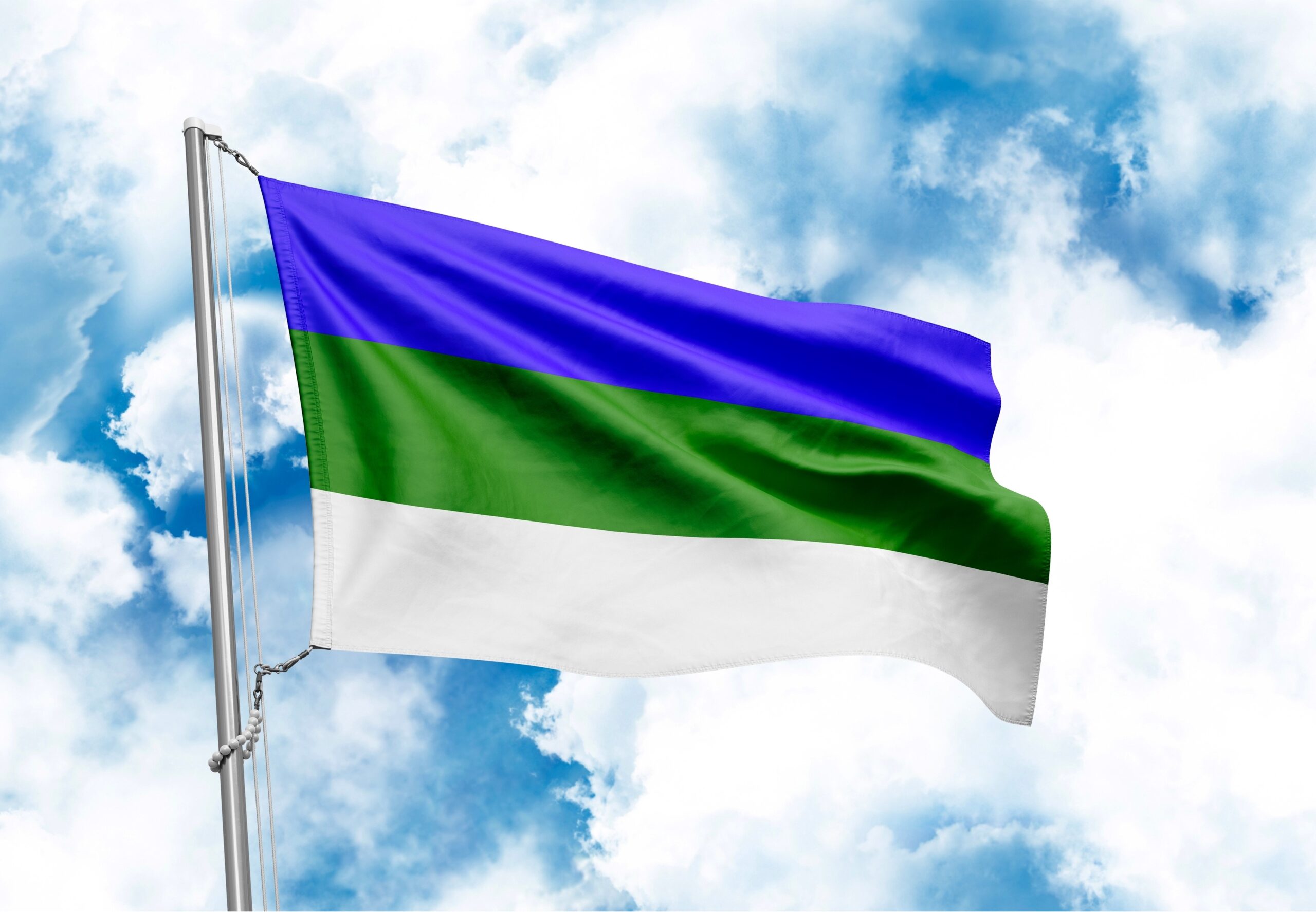
The most important ethnic organization of the Komi-Zyryans is the inter-regional movement, Komi Voityr, founded in 1989 and still functioning legally, which has branches in all districts of the republic and beyond, in particular in the Nenets Autonomous District bordering the Komi Republic from the north. The movement has a youth wing — the Union of Komi Youth, “MI”. In 2019, a noticeably more radical nationalist movement, Doryam asnymös (“Let’s Protect Ourselves”), emerged, which after the beginning of full-scale Russian aggression in Ukraine was included in the “register of terrorist organizations” of the FSB.
In recent years, it has become popular among supporters of the anti-Putin opposition in the Komi Republic to use the Komi language (which still retains the status of one of the state languages of the republic along with Russian) in communication with representatives of the authorities. It is worth noting the cooperation of the Komi branch of the Communist Party of the Russian Federation (CPRF) with the Komi Voityr movement and with local supporters of Alexei Navalny, which was clearly manifested during the high-profile protests against the construction of a landfill in Shiyes in 2018, and continued after them. Indicative in this sense is the stream of accusations of Komi nationalism against Oleg Mikhailov, the first secretary of the Committee of the Komi Republican Organization of the CPRF in 2021, against the background of his much-publicized conflict with the then head of the Komi Republic Vladimir Uiba from United Russia, who had been appointed a year earlier from Moscow and had nothing to do with the Komi people or the Komi Republic.
The attempt to break off the Komi and then the entire Russian North is actualized in the context of the development of the Northern Sea Route and the growing international interest in the development of the Arctic zone. In this context, it is important to remember that the territory of the Nenets Autonomous Okrug (NAO) used to be a former part of the Komi Republic. The population of the Nenets Autonomous Okrug is about 40 thousand people, of which 66.13% are Russians, 18.62% are Nenets, and 8.99% are Komi. In the capital of the autonomous district, Naryan-Mar, the Komi outnumber the Nenets. As mentioned above, there is a branch of the “Komi Voityr” movement in the NAO.
Since 2021, the situation in the Russian Federation has changed dramatically. What was acceptable then is unacceptable now. Nikolai Udoratin, 25, who refused to give up his principles and, in particular, openly opposed Russian aggression in Ukraine, was mobilized in November 2023 for compulsory service in the Russian Army and deprived, in this connection, of his deputy mandate. Doxa, an opposition online publication operating from outside Russia, reported—citing an anonymous correspondent in Syktyvkar—that “although due to the threat of repressions none of the deputies and public figures in the Komi Republic speaks out in support of Udoratin, almost all representatives of the CPRF in the Republic are against the war. Also, judging by personal conversations, the vast majority of political figures in the Republic are strongly against the war, but they are very much afraid to show their position publicly”.
The Nenets Autonomous Okrug is not the only administrative unit of the Russian Federation that Komi separatists, in theory, can claim. As already mentioned, the Komi Republic is bordered by the Komi-Permyak District, formerly an autonomous Okrug, which on December 1, 2005 became “an administrative-territorial unit with a special status” within the Perm Krai. The fact that in the process of “enlarging the federation entities”, the Russian authorities annexed it to the Perm Oblast, and not to the Komi Republic, directly indicates their desire to weaken the non-Russian ethno-cultural character of this territory. One way or another, the residents of the Komi-Permyak District are dissatisfied with the results of its unification with the Perm Oblast. Today Komi-Permyaks have no ethnic public organizations of their own, with the exception of Yugör — the Society for the Promotion of the Komi-Permyak Language, History and Culture, which was founded back in 1988 and has existed only formally in recent years. Under such conditions, should the process of disintegration of the Russian Federation begin, the annexation of the Komi-Permyak District to the Komi Republic could easily become a reality.
The Komi Republic is one of the donors to the budget of the Russian Federation. It has huge reserves of minerals — oil, gas, coal, bauxite, semi-precious stones, as well as small deposits of gold, titanium and diamonds. The basis of its economy is their extraction and primary processing, as well as wood processing. The loss of control over these riches — as a result of the hypothetical creation of an independent Komi state or the transfer of its revenues to the autonomy itself, as moderate Komi activists insist — would certainly be a tangible economic blow to Moscow. However, it seems that the Russian authorities tend to view the struggle of Komi activists, as well as ethnic activists of other indigenous peoples of the Russian North, in the context of larger international politics, namely the struggle for control over the Arctic Ocean, in which the Russian Federation is facing the United States and a number of other NATO member states. It is not by chance that an article in the Russian propaganda resource The New Insider, dedicated to the Komi activist with Jewish roots Nikita Goldin, is subtitled “In the fight for the Arctic, the West is playing the separatist card”.