BESA Geo-Energy Insights No. 8, April 9, 2025
EXECUTIVE SUMMARY: The decision by SOCAR, Azerbaijan’s state oil company, to press ahead with a gas exploration license in Israeli waters marks another significant step in the ever-deepening partnership between Israel and Azerbaijan. In addition to the economic opportunity it provides to discover new gas, the involvement of SOCAR carries significant strategic weight in a region where energy projects can forge new ties or rekindle old rivalries. SOCAR’s role as the project’s operator may facilitate a more stable multilateral energy framework in the Eastern Mediterranean due to Azerbaijan’s close relations with Turkey, which enable it to serve as a mediator. Azerbaijan’s involvement may also offer Israel a viable route for future gas exports to Turkey that buffers the volatile relations between Jerusalem and Ankara, mirroring the current oil trade arrangements between the sides.
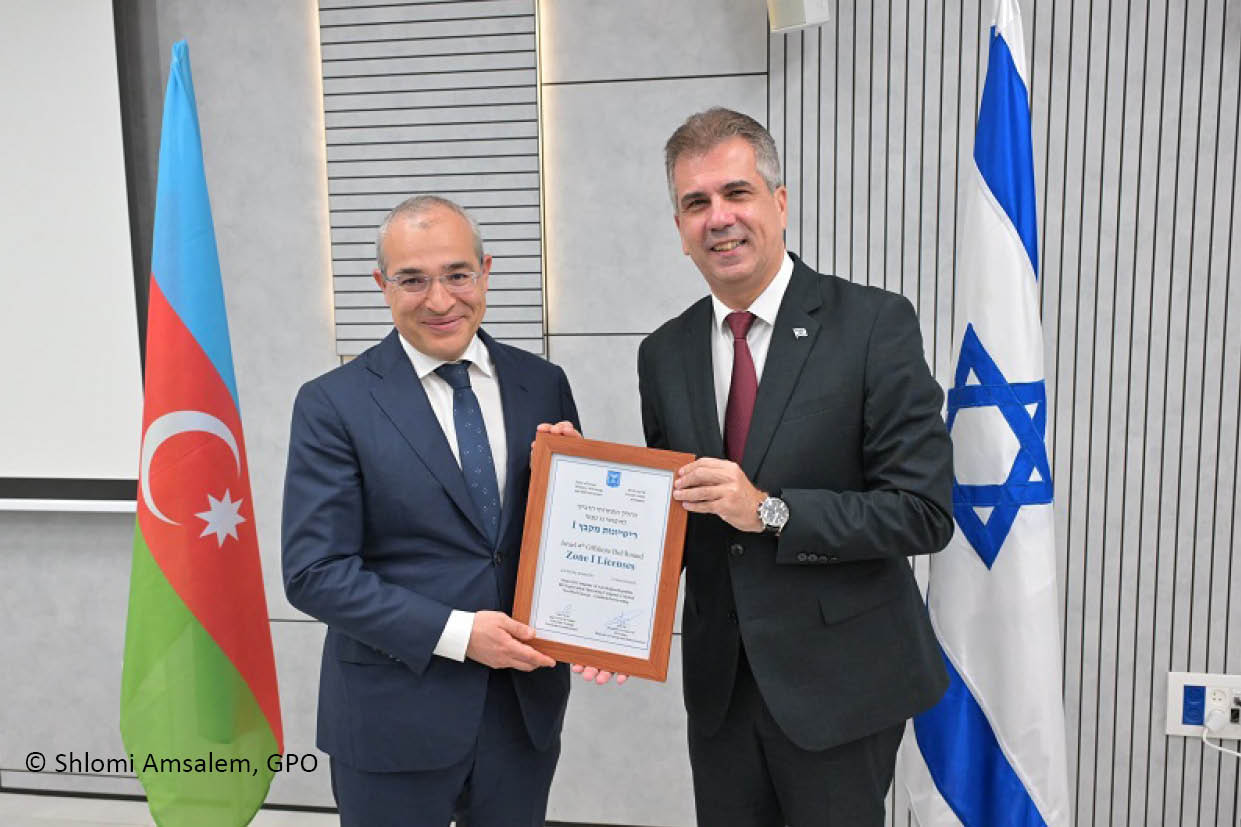
A significant development in the Eastern Mediterranean energy landscape recently took shape as Israel finally approved an offshore gas exploration license to a consortium comprised of British energy giant BP, Azerbaijan’s state oil company SOCAR, and Israel-based NewMed Energy. The license was granted in Zone I, an approximately 1,700 square km area in the northernmost part of Israel’s economic waters. It was put up for offer as part of Israel’s fourth bid round in 2022 and awarded to the three companies in October 2023, but the tender was frozen due to the eruption of the Israel-Hamas war. Despite concerns that the deal might never be implemented, recent joint statements from Israel’s Energy Ministry and Azerbaijan’s Minister of the Economy suggest that the tender is finally moving forward.
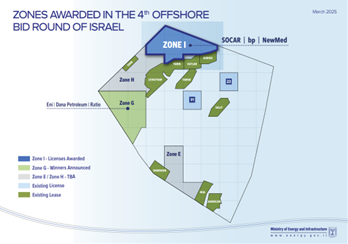
Source: Ministry of Energy, State of Israel
In addition to the strong vote of confidence BP is offering in Israel’s gas prospects by following through with the tender, SOCAR’s decision to press ahead as operator of the project amid the Israel-Hamas war reaffirms the deepening ties between Israel and Azerbaijan. This partnership is built on longstanding mutual interests that have been cultivated over decades. Azerbaijan has been Israel’s largest and most reliable supplier of crude oil for almost 20 years, and the security arrangements between the two countries include technological exchanges and arms. With its unique geographic positioning, Azerbaijan has also been a vital regional trade partner for Israel, opening avenues for Israeli commerce with other countries in Central Asia and the Caspian region.
The timing of SOCAR’s renewed commitment reflects more than just Baku’s desire to take part in international offshore gas projects. It also underscores the fact that the recent friction between Israel and Turkey does not shape Azerbaijan’s economic decisions nor diminish Azerbaijan-Israel cooperation. For more than a decade, Baku has successfully balanced its relationships with multiple regional powers, including Turkey, Russia, and Iran, while at the same time maintaining strategic depth in its relationship with Israel. This balancing act has become more challenging as Ankara’s hostility toward Jerusalem has escalated since the start of the war in Gaza, including boycotts of Israeli products, sanctions against trade with Israel, and even veiled threats of Turkish military intervention. However, Azerbaijan has stayed the course by respecting its alliance with Israel without forsaking its close cultural and political ties to Turkey.
Now that Israel is seeking new markets for its natural gas, Azerbaijan’s participation in exploration efforts in Israeli waters could serve as a vital energy bridge between Israel and Turkey. Should BP and SOCAR make significant discoveries, Israeli officials have indicated that these reserves would be earmarked predominantly for export rather than for domestic consumption. The domestic Israeli market has no need for additional gas suppliers, so it must provide viable export options if it wishes to attract new companies to develop any new gas fields they may find.
The questions are where the gas would go and how it would reach the markets. Plans to develop mutual export infrastructure with Cyprus and Greece have been repeatedly stalled due to political tensions with Turkey and the prohibitive costs of the project, and Israel’s current reliance on Egypt as its main gas customer and LNG exporter has proven to be problematic due to Egypt’s repeated gas shortages and payment disputes.
Turkey is a possible candidate for new Israeli gas exports, given its proximity, infrastructure, and ambition to become a regional energy hub. This prospect has gained momentum following Turkey’s renewed interest in connecting to the Arab Gas Pipeline following the fall of the Assad regime in Syria. The pipeline is mainly used by Israel to transit gas southward to Jordan and Egypt, but could easily be used to export northward to Turkey as well. Another possible route could be an underwater gas pipeline directly to Turkey, an idea that has been discussed since 2015 and that would bypass the turmoil in Syria. However, its main problem is political rather than financial. Energy companies do not sign long-term export deals or build expensive gas infrastructure without credible assurances that the gas will not be disrupted due to political tensions or security concerns between buyers and sellers. Israeli-Turkish relations have repeatedly been tested, and Erdogan’s attitude toward Israel has been erratic and increasingly hostile. However, the possibility of Israeli gas flowing to the large Turkish market and from there to Greece and the rest of Europe still remains an enticing prospect for energy companies.
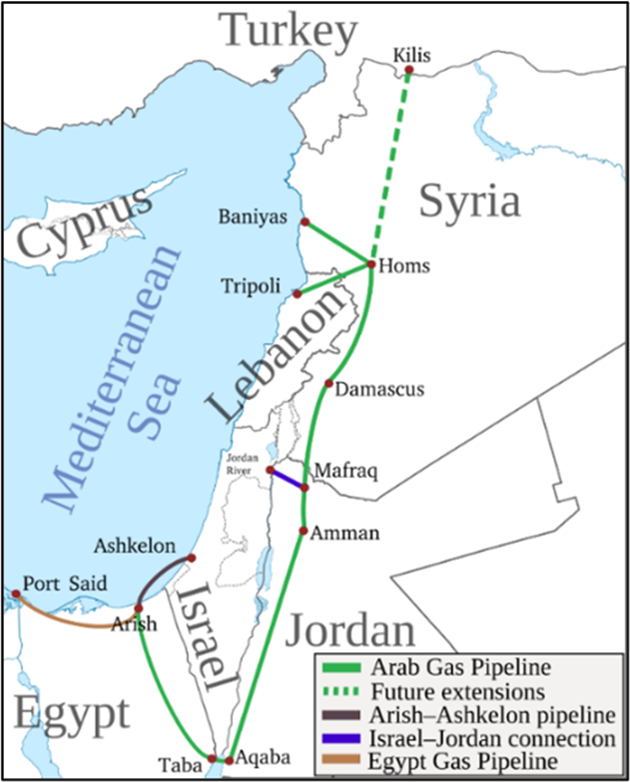
Source: Wikipedia

Azerbaijan’s involvement may be the crucial factor that mitigates potential disruptions in a future gas trade deal between Israel and Turkey. By branding the resources as “Azerbaijani-produced gas,” SOCAR’s presence in Israeli waters could offer a layer of insulation from direct political friction between Jerusalem and Ankara without demanding strong involvement from Azerbaijan. A precedent for this exists in the realm of oil exports. Azerbaijani crude passing through Turkey to Israel has rarely faced political hurdles, even at times of heightened diplomatic strain and Turkish sanctions on Israeli products.
This model of pragmatic economic exchange, driven by mutual benefit, has the potential to stabilize energy flows in the face of periodic political disagreements. Both Israel and Turkey stand to gain from this arrangement, as does Azerbaijan, which could reap commercial rewards while strengthening its reputation as a reliable partner in the region. Azerbaijan may also help ease tensions with Turkey regarding other projects in the area if it wishes to do so, such as Cypriot gas development and exploration projects that Israel wants to support. While Azerbaijan has no obligation to get involved in these regional issues, it may see them as opportunities to present itself as a constructive player in a region of interest to both the EU and the US.
The renewal of Israeli-Azerbaijani cooperation in offshore gas exploration should remind regional policymakers that alliances and energy partnerships often transcend short-term political skirmishes. Israel’s relationship with Azerbaijan exemplifies how two countries with shared strategic interests can deepen cooperation across multiple domains, from defense to energy and from technology to trade. Both states understand that their collaboration not only serves economic imperatives but also bolsters their respective positions in a constantly shifting geopolitical environment.
As the partnership matures, new avenues will likely open up. These include political avenues, such as Azerbaijan mitigating EEZ disputes with Turkey in the East Mediterranean, as well as commercial avenues, such as more extensive cooperation in renewables and joint ventures in petrochemical industries.
Dr. Elai Rettig is an assistant professor in the Department of Political Studies and a senior research fellow at the Begin-Sadat Center for Strategic Studies at Bar-Ilan University. He specializes in energy geopolitics and national security.