PSCRP-BESA Reports No 144 (August 8, 2025)
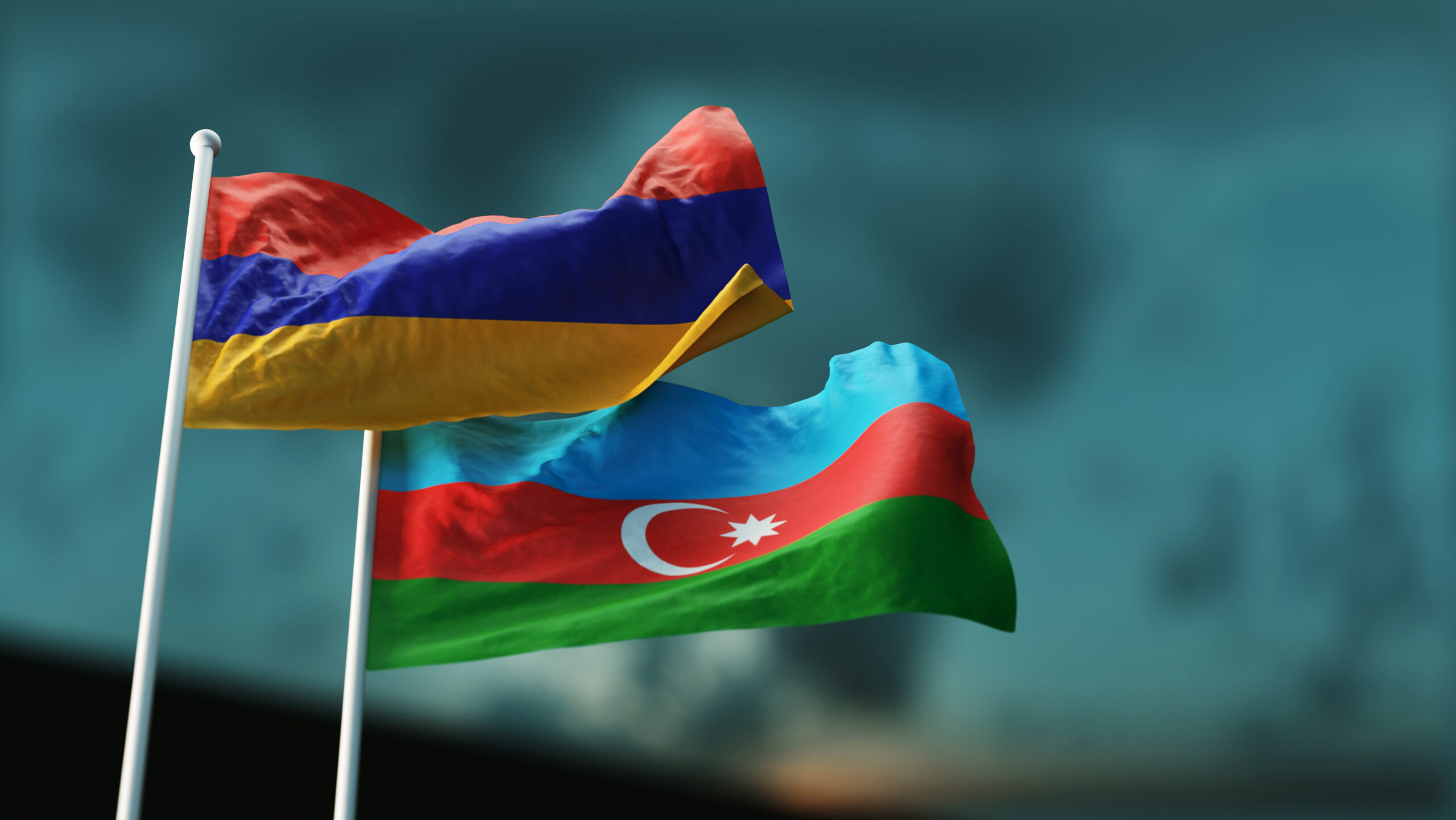
A trilateral meeting of the leaders of the United States, Azerbaijan, and Armenia is anticipated in Washington on August 8. The agenda includes the possibility of reconciliation between Baku and Yerevan, along with a potential declaration regarding Azerbaijan’s ascending to the Abraham Accords.
What are the reasons for not conflating these two processes?
According to Reuters, President Donald Trump’s administration is actively discussing with Azerbaijan the possibility of bringing that nation and some Central Asian allies into the Abraham Accords, hoping to deepen their existing ties with Israel. The agency cites “five sources with knowledge of the matter.”
According to sources in Baku, President Trump is expected to host Azerbaijani President Ilham Aliyev and Armenian Prime Minister Nikol Pashinyan at the White House on the coming Friday (August 8). “The anticipated meeting is being seen as a significant diplomatic step toward resolving decades of conflict between the two countries. The expected announcement follows recent talks between the Azerbaijani and Armenian leaders held in Abu Dhabi, where both sides reportedly made progress on the key terms of normalization,” points out the AzerNews agency.
It’s unclear if these two reports are related or if someone is trying to create an artificial connection between them. The Reuters report quotes three sources who assert that the “sticking point is Azerbaijan’s conflict with its neighbor Armenia, since the Trump administration considers a peace deal between the two Caucasus nations as a precondition to joining the Abraham Accords.” This version is unverified, and there are several reasons why the mixing up of these two processes could be detrimental to both.
1. Relations with Israel are a key factor in joining the Abraham Accords. Among all Muslim countries in the world, Azerbaijan has the longest and most comprehensive partnership with Israel. It is the only strategic partner of the United States’ main ally in the Middle East in the Muslim world, bordering both Iran and Russia. Israel views Azerbaijan as one of the pillars of the regional architecture of strategic security. Israeli and American analysts, as well as Israeli Prime Minister Netanyahu, have repeatedly noted that Azerbaijan is a model of Muslim-Jewish symbiosis and facilitates Israel’s relations with other Muslim countries. Reconciliation with Armenia is a process that is unfolding on its own and does not add any weight to the Abraham Accords. Relations with Armenia do not hold strategic value for Israel.
2. The goal of the Abraham Accords project is to normalize relations between Israel and the Muslim world in order to resolve the Palestinian-Israeli conflict. Armenia is not a Muslim country and has no relation to this conflict (except for the cooperation between Armenian and Palestinian terrorist organizations since the 1980s).
3. Mandating Azerbaijan to negotiate a peace treaty with Armenia as a prerequisite for joining the Abraham Accords is unproductive. The conflict in the South Caucasus has no relation to the Accords; it is a result of the policies of the Russian Empire and later the USSR, aimed at creating ethnic tensions. Specific reasons, such as articles in Armenia’s constitution that form the basis for Armenian extremists’ claims to Azerbaijan’s internationally recognized territory, obstruct the signing of a peace treaty. Signing a peace treaty without removing these articles preserves all the preconditions for the continuation of the conflict in the South Caucasus in the near future. This undermines the status of the Abrahamic Accords, turns them into an empty formality, and, in the event of renewed conflict, casts a shadow over Trump’s peacekeeping initiative.
4. Almost the same story happened with Abraham Accords 1.0, signed in the first of Trump’s presidential terms, where the idea was almost exclusively about establishing full diplomatic relations between Israel and moderate pro-American Arab regimes concerned about the Iranian threat. The long-awaited official accession of Saudi Arabia to this process (and along with it, the expected joining of the rest of the Saudi bloc countries that have yet to have diplomatic relations with Israel) faced the obstacle of the Palestinian state issue. Pushing this issue before signing Abrahamic Accords 2.0, which is envisioned as a much wider model—the formation of a U.S.-led defense and economic alliance with the participation of Israel and the Arab countries of the Saudi bloc—might again harm this breakthrough idea. Conversely, Yerevan’s acceptance of the principal guidelines for joining the new model of the Abraham Accords could serve as a significant catalyst for resolving the Azerbaijan-Armenian conflict. As President Aliev put it, speaking about energy security, transportation, political dialogue, investments, and economic advantages, “Armenia could have been part of that process… When an agreement between Azerbaijan and Armenia is signed, then, of course, there will be no obstacle to the beginning of cooperation.”
5. Similar preconditions have never been imposed on other countries before their ascending to the Accords; for example, no one required Morocco to reconcile with Algeria as a condition for joining the format. Introducing such a precondition, especially toward a country so allied with Israel, constitutes a dangerous double standard. According to American and Israeli analysts, Trump is using the Abraham Accords to establish an elite “club” of countries that the U.S. can depend on for its foreign policy. This “club,” with significant financial and intellectual resources, could serve as an alternative to European countries whose interests conflict with Trump’s vision. In the past, Special envoy Witkoff has even mentioned that Armenia could join the Accords. But it has no value for such a structure. On the contrary, Armenia’s close ties with France, which opposes Trump’s initiatives, make it a potentially destabilizing factor.
6. Iran, as the primary opponent of the Abraham Accords process, responsible for derailing the normalization between Israel and Saudi Arabia (the terrorist attack on October 7, 2023), poses an existential threat to both Israel and Azerbaijan. In turn, Armenia maintains close strategic relations with Iran; officials in Armenia consistently emphasize the alignment of interests between Yerevan and Tehran. Armenian media and the Armenian diaspora actively participate in Iran’s media campaign to demonize Azerbaijan for its ties with Israel. Preconditioning Azerbaijan’s entry into the Abraham Accords on reconciliation with Armenia provides Iran with another tool to derail Trump’s initiative. In other words, Iran may see an advantage in disrupting peace agreements between Baku and Yerevan, for instance, through military provocations or terrorist acts.