
PSCRP-BESA Reports No 174 (December 30, 2025)
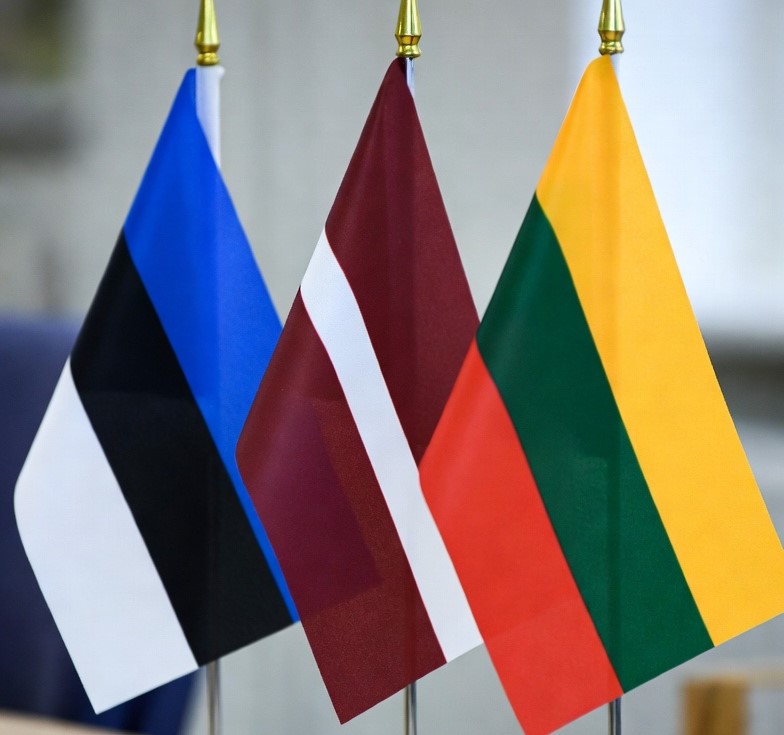
The Baltic states are preparing for war — not a hypothetical conflict decades away, but one their leaders believe could come within five years. “Russia is a threat today, tomorrow and in the long future,” Finnish Prime Minister Petteri Orpo warned this month. The question is whether Western Europe will listen.
While the world watches Ukraine’s grinding defensive struggle, a parallel crisis is building along NATO’s northeastern edge. The Baltic states, Poland, and Finland are rearming at a pace unseen since the Cold War — not against a theoretical threat, but against one their leaders describe as imminent and inevitable.
Moscow’s territorial demands have only hardened. On December 11, Foreign Minister Sergei Lavrov revived Russia’s December 2021 ultimatums as his baseline for any security arrangement — demands that would require NATO to withdraw all forces and weapons from every country that joined after 1997, effectively dismantling the alliance’s eastern presence. The Kremlin first issued these demands two months before invading Ukraine. That Lavrov is reiterating them now signals how little Russia’s war aims have moderated.
President Vladimir Putin frames this conflict in nakedly imperial terms. Speaking to his Defense Ministry on December 17, he vowed to “liberate” Russia’s “historical lands” by force if diplomacy fails. He has likened his campaign to Peter the Great’s eighteenth-century conquests — a comparison that should alarm every nation once ruled from Moscow or St. Petersburg.
The Scale of Ambition
Putin’s notion of “historical lands” is deliberately boundless. He openly denies Ukrainian statehood — “all of Ukraine is ours,” he told an economic forum this summer — but his revisionism extends far beyond Kyiv. In 2022, he equated the Soviet Union with “historical Russia,” a formulation that encompasses not just Ukraine but the Baltic republics, Finland, Poland, Moldova, the Caucasus, and Central Asia.
U.S. and European intelligence assessments confirm that Putin has not abandoned his maximalist objectives — seizing all of Ukraine and reasserting influence over former Soviet territories. Officials across NATO’s eastern flank take the threat personally. As one Reuters report summarized the mood: the Poles are convinced Russia will eventually turn westward, and the Baltic states believe they will be first in line.
The Hybrid War Is Already Underway
Open warfare against NATO has not begun, but a shadow conflict is well advanced. Russian sabotage, electronic jamming, and military provocations have intensified sharply throughout 2025, with the Baltic Sea as the primary arena.
The region’s infrastructure makes an inviting target. Undersea cables carry data and electricity; pipelines like the Balticconnector (Finland-Estonia) and Baltic Pipe (Norway-Poland) supply natural gas; ten LNG terminals line the coast. When Estonia, Latvia, and Lithuania disconnected from Russia’s power grid earlier this year, three of their four links to the European network ran beneath the waves. Offshore wind farms are proliferating off Denmark, Germany, and soon Poland.
At least eleven suspected sabotage incidents have struck Baltic infrastructure since 2023. The most damaging — ruptures of the Balticconnector and a Finnish-Estonian power cable — appear to have been caused by vessels dragging anchors across the seabed. Repairs took months. A RAND study estimates daily repair costs at €24 million for a telecom cable, €36 million for an oil line, and €75 million for a gas pipeline — figures that multiply over the weeks or months a fix typically requires.
Russia’s “shadow fleet” of sanctions-evading tankers is the prime suspect. Intelligence agencies believe these ships have also launched surveillance drones over airports in Denmark, France, and Germany. Danish officials revealed in October that Russian warships had aimed weapons at Danish naval vessels and helicopters, and simulated ramming maneuvers.
The provocations continued through the holidays. On Christmas morning, Polish jets scrambled to intercept a Russian reconnaissance plane skirting their airspace; overnight, dozens of objects — likely smuggling balloons — drifted in from Belarus, forcing temporary airspace closures. Warsaw warned the timing suggested deliberate provocation. Similar incursions in September saw Russian jets violate Estonian airspace and more than twenty drones penetrate Polish territory.
A Sea Full of Targets
NATO’s Baltic presence looks formidable on paper — eight of the sea’s nine littoral states belong to the alliance. But Russia does not need to match NATO conventionally to cause severe disruption. Hybrid attacks offer deniability, probe alliance cohesion, and impose costs without crossing the threshold that would trigger Article 5.
The target set is expanding. Poland alone may invest over $100 billion by 2040 in offshore wind and LNG capacity; its first nuclear plant, slated for 2036, will sit less than two kilometers from the coast. Germany, Denmark, Sweden, and Finland are all building new wind installations. Much of this infrastructure was planned when Russian aggression seemed remote. Now governments are racing to protect assets they cannot easily defend.
Existing surveillance systems struggle in Baltic conditions. Shallow, debris-strewn waters generate acoustic clutter; heavy shipping masks submarine activity; sharp salinity gradients distort sonar. Poland responded in November by ordering three Swedish A26 submarines — stealthy, shallow-water platforms equipped to deploy divers and underwater drones — for $2.8 billion. Parliament also authorized the navy to use force protecting critical infrastructure beyond territorial waters. As one analyst put it: enough provocations, and submarines start to look like a bargain.
The Suwalki Gap: NATO’s Achilles Heel
No piece of terrain haunts NATO planners like the Suwalki Gap — a 65-kilometer corridor linking Poland to Lithuania, squeezed between Belarus and Russia’s Kaliningrad exclave. Seizing it would sever the Baltic states from overland reinforcement. A 2016 RAND wargame concluded Russian forces could reach Tallinn within 60 hours of an invasion. Finland and Sweden’s NATO membership has opened alternative supply routes by sea and air, but the gap remains a glaring vulnerability.
Berlin is responding with its most significant military commitment since 1945: a permanent panzer brigade in Lithuania and engineering units deploying to Poland in 2026 to help construct the “East Shield” — a $2.5 billion defensive line of anti-tank obstacles, bunkers, and sensors stretching 700 kilometers along Poland’s borders with Russia and Belarus.
The Timeline of Threat
Western leaders are now speaking with unusual bluntness. NATO Secretary General Mark Rutte declared in December that “we are Russia’s next target.” German Defense Minister Boris Pistorius went further, suggesting “we may have already had our last summer of peace”. Senior German and Polish generals have warned of a potential attack within four years.
The European Council on Foreign Relations estimates Russia would need five to ten years after ending its Ukraine campaign to reconstitute forces for a NATO offensive. But the think tank also identified a deeper anxiety gripping European capitals: that Washington, absorbed by domestic politics or tempted by retrenchment, might scale back its commitment to the continent’s defense.
“Baltic officials see no room for complacency. At a December 16 summit of NATO’s eastern flank nations in Helsinki, Finnish Prime Minister Petteri Orpo declared that “Russia is a threat today, tomorrow and in the long future”. Lithuania has committed to spending between 5 and 6 percent of GDP on defense — becoming the first NATO member to meet the benchmark advocated by the Trump administration. On December 27, Vilnius officially withdrew from the Ottawa Treaty banning anti-personnel mines, joining Estonia, Latvia, Poland, and Finland.”
Why the Baltic States See What Others Miss
Russia’s slow, bloody progress in Ukraine should not breed complacency. The war has revealed not Russian weakness but an appetite for casualties that Western democracies cannot match. Moscow can conscript millions; the regime’s domestic legitimacy now rests on military mobilization. Reversing that militarization without destabilizing Russian society may prove impossible.
The Baltic states grasp this reality because they have lived it before — as Czarist provinces, Soviet republics, and Warsaw Pact satellites. Writing in The Baltic Times, European Court of Auditors member Laima Andrikiene captured the shift in outlook: “The illusion of guaranteed safety has been shattered… drones and cyberattacks can breach our borders at any moment”.
The Strategic Imperative
Supporting Ukraine is not charity; it is self-defense by other means. A Russian victory would not satisfy Putin’s ambitions — it would validate them. Ukraine fields Europe’s largest and most battle-hardened army outside Russia itself, backed by a defense industry that has pioneered drone warfare and asymmetric tactics. Allowing those forces and factories to fall under Kremlin control would be a strategic catastrophe, handing Moscow the means to threaten the rest of the continent.
The Baltic states are sounding the alarm because they recognize the warning signs that comfortable Western Europeans have been slow to register. Ukrainians knew what was coming in February 2022. Estonians, Latvians, Lithuanians, Poles, and Finns believe they know what may come next. The question is not whether Putin’s imperial fantasies are realistic — they may well be delusional — but whether he is capable of wreaking havoc in pursuit of them. The answer, plainly, is yes. The time to listen is now, before it is too late.
PSCRP team