BESA Center Perspectives Paper No. 2,326, January 26, 2025
EXECUTIVE SUMMARY: Israel, the US, and other international and regional actors are faced with a dilemma. They are unwilling to invest too many resources in countries/regions with poor governance, but need to prevent negative developments like famine and terrorism from arising. One possible approach to this problem is “Semi-Self Governance” (SSG), which allows local forces to take accountability and improve the lives of their civilian populations while allowing for external intervention when problems develop. This principle could align with President Trump’s strategic vision.
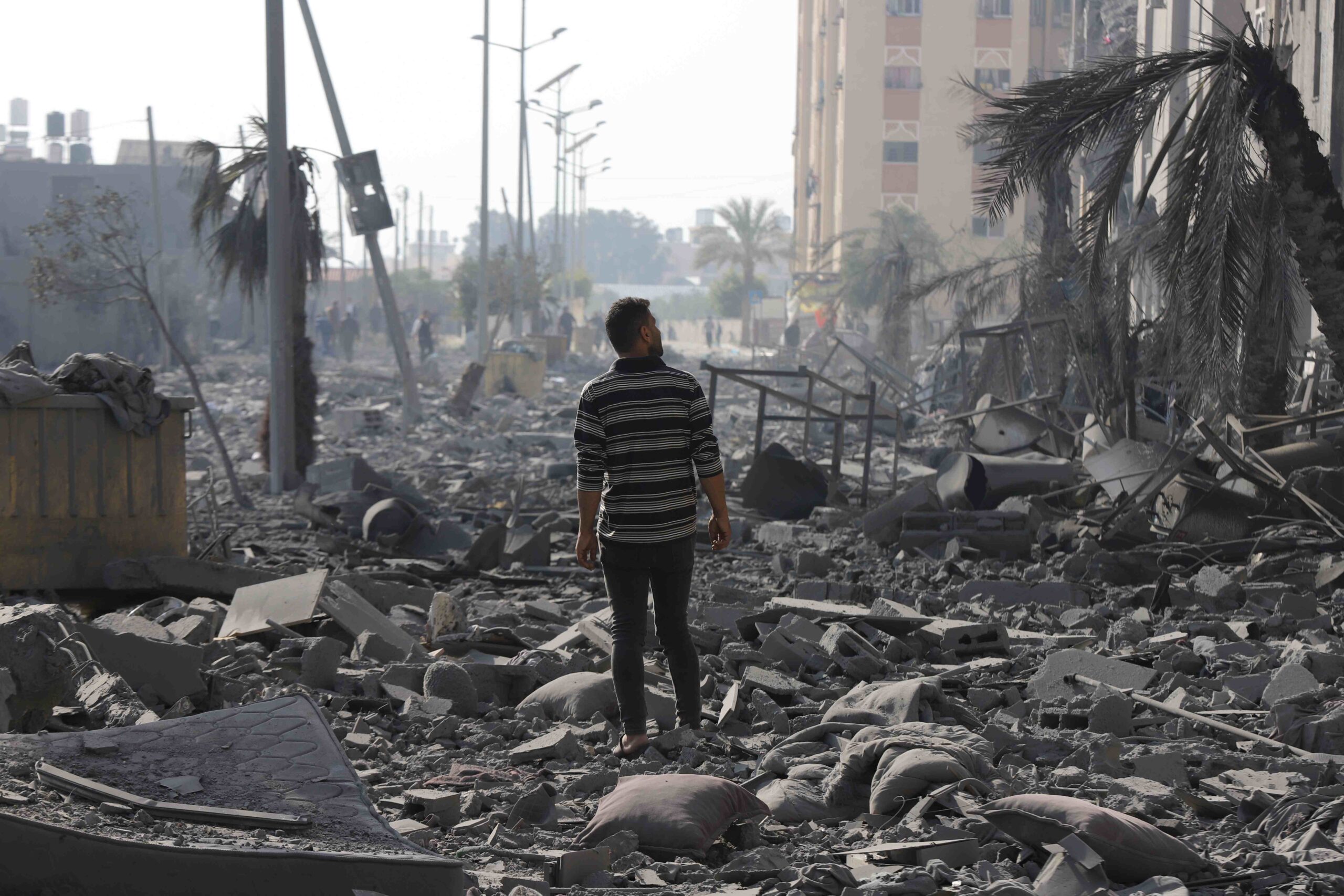
Israel, together with key countries around the world and in the Middle East and led by the United States, is debating the policy it should adopt toward countries or regions in its vicinity where there is no proper governance. The current challenges are the post-war Gaza Strip and the denial of the possibility of Hamas’s continued control; the “new” Syria, whose sovereignty over its territory and new regime’s characteristics are in question; and Lebanon, the central government of which is still weak in the face of the military and political dominance of the Hezbollah terrorist organization despite that group’s pummeling by Israel. Other countries or regions where proper governance does not exist are Yemen, Sudan, and Libya, as well as parts of Iraq and the Palestinian Authority in Judea and Samaria.
External actors have difficulty formulating policy to address such countries/ regions because of an inherent tension. On the one hand, they do not want to be drawn into significant military, economic or political involvement in these countries/regions. Military moves could entail costs in human lives; economic assistance could require significant expenditure, and political intervention has a cost in terms of attention. And as Afghanistan, Libya, Somalia and Iraq have demonstrated, none of these measures have much chance of success. They also contradict the essential need for the locals to take responsibility for their fate.
But they also cannot ignore the significant external threats potentially posed by these countries/regions. They could become hubs of terror that carry out attacks around the world; they could arm themselves with missiles and drones to strike other territories; they could take over existing WMD stockpiles and threaten to use them; they could prompt waves of refugees that affect the demography of countries near and far; they could spread epidemics; and more. Internal impacts could include genocide, famine, epidemics, and violence against women or other populations.
It is therefore necessary to define a policy basis that bridges these tensions – a political-strategic concept that lies between extensive direct involvement and a tacit agreement to allow a dangerous reality to be established.
An orderly concept that fits the bill is the principle of “Semi-Self Governance” (SSG). Israel, under the leadership of the United States and together with its partners in the international and regional arena, can promote an approach whereby local actors are given the ability to govern with external assistance to advance the processes of restoration and construction of the governmental and civilian framework (“Your fate is in your hands…”). They will also – either together with, or with the consent of the international community – take steps, including military action, against forces that endanger its security or flout accepted international norms (“…conditioned on your behavior”).
To promote such a policy, it is necessary to clearly define it. Doing so would effectively warn the residents of the country/region and those who try to control it of the situations in which external involvement will occur:
- if terrorist actions, subversive activity, or any other attacks are committed against the State of Israel or countries in the region and the West
- if terrorist or other attacks affecting the normal lives of Israeli citizens are committed, either in Israel or abroad
- if arrays are built that constitute terrorist infrastructures, particularly attempts to insulate such infrastructure from attack through underground digging or the takeover of public buildings (hospitals, schools)
- if external negative terrorist elements are allowed to establish themselves in the territory
- if evidence is detected of the production, receipt, or procurement and conversion into operational arrays of missiles, rockets, UAVs, or other advanced offensive weapons
- if military systems are procured or constructed that limit the essential freedom of action of Israel and its partners in the region for their self-defense, such as advanced air defense and coastal missiles
- if massacres or extreme acts of starvation and oppression are committed against the local population
- if violence is committed against minorities up to the point of genocide
- if systematic mechanisms of incitement and the fostering of hatred are built
Such moves will be met with strong opposition from Israel and the international community, including the use of force.
With that said, local authorities and civil society are to be given full freedom, encouragement and assistance to promote:
- rehabilitation and operation of all civil and economic activity
- construction of civil infrastructure
- the stabilizing of governance mechanisms including police enforcement (law and order)
- proper government institutions, preferably elected
- contact with external aid agencies for the purpose of receiving assistance
While the SSG principle can be a basis for policy, it can also be developed into an international legal principle. In its establishment and application, it stands on the shoulders of solid international legal principles such as self-defense and the enforcement of UNSC resolutions. It also promotes and develops principles like preemptive self-defense, collective self-defense and humanitarian intervention.
By becoming an international norm, it will allow for the establishment of agreed enforcement mechanisms like those that exist, for example, in the recent ceasefire agreement between Israel and Lebanon.
Such a principle also seems to be in line with the approach of US President Trump, who wants to avoid wars as much as possible but is also interested in influencing global trends. As he said in his inauguration speech, “Our power will stop all wars and bring a new spirit of unity to a world that has been angry, violent, and totally unpredictable”.
The benefits of implementing the principle of partial governance are clear for Israel in its relations with post-war Gaza. It will:
- help Israel avoid being dragged into a full military occupation, de facto control over the territory, and friction with the local population, all of which would be difficult and expensive
- open the possibility of dialogue with the ruling parties to reach agreements with them regarding the hostages, border control mechanisms, joint enforcement of problematic activity, economic and trade ties, and more
- promote accountability by instilling an understanding among the parties on the ground that what is created is their full responsibility
- promote the involvement of the general public in the reconstruction process (“As you build, so you will live”)
- expand the possibility of constructive external involvement
- establish a basic principle for positive political discourse and international legitimacy for Israel’s moves, whose intervention in what is happening in the region is based on universal principles
- provide flexibility for the ability to influence from a distance – for example, the formation of the government in Syria or the political balance in Lebanon – through positive (aid) and negative (military strike) incentives.
At the same time, the disadvantages of this approach should not be ignored. It constitutes effective consent to the control over countries/regions by extreme Islamic elements, provided they are not perpetrators of terrorism. This includes Hamas elements who will be integrated into the control mechanisms in Gaza. It creates a situation of security control that is not hermetic, thus entailing strong defense and risk management measures against the leakage of weapons and cross-border terrorist activity. It could involve the channeling of some of the funding and external aid towards power building by negative elements. It also does not answer the question of how military intervention will be conducted over time and in situations of continuous silence (“why did you suddenly wake up?”), and does nothing to solve the fundamental problems that form the basis for radicalization and support for terrorism in the area.
Col. (res.) Shay Shabtai is a senior researcher at the BESA Center and an expert in national security, strategic planning, and strategic communication. He is a cyber security strategist and a consultant to leading companies in Israel.