Europe and the Middle East
A conference with the Aspen Institute of Germany featuring lectures on European and NATO policy in the Middle East, the perception of Israel in Europe, and the Iranian threat vis-a-vis Europe. Tuesday, May 27 at 4:00 pm.
BESA Center Ranked Top Mideast Think Tank
The Begin-Sadat Center for Strategic Studies has been ranked one of the three top think tanks in the Middle East and Africa, along with Carnegie Middle East Center in Lebanon and the Gulf Research Center of Saudi Arabia.
Newest Publications
Israel Is Not Isolated
Despite a perception to the contrary, Israel is not isolated in the international community. Since the end of the Cold War Israel has developed strong ties with most United Nations member states. Attempts to harm Israel through the BDS (boycotts, divestments, sanctions) campaign have failed. Israel’s strategic relationship with the United States should be further developed in order to ensure Israel’s important standing in the international community.
New Paradigms in Peace Diplomacy
Regional Alternatives to the Two-State Solution
Within the currently-defined, narrow confines of the conventional two-state parameters, no Israeli-Palestinian agreement is likely. Regional alternatives that widen the scope of actors taking responsibility for a settlement can creatively help break the impasse.
The Rise and Demise of the Two-State Paradigm
The Israeli-Palestinian conflict over the Land of Israel has evolved over the past hundred years. Nowadays, most attempts to solve this conflict revolve around the two-state paradigm. However, a solution based on this paradigm is unlikely to emerge in the near future.
A Strategy for Peace with the Palestinians
The Palestinians refuse to accept Israel as a Jewish state and are reluctant to drop their armed and ideological opposition to Israel’s existence. The global community can oppose Palestinian denial of Israel’s connection to the land; support Israel’s legitimacy; resettle Palestinian refugees outside of Israel; modify aid programs to reduce Palestinian use of foreign money to support terror; and encourage free speech in Palestinian society.
US-Israel Relations
A Second Term Obama Administration and the Middle East
The changes in the region will force the Obama administration to make some difficult decisions on how to act regarding Egypt, Syria, the Palestinians, and Iran. Alarmist scenarios that a second term Obama administration will abandon Israel are unwarranted.
Arab Spring-Islamist Winter
New BESA Center Book: An Arab Spring?
In this new book, eight experts from the BESA Center and other institutes evaluate the Arab earthquakes rocking the Middle East. They consider their implications of the regional volatility for Israel and its chances to live peacefully in the region, as well as the implications for regional and global security.
2011 Arab Uprisings and Israel’s Security
Dramatic events have unfolded in the Middle East since the beginning of 2011. This unstable environment indicates trouble for Israel. What follows is an assessment of the implications of the changing regional environment for Israel’s national security.
Confrontation Along Israel’s Borders
“Nakba Day” confrontations along Israel’s borders reflect new regional realities and a long-term weakening of Israel’s deterrence posture.
Confronting Iran
An Integrated Imperative: Attack Iran and Launch a Regional Peace Initiative
Israel must destroy Iranian nuclear facilities and simultaneously launch a comprehensive Middle East peace initiative, relying in part on the Arab-Islamic Peace Initiative of ten years ago. A violent Iranian reaction is to be expected, but its maximum costs to Israel, the US, and all of the Middle East are much smaller than those stemming from Iranian possession of nuclear weapons.
Tom Pickering at the BESA Center: Use No Force
The best course of action in halting the Iranian nuclear program is a combination of Western sanctions and military threats. Military force should be the last resort taken by the US, and probably not at all. Though a “Grand Bargain” between the US and Iran will not happen, it is imperative that both sides continue negotiating in the hopes that there will be a breakthrough.
The Ostrich Syndrome: The World’s Reluctance to Take Action Against Iran
The international community appears unlikely to take military action against the Iranian nuclear weapons program because of the “Ostrich Syndrome” – a reluctance to deal with difficult problems and a preference to ignore them.
Invisible Red Line: The Futility of Trying to Detect an Iranian Order to Build the Bomb
It is practically impossible and very unlikely that Western intelligence could detect an unambiguous order from Iranian leadership to build a nuclear bomb.
Sanctions or Strike: BESA Center Experts on Iran
Israel Hayom presents a special roundtable discussion in which five Israeli experts in Middle Eastern and international politics discuss the Iranian nuclear threat, whether Israel can trust the US, and whether the era of American deterrence in the region is over.
Following the IAEA Report: Time to Hit Iran
A US strike on Iranian nuclear infrastructure is not only necessary, it is also the only course of action that can prevent the impending American retreat from Iraq and Afghanistan from signaling the denouement of US clout in the Middle East.
Israeli-Palestinian Conflict
Abbas Is Part of the Problem, Not the Solution
Though much of the international community sees Mahmoud Abbas as a serious partner for peace, his words and actions prove that he is interested in nothing less than the ruin of the State of Israel.
Israeli-Palestinian Water Conflict
This important study, based on previously classified data, refutes Palestinian claims that Israel is denying West Bank Palestinians water rights negotiated under the Oslo Accords.
Building in Jerusalem: A Strategic Imperative
Israel must follow up on its recent declaration to build in and around Jerusalem, particularly in Area E1, which connects the capital to the settlement of Maaleh Adumim. Creating continuous Jewish settlement in that area is necessary to enable Israel to have secure access to the strategic Jordan Valley.
The Levy Report: Reinvigorating the Discussion of Israel’s Rights in the West Bank
The Commission to Examine the Status of Building in Judea and Samaria (the “Levy report”) reinvigorates the discussion of the legitimacy of Israel’s position regarding settlements under international law, after many years in which Israel has been silent about its legal rights.
Missile Defense
The Missile Threat from Gaza: From Nuisance to Strategic Threat
When the first Qassam rocket landed in the town of Sderot in October 2001, few observers, if any, perceived it as the harbinger of a protracted and increasingly furious campaign by the radical Palestinian groups in Gaza against Israel’s population centers adjacent to the Gaza Strip (the so called “Gaza envelope” communities) by ballistic weapons.
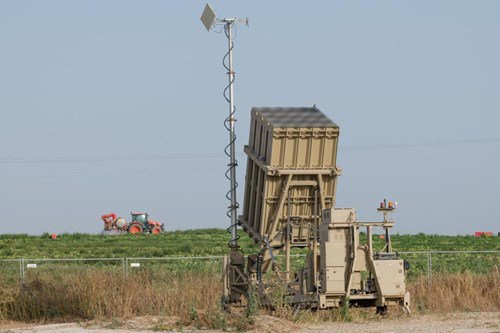
Iron Dome: Has the Euphoria Been Justified?
Praise for Iron Dome may be deserved, yet Israel’s deterrence capability has not been enhanced, and Israel’s enemies may initiate an arms race to try and defeat it.
Operation Pillar of Defense: An Initial Assessment
The operation also proved Israel’s determination to act forcefully in the post “Arab Spring” environment. However, the lack of a ground offensive allowed Hamas to craft a victory narrative and gave it the potential to re-arm.
Iron Dome: A Dress Rehearsal for War?
If the appearance of Iron Dome on the battlefields of southern Israel was what compelled Palestinians to scale down the scope of their rocket fire, this would be a major strategic achievement of Israel’s newly deployed missile shield, and a resounding exoneration for the resources invested in it.
Missile Warfare: A Realistic Assessment
The threat to Israel of missile warfare is somewhat exaggerated and public discourse on this issue should reflect realistic assessments. Missile attacks would be able to inflict only limited physical damage on Israel.
The Lessons of Operation Cast Lead and 2006 Lebanon War
Almost the entire Israeli home front has come under rocket and missile assault. This article surveys the Israeli response to rocket attacks, including the targeting of missile launchers and improved civil defense; and discusses the need for a comprehensive active missile defense.
Syrian Civil War
The End of Syria?
In this roundtable discussion, ten experts at the BESA Center the implications for Israel and the West of the civil war raging in Syria, just across Israel’s northern border. The bottom line: Israel should stay out of the conflict but prepare for continued instability as Syria breaks up.
The Fate of Syria’s Chemical and Biological Weapons
Bombing Syrian CBW stockpiles could result in significant environmental pollution. If Assad falls, the West needs to ensure secure transposition of these arms to a stable, sane central authority.
Is Turkey Getting Dragged Into War with Syria?
As the turmoil in Syria continues and the security environment of Turkey worsens, two factors might lead to unilateral Turkish military intervention in Syria: a refugee crisis that forces Ankara to establish a buffer zone within Syrian territory, or defensive military measures needed to stop PKK terrorism.
The Future of Egypt
Egypt’s Army Will Not Intervene
Hopes or expectations that the Egyptian military will intervene in the deteriorating political and security crisis are probably misguided.
Morsi’s Egypt and Ahmadinejad’s Iran: Much Ado Over Next to Nothing
Morsi’s hosting Ahmadinejad signals a potential improvement in ties between Egypt and Iran. This move will backfire, as ultimately Morsi needs the US and Gulf countries more than they need him.
The Muslim Brotherhood in Egypt and Its True Intentions Towards Israel
The Brotherhood sees Israel as a strategic threat and has aggressively lobbied Morsi to strengthen Egyptian military presence in Sinai. The anti-Israel rhetoric emanating from senior Brotherhood leaders must be taken seriously.
Morsi’s Dictatorship and the Gaza Ceasefire
Egyptian President Morsi is proving to be a dictator in the footsteps of his predecessor Hosni Mubarak.
Will Egypt Go Nuclear?
President Morsi says that Egypt wishes to create a civilian nuclear
energy program. Leaders of Morsi’s party, the Muslim Brotherhood, have called for Egypt to pursue a nuclear weapons program.
Turkish-Israeli Relations
Israel’s Apology to Turkey: A Mistake
Israel’s apology to Turkey is a diplomatic mistake that only enhances Turkish ambitions and weakens Israel’s deterrence.
The Deterioration in Israeli-Turkish Relations
Tensions between Ankara and Jerusalem have escalated since Turkey harshly criticized Israel following its invasion of the Gaza Strip in December 2008 (Operation Cast Lead). This is due to a reorientation in Turkish foreign policy, characterized by moving away from the West and by a desire for better relations with Muslim states.
The Cold War Between Turkey and Iran
Syria and Iraq have become battlefields on influence between Turkey and Iran. In Syria, a proxy war is underway, with Iran supplying weapons to its Alawite client and Turkey actively arming the opposition. In Iraq, Turkey and Iran vie for political influence along Sunni-Shiite fault lines.
Get Tough With Turkey
Turkish demands are unreasonable and an apology will not change the anti-Israeli policy of an increasingly authoritarian and Islamist Turkey. Israel’s reluctance to criticize Erdogan’s government is construed as weakness and Jerusalem should take off its gloves in dealing with Ankara.
Security in the Gulf
The GCC States and the Security Challenges of the Twenty-First Century
The US invasion of Iraq in April 2003 generated a new set of threats and challenges for the Arab states of the GCC, including the possibility of Sunni- and Shi’i- instigated terrorism spreading to the GCC states from Iraq, and, as in Iraq, the outbreak of sectarian fighting in these states.
Saudi Succession and Stability
The process of balancing and satisfying Saudi royal factions depends on patience and conservatism within royal circles. It also requires quiet in the streets of Riyadh and Jedda. Thus far, there are no signs of the so-called “Arab Spring” spreading to Saudi Arabia.
Empty Words: Saudi Blustering
The Saudis are all bark and no bite. Despite occasional public “outrage” from Saudi officials about US policy regarding the Arab unrest, Israel, Iraq, Iran, or Afghanistan, Riyadh and Washington are still very distant from the parting of ways threatened by some Saudi officials.
Gulf Monarchies Confront the “Arab Spring”
The threat emanating from Iran as well as the lack of confidence in US support gives the Gulf states much to fear and has imbued the GCC with new-found unity and purpose.