
July 28, 2026

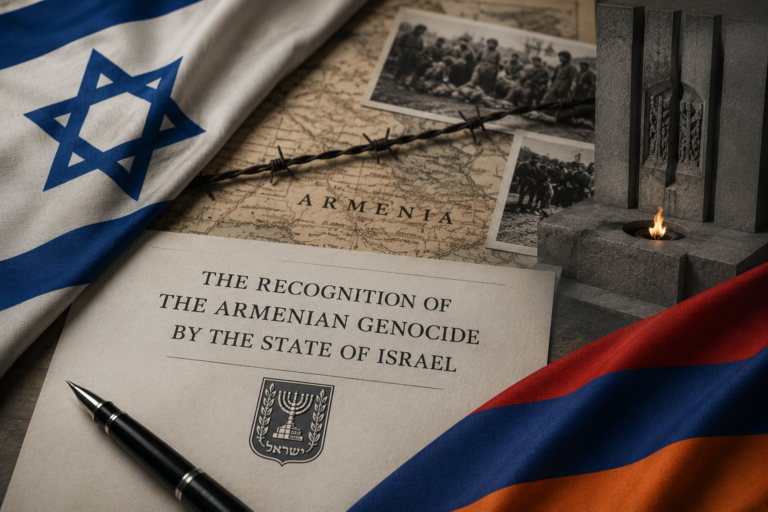
AI generated illustration (Grok)
The key word in this issue of our monitoring, analyzing scientific publications and reports from June 2026, is «war». News reports have taught us that war is no longer a crisis, a brief storm between periods of peace, but the new norm. There is less and less research on war itself; more and more research on how war changes and transforms the everyday fabric of life. Israelis have known this for a long time, since the founding of our country. Now the rest of the world is feeling it along with us.
For many years, the Armenian question has constituted one of the most sensitive issues in Israeli–Turkish relations. Although it was never at the core of the bilateral relationship, it repeatedly resurfaced whenever the question of recognizing the Armenian Genocide was raised, confronting Israel with a complex dilemma: how to balance its commitment to historical memory and the struggle against genocide denial with the strategic importance of its relations with Turkey. Over the years, the Israeli Ministry of Foreign Affairs has regarded the issue primarily as a diplomatic matter with direct implications for relations with Ankara rather than merely as a historical or moral debate. Nor has this tension characterized Israeli policy alone. In recent years, Armenia itself has adopted a more pragmatic approach by advancing a process of normalization with Turkey without making Turkish recognition of the Armenian Genocide a precondition. The Armenian question therefore reflects a dynamic reality in which both Israel and Armenia are required to balance historical memory against changing strategic interests.

Accessibility Toolbar