
PSCRP-BESA Reports No 14 (November 3, 2023)
On the morning of October 7, 2023, when several thousands of heavily armed fighters from the radical Islamist terrorist group Hamas attacked Israel from the Gaza Strip, invading Israeli border settlements and other communities in the south of the country, a significant number of samples of weapons and equipment used by the group’s Iran-trained military wing fell into Israeli hands right then. The number of such specimens is rapidly accumulating as the IDF’s ground operation in the Strip expands, aiming to dismantle the Islamic fundamentalist regime that has established itself in Gaza over the past 18 years and turned it into a springboard for regular shelling and terrorist attacks on the cities and towns in the southern and central parts of Israel.
Among the weapons already captured as trophies and/or in the possession of Hamas militants, in addition to the ubiquitous Kalashnikov assault rifles, the production of which has been established in many countries of the world, attention was drawn to RPG-7 grenade launchers, Russian Kornet PTRKs, HE shaped charge bombs used by both sides in the war in Ukraine, thermobaric shells (used by terrorists to set fire to houses in Israeli border communities), Dragunov sniper rifles, Strela anti-aircraft missile systems, night vision devices, and other weapons also originally developed and still produced in Russia.
It is not yet known whether we are talking about direct deliveries of Russian weapons to Hamas, which Moscow considers to be a “legitimate organization”, or about deliveries of weapons through intermediaries: primarily through supply channels established by Iran, Russia’s closest ally in the region, or about military equipment produced under Russian license in third countries. We also do not know if the suspicions that Russia secretly transferred to Hamas weapons captured in Ukraine are true. If they are true, the weapons in question are likely to have entered Gaza by the same route.
However, no reliable confirmations of all these speculations exist as of yet. Neither there are facts supporting the information that appeared in the Israeli media: according to them, on their recent visit to Moscow the Hamas delegation discussed the possibility of Russia transferring anti-tank missiles and other weapons to the military wing of this terrorist group in exchange for the release of eight hostages with Russian passports. At the same time, fears that Iranian proxies – Hamas (if it survives in any shape or form), the Houthis in Yemen, Shiite militias in Iraq, pro-Iranian formations in Syria, and especially the South Lebanese Hezbollah) will receive their weapons or their know-how from the battlefields of another conflict in the post-Soviet space look more reasonable. We are referring to the recently (September 2023) completed third round of the conflict between Azerbaijan and Armenia, as a result of which Yerevan was forced to agree to the return of the Armenian separatist enclave of Karabakh/”Artsakh” (former Nagorno-Karabakh Autonomous Oblast of the Azerbaijani SSR) under Baku’s sovereignty.
Although it would seem that the parties have agreed on mutual recognition of the borders that existed at the time of the collapse of the USSR in December 1991, and the almost thirty-year Armenian-Azerbaijani conflict can be considered exhausted, there are reasons to believe that this is only a temporary respite. At the very least because such developments clearly contradict the geopolitical interests of the Islamic fundamentalist regime of Iran, the main “patron” and sponsor of Yerevan and, accordingly, the adversary of Azerbaijan. The latter, in turn, is a close partner and ally of Israel, which Iranian ayatollahs regularly threaten to “wipe off the political map.”
Therefore, Tehran is unlikely to refuse to use any convenient opportunity to stimulate a new round of armed confrontation between the two South Caucasian republics, continuing to provide its protégés with resources and support in the military, energy, transportation and diplomatic spheres, and slowing down the trend announced by Armenia to “reorient” its foreign policy priorities to the West.
An additional aspect of the military-political balance in this region was the emergence of a new player in the region — that of France, which has traditionally sympathized with Armenia, and by the end of 2020 almost officially sided with it in the conflict with Azerbaijan. The reason for this, in addition to the efforts of the numerous and highly influential Armenian diaspora in France, was, according to a number of experts, Paris’s desire to occupy the niches of geopolitical influence that are relevant to it: due to the shift of US foreign policy priorities to confrontation with China and Russia, these niches were left unoccupied. These include the Greater Middle East, including the Caucasus, which is a direct and natural extension of France’s long-standing strategic interests in the Eastern Mediterranean. Paris is quite nervous about Turkey’s increased geopolitical activity in this region in 2016–2020.
Given the strategic partnership between Ankara and Baku, France’s logical decision to support Yerevan came as no surprise. The intensification of military cooperation between the two countries has been observed since May 2022, when it was revealed that military supplies to the Armenian army had begun (the first shipment consisted of 50 French-made armored personnel carriers). In April 2023, Intelligenceonline.fr, the mouthpiece of the French intelligence services, reported the reopening of a bilateral arms committee designed to boost France’s military exports to Armenia, and at the end of the same month, Foreign Minister Catherine Colonna announced the establishment of a military mission in Yerevan and the deepening of the partnership in this sphere.
Azerbaijan’s military operation on September 19–20, 2023, which led to the capitulation of the unrecognized Karabakh/Artsakh Republic, apparently accelerated this process considerably. The meaning of the new (sub)regional doctrine of Paris was explained by the head of the French Defense Minister Sébastien Lecornu. Following the visit of Armenian Defense Minister Suren Papikyan to France on October 23, 2023, his French counterpart said: “Even if we are not part of the same military and political alliances, we assume this defense relationship, which is based on the simple principle that you need to be able to defend yourself and your civilian population.”
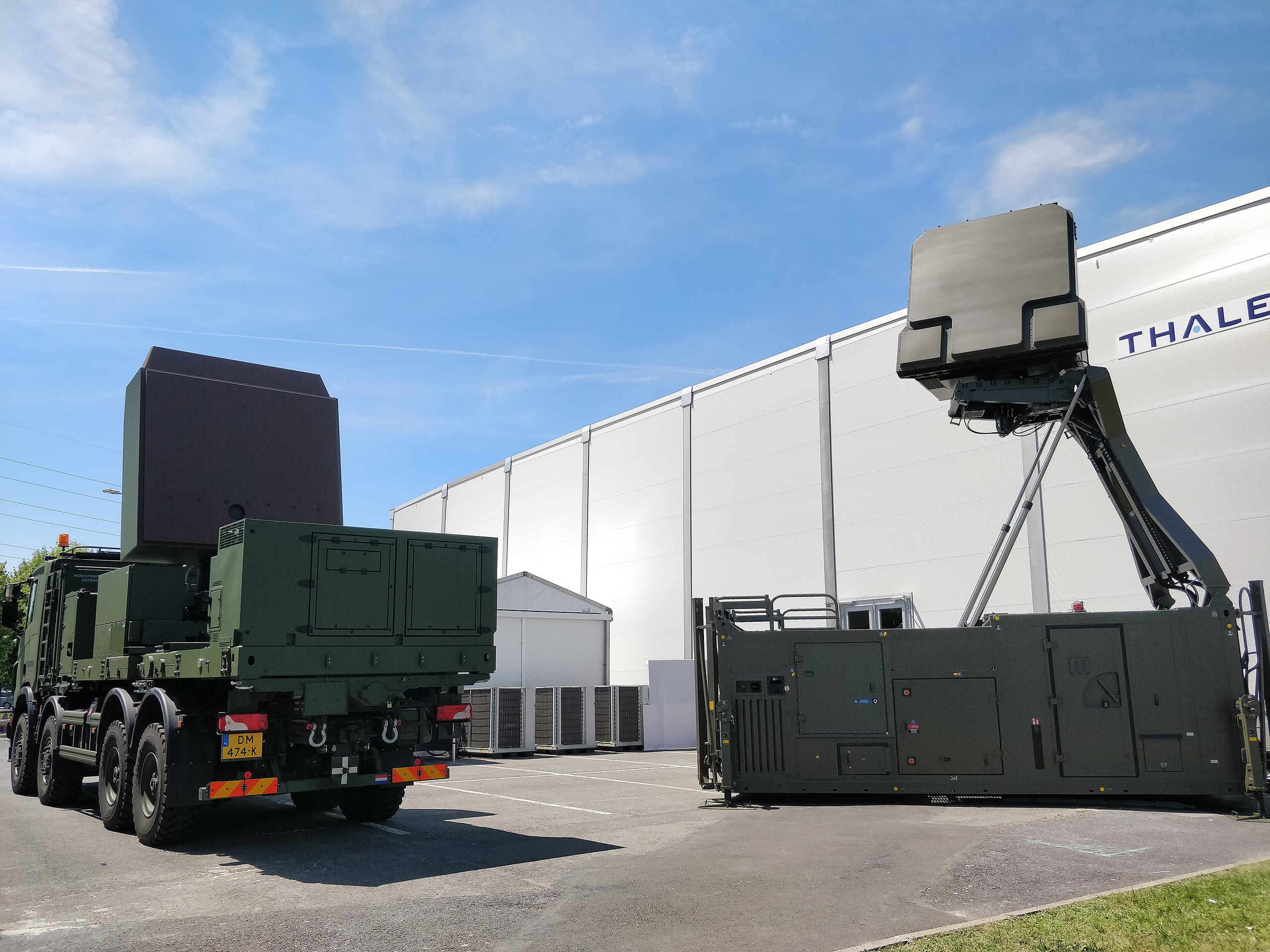
On the same day, a contract was signed to supply Yerevan with three Ground Master 200 radars similar to those previously supplied to Ukraine, Safran equipment including binoculars and sensors, and an unspecified number of Mistral short-range missiles. Armenia and France also signed a letter of intent to kick off a process to purchase Mistral air defense systems made by MBDA. A French military mission is expected to arrive in Yerevan in the coming months to advise the Armenian executive branch on the combat training of the republic’s armed forces and to conduct an audit of Armenia’s air defense.
It is indicative that Paris intends to solve the issue of financing this expensive project, the cost of which may reach hundreds of millions of euros. According to the French newspaper Le Monde, for this very purpose, on October 3, French Foreign Minister Colonna suggested that Armenia use the European Peace Fund, created to organize military support for Ukraine and Moldova.
Obviously, all of the above can signify the beginning of a large-scale rearmament of the Armenian Armed Forces with modern defensive and offensive weapons, theoretically capable of shifting the balance of power in the South Caucasus – as well as affecting the situation in the eastern Mediterranean. This is also because some of these weapons may fall into the hands of Iran, which, as noted by NATO expert Robert M. Cutler, has extensive experience and capabilities in reverse engineering (and multiplying) the latest weapons of various origins, including those from the West.
It is clear that such prospects cannot but worry both Jerusalem and Baku. But concern is also expressed in Kyiv, which believes that such weapons could end up not only in the hands of Iran and its proxies, but also at the disposal of Russian troops fighting in Ukraine. At first glance, such fears of Ukrainians are exaggerated. Armenia – once a link in the Moscow-Yerevan-Tehran geopolitical axis – is seriously disappointed with the position of Russia, which, according to most Armenians, despite the obligations it had assumed, “abandoned them at the most crucial moment of the confrontation with Azerbaijan in 2022 and especially in September 2023”. This, in particular, became a factor in the reorientation of Armenia’s foreign policy priorities towards the West, as stated by President Nikol Pashinyan.
And, apparently, it was under this commitment that the US and NATO did not protest France’s decision to sell air defense systems and other military equipment to Armenia, Russia’s historical ally. Washington and Brussels, Taras Kuzio believes, are counting on Armenia to stop helping Russia circumvent Western sanctions and join, formally or informally, Azerbaijan and Turkey in their efforts to prevent Iran and Russia from interfering in the South Caucasus. However, not everything is so clear-cut.
Despite its declarations, Armenia has not yet withdrawn from the Collective Security Treaty Organization (CSTO), a kind of “truncated version” of the Warsaw Pact created by Russia in the early 1990s to counterbalance NATO, nor from the Moscow-run Eurasian Economic Union, which Yerevan joined in 2013 instead of signing the already agreed association agreement with the EU. There is also no talk yet of withdrawing the two Russian military bases located on Armenian territory in Gyumri and Yerevan. Russian units have served as Armenia’s border guards since 1992 to this day, and there is no certainty that this will change in the foreseeable future. Finally, Armenia still partially serves as a military and logistical pillar of the Russian-Iranian alliance, being a major hub for the supply of goods to the Russian Federation in circumvention of Western sanctions and a base for the military-technical supply of Russian troops operating against Ukraine.
The most controversial point is that the Armenian air defense system is under the control of the Russian military, and the presence of a small number of local military personnel there does not fundamentally change the situation. The question arises: how will this Russian military presence be reconciled with the missile systems and groups of instructors supplied by France? Apparently, they are supposed to be stationed at the same bases from which the Russians are clearly not going to leave. It is easy to assume that the coexistence of Russian and French military forces in the same space, even if only for a short time, will lead to the exposure of Russians to advanced Western equipment. Deliveries of their adapted Iranian copies to Russia or the production of analogs in Russia itself will become a matter of time.
A result might be a vision of France as a party that, through the mediation of Armenia, de facto supports Russia in the war against Ukraine and Iran in the war against Israel. This is very unlikely what the French exactly mean, and perhaps Yerevan and Paris, as well as NATO headquarters, are already considering some ways to avoid such a situation. However, at the time of writing, little is known about the existence of such schemes.
Illustration source: Ground Master 200 MM/C and MM/A at Eurosatory 2022 Guépard78 – Own work, License CC BY-SA 4.0 (Attribution-ShareAlike 4.0 International)
