PSCRP-BESA Reports No 211 (June 17, 2026)
by Boris Ginzburg
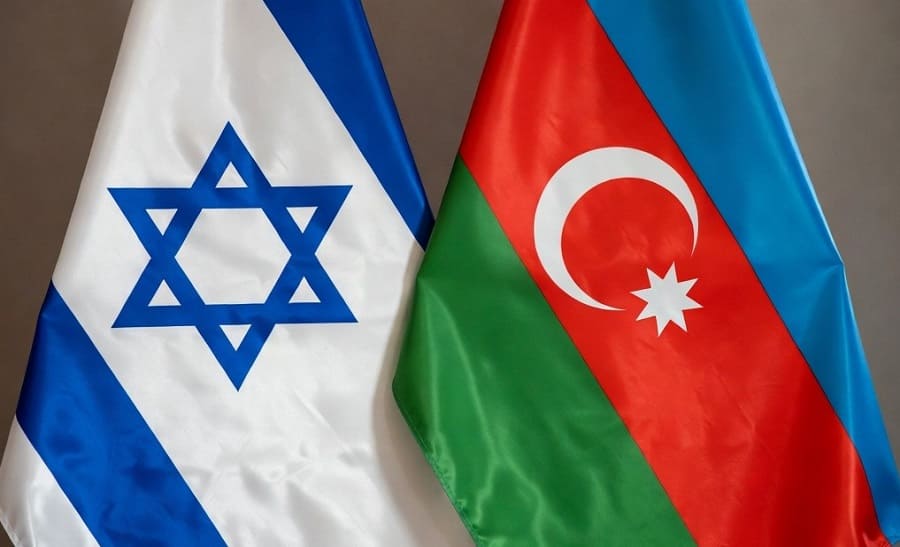
In a previous study for the “Caucasus Analytical Digest” published by the Center for Security Studies at the ETH Zurich (Switzerland) and the University of Bremen (Germany) in fall 2025, the author of this BESA analysis explored Azerbaijan’s motivations to consider membership in the US-brokered “Abraham Accords Declaration (AAD).” In 2020, the AAD resulted in the establishment of diplomatic relations between Israel and the two Arab Gulf states, Bahrain and the United Arab Emirates (UAE). Morocco, Sudan, and Kazakhstan became subsequent members. Motivated by a rising threat from the Iran-led Shia axis in the region, the Abraham Accords included a series of common economic and security agreements between Israel and the other AAD-states. Since 2025, American-Israeli security discourse has repeatedly put Azerbaijan forward as a possible AAD candidate state, even though fruitful cooperation between Jerusalem and Baku has existed since April 1992, when both states established diplomatic relations.
The previous study was the first to delve deeper into Baku’s deliberations over whether to join the AAD. Ultimately, it identified the following five major Azerbaijani motives to consider membership in the AAD:
- Baku hopes to achieve a final American repeal of the burdensome Section 907 regulation in the Freedom Support Act of 1992 (Motive 1).
- By emphasizing Azerbaijan’s mediation efforts in the Middle East, Baku aspires to draw the White House’s attention to the value Azerbaijan can bring to fostering American peace initiatives in the region (Motive 2).
- Azerbaijan seeks a geopolitical role as a regional power (Motive 3).
- Azerbaijan aims to increase its military-qualitative edge over its Arab allies in the region (Motive 4).
- Baku strives to deepen its security cooperation with Washington (Motive 5).
However, in hindsight and after proceeding with the research, qualitative data collection, and expert conversations on the AAD framework, the Azerbaijani-Israeli strategic partnership, and Israeli-Muslim relations after the publication of the aforementioned study, its author would have probably added a question mark at the end of the title of his first study on this topic (the title of the first analysis “About Icebergs and Abraham: The Strategic Partnership Between Azerbaijan and Israel on Course for the Abraham Accords”). But why?
Baku’s Calculus and Concerns
The answer is manifold: First, it seems that for the Azerbaijani side, after a first consideration of joining the AAD, questions have arisen about whether the realization of Baku’s goals mentioned above is indeed achievable only through joining the AAD.
Second, a closer look at the motives mentioned above reveals that most of them are actually focused more on improving Azerbaijan’s standing in Washington. The upgrading of its valuable relationship with Israel to the AAD level thus becomes, ultimately, “only” a means to this ultimate goal.
Third, it is striking to observe that over the last months (since the author’s first study on this special relationship was published), the discourse of Azerbaijani officials and Azerbaijani (state) media focuses less and less on the AAD topic (with a few exceptions). The reasons for this lie, on the one hand, in the fact that the Azerbaijani-American relations have deepened even without Baku’s membership in the AAD. This circumstance has been most evident in Baku’s accession to the US-led “Peace Board” initiative for post-Hamas Gaza and the signing of the “Charter on Strategic Partnership between the Government of the United States of America and the Government of the Republic of Azerbaijan” on February 10, 2026.
On the other hand, fourth, Baku’s avoidance of discussing the AAD publicly stems from Azerbaijan’s fear of retaliatory measures by Tehran’s regime if Baku decides to upgrade its relations with the Jewish state further. That the Iranian regime is capable of such behavior has been shown by Tehran’s recent drone attacks on Azerbaijan’s Nakhchivan exclave on March 5, 2026, and past attacks on Azerbaijani diplomatic staff. Although the current second US-Israeli war against Iran have weakend the Teheran regime, Teheran still poses a security risk not only to Baku: The current Iranian regime’s internal power reconsilidation process will for now – and at least for a while – have the side effect that the command structures within the Iranian Revolutionary Guards – and in the Iranian state more broadly – will be more decentralized, in disarray, and could eventually compete with each other in the future, making it to some degree unpredictable. The very contradictory explanations of the now “Revolutionary Guard” regime in Tehran on its attack on Azerbaijan’s airport in its Nakhchivan exclave on March 5, 2026, are a prime example of this decentralization argument. In consequence, Baku should view any security guarantees formulated by Tehran towards Baku with the utmost caution, and yet, at the same time, stay loyal to its patient foreign policy approach of the last decades and acknowledge that – in metaphorical terms – the current Iran-War has injected the toxin into the veins of the Tehran regime, which needs time to take full effect.
What Does This Mean for Israel?
A reassessment of the idea of including Baku into the AAD framework, taking into account the points mentioned above, requires an honest self-reflection on this issue by Israeli foreign policy. Does this idea truly offer strategic added value for Jerusalem, or should it ultimately be seen as a political “add-on” that merely makes the already broad partnership with Baku appear even more impressive on paper, while leaving everything unchanged in substance? If the primary objective is simply public diplomacy aimed at using the Israeli-Azerbaijani strategic partnership, upgraded to the AAD level, as an additional regional showcase of how a solid partnership between the Jewish state and a predominantly Muslim state can look, there is a risk that Jerusalem underestimates the perception capacities of other Muslim states in the region. Many of these eligible and potential AAD-candidate states understand that the partnership between Jerusalem and Baku has made significant progress, even without the AAD, and continues to do so.
Regarding the Israeli public diplomacy sector, a few points should be emphasized: for an analyst of Israeli foreign policy living in Germany (like the author of this analysis), it has become clear since October 7, 2023, that Israel’s public diplomacy in the West has clearly failed over the last few years. This problem is all the more significant and astonishing when one considers, firstly, how quickly Israel ceded the field of public diplomacy to its enemies within Western societies shortly after the largest massacre of Jews since the Holocaust, and secondly, how little the European public knows about the added value of the Israeli security sector for European security. The most “positive” publicity Israel is getting in the West is for its creative counter-terrorism operations against the Iran-led Shia Axis (e.g., the Pager operation against Hezbollah or the precise liquidation campaigns against the current Iranian leadership, etc.). This is even more paradoxical, as these examples concern Israel’s security sector, which primarily operates in secret. At the same time, Israel’s public diplomacy – which actually should be the most public operational arm of Israeli foreign policy – remains mainly unnoticed in Western societies. However, what does this have to do with the Israeli-Azerbaijani strategic partnership?
From the author’s experience, many Europeans and Americans are extremely surprised to learn that, in addition to the USA and Germany, two predominantly Muslim states are among the Jewish state’s most important allies (the United Arab Emirates (UAE) on the Persian Gulf and Azerbaijan in the South Caucasus). This observation is another indication of Israel’s failure in public diplomacy. Considering the renewed rise of antisemitism in Western societies, this is almost tragic, as the Israeli-Azerbaijani partnership has the potential to serve Israeli public diplomacy. For this purpose, upgrading and institutionalizing this partnership to the AAD level is not a prerequisite.
However, if Jerusalem is really keen to see Baku join the AAD framework, it must clearly convey the advantages of membership to Baku. This can be accomplished by emphasizing and expanding the role of the “Negev Forum” and “Abraham Fund.” As a reminder, both institutions are exclusively available to AAD members and offer generous economic, technological, and military packages that the US partially finances.
Conclusion
The insights of this analysis allow a more detailed look at the Israeli-Azerbaijani strategic partnership. Drawing well-thought-out conclusions from this is even more essential for Israel, as many security-related issues depend heavily on the future trajectories of this important partnership. Following this, Azerbaijan’s value to the Jewish state will continue to remain crucial in the near future – even outside the Iranian issue and even if Baku remains outside the AAD. Among many other sectors (not mentioned here), such looming issues include:
- The Israeli-Azerbaijani partnership vis-à-vis the new Syrian regime: Baku is largely engaged in the reconstruction of post-Assad Syria. Moreover, it has already served as a mediator between Israel and the new Syrian regime. Surely, this Azerbaijani communication platform will retain its crucial importance for Israel, given the ongoing evolution of the Middle East security order. Since the new Syrian leader, Abu Mohammad al-Julani (also known in the West by his birth name, Ahmed Hussein al-Sharaa), remains a controversial and very opaque figure, any additional communication channels into the new Syrian regime are helpful for Israel.
- The Israeli-Azerbaijani partnership vis-à-vis Türkiye: Azerbaijan’s role remains also relevant in the current strained relationship between Israel and Türkiye – the latter is next to Israel, Azerbaijan’s most important ally. Talking to Israeli and Azerbaijani experts indicates that both groups identify the current status of Turkish-Israeli relations as simultaneously the biggest risk (if the current low point in Turkish-Israeli relations is not overcome) and the biggest opportunity for the Azerbaijani-Israeli strategic partnership (as soon as a détente between Ankara and Jerusalem resumes). Furthermore, Israel should not underestimate Baku’s influence in Türkiye, especially in a post-Erdoğan Türkiye and if the current low point in relations between Israel and Türkiye cannot be overcome with the current Turkish president.
- The Israeli-Azerbaijani partnership vis-à-vis Russia: Although the current Azerbaijani-Russian relations are very volatile, Israel should use any progress on the Azerbaijani-Russian track to secure (via Azerbaijani help in parallel) at least a modest continuation of Russian military presence in post-Assad Syria. Such a scenario can allow Israel to counterbalance the Turkish neo-Ottoman influence in Syria. Interestingly, this development would benefit even Europe (and Ukraine) since Russia would be forced to waste its already strained military capacities (again) on Syria instead of accumulating them more near Eastern Europe. According to Jerusalem Post, Russian emissaries already visited the Israeli-Syrian border in fall 2025.
- The Israeli-Azerbaijani partnership vis-à-vis France: This analysis expects a tensening of the Azerbaijani-Israeli partnership towards France. Paris’s traditional diplomatic support for Armenia, especially in the last Nagorno-Karabakh wars, is one reason. The other lies in its breach of the Oslo Accords by initiating a wave of recognition of undefined Palestinian statehood among other UN members in September 2025, without prior Israeli-Palestinian reconciliation. Additionally, France’s escalating domestic surge of antisemitism does the rest.
Boris Ginzburg is a doctoral researcher at the Institute for East European Studies (Politics Department) at the Freie Universität Berlin (Germany).