PSCRP-BESA Reports No 153 (September 23, 2025)
by Alexander Shpunt
Explosive Identity
There is no longer any need to convince anyone that questions of national consciousness and identity have become a matter of scholarly debate far beyond the borders of Belarus.
The largest armed conflict in Europe in the past eighty years—the war in southeastern Russia and Ukraine—raises many questions. Some try to explain it through conspiracy theories; others see in it signs of the emergence of a new technological order. One can find many, often exotic, causes.
However, following Occam’s razor, the simplest explanation is usually the best one.
At the heart of the conflict between Russia and Ukraine lies a fundamental difference in how Ukrainians perceive their national identity. This conflict is what is often described as a “war for identity” —whether the dominant view of Ukrainians should be shaped by Russian or Ukrainian perspectives.
This concept emerges within the framework of traditional geopolitical analysis—whether through complex approaches to security dilemmas or territorial disputes—yet it opens the way to deeper ontological dimensions, addressing the foundations of state- and nation-building in the post-Soviet space.
Moscow’s policy toward Ukraine is based on the assumption that modern Ukrainian national identity is artificial, even imposed. This position, most clearly articulated by President Vladimir Putin, rests on the claim that Russians and Ukrainians constitute “one people,” sharing a common historical destiny that should determine their political future.
The further elaboration of this idea can be found in Putin’s July 2021 article “On the Historical Unity of Russians and Ukrainians”, which readers may consult directly.
The Ukrainian perspective represents a diametrically opposed understanding of how national identity is formed. Ukrainian leaders argue that, in the post-Soviet period, the country has developed a new civic national identity, one that “embraces not only the Ukrainian-speaking population of the western part of the country, but also part of the Russian-speaking—though increasingly bilingual—east”.
An in-depth analysis of this position falls outside the scope of this article. Here, we will simply note the fundamental irreconcilability of these two opposing views of Ukrainian identity.
The Phenomenon of Belarusian Identity
Against the backdrop of the intense military confrontation between Ukraine and Russia, it is especially important to look closely at the case of Belarus. Despite modest starting conditions and sharp tensions along the “government–opposition” divide—including, not so long ago, episodes of mass unrest—the republic has experienced no internal conflict comparable to the Donbas, rooted in divergent understandings of national identity. Not a single one in all these years.
So why has this been the case, and what defines today’s Belarusian national identity?
Quite recently, in December 2024, Belarusian sociologists Filipp Bikanov and Konstantin Nesterovich conducted a large-scale study, “Belarusian National Identity in 2024,” published with the Friedrich Ebert Foundation (FES).
Anyone familiar with sociological research in modern Belarus understands how necessary such a comprehensive and fundamental study was. The fact that it was carried out by two independent sociologists gives it particular weight. Even more valuable is that Bikanov and Nesterovich managed to maintain genuine scholarly impartiality.
From this extensive report, we would like to highlight just a few key excerpts.
A statistical analysis of identity-related statements revealed four main components: Russo-Soviet, Belarusian, nationally indifferent, and cosmopolitan. Based on these data, five segments were identified, each reflecting distinct socio-demographic and political characteristics.
- The Conscious (11%): This segment is the primary bearer of the “national romanticism” project. It shows the strongest expression of both the Belarusian (4.50) and cosmopolitan (3.70) components. A large majority (73%) hold pro-democratic political views—the highest share among all segments. Members of this cluster are strong advocates of the Belarusian language: most consider it their native tongue and favor its broader use in public life. The demographic profile of this segment is diverse: 63% are men; 32% fall within the 55–64 age group; 52% reside in Minsk; and 61% hold higher education degrees. It also has the highest share of IT professionals (21%).
- “The Developing” (25%): A predominantly youth-oriented segment, with 47% aged 18–34 and 49% residing in Minsk. They demonstrate a balanced, moderate expression of all four identity components—combining an appreciation for the Belarusian language and culture with a recognition of Soviet heritage and a cosmopolitan openness. Politically, they represent the most economically dissatisfied group (29%) and tend to move away from pro-Russian foreign policy positions. Their identity is tied less to supranational affiliations and more to participation in cultural events within national projects (e.g., Dziady commemorations and official parades).
- The Indifferent (32%): The largest segment, marked by the highest level of national indifference. Its members believe that national culture and language are irrelevant in the modern world and merely create unnecessary barriers. They lean slightly toward Russo-Soviet identity traits but are generally apathetic. Politically, 59% hold neutral positions, while in foreign policy they tend toward either pro-Russian views or ambiguity. Demographically, this group has a somewhat higher share of women (58%), residents of towns with populations of 20,000–100,000 (56%), and individuals with vocational or technical education (51%).
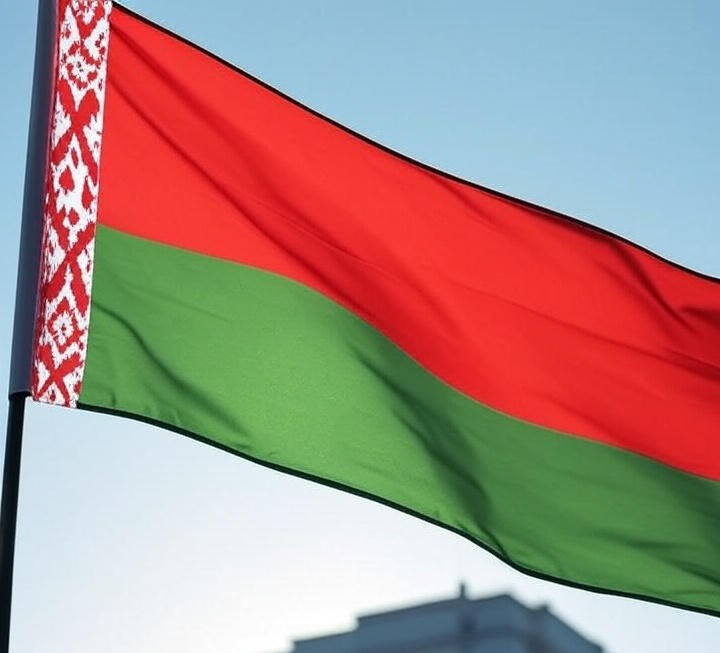
- The Soviet (24%): This is the oldest segment, with a majority aged 45 and older (52%). It exhibits the strongest Russo-Soviet component, alongside moderate levels of Belarusian and cosmopolitan identity. Members of this group place high value on the connection between Belarusians and Russians; nearly half support the actions of the Russian army in Ukraine. Domestically, they form the most loyalist segment (34%), positively assessing the country’s economic situation and its leadership. They identify with symbols such as the red-green flag and with holidays like Dozhinki and the Slavianski Bazaar.
- The Russified (7%): Their profile closely resembles that of the Indifferent segment, but they identify as Russians rather than Belarusians. They are likely migrants from Russia or individuals with a strongly pronounced Russian identity. Their Russo-Soviet component is less pronounced than in the Soviet segment, but their national indifference is high.
A key conclusion drawn by Bikanov and Nesterovich is that expressions of “Belarusianness” (e.g., regular use of the Belarusian language) and cosmopolitanism (e.g., having foreign friends) are met with positive attitudes across all segments, including the Soviet and Russified groups. In other words, there is not a single segment—even among those divided by other value-based tensions—where “Belarusianness” and cosmopolitanism are perceived as mutually exclusive.
When compared with the Ukrainian sociological landscape, it is especially significant that both Belarusianness and cosmopolitanism are accepted in Belarus by the Soviet and Indifferent clusters. By contrast, the categorical rejection of “Ukrainianness” and cosmopolitanism (the so-called “European choice”) by Ukraine’s Soviet cluster—and later by the Indifferent cluster—led first to the armed uprising in the Donbas and eventually to the full-scale war between southeastern Ukraine and Russia.
On the other hand, support for integration with Western countries produces strong polarization. The so-called Conscious segment registers such views as highly marginal (–8 on the acceptance scale), while the Soviet segment demands their full embrace (+8).
From this, one can conclude that Belarus is not a rhetorical quagmire. While “Belarusianness” and European orientation could, in principle, become issues of foreign policy and even mobilization, they do not trigger rejection across the ideological spectrum of respondent clusters. By contrast, conflict-prone themes—such as the restoration of the USSR—show no visible political prospects, even within the worldview projects of those who support them.
Another difference between developments in Ukraine and Belarus concerns the role and use of the national language.
The study by Bikanov and Nesterovich reveals a gap between the symbolic value and the practical use of the Belarusian language.
Although 63% of urban residents consider Belarusian their native language, it functions as a secondary marker of identity. Only 3% use it as a criterion for identifying someone as Belarusian. Its primary function is more symbolic than communicative, since just 7% report using it most frequently (compared to 88% for Russian).
The image of the Belarusian language in the respondents’ minds is shaped more by value-based characteristics than by perceived utility. When asked to describe it, respondents most often associated Belarusian with being “native” (70%), “beautiful” (61%), “for those who love the country” (60%), and “unique” (54%). Its shortcomings, however, were largely practical: it scored low on parameters such as “usefulness for work” (25% vs. 64% for Russian) and “the language of youth” (23% vs. 49% for Russian). Additionally, 33% still associate it with being “rural.”
As we recall, the deliberate—opponents would say “aggressive”—promotion of the Ukrainian language by authorities in Kyiv, and the equally deliberate, aggressive resistance to its spread by authorities in Donetsk and Luhansk, became the first ideological foundation of the Donbas uprising. Both sides of the Ukrainian conflict used language as a tool of ideological expansion and symbolic victory—something important to note, since in this struggle both Kyiv and Donbas were active players.
Lessons of Crimea
In our view, Belarus’s “safe” identity is not the product of coincidence but rather the result of deliberate state policy. A historical turning point was the annexation of Crimea by Russia in 2014, which prompted Alexander Lukashenko and his ideological apparatus to develop principles of ontological security—an ideological model designed to prevent a “Crimea scenario” in Belarus.
A stable, “seamless,” and non-confrontational identity—as theorized by Anthony Giddens—became one of the key elements of this security.
After the annexation of Crimea, the Belarusian authorities adjusted their official discourse, emphasizing a distinct, routine, and stable Belarusian identity. International political analysts described this shift as a policy of “soft Belarusianization”—a gradual counterbalance to Russian influence.
Between 2014 and 2019, Belarus launched or sanctioned a series of initiatives aimed at strengthening national identity through cultural and historical policy. Various public groups, including civil society, business associations, and political actors, implemented projects to promote Belarusian culture, language, and pre-Soviet historical heritage. These measures gained necessary public support but, unlike in Ukraine and the Baltic states, did not provoke significant resistance from the authorities.
This difference is telling: in Ukraine and the Baltics, similar processes often resulted from concessions by weakened governments to nationally oriented opposition forces. In Belarus, however, such initiatives were under the control of presidential power from the outset.
One of the first symbolic signals to both elites and the population was President Alexander Lukashenko’s 2014 Independence Day speech delivered in Belarusian—a gesture underscoring national cultural and linguistic traditions.
The broader use of Belarusian in official contexts was followed by appointments of civil servants proficient in the language to corresponding posts. This, in turn, led to the emergence of state officials capable of delivering public speeches in Belarusian. In this way, the government demonstrated that the Belarusian language is part of official state communication—without being monopolized by political opposition.
In 2019, the Presidential Administration underwent personnel changes. Historian Alexander Kanoyko, a Doctor of Sciences specializing in the study of the Belarusian language, was appointed chief ideologist. At the same time, President Lukashenko instructed the appointment of new leadership for the Presidential Administration’s department on ideology and information policy. The position was given to Andrey Kuntsevich, a young regional official and Belarusian poet from Mogilev.
In March 2019, Belarus published its Concept of Information Security. This document emphasizes national values and traditions. The Belarusian language, shaped by bilingualism, is presented as an important factor in fostering national consciousness and the spiritual development of society. It also asserts that the development of Belarusian plays a key role in ensuring the country’s humanitarian security. Written in Belarusian, the document was framed as an element of national cohesion, tied to the security of the republic.
A central feature of Belarus’s current historical policy—highlighted in academic discourse—is the construction of a “long genealogy” of national statehood. As noted by independent Belarusian scholar Aliaksei Lastouski, this trend is reflected in school textbooks published between 2020 and 2025.
He observes a growing shift toward presenting the origins of Belarusian statehood in the period of the Principality of Polotsk, as well as emphasizing the Belarusian character of the Grand Duchy of Lithuania (GDL). A striking narrative strategy, also echoed in Lukashenko’s public speeches, is the ontological affirmation of an older lineage of Belarusian statehood, one predating the Soviet period. While subsequent discourse continues to highlight continuity with pre-Soviet political formations, its implicit perspective portrays Russia primarily as a historical neighbor rather than the source of Belarusian statehood.
Conclusions
The Belarusian identity that has taken shape is the result of more than a decade of work by the ideologists of Alexander Lukashenko’s administration, aimed at embedding the regime within an ontological framework of security.
Unlike other identities in the post-Soviet space, the Belarusian model stands out for its coherence, low susceptibility to conflict, and stability.
Yet the main challenge remains unanswered: has Lukashenko’s state-driven ideology succeeded in building an identity in which every—or almost every—Belarusian can recognize themselves? Or might there come a time when a genuine, grassroots identity emerges to fill the gaps left by this carefully cultivated state identity—and what consequences would that have for the stability of the state?
These are questions that only the future can answer.
Alexander Shpunt is an Israeli and Russian researcher and expert in the theory and practice of information and analytical work in the field of politics and resides in Haifa. Since 2016 he has served as a professor at the National Research University “Moscow Higher School of Economics. In 1999–2011 he also served as the executive director of the “Effective Policy Foundation”, the largest think tank in the RF at that time, and in 2011 founded and headed the Institute of Political Analysis Tools, specializing in systems for monitoring political behavior.