
PSCRP-BESA Reports No 232 (September 23, 2026)
September has not been a quiet month on NATO’s northeastern edge. Russia opened polling stations for its parliamentary election at crossing points with Poland and the three Baltic states, a suspected Russian drone triggered fresh NATO scrambles over Lithuania days after a missile struck near a civilian train carrying European officials close to the Polish border, and analysts spent the month weighing whether Vladimir Putin might test the alliance’s resolve before winter. Estonia, Latvia, and Lithuania have spent four years arguing they are simultaneously the alliance’s most exposed members and its most prepared. September’s record invites a mild but persistent question: prepared for what, exactly, and with what?
A Familiar Kind of Escalation
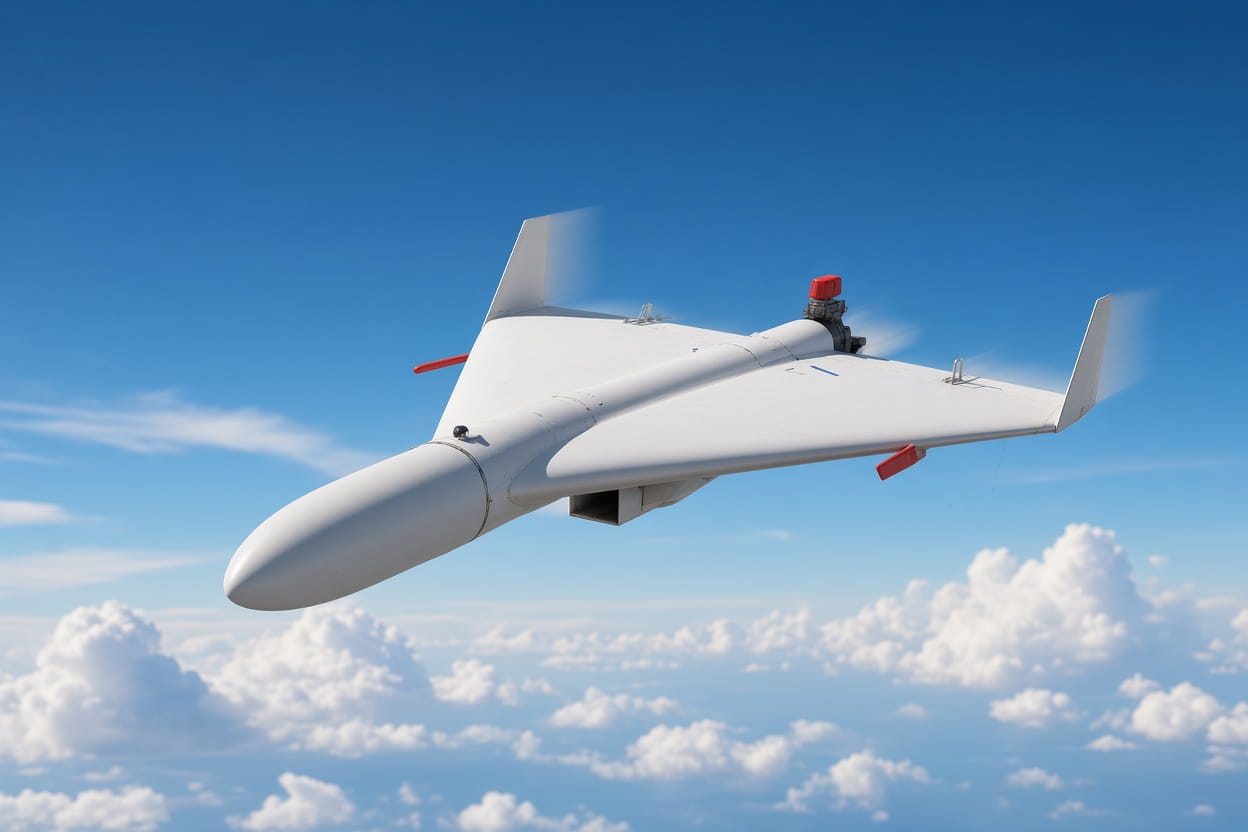
The month’s drone and airspace incidents follow a pattern established over the spring and summer. Reporting from CBS News on September 8 described Lithuania training ordinary citizens to fly and disable drones, alongside underground command posts and anti-tank obstacles scattered across the country. The Foreign Policy dispatch of September 15 placed the latest Lithuanian incursion in the context of a train attack in Ukraine that narrowly missed senior European figures, a coincidence read in Brussels as a message rather than an accident.
US intelligence assessments first reported by the Wall Street Journal, and confirmed independently by CNN, describe a range of scenarios in which Putin might test NATO’s resolve on the alliance’s eastern flank sometime between this autumn and 2029, running from cyberattacks and deniable proxy groups to, at the outer end, a small-scale ground incursion. The reports rate the probability of that outer scenario as low but rising over time, and note that such a move has traditionally been considered unlikely precisely because it would activate Article 5, the very guarantee this piece questions below.
Numerous unnamed sources have also floated a more specific and more alarming claim over the past month: that Russia’s General Staff has drawn up plans for an additional mobilization of roughly 600,000 troops across 2026 and 2027, timed to follow the September 18–20 State Duma elections. It remains genuinely difficult to establish whether this represents a substantiated military plan, a piece of Russian hybrid warfare designed to unsettle Baltic publics, or one of several interested parties in the broader conflict testing the waters with a convenient leak. The rumor has, in any case, already become part of the psychological environment this piece is describing, regardless of its truth.
Set against all this is a curious diplomatic footnote from late August. CIA Director John Ratcliffe made an unannounced trip to Moscow on August 25, reportedly to warn the Kremlin against escalating with Estonia, Latvia, and Lithuania specifically. That a visit of this kind was thought necessary says something about how seriously Washington takes the risk. It also raises a question the public record does not yet answer: a warning delivered quietly in Moscow sits oddly next to a public American posture, discussed below, in which the commitment to defend the same three countries has been left deliberately vague.
Four Years, One Wall That Is Not a Wall
What, then, has actually been built since February 2022? The headline figures are real. All three Baltic states have reached or are approaching NATO’s 2035 target of spending five percent of GDP on defense, and the European Union has begun channeling roughly fourteen billion dollars in loans toward regional security investment, according to RFE/RL reporting cited above. Germany has committed an armored brigade to Lithuania, the United Kingdom leads the multinational battlegroup in Estonia, and Canada leads the one in Latvia. NATO has layered Baltic Sentry and Eastern Sentry over the region’s air, sea, and cyber domains since early and mid-2025.
Look past the announcements, though, and the picture thins. The “Baltic Drone Wall,” discussed publicly for more than a year, remains largely a name. As one unnamed Baltic official told RFE/RL in August, “it’s easier to talk about the drone wall than to build one. But let’s be frank: Nobody has this wall yet, not even the Ukrainians.” Rail Baltica, the EU-funded line meant to let NATO move troops and equipment into the region without relying on Soviet-gauge track, was supposed to open this year; it is now targeted for 2030, amid cost overruns and design changes. The military training ground at Kapčiamiestis, meant to secure the Suwalłki Corridor, has drawn public skepticism even from a former commander of Lithuania’s armed forces, who complained that officials have offered little beyond “believe me, we need it.” The IISS Military Balance for 2026 makes a related point about the wider eastern flank: when twenty-three drones crossed into Poland from Belarus in September 2025, at most four were shot down despite advance warning.
A second opinion is worth setting against this account. CEPA’s own reporting describes Estonia, Latvia, and Lithuania as, after Finland, the best-prepared states in Europe to face Russian hybrid aggression, pointing to their rapid and technically demanding exit from the Soviet-era BRELL power grid and to institutional experience accumulated since 2014. CEPA’s own analysts nonetheless add that an effective future response remains unlikely without greater investment and cooperation from the wider EU, a caveat that narrows the distance between this account and RFE/RL’s rather than closing it.
Poking the Bear on Borrowed Time
This is the part that produces genuine puzzlement rather than mere criticism. The Baltic governments have spent four years adopting an unmistakably confrontational public posture toward Moscow: expelling diplomats, banning Russian tourists, publicizing every airspace violation, and now hosting a training ground explicitly framed as a hedge against Russian ambitions in the Suwalłki gap. Carnegie’s own analysis from May noted that the three governments have avoided directly confronting Donald Trump on defense spending while doing everything possible to entrench NATO’s regional posture before any American drawdown becomes irreversible. That is a sensible hedge if the underlying military balance supports it.
Not every analyst reads the underlying balance as alarming as the previous section implies. The Atlantic Council’s assessment of September 17 pushes back against the more alarmed readings above, and its reasoning rests on two points. First, so long as Ukraine continues to absorb the bulk of Russia’s available combat power, Moscow lacks the spare capacity for a Baltic adventure, which is itself one reason the three Baltic states remain among Ukraine’s largest donors relative to GDP. Second, Baltic security officials themselves object to being framed as “virtually defenseless,” pointing to the battlegroups, reserve systems, and fortifications described above. The Council adds, however, that Baltic threat assessments would likely shift upward quickly if a ceasefire in Ukraine were reached, a comment on how contingent today’s reassurance actually is.
The EUobserver reporting from August adds a further layer of unease regardless of which reading one accepts. Baltic officials interviewed anonymously worry less about the drones themselves than about the “political chaos and hesitation” a false-flag incident might trigger among allies in its first hours. The frontline states’ own security establishment, in other words, is not fully confident that a genuine crisis would produce a fast, unified NATO response.
Would Article 5 Actually Be Invoked?
The deeper reason for skepticism lies in Washington rather than in Tallinn, Riga, or Vilnius. Donald Trump’s own comments on the alliance’s mutual-defense clause have been strikingly noncommittal. En route to the 2025 Hague summit, asked whether the United States would honor Article 5, he replied, “depends on your definition. There’s numerous definitions of Article 5,” a formulation he has never fully walked back. A Reuters investigation published in September, based on interviews with more than fifty current and former officials, found that this ambiguity has already begun reshaping European defense planning, with at least eight member states diversifying away from American weapons and technology in anticipation of reduced US involvement. The same reporting noted that roughly half the American troops previously stationed at Mihail Kogălniceanu Air Base in Romania, a key eastern-flank facility, had already departed as part of a broader realignment.
A second opinion comes from within the American political system itself. Writing in Newsweek this month, a sitting member of the US House of Representatives argued that Trump “has since reaffirmed America’s Article 5 commitment,” while also warning that his mixed messages “carry real risks”. The two halves of that argument sit uneasily together: reassurance and warning, offered by the same author, about the same guarantee, within the same short piece.
None of the above resolve the puzzle cleanly. The Baltic states have genuinely reinforced their positions since 2022, and their public defiance may be precisely the correct strategy if it buys time for slower-moving investments to mature. But the combination of loud provocation, incomplete fortification, and an American security guarantee that its own president describes as a matter of “definition” leaves an observer with a reasonable question: on whose confidence, exactly, is this policy resting?