
PSCRP-BESA Reports No 91 (Oct 21, 2024)
by Vakhtang Maisaia
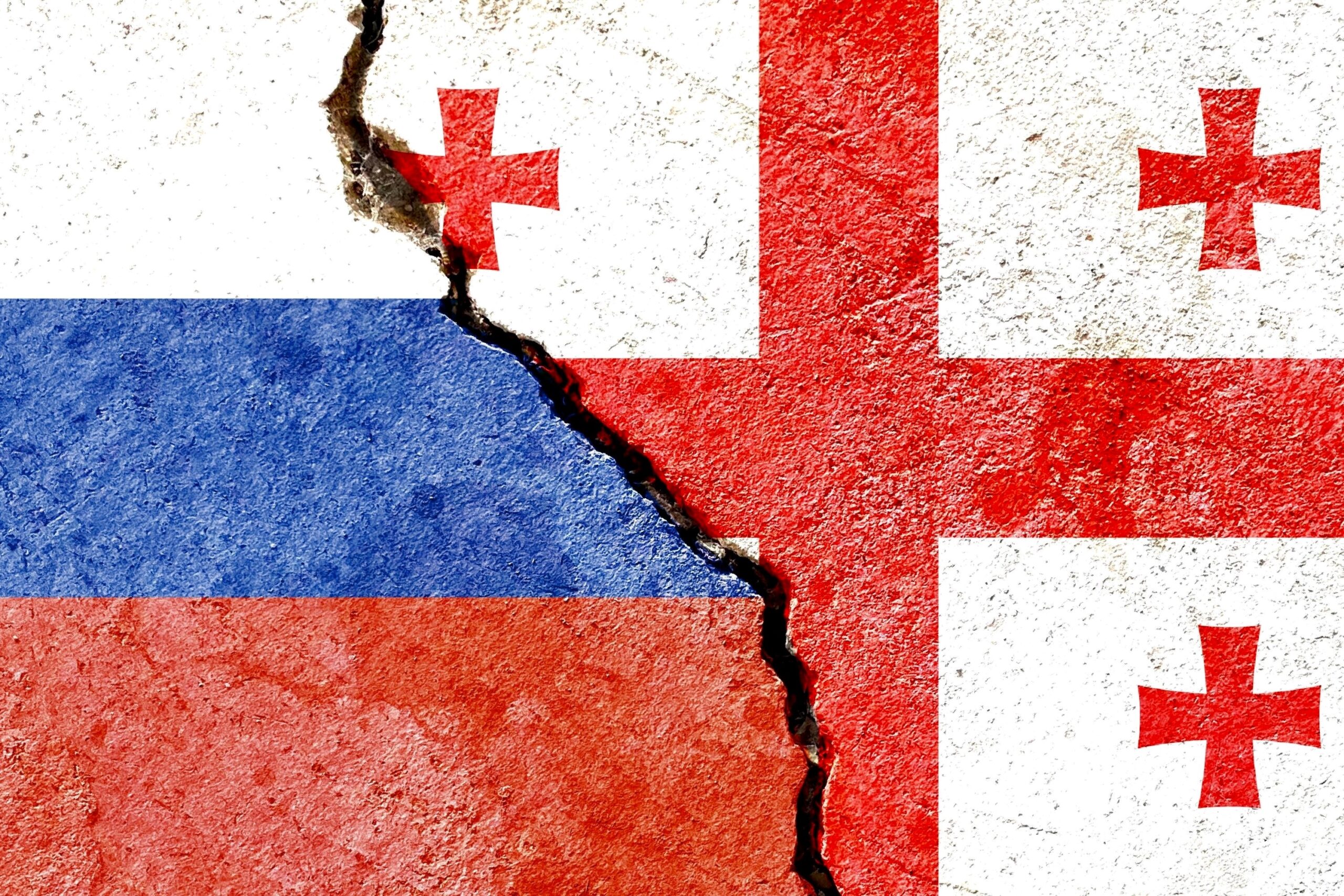
The Georgia’s political situation remains strained and has turned into a real geopolitical dilemma. Formally, the incumbent authority of Georgia, led by the ruling party “The Georgian Dream,” has cut off relations with the EU and the USA. The Charter on Strategic Partnership between Georgia and the USA, signed on January 9, 2008, is no longer active. Even the date of the complete breakdown in relations has been set for May 30, 2024. Relations between the Georgian government and the Western world have stiffened at all levels. Consequently, the pro-Western community of Georgia, led by President Salome Zourabichvili and the four main opposition parties, has begun a fierce battle against the ruling coalition of “The Georgian Dream” and “People’s Power” parties.
Moreover, three key geopolitical demands have been put forward by the pro-Western community toward the incumbent government led by tycoon Bidzina Ivanishvili:
- Abolish the so-called “Russian Law” and return to the pro-Western foreign policy stipulated in Article 78 of the Constitution of Georgia;
- Cancel any strategic relations with China, including the annulment of the Anaklia Sea Port business deal with the Chinese Consortium, and eliminate Chinese influence;
- Reverse relations with Russia and sever ties with Belarus. Prime Minister Irakli Kobakhidze announced in May 2024 during his visit to Berlin the country’s “Strategic Appeasement Policy”, which involves a neutral foreign policy agenda accepted by the Russian leadership.
These demands were announced to high-ranking officials from the USA (James O’Brian) and the EU (Foreign Policy Commissioner Josep Borrell) and fully supported by Georgia’s pro-Western opposition. However, they have been outright rejected by the incumbent Georgian government.
Regarding the Russian-occupied territories, the “Georgian Dream” party, as part of its pre-election campaign, introduced a policy of “strategic patience” over the regions of Abkhazia and Tskhinvali (South Ossetia). The government aimed to “seize the opportunity for reunification when the time is right” by maintaining peace and avoiding rash actions. This policy involves:
- Resolving the occupation through multiple approaches, including international pressure and a government strategy to prevent escalation;
- Restoring a non-confrontational approach toward Russia and finding a common position for reconciling the conflict zones;
- Building relations with the Abkhazian and Ossetian communities through various forms of “People Diplomacy.”
In this case, the Russian government has been tacitly supporting the policy. After a closed-door meeting between Dmitry Kozak, Deputy Head of Russia’s Presidential Staff, and Abkhazian de-facto President Aslan Bzhania on August 19, 2024, the Kremlin suspended financial aid to Abkhazia starting September 1, 2024. Russia has invested over 110 billion Russian roubles in Abkhazia since 1992, providing 8-9 billion roubles annually. It appears that Russia and Georgia are collaborating on dealing with the conflict zones, potentially introducing a “Confederation” model of statehood and the reopening of the “Abkhazian Railway Route.” The ruling “Georgian Dream” party seems to align with this policy, expressing an intention to pardon separatist leaders and revitalize economic and transit projects, such as restoring the “Abkhazian Railway” corridor connecting Sukhumi with Zugdidi.
Given these developments, three main scenarios could emerge from the elections:
First Scenario – “Belarusization”: In this scenario, the ruling party rigs the elections, securing a constitutional majority in parliament, allowing it to abolish Article 78 and implement a “Strategic Appeasement” policy with Russia. This would result in the West severing ties with Georgia, leaving Russia to dominate the region. Georgia would join pro-Russian projects like the “North-South” corridor, possibly rejoining the CIS and seeking membership in BRICS and the Shanghai Cooperation Organization. Political persecution of opposition leaders would also follow.
Second Scenario – “Political Anarchy”: Neither the ruling party nor the opposition secures enough seats to form a government, resulting in a political deadlock and the need for additional elections. In this case, the interim government would continue its foreign policy, which could provoke a pro-Western coup or revolution. However, the success of such a coup is doubtful.
Third Scenario – “The Polish Option”: The opposition wins a majority and forms a coalition government. However, the ex-ruling party, led by Ivanishvili, attempts a coup d’état with support from Russia. The outcome would be uncertain, but there’s a higher likelihood that the coup would succeed.
Vakhtang Maisaia holds Ph.D. in Politics and in Military Science and master’s degree in public administration. He is USIA Alumni and is a member of “Independent Expert’s Club of Georgia” and Political Scientists Association of Republic of Poland. Currently he is a Professor and Head of MA program on international security studies at Caucasus International University (CIU), visiting professor at Tbilisi State University as well as visiting professor at International Black Sea University (IBSU) and Deputy Director of IBSU Black Sea Region Geopolitical Research Centre.