PSCRP-BESA Reports No 239 (October 16, 2026)
Israeli President Isaac Herzog visited Azerbaijan to attend the Seventh Summit of the Conference on Interaction and Confidence Building Measures in Asia (CICA). Addressing the summit, he emphasized, among other things, that Azerbaijan, under President Ilham Aliyev’s leadership, had become a model of stability, demonstrating economic growth and strengthening ties with countries across the region. Herzog described the decision to hold the summit in Azerbaijan as symbolic, stressing that the country serves as an example of regional partnership, tolerance, and confidence-building.
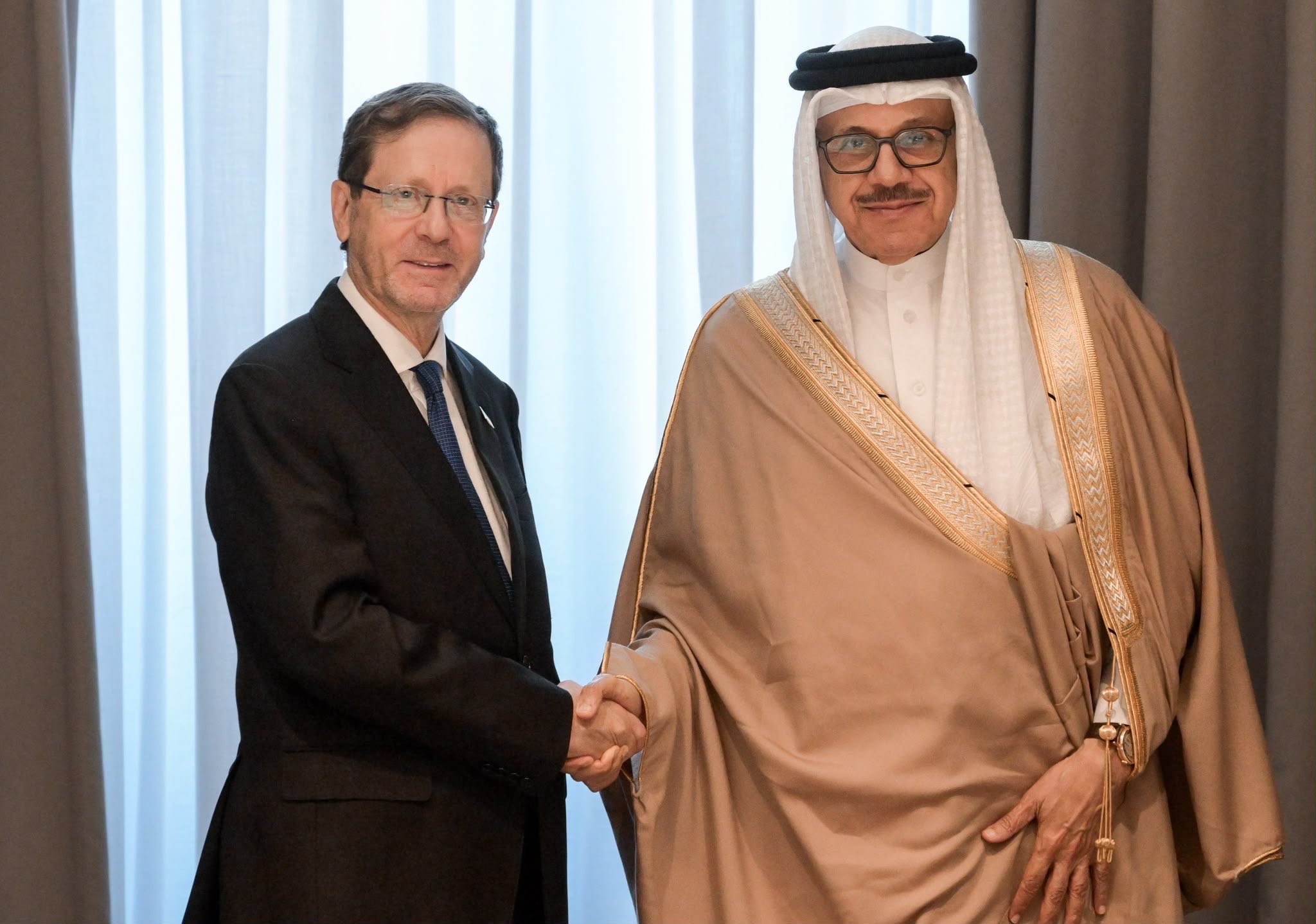
Particularly noteworthy for the media were Herzog’s meetings with Bahrain’s Foreign Minister Abdullatif bin Rashid Al Zayani, during which issues related to the Abraham Accords were discussed, and with Chinese Foreign Minister Wang Yi.
It should be noted, however, that almost simultaneously with the CICA summit, a controversy erupted in Azerbaijan over school uniform requirements. The Ministry of Education published regulations emphasizing the need to uphold the state’s secular principles in both students’ school uniforms and teachers’ attire. Against this backdrop, reports emerged that girls wearing hijabs had been denied entry to classes at several schools in areas inhabited by more conservative communities.
Although such incidents occur almost every year at the beginning of the school term, this time the controversy escalated significantly and took on a distinctly antisemitic dimension. Rumors began circulating on social media claiming that Israel was behind the secular dress requirements and that it allegedly always promoted hijab bans in Muslim-majority countries with which it maintained good relations. Naturally, no one provided any examples to substantiate these allegations, even though the number of Muslim-majority countries maintaining open diplomatic relations with Israel is relatively small, and any such cases would have been easy to identify.
Fabricated claims also began circulating online, alleging that Jewish schools were subject to more permissive rules than schools attended by Muslim students.
This allegation is false, as representatives of Azerbaijan’s Jewish community have confirmed. For example, Rabbi Zamir Isayev, head of the Religious Community of Sephardic Jews of Baku, stated that Jewish schools comply with the established school uniform regulations.
“The relevant decision of the Cabinet of Ministers applies to all schools in Azerbaijan, including Jewish schools. Students attend classes wearing the prescribed school uniforms and comply with the established requirements. Furthermore, compliance with these regulations is regularly inspected by the relevant authorities, and monitoring is conducted. In this regard, the information being circulated about violations of school uniform regulations in Jewish schools is entirely unfounded,” Zamir Isayev stated.
Yevgeny Brenneysen, deputy chairman of the Religious Community of European Jews of Baku, said that certain foreign groups must not be allowed to turn discussions about school uniforms into religious and ethnic confrontation.
He emphasized that Jewish schools, like all other schools in Azerbaijan, comply with the Cabinet of Ministers’ decision on standardized school uniforms. According to him, students attend school wearing the prescribed uniforms, and compliance with these regulations is regularly monitored by the Ministry of Science and Education.
Yet none of this appears to concern those behind the campaign to incite hatred. Moreover, personal antisemitic attacks against Azerbaijani President Ilham Aliyev have resumed. Some online sources claim that he has Jewish ancestry and that his alleged ties to the Jewish people are the reason for this supposed “discrimination against Muslims”.
The controversy extended beyond Azerbaijan and the online media environment. Surprisingly, a protest demonstration against the “ban on wearing hijabs in schools” was held in Turkey. Demonstrators argued that they could not regard Azerbaijan as a brotherly nation if such regulations remained in force there.
Conservative Turkish media outlets and members of the public sharply criticized Ilham Aliyev’s decisions, drawing parallels with the period following Turkey’s military memorandum of February 28, 1997, when severe restrictions were imposed on wearing hijabs in educational institutions. Interestingly, criticism of Azerbaijan on this issue came not only from supporters of President Erdoğan but also from the opposition. Kemal Kılıçdaroğlu, a representative of the Atatürkist political camp, also criticized the Azerbaijani authorities, even though his party would ostensibly be expected to defend the strict principle of secularism.
Iranian media outlets, unsurprisingly, also actively commented on Azerbaijan’s school uniform requirements. Some suggested that serious disagreements had emerged between President Ilham Aliyev and President Erdoğan over their differing views on the role of religion in society.
The disinformation campaign did not stop there. False claims emerged alleging that the Azerbaijani authorities had banned hijabs in medical institutions. The Ministry of Health refuted these fabrications. The Media and Broadcasting Council urged media organizations and social media users to verify information against official sources, refrain from circulating the forged document as authentic, and avoid becoming instruments for spreading disinformation.
It is evident that Russian, Iranian, and Turkish sources are behind this aggressive antisemitic campaign, each driven by its own motives. Iran’s interests are clear: for many years, Iranian propaganda has portrayed Azerbaijan as a “fake state” hostile to Islam and as an ally of Israel and the United States. Incidentally, Iranian propagandists have long accused the Azerbaijani authorities of “persecuting Shiites” while accommodating “Sunni extremists” and, of course, the Jewish community.
Russia, which has been rapidly losing influence in the South Caucasus in recent years, also has an interest in destabilizing Azerbaijan. Turkey’s motives are less obvious, but one can assume that its ruling circles would prefer Azerbaijan to abandon its secular character. This would make it easier for Ankara to impose an unequal relationship on Baku, with Turkey assuming the role of senior partner.
At the same time, it should be noted that not everyone in Turkey supports this anti-Azerbaijani stance. Many representatives of secular and Kemalist circles have expressed support for Azerbaijan, viewing the criticism as interference in its internal affairs. Moreover, Baku’s decision has given them an opportunity to highlight the growing influence of political Islam within Turkey itself and the country’s gradual departure from Atatürk’s principles.
Prominent Turkish theologian and columnist Cemil Kılıç, for example, accused supporters of political Islam of attempting to undermine relations between Azerbaijan and Turkey. “If Azerbaijan makes concessions to political Islamists, it will face serious problems in the future. Under no circumstances should it give in. It must carefully preserve its secular identity,” Kılıç wrote on X on October 3.
At the same time, the explicitly antisemitic nature of much of the criticism suggests that the primary target of this campaign is the relationship between Azerbaijan and Israel. The two countries continue to cooperate actively across all sectors and are working to further develop their partnership, as President Isaac Herzog noted in his remarks. This is a source of irritation primarily for Iran, but other countries that believe themselves entitled to dominate the South Caucasus also view Baku’s independent foreign policy with displeasure.
Apparently, the organizers of the information campaign saw the Israeli president’s visit to Azerbaijan as a convenient opportunity to incite hatred against Jews and drive a wedge between Baku and Jerusalem. At the same time, by attempting to destabilize the country during the CICA summit, they apparently sought to discredit Azerbaijan more broadly and tarnish its international reputation.
PSCRP team