PSCRP-BESA Reports No 184 (February 18, 2026)
by Boris Ginzburg
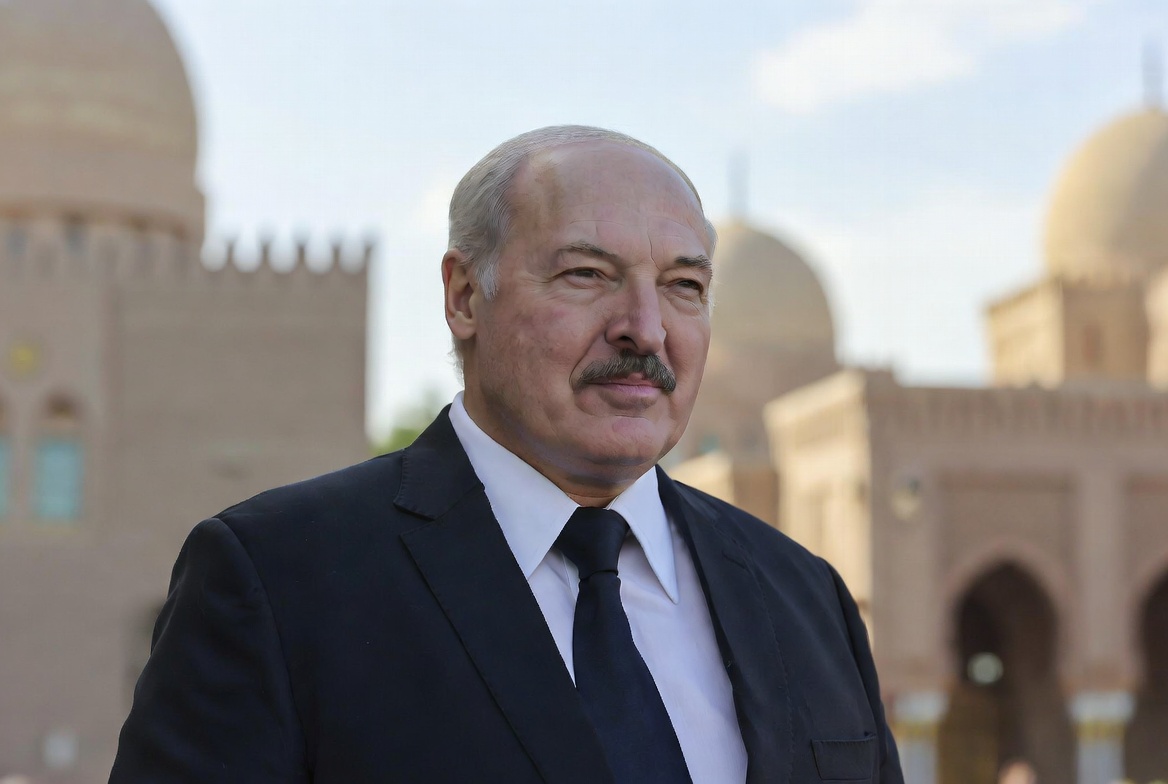
Between November 27 and December 7, 2025, Belarusian leader Alyaksandr Lukashenka undertook a major foreign trip. In addition to visiting two Asian countries (Kyrgyzstan and Myanmar), the internationally isolated politician focused his travels primarily on the Middle East and North Africa (MENA) region. From November 28 to December 2, 2025, he visited the Sultanate of Oman. From there, he traveled to Algeria. Three days later, on December 5, 2025, Lukashenka flew back to Oman, where, after two days of government consultations in Muscat, he returned to his homeland on December 7, 2025. In parallel, Lukashenka’s middle son, Dzmitry Lukashenka, Belarus’s Honorary Consul in Ethiopia and his father’s Special Representative for Asian and African Affairs, was in Indonesia for government talks. On January 27, 2026, the Emirati news agency WAM reported that the eldest son of the Belarusian ruler, Viktar Lukashenka, who is also the president of the Belarusian Olympic Committee and his father’s personal Middle East envoy, met with Emirati vice president Sheikh Mansour bin Zayed Al Nahyan in Abu Dhabi, United Arab Emirates (UAE).
The trips’ motives sparked much speculation. Belarusian state media portrayed the journey as an attempt to further the supposedly flourishing economic ties between Belarus and the countries Lukashenka visited. However, Belarusian exile media pointed to minimal trade between Minsk and the host countries, thereby undermining the Belarusian state media’s argument. Belarusian opposition figures in exile, such as Pavel Latushko, Deputy Head of the Belarusian United Transitional Cabinet, accused the Belarusian autocrat of using these alleged political trips as a pretext to hide and launder abroad the illegally acquired funds of the Lukashenka clan. However, there is no concrete evidence to support this claim.
A far more realistic argument, put forward by Belarus experts like Valery Karbalevich, is the public relations (PR) function of this foreign trip: Lukashenka’s latest MENA tour signals that the Belarusian state is by no means isolated. On the contrary, it has—if it so chooses—other markets abroad besides Europe and Russia. Lukashenka’s own electorate at home would ostensibly also be an audience for this message.
Regardless of the possible motives mentioned above, it remains overlooked that this trip reflects many inherent elements of Belarusian foreign policy under Lukashenka. Ignoring these features results in the loss of important insights that could inform a more judicious policy by Western states towards Belarus. By pointing to Minsk’s past international engagements, this analysis uses Lukashenka’s MENA-Tour to highlight the main characteristics of Belarus’s current diplomacy. These include: (1) Foreign policy as a tool for international recognition, (2) the preference for a personalistic foreign policy approach, and (3) proactive foreign policy initiatives to remain internationally relevant. Taking these insights into account helps to understand why Lukashenka’s involvement in the Middle East is highly relevant to Israel (and Europe).
Lukashenka’s MENA-Tour 2025/26 as a reflection of Minsk’s Foreign Policy Approaches
- Belarusian Foreign Policy as a Legitimacy Tool
Due to state-controlled political competition in domestic affairs (especially during elections), autocracies’ political legitimation process proceeds more complicatedly than in democracies. This fact makes it all the more important for autocrats to close this legitimacy-related “deficit” through their own foreign policy activities.
In the case of Belarus, the rigged 2020 presidential elections and their repressive aftermath exacerbated this legitimacy problem. Many Western states withdrew their ambassadors or now manage their actual relations with Belarus only through so-called chargés d’affaires. Current examples of this are Germany and Israel. This situation allows the respective foreign ministries to avoid formally recognizing Lukashenka as Belarus’s head of state by issuing a letter of credence, while simultaneously enabling them to maintain a diplomatic presence in Belarus.
Lukashenka’s recent foreign trip, with its grand economic promises, also falls into the well-established pattern of using Belarusian foreign policy as a legitimacy tool. As in Oman, Algeria, and Myanmar, during Lukashenka’s nearly 32-year rule, there were grand promises of flourishing interstate economic relations with other countries (like Argentina, Cuba, and Libya). These promises, however, never materialized. However, first, they allow the regime to maintain, at a “cosmetic” level, its self-proclaimed multi-vector foreign policy, which seeks to balance among the different global power poles. Second, Minsk allegedly intends to demonstrate to both Europeans and Russians that it is not entirely dependent on either market. In addition, third, the aforementioned domestic political signal sent by such trips is certainly decisive. At least, the extent to which Belarusian state propaganda exploits such trips strengthens this assumption.
Be that as it may, the first analytical conclusion drawn from Lukashenka’s MENA trip is that the Lukashenka regime is still striving for international political legitimacy (Element 1).
- Belarusian Foreign Policy as a Sign of Lukashenka’s Distrust of the Diplomatic Profession
Two central developments of Belarusian foreign policy since Lukashenka’s rise to power in 1994 are the increasing personalization of foreign policy by Lukashenka and the curtailment of the Belarusian Foreign Ministry’s competencies. Over the past few decades, the Belarusian Foreign Ministry has increasingly become a ministry of foreign economic affairs. This fact significantly complicates the collection of qualitative research data on Belarusian foreign policy. Therefore, analysts and political stakeholders must treat the references to statements by Belarusian diplomats with extreme caution.
This development has its roots in Lukashenka’s peculiar distrust of the diplomatic profession and his self-proclaimed anti-bourgeois image as a “man of the people”. A prime example is the so-called “Drozdy conflict” of 1998, in which Lukashenka “bullied” the European and American embassies out of their residences in the Minsk suburb of Drozdy and established his new presidential residence there. According to the Belarusian leader, the embassies engaged in espionage activities against Belarus from this location. Even today, this particular attitude is still evident. During a meeting with the heads of Belarusian diplomatic missions on July 31, 2025, Lukashenka openly stated:
“There is no room here for betrayal and nepotism, which our Foreign Ministry has always suffered from. […] I am afraid it still exists somewhere. […] I will be honest. I have instructed our law enforcement agencies: Any betrayal by a Foreign Ministry employee … [short silence by Lukashenka] … I am afraid even to mention [the possible consequences awaiting such “traitors”]” (own translation).
Lukashenka’s recent trip to the Middle East further underscores this point. He did not hide that his eldest son, Viktar Lukashenka, and his youngest son, Mikalay Lukashenka, participated in the talks with the Omani Sultan Haitham bin Tariq Al Said. Besides them, no Belarusian diplomat attended this meeting, except for Lukashenka‘s personal translator, Sergei Zelenkevich – a close associate of Lukashenka’s eldest son Viktar. As mentioned above, Viktar is his father’s special envoy for Middle Eastern affairs.
Interestingly, especially Belarus’s relations with Oman demonstrate that the Belarusian leader himself is susceptible to a personalized foreign policy by other states as well. It becomes particularly evident in the Omani government’s continued use of the so-called “Belarusian Omani,” Jamal Al Moosawi. The Omani Sheikh Al Moosawi was born in Russia to an Omani father and a Belarusian mother from Rechytsa, Belarus. He studied cultural studies in the United Kingdom and currently serves as the Director-General of the National Museum in Oman. Muscat repeatedly uses the “Belarusian Omani” as a key liaison between the Sultanate and Lukashenka. On October 6, 2025, during a previous visit by Lukashenka to Oman, he agreed with the Omanis that Al Moosawi would play a supporting role in the construction of the new National Museum of Belarusian History in Minsk. On December 20 2025, Al Moowasi indeed appeared in Minsk to oversee the project’s planning.
Thus, this subchapter yields three further important insights into the Lukashenka regime’s foreign policy: Belarusian diplomacy pursues a personalized foreign policy approach (Element 2). In this respect, it prefers to bypass official channels that would normally go through institutions such as the foreign ministry (Element 3). Moreover, Lukashenka himself is susceptible to such a foreign policy approach from his partner states, as he is highly distrustful of the diplomatic profession (Element 4).
- Belarusian Foreign Policy as an Intruder
The author of this analysis often points to the advantage of relying on research on (post-)Soviet organized crime and its modus operandi when analyzing the autocracies of the post-Soviet region. Similar to autocracies, organized crime groups also operate within highly hierarchical structures, where informational asymmetries persist between the leader and his closest circle (“winning coalition”). Even here, it can serve as a tool to point to a fifth element of Lukashenka’s foreign policy:
Over the centuries of the Russian-speaking organized crime groups’ existence, reaching back to tsarist times, their members not only nurtured a quasi-religious cult of their lifestyle, but also developed their own language, or jargon. In Russian, the linguistic feature of organized crime is called “fenya” («феня»). Within its rich vocabulary, one jargon term could be helpful for further analysis: the Russian criminal term “razvodyashchii” («разводящий»). There is no direct English translation of this word. However, the term has its roots in the Russian word “razvod” («развод»), which can mean “divorce” or “separation”. Thus, a razvodyashchii is someone who conducts such separating acts during times of conflict.
High-ranking members appointed by an organized crime group‘s leader often assume this “office”. In many cases, however, the leader itself takes this role. To this day, this phenomenon exists within and beyond the post-Soviet prison system. The main task of this “separator” is to mediate between conflicting factions within a crime group and resolve disputes among them. However, the role and logic of this “quasi-judge” can be much deeper than often assumed. A razvodyashchii can use this role to foster his position within his crime group. Since conflicting factions cannot use the official legal system (as the Russian-speaking organized crime does not acknowledge state-related authorities), they rely more on their own codex (so-called “ponyatiya” («понятия»)). Consequently, they are dependent on the razvodyashchii to resolve their internal conflicts. This dependence often gives the “separator” the power and position to have the last word in a conflict. Simultaneously, behind the scenes, he is well-positioned to enjoy being spoiled by each side of the conflict, which often tries to win over the “referee” to its side.
Yet, a razvodyashchii with greater affinity for power will not only be active in ongoing conflicts. He will find ways – ideally without being traceable back to him – to artificially create conflicts between the factions and thus deepen the groups’ dependence on him. Such a mechanism allows him to increase or at least maintain his relevance to the conflicting parties. In other words, he will create problems in order to be needed to solve them. The same modus operandi can apply to autocratic leaders during inner-elite conflicts. Besides domestic examples not mentioned here, Lukashenka has proven several times that he can also apply a razvodyashchii’s logic on the international level:
On the one hand, Lukashenka does not shy away from playing both sides of a conflict. Belarus’s relations with Israel are quite a good example of this. Given the Jewish community in Belarus (approximately 40.000 people) and the many Israelis with roots in this former Soviet republic (approximately 130.000; famous examples include former Israeli Prime Ministers Yitzhak Shamir and Shimon Peres), Israel and Belarus are historically intertwined. At the same time, from 2004 on, Lukashenka’s Belarus was several times sanctioned by the US in the last decades for helping the Mullah regime in Iran to circumvent the international sanctions against its nuclear program. Moreover, Belarus is a global arms exporter that was also involved in selling weapons to Palestinian terrorist organizations in the past. Not even Belarus’s main partner, Russia, is safe from Lukashenka’s double-games. Besides aiding the former Assad regime with defense technology during the Syrian civil war, investigative journalists showed in 2017 how Minsk also supplied Syrian rebel groups with arms who were fighting not only Assad but also his Russian ally.
On the other hand, Minsk has never felt obligated to wait for a formal invitation to participate in resolving current international disputes. Like an experienced razvodyashchii, it lives by another mantra: If a given political constellation promises political dividends for Minsk, it will appear at the “wedding” even without an invitation. By doing this, Lukashenka becomes a stakeholder in diverse political events and secures a seat for himself at the negotiation table during ongoing or future conflict-resolution processes. Lukashenka’s current 32-year reign presents manifold past examples of this kind. This analysis will limit itself to mentioning the latest but still most often forgotten examples:
On July 29, 2020, just days before the rigged presidential election in Belarus on August 9, 2020, an incident known in Ukrainian politics as “Wagner-Gate” took place. 33 mercenaries from the Russian mercenary group “Wagner” were arrested by Belarusian security forces in Minsk. According to the Belarusian leader, their task was to destabilize the domestic political situation in Belarus on the Kremlin’s behalf. Minsk likely fabricated this pretext, which points to the actual, very contentious relationship between Lukashenka and Putin. However, rumors persist that Lukashenka was intervening in an ongoing Ukrainian special forces operation. Ostensibly, Kyiv has tried to bring the mercenaries, whom Kyiv accused of committing war crimes in the Donbas, to Ukraine after their stopover in Belarus and put them on trial in Ukraine. Indeed, Kyiv tried vainly to convince Minsk to extradite the mercenaries to Ukraine. Thus, Lukashenka obtained bargaining chips vis-à-vis Kyiv and Moscow.
Another instance related to the Wagner mercenary group is Lukashenka’s mediating role during their revolt against the Kremlin in June 2023. A part of the mercenary group was thereafter stationed in the Belarusian forest and is allegedly involved in training the Belarusian armed forces. At the same time, Lukashenka displayed to the Kremlin his pivotal role in Russian internal and external affairs. The artificially created migration crisis at the Belarusian-Polish border in the winter of 2021/22 is also worth mentioning. Eventually, Lukashenka created the political circumstances in which the then-German chancellor, Angela Merkel, was forced to conduct two phone conversations with the persona non grata Lukashenka and discuss the issue with the Belarusian politician, whom the European Union refuses to recognize as the president of Belarus since the rigged 2020 elections.
Accordingly, the Lukashenka regime’s latest MENA tour can also be assessed through this lens. Oman was, and once again is, an important mediation hub for the ongoing crisis between Belarus’s ally, Iran, on the one hand, and the US (and Israel) on the other. Also, it is noteworthy that the government consultations held by Lukashenka’s eldest son, Viktar, in Abu Dhabi on January 27, 2026, happened just one day after the end of the “peace talks” between Ukraine and Russia, mediated by the US and the UAE from January 24 to 26, 2026, also in Abu Dhabi. Since the outbreak of the second Russo-Ukrainian War in February 2022, Lukashenka has repeatedly emphasized that any renegotiation of a new European security order must involve Belarus’s active participation. For Minsk, it is crucial to receive security guarantees—not only from NATO and a battle-experienced Ukraine but also from any future expansionist endeavours by the Kremlin, which could also target Belarus.
Paradoxically, Belarus’s double-dealing bears similarities to another state actor in the Middle East with whom Israel has extensive experience: Qatar. Doha has become a key mediator in several international conflicts (such as the current one between Israel and Hamas). At the same time, however, it is an open secret that Qatar is often itself the source of the conflicts in which it mediates, as it acts as a major financier of numerous Islamist organizations worldwide (such as the Muslim Brotherhood and its Palestinian branch, Hamas).
In this respect, the analysis identifies a fifth element of Belarusian foreign policy under Lukashenka: The Lukashenka regime does not wait for a formal invitation to become involved in global political issues. If necessary, it creates an “access” to ongoing international procedures itself to remain politically relevant and involved – often at the expense of the actual parties to the conflict (Element 5). However, it would be premature to assume that this strategy always works out: A razvodyashchii is inclined to forget that “black swans” might sometimes intervene in one’s plans.
Conclusion: Recommendations for Jerusalem
This analysis examined the Lukashenka regime’s recent Middle East Tour in Winter 2025/26. By using examples of past interactions between Minsk and the international community, it showed how Lukashenka’s MENA-Tour falls into the familiar pattern of Lukashenka’s foreign policy approaches. The analysis identified five main features (elements) of the Lukashenka regime’s foreign policy:
- Element 1: The Lukashenka regime uses foreign policy to compensate for its deficits in political legitimacy.
- Element 2: Belarusian diplomacy pursues a personalized foreign policy approach tailored to the Belarusian leader and, preferably, conducted independently by him or his family members.
- Element 3: It prefers to bypass official channels that would normally go through institutions such as the foreign ministry.
- Element 4: Simultaneously, Lukashenka himself is susceptible to such a foreign policy approach from his partner states, as he is highly distrustful of the diplomatic profession.
- Element 5: The Lukashenka regime does not wait for a formal invitation to become involved in global political issues. If necessary, it creates its own “access” to them to remain internationally involved and relevant – often at the expense of the actual parties to the conflict.
One might ask why Israel should be interested in the findings of this analysis. What is interesting about Belarus for Israel, apart from the presence of a Jewish diaspora in the country, whose members may be eligible for aliyah (return to Israel)? Moreover, isn’t this country primarily a European-Russian problem that has little impact on Israel’s security interests? Such a reduction of the “Belarus issue” might lead Israel to repeat the mistakes made by the Europeans and Americans in recent decades. By assuming that Belarus is merely a protectorate under complete Russian control, both Brussels and Washington long failed to recognize that Belarus can act as an independent spoiler in international relations—often in conflict with its “big brother” to the east (Russia). Following this false example carries risks for Jerusalem, including missing out on opportunities to enhance its own security and its role in Europe, the post-Soviet region, and the Middle East. Followingly, this analysis mentions some of these opportunities. Furthermore, it derives from the analysis’s insights six recommendations (next to a pool of other recommendations not mentioned here), which Israel and Europe should acknowledge as common security interests:
- Element 5 (Intervening in ongoing disputes/the Iranian threat): In August 2025, Iranian President Massoud Peseshkian visited Minsk. Several agreements were signed there, covering economics, science, and defense. Due to the effects of Israeli strikes in the Twelve-Day War in 2025, Tehran might also be trying to establish weapons depots in various locations worldwide, allegedly beyond Israel’s reach. Furthermore, one has to be concerned that Minsk might also use the renewed cooperation to learn from the Iranian drone technology. For now, Belarus is “only” using weather balloons to disrupt air traffic in states like Lithuania. Thus, unlike its direct neighbors (Ukraine and Russia), Belarus is still behind in drone technology, making cooperation with Iran in this sphere even more attractive to Minsk.
- Element 5 (Intervening in ongoing disputes/the Iranian threat): The above-mentioned circumstances raise several new areas of shared interest between Europe and Israel (and Ukraine). Consequently, deepening cooperation on defense technology projects between the Baltic states, Poland, and Israel also appears feasible.
- Element 5 (Intervening in ongoing disputes/the Iranian threat): Tehran and Minsk also agreed in December 2025 to work more closely together in circumventing international sanctions against them. Indeed, as long-time sanction targets, both states have vast experience in sanction busting. Again, curbing the Belarusian-Iranian sanction-busting appears to be a fertile ground for new common Israeli-European security initiatives.
- Elements 2-4 (Personalistic foreign policy approach): The elements 2 to 4 present another way to minimize Iranian involvement in Belarus and counter Belarusian spoiler activities: Lukashenka not only prefers a personalized foreign policy but also responds to it (as the Omani case demonstrates). The appointment of Roman Gofman as Israel’s new Mossad director could play into this. Gofman was born in Belarus in 1976 and emigrated to Israel in 1990. These biographical facts and his position make him particularly well-suited to act as a communication channel to Minsk. Since Gofman is not a diplomat by profession, Israel can assume that Lukashenka will not react negatively to such an interlocutor. The case of Kyrylo Budanov, the former head of Ukrainian military intelligence and current head of the Ukrainian presidential office, shows that Minsk prefers to communicate with people with a security background. Budanov is considered the curator of Ukrainian-Belarusian relations since the Kremlin’s second invasion of Ukraine, in which Belarus served as Russia’s logistical supporter.
- Elements 2-4 (Personalistic foreign policy approach): At the same time, it might be in Israel’s interest not to ignore Lukashenka’s eldest son, Viktar, as he too could play a key political role in the era after his father’s reign. Although he lost his position on the Belarusian Security Council and as his father’s national security advisor in February 2021, this analysis shows that Viktar’s influence within his father’s regime could be on the rise again. Even if he does not succeed his father as the new leader of Belarus, he is deeply entrenched within Belarus’s powerful security apparatus. His current role as Belarus’s special envoy for Middle East affairs could make him particularly interesting to Israel (and Europe), as he possesses crucial insights into Tehran’s involvement in Eastern Europe. If Lukashenka’s last MENA trip has shown anything, it is that Lukashenka senior is aging rapidly. During the second session of the Seventh All-Belarusian People’s Assembly in December 2025, the Belarusian leader personally admitted that long-distance travel has become increasingly difficult for him. Thus, this is another indication not to lose sight of Belarusian regime actors who could succeed Lukashenka senior.
- Element 1 (Search for international legitimacy): Other historical cases, such as the beginning of Israel’s strategic partnership with Azerbaijan in the early 1990s, and Baku’s related interest in improving its relations with Washington via Israeli assistance in light of the American Section 907 sanctions against Azerbaijan, demonstrate that Israel’s special relationship with the US can be a particular asset of Israeli foreign policy. The signals sent by Minsk to Washington since the beginning of 2025, through the release of political prisoners in Belarus and the resulting improvement in Belarusian-American relations, reveal that Minsk is interested in further improving its stance in Washington. In this respect, Jerusalem possesses a potential lever of influence vis-à-vis Minsk, which has increasingly sought international legitimacy since the 2020 protests. Nevertheless, the analysis’s author wants to emphasize here that this policy paper does not recommend upgrading the Israeli-Belarusian relationship to a strategic partnership level (as in the Israeli–Azerbaijani case) – the reputational costs for Israel in such a scenario might be too high. Instead, it calls on Jerusalem to use its close ties to Washington as an incentive, vis-à-vis Minsk, to persuade Belarus to recalibrate its liaison with Tehran.
Boris Ginzburg is doctoral researcher at the Institute for East European Studies (Politics Department) at the Freie Universität Berlin, Germany