PSCRP-BESA Reports No 187 (March 7, 2026)
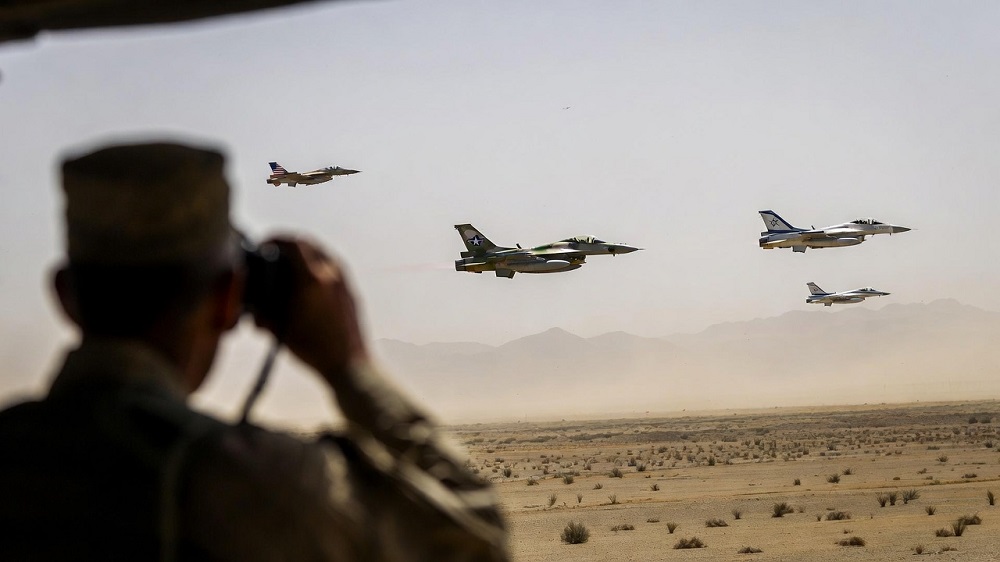
By the time of this writing, the Israeli and US military operation “Lion’s Roar/Epic Fury” against the fundamentalist ayatollah regime in Iran had passed its eighth day. The strategic objective of this operation would be either the collapse of the Iranian regime or the infliction of such severe damage that it would be unable to restore its military and geopolitical capabilities for a long time. This strategy relies heavily on targeting the leadership. Strikes have already eliminated the first and second circles of Iran’s religious-political and military command structures. Inside Iran, this has produced a rapid reshuffling of positions. In some cases, a person who holds one post in the morning may be replaced by evening as new appointments are made.
But the critical question is whether these newly appointed figures actually control the situation. It remains unclear whether they are capable of coordinating the actions of the Islamic Revolutionary Guard Corps, the regular army, and the country’s intelligence services. At the same time, signs are emerging that internal pressure inside Iran is growing. Protest activity appears to be intensifying, and ethnic minorities are becoming more active. Reports have also suggested that Kurdish forces may be entering the picture, including Kurdish militias from Iraq as well as Iranian Kurdish groups.
In other words, the Iranian leadership itself is under serious time pressure. Its options are limited: either continue fighting despite the mounting risks or begin seeking a political exit. Recent reports indicate that American and Israeli forces have begun striking not only the top leadership but also the middle layers of the command structure. In some cases, Iranian units may now be operating according to previously prepared plans that no longer correspond to the rapidly changing reality. This may explain why some retaliatory actions appear chaotic.
At the same time, there are indications that Tehran is attempting to send signals to Washington through unofficial channels, suggesting the possibility of renewed negotiations. Trump, however, has publicly stated that the opportunity for negotiations may have passed. According to him, many of the individuals who were involved in earlier discussions are no longer in positions of authority.
Another key factor is the reaction of the so-called Saudi bloc, particularly Saudi Arabia and the United Arab Emirates. The current developments appear to have shocked these countries. The UAE in particular has long served as a financial and logistical hub through which Iran was able to obtain equipment, technology, and goods despite international sanctions. Many of the supply chains and financial channels that helped sustain the Iranian economy ran through Emirati networks.
Under the new circumstances, Arab states may find it increasingly difficult to continue their previous strategy of balancing relations simultaneously with Israel, the United States, and Iran. The regional environment may be forcing them to reassess that approach. From Trump’s perspective, the Iranian regime appears to be gradually weakening — militarily, diplomatically, and especially economically. But Washington still faces a strategic choice.
One possibility would be to escalate into a full-scale war. Yet such a war could last for years and carry serious risks. The example of the Iraq invasion in 2003 remains a powerful reminder: the United States entered Iraq quickly but struggled for many years to stabilize the situation afterward. The alternative would be to bring the conflict to a rapid conclusion. However, this requires the existence of a credible negotiating partner inside Iran — someone capable of speaking on behalf of the system. At the moment, such a figure is not clearly visible among the hardliners within the Revolutionary Guard who currently dominate the political landscape.
Some observers mention Ali Larijani as a possible interlocutor. Although he has publicly stated that negotiations with the United States are impossible, it cannot be ruled out that quiet discussions may be taking place behind closed doors. This leads to what could be described as the second scenario: an elite-level political transformation inside Iran. In such a case, a new leadership might emerge that includes not only figures from the current establishment but also elements of the opposition. Some observers also refer to Reza Pahlavi, the son of the last Shah of Iran. He is currently based in Washington and remains a symbolic figure for parts of the Iranian opposition. However, both Washington and Jerusalem understand that he represents more of a symbol of protest than a single unifying political leader.
Finally, there is a third scenario — one that depends less on external actors and more on developments inside Iran itself. Regardless of what major powers or regional players such as Israel, Saudi Arabia, or Türkiye may want, the decisive factor could ultimately be the Iranian people. If protests expand, involving ethnic minorities, urban intellectuals, and other social groups, Iran could experience a profound internal political shift.
Russia and Ukraine: Gainers and Losers
At the same time, there is every reason to suppose that the current war of the USA and Israel and their allies with Iran and its terrorist proxies may have a substantial impact on other regional conflicts, including the Russia-Ukraine war. The leaders of these two confronting states reacted with diametric opposition, as expected. Ukrainian President Volodymyr Zelensky has issued an official statement supporting the intervention.
On the contrary, RF President Vladimir Putin, in his letter to Iranian President Masoud Pezeshkian on 28 February expressed his “deepest condolences over the assassination of Ali Khamenei and his family members,” which was defined in this letter as “a cynical violation of all norms of human morality and international law.” Unlike the kidnapping of Venezuelan dictator-president Maduro, the Russian leader, who, as Alexander Baunov noted, “failed to fulfill his role as savior of an old ideological and political ally,” could not remain silent. Although he did not specifically say whether the US or Israel killed Khamenei, he did so to avoid direct accusations against Donald Trump, with whom Putin’s inner circle still hopes to reach an agreement on the division of spheres of influence and especially on the conditions for ending military action in Ukraine.
More stringent was the statement by the Russian Foreign Ministry regarding “military aggression of the United States and Israel against Iran”. This document described the attack as “a deliberate, premeditated, and unprovoked act of armed aggression… under the cover of the renewed negotiation process”. As well as insisted that this action will (allegedly) damage “the global non-proliferation regime” and called for an immediate return to a political and diplomatic track. (Indicative that this statement Russian Foreign Ministry, like in the Soviet times, refer to Israel as “Tel-Aviv” rather than “Western Jerusalem”, as Moscow deed it on the pick of Israeli-Russian rapprochement in the second half of the last decade).
Another difference was that Russia, suggested to assist in advancing peaceful solutions grounded in international law, mutual respect, and a balanced consideration of interests. While Kyiv expressed it willingness to provide assistance to the US in response to its request for help in dealing with Iranian Shaheed drones in the Middle East.
Russia has also benefited from Iranian military technology, particularly drones that Moscow has used extensively in its war against Ukraine; however, the relationship has not been entirely reciprocal. Russia and Iran officially declared themselves as strategic partners about a year ago and signed an accord around diplomatic, economic, humanitarian, and security affairs. This doesn’t mean either country will fight for the other.
As part of that cooperation, Russia has supplied Iran with some air defense systems, military aircraft, and tanks, while Iran has provided Russia with unmanned flying vehicles and drones for use in Ukraine. However, despite various promises, Iran has not received the most advanced fighter jets or air defense systems from Russia. When tensions escalated between Israel, the United States, and Iran earlier this year, Russia did not intervene militarily, and it is unlikely to do so now. They might exchange some sort of intelligence information, but not more than that.
In addition, the current conflict does not involve only Israel, the United States, and Iran. Iran has drawn in multiple regional actors, particularly Gulf states, where Russia also has significant strategic and economic interests. Moscow has been working to maintain ties across the region, including with Gulf countries and with Israel. Because of these interests, Russia will act cautiously. If Gulf states work more with Western powers during the conflict, Russia risks losing its influence in the region.
Another factor is Russia’s reliance on Iran as a workaround to sanctions. Iran has spent decades building networks of companies and intermediaries in places such as Dubai, Turkey, and Southeast Asia. These networks have helped Iran bypass international sanctions and have also enabled Russia to obtain goods it could not easily obtain through official channels. If Iran now loses this network, that will be a very bad piece of news also for Russia – and very good for Ukraine.
Besides, Russia poured billions of dollars into North-South Corridor (INSTC): railways and ports to transport cargo across the Caspian Sea to the Iranian port of Bandar Abbas and onward to India and Asia. This was their “backdoor” to bypass the Suez Canal and the European seas. Now this route is becoming toxic and dangerous. The ports are under attack, the railway is paralyzed. If so, Russia may be cramped once again in the Baltic and Black Seas, where NATO control awaits.
On the other hand, Russia may expect to gain some profits from the current war. First, any prolonged blockade of the Strait of Hormuz or the destruction of oil and gas export capacity in the Persian Gulf could also revive the market for sanctioned Russian energy products. Tankers left with unsold oil since the US pressured India to reduce its purchases from Moscow may likely find buyers. That indeed happened 6 March, when Washington, in order to alleviate the oil crisis caused by the war in the Persian Gulf, the world’s key oil-producing region, suspended sanctions against Russian oil and the shadow fleet due to the war in Iran, although only for a month and only for India.
Second, the US is firing Tomahawk missiles at Iran to destroy the launchers and factories on which Tehran’s ability to launch retaliatory attacks depends. However, the pace of US missile strikes in the Persian Gulf makes such supplies to Ukraine increasingly unlikely. However, the opposite is also true: the more US and Israeli cruise missiles land on Iran’s underground Isfahan factories, the fewer weapons and ammunition the Russian army will have to bomb Ukrainian cities. And the overthrow of Iran’s radical Islamist regime will remove one of its key elements from the Moscow-Tehran-Beijing axis.
Quo Vadis?
The current escalation around Iran cannot be understood without taking into account the political calendars of two key leaders: U.S. President Donald Trump and Israeli Prime Minister Benjamin Netanyahu. Both face crucial elections in November 2026. In the United States, the country will hold the midterm elections—congressional and Senate races that take place in the middle of a presidential term. For Trump, securing a stable Republican majority in Congress is essential if he wants to continue advancing his domestic and foreign policy agenda.
Netanyahu faces his own electoral test at roughly the same time: parliamentary elections to the Knesset. For both leaders, therefore, the coming months are politically decisive. In fact, the official election campaigns in both countries will begin in roughly four to five months. In the language of modern politics, that means they begin almost immediately.
For this reason, both Trump and Netanyahu need to approach the elections with what might be called a clear “picture of victory.” In their political narrative, that victory would be framed as a decisive blow against what they portray as the radical Islamist regime of the Iranian ayatollahs. Yet the domestic political environments in the United States and Israel differ significantly. Netanyahu, as it was shown by the March 4 flash opinion poll of the Israeli Democracy Institute, currently benefits from broad support for the actions of the Israeli government and the IDF. In the United States, however, public opinion is more divided. According to polling data, more than half of Americans do not support the idea of a military attack on Iran.
That means Trump faces a particular challenge: he must persuade voters that the objectives of the operation were justified and that the results exceeded expectations. This leads us to the question of possible scenarios. The first scenario is based on a simple political reality: neither Trump nor Netanyahu wants a long war. On the contrary, both leaders would strongly prefer a short and decisive campaign. Trump himself has mentioned a timeframe of four weeks or less. The first week has already passed, leaving roughly three weeks—or it will demand much more.