PSCRP-BESA Reports No 250 (November 17, 2026)
The scale of political repression in today’s Russian Federation is enormous, and it seems that its true extent is not entirely clear even to those who closely follow developments in the country. It is evident, however, that whereas until recently the victims of political persecution were primarily outspoken opponents of Putin’s regime, the Russian authorities are now targeting virtually all prominent representatives of the systemic opposition—that is, those who attempted to “play by the rules” established by the regime. Let us consider just a few of the best-known recent examples.
On July 10 of this year, Boris Nadezhdin, a former State Duma deputy (1999–2003) representing the Union of Right Forces party, was designated a “foreign agent.” He had announced his candidacy in the Mytishchi single-member constituency No. 123 for the 2026 State Duma elections. In effect, he was the only candidate presenting himself as an opponent of the war, although he avoided directly attacking Putin’s regime. Despite his moderate stance, Boris Nadezhdin was detained by the police on July 13. According to the detention report, he was detained “for publishing materials by other foreign agents and disseminating false information about the authorities and the electoral system”. Nadezhdin was released several hours later, but he understood the warning and emigrated from Russia to France in early August.
This politician’s decision to abandon the struggle for democracy within Russia and emigrate is understandable in light of the fate of Lev Shlosberg, a former deputy of the Pskov Regional Assembly (2011–2021) from the Yabloko party, who has demonstrated unquestionable courage. Shlosberg was designated a “foreign agent” as early as June 16, 2023. Nevertheless, he refused on principle to leave the Russian Federation, although doing so would have been relatively easy for him, given that he is ethnically Jewish and entitled to Israeli citizenship under the Law of Return. Moreover, Shlosberg condemned Russian opposition figures living in exile who, in his words, “hope to return to Russia behind the armor of foreign tanks.” His principled position is that “a responsible opposition stands against the authorities, but not against the people; against the political class, but not against its country’s society”. Shlosberg was repeatedly detained by the police, and three criminal cases were brought against him on charges of “discrediting the army.” On December 5, 2025, he was arrested, and on August 17, 2026 (a couple of weeks after Boris Nadezhdin’s departure for France), he was sentenced to 11 years and one month in prison.
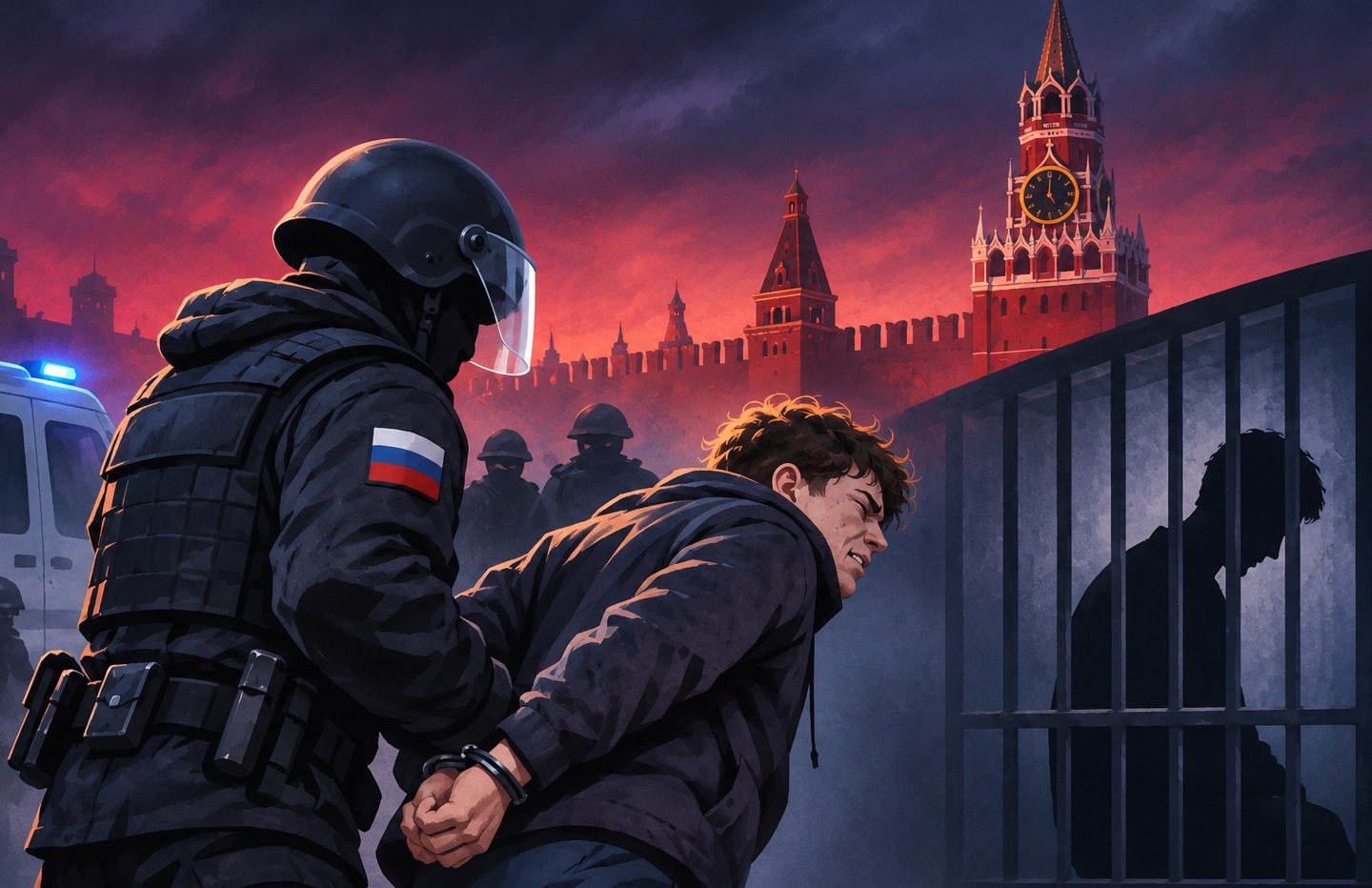
Shortly after the State Duma elections, on September 24, opposition political scientist Dr. Alexander Kynev, an expert on regional politics, elections, and regional elites, was arrested in Moscow. He had made a principled decision to remain in Russia even after being designated a “foreign agent” on February 20, 2026. From 2008 to 2010 and again from 2012 to 2019, he was an associate professor at the Faculty of Applied Political Science of the Higher School of Economics. From 2017 to 2020, he served on the expert advisory group attached to the chair of the Central Election Commission of the Russian Federation, and from 2018 to 2020, he was a member of the Commission’s Scientific Advisory Council. Since 2018, Alexander Kynev has also collaborated with the nonprofit Liberal Mission Foundation, which was briefly listed in the register of “foreign agents” from May to September 2015. During his arrest, Kynev was brutally beaten, suffering fractures of both lower-leg bones. Moscow’s Perovsky District Court ordered that he be held in pretrial detention for two months on charges of “illegal production, sale, or shipment of narcotic substances on a large scale.” Under this provision, he faces between 10 and 20 years in prison. The political scientist refused to admit guilt, stating that the drugs had been planted on him. Given that Kynev was known as an advocate of a healthy lifestyle, the charges against him appear extremely unconvincing.
Finally, on October 21, Oleg Mikhailov, a former deputy of the Russian State Duma (2021–2026) and the State Council of the Komi Republic (2015–2021), who holds a doctorate in biological sciences, was arrested upon arriving at one of Moscow’s airports. Since 2014, he had also served as first secretary of the Komi Republican Committee of the Communist Party of the Russian Federation (CPRF). Moscow’s Basmanny District Court ordered that he be held in pretrial detention for two months on charges of “justifying terrorism using the Internet,” stemming from a 2024 publication concerning sociologist Boris Kagarlitsky. (In 2024, a Russian court sentenced Kagarlitsky, a former participant in the Soviet dissident movement, to five years in prison, also on charges of “justifying terrorism.” Kagarlitsky, whose father was Jewish, was entitled to Israeli citizenship under the Law of Return but chose not to leave Russia.) The charge brought against the Komi communist leader, under Part 2 of Article 205.2 of the Criminal Code, carries a penalty of a fine or imprisonment for five to seven years. Two days after his arrest, the Russian authorities added Oleg Mikhailov to their “list of terrorists and extremists”.
The irony of the situation is that Oleg Mikhailov, now included on Russia’s “list of terrorists and extremists,” has simultaneously been subject, since early 2023, to sanctions imposed by Ukraine, the European Union, the United States, Switzerland, New Zealand, and Canada “for actions undermining the territorial integrity, sovereignty, and independence of Ukraine.” These sanctions concern his votes in the Russian State Duma in support of Russia’s aggression against Ukraine and the annexation of occupied Ukrainian territories.
To understand how such a situation became possible, it is necessary first to recognize that two types of systemic opposition exist in the Russian Federation. They may be described as federal-level systemic opposition and regional systemic opposition. Today, both the systemic and non-systemic opposition of the first type are relatively well known: their political center is Moscow, and they regard the Russian Federation as a whole as “their country.” However, there is also a regional systemic opposition that seeks to defend the interests of particular regions of the Russian Federation. In Oleg Mikhailov’s case, this means the Komi Republic. Unlike Alexander Kynev, a native of the same republic and an ethnic Komi who moved to Moscow in the 1990s to study at Moscow State University and became fully integrated into the liberal Moscow intelligentsia, Oleg Mikhailov, despite his relatively long career and senior position in the CPRF, is also an active figure in the regional protest movement, which is closely connected to the Komi national movement. His political loyalty lies first and foremost, if not exclusively, with the Komi Republic. Against this background, his votes in the Russian State Duma in favor of decisions that provoke outrage in Ukraine and the West appear to be merely the price of being able to defend his region’s interests at the federal level. All the more so because, under present conditions in Russia, a vote against such decisions by an individual deputy would have been a noble gesture but would have produced no practical results. One need only recall Ilya Ponomarev, the sole deputy (from the A Just Russia faction) who voted against the annexation of Crimea on March 20, 2014. His parliamentary career effectively ended there. In the summer of that year, he was forced to leave Russia and now lives in Ukraine.
The potential for local protest in the Komi Republic is considerable. Mass protests that began in July 2018 against the construction of a landfill at Shiyes, on the border between Arkhangelsk Oblast and the Komi Republic, intended to receive waste transported from Moscow, became widely known throughout the Russian Federation. They provided a powerful impetus for the development of civil society’s protest potential in the Komi region. These protests brought together environmental activists, the republican branch of the Communist Party of the Russian Federation, and Komi ethnolinguistic activists. Against the backdrop of these protests, the movement “Dor’yam as’nymös” (“Let Us Defend Ourselves”) was established in 2019. Russian nationalists accuse it of radicalism and Russophobia. The Shiyes protests continued until 2020 and ended in victory for the protesters.
The active cooperation between local communists and the protest movement provoked a wave of attacks by pro-government media against Oleg Mikhailov, first secretary of the Komi Republican Committee of the Communist Party of the Russian Federation. He was labeled a “regional Führer,” condemned for displaying the flag of the Komi opposition on the party committee building in Syktyvkar, and accused of seeking to separate the Komi Republic from Russia by incorporating the Nenets Autonomous Okrug into it, thereby gaining access to the sea. It is worth noting that the Nenets Autonomous Okrug is home to a substantial ethnic Komi population and has a branch of the public organization “Komi Voytyr” (“Komi People”). Moreover, an attempt to deprive the okrug of its status as a constituent entity of the Russian Federation and merge it with Arkhangelsk Oblast—just as the Komi-Permyak Autonomous Okrug had been merged with Perm Oblast—was thwarted by local residents in 2020. That same year, Oleg Mikhailov ran for the position of head of the Komi Republic but was barred from the election.
In 2021, he was elected to the State Duma of the Russian Federation, while his seat in the State Council of the Komi Republic, representing the CPRF faction, went to Viktor Vorobyov, a former member of the Yabloko party and a lawyer who had defended Komi human rights activists. In April 2022, the Russian Ministry of Justice designated Vorobyov a “foreign agent” because of his outspoken anti-war stance. In the autumn of the same year, the State Council of the Komi Republic voted to terminate his parliamentary mandate ahead of schedule. His seat was transferred to Nikolai Udoratin, a CPRF member of the Syktyvkar City Council who had belonged to the “Dor’yam as’nymös” movement during the Shiyes protests.
Following the beginning of Russia’s full-scale aggression against Ukraine, a considerable number of people in the Komi Republic took part in open protests. These protests were forcibly suppressed. Some anti-war and ethnic activists were compelled to leave their homeland to escape repression. Against this background, independent media began openly discussing the possibility of the Komi region seceding from the Russian Federation and establishing an independent state. In January 2026, it was announced that the Bureau of the Parliamentary Assembly of the Council of Europe had selected Lana Pylaeva, the Netherlands-based exiled head of the independent Russian-language publication “Komi Daily,” which promotes the revival and strengthening of Komi identity, as one of the 15 members of the “Platform for Russian Democratic Forces,” who would engage in dialogue with European parliamentarians.
In conclusion, the following observations can be made:
1. The machinery of repression in the Russian Federation has moved from persecuting outspoken opponents of Putin’s regime to suppressing all domestic opponents, including every prominent representative of the systemic opposition. It can be expected that this same machinery will soon be employed in internecine struggles among active supporters of Putin’s regime.
2. The regional systemic opposition, of which Oleg Mikhailov is a prominent representative, constitutes a significant political force. If the federal center weakens, as appears quite likely, this opposition may come to power in a number of regions, particularly the Komi Republic. The repression that its leaders, including Oleg Mikhailov, are already experiencing and will continue to face serves as a form of symbolic purification from their previous cooperation with Putin’s regime. Cooperation between such leaders and activists of regionalist political organizations currently operating in exile appears inevitable.
3. If the federal center weakens, given the limited influence of exiled Russian opposition activists who remain oriented toward Moscow and committed to preserving the Russian Federation as a unified state, it can be expected that at least some currently Moscow-centered opposition activists with personal roots in particular regions of the Russian Federation (such as Alexander Kynev) will reorient themselves toward regional political projects.