PSCRP-BESA Reports No 80 (August 31, 2024)
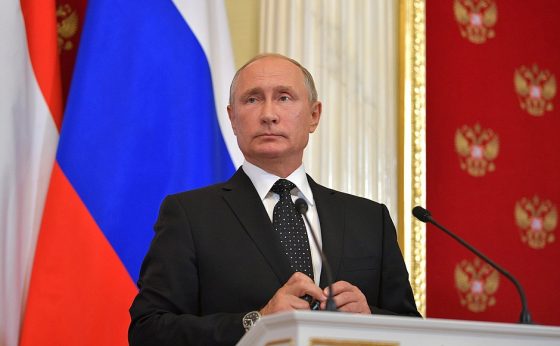
Many commentators have described Russian President Vladimir Putin’s visit to Azerbaijan as a necessary show of legitimacy and damage control attempt in the Caucasus region. Russian authorities have found themselves needing to prove domestically that Moscow still holds the same clout in its traditional sphere of influence against the backdrop of the ongoing Ukrainian incursion into the Kursk region of Russia. A political win is all the more needed, as the Russian military has not achieved any significant military success in either Kursk or Ukraine.
For years, the Kremlin has sought to reclaim its influence in post-Soviet countries. Yet today, the list of post-Soviet countries bordering Russia Putin can travel to is very short. Senior Russian officials cannot travel to the Baltic States, whose populations and governments are hostile to them, nor can they travel to Georgia, whose population is hostile to them. As Belarus has become more and more incorporated into Russia, trips there are no longer considered “abroad” by many Russians.
Trips to Collective Security Treaty Organization (CSTO) members – Armenia, Uzbekistan, Tajikistan, Kazakhstan and Kyrgyzstan— would put Russian authorities in an uncomfortable situation due to the Ukrainian incursion. In theory, such an operation should trigger these countries to join Russia in repelling Ukrainian forces, yet the chances that they would is small. And travelling to any of these countries would force the issue, which would make the Kremlin look weak.
Thus, the only remaining logical option is Azerbaijan, where Putin had not visited since 2018. Baku has consistently pursued a “multi-vector” foreign policy, staying out of conflicts and balancing relations with large powers while not becoming dependent on any of them. Since Russia’s invasion of Ukraine, Azerbaijan has taken a pro-Ukrainian stance, supporting Ukraine’s territorial integrity and supplying Kyiv with large amounts of humanitarian aid. All that was done without rubbing it into Russia’s face.
Azerbaijan has also been a key partner for EU countries seeking to end their dependence on Russian energy. Baku has not only supplied the union with oil and gas, but has also acted as a conduit for Central Asian energy to reach the West.
This is part of a larger strategy of regional integration with Central Asia. The end goal of such integration is for Azerbaijan to position itself as a key transit point in the Middle Corridor, a trade route from Asia to Europe through Central Asia bypassing both Russia and Iran. By doing so, Azerbaijan would increase its political power, becoming a key player in the new “Turkic World,” a potentially powerful bloc that would pursue an independent foreign policy from Turkey, Iran and Russia, especially when considering its relationships with Western countries and Israel.
In 2023, Azerbaijan took advantage of Russia’s preoccupation with Ukraine to fully liberate the Karabakh region from pro-Russian Armenian separatists that held it for 30 years. The region, which under separatist control was analogous to the DPR and LPR in Ukraine, was a major blow to Russian foreign policy.
Following the liberation of Karabakh, Russia lost its position in Armenia as it was no longer able to use the formerly frozen conflict to pressure Yerevan. The negotiation process between Azerbaijan and Armenia under the auspices of Russia and the West, which had pointlessly dragged on for three decades, has been replaced by clear and concrete steps by Baku and Yerevan towards ending their conflict and beginning border demarcation.
Because Russia was no longer able to pressure Armenia, Yerevan had a chance to escape Russian control. The resulting vacuum began to be actively filled by Iran and Western countries.
Azerbaijan has also dealt a significant setback to Russia by announcing the removal of a crucial issue from ongoing treaty negotiations. The contentious point involves the Zangezur Corridor, a transportation link between Azerbaijan’s mainland and its exclave of Nakhchivan that passes through southern Armenia. This route is essential for Azerbaijan’s connectivity but also was offering Russia a strategic opportunity to expand its influence in the region, because, initially, Armenia and Azerbaijan had proposed that Russia’s security service oversee the corridor. While Moscow remains hopeful that this provision will be included in the final agreement, Azerbaijan’s recent decision has significantly weakened Russia’s position.
But all these steps were taken without direct confrontation with Russia. Baku did not cut economic and political relations with Moscow, and made no statements, which might have been considered leading to a dispute.
This made Putin’s decision to go to Baku easier, as it helped him to demonstrate regional damage control.
For Azerbaijan, a refusal would have been seen as a confrontation, which would have been painful for Baku. While Russia could not conduct military operations against Azerbaijan, it could work with Iran to wage irregular warfare through proxy groups, subversion and other means. Tehran has done so in the past, using Shiite proxies like the Husseiniyyun, attempting assassinations against Azerbaijani lawmakers and spreading extremist ideology .
For Baku, maintaining political, economic, and cultural ties with neighbouring states, including Russia, is key in mitigating potential security threats. Without such ties, Azerbaijan’s oil and transport strategy could be at risk. For example, letting Iran to become involved in the Shah Deniz gas project (it is considered to be a founding link for the Southern Gas Corridor, aiming to bring additional and alternative natural gas volumes to the EU) removed several obstacles to the successful implementation of Azerbaijan’s gas delivery to European markets.
The results of Putin’s visit were modest for the scale of the delegation. Some agreements were signed, but none that required the presence of the president and other high-ranking officials. The agreements pertained to food security, labor inspection, the opening of a new Russian-Azerbaijani University in Baku, and the joint production of oil tankers.
Following the visit, Russian media emphasized Baku’s application to join BRICS, but in Azerbaijan, commentators paid limited attention to this, noting that Baku continues to demonstrate a multi-vector approach in its economic and political relations. It is unlikely that Azerbaijan joining BRICS would have much of an effect given its small population of 10 million and modest export potential. The application could be declarative—especially in the context of heightened geopolitical tensions and the lack of substantial support for Azerbaijan from the West. For example, recently the United States has taken an anti-Azerbaijani position. The State Department has put Azerbaijan on a watch list for engaging in or tolerating “severe violations of religious freedom”, and Democrats are pushing for sanctions.
Some Western commentators have thus tried to portray Putin’s visit, agreements between Azerbaijan and Russia and Azerbaijan’s application to join BRICS as a sign of Baku taking a pro-Russian and anti-Western stance.
But this position is flawed and constitute a double standard. Today nobody talks about “pro-Russian and anti-Western stance” of the EU members, which have imposed sanctions against Russia but in reality, have only limited their economic relations with Moscow, not severed them. Some of those countries have increased their economic relations with Kremlin. Here are several examples:
The EU is still importing energy resources, nickel, iron, steel, and fertilizers from Russia. In 2023, trade turnover between Russia and the EU countries reached 89 billion euros with imports from Russia totalling 51 billion euros and exports to Russia amounting to 38 billion euros.
At the same time, Russia, which borders Azerbaijan, ranks only third among Azerbaijan’s trading partners, after Italy and Turkey. The volume of mutual trade between the two countries was less than 4 billion euros by the end of 2023.
Russian liquified natural gas (LNG) continues to flow into Europe at record levels. Two shipyards in France and Denmark provide dry dock services to keep the Russian LNG fleet running. French companies imported almost 4.4 billion cubic meters of Russian LNG in the first half of this year, compared to more than 2 billion cubic meters in the same period a year ago. While France began importing more Russian LNG, it began importing less from other suppliers including the United States, Angola, Cameroon, Egypt and Nigeria.
Belgian consumption of Russian LNG has risen by 270% since 2021. Brussels now imports 7.7% of its LNG from Russia – up from 5.6% in 2022.
Until May 2024, the United States imported almost $1 billion of uranium annually from Russia. The law banning uranium imports still permits the option of resuming purchases if needed.
Meanwhile, trade between Russia and Armenia has skyrocketed since the invasion of Ukraine. In 2022, the trade turnover between Armenia and Russia almost doubled, reaching almost 5 billion euros. In 2023, Armenian exports to Russia increased by 38.8%, reaching over 3 billion euros. In just the first half of 2024, the Russian-Armenian trade turnover amounted close to 8 billion euros. Simultaneously, Armenia’s imports from EU countries increased almost 150% from 757 million euros in 2021 to 1.9 billion euros in 2022.
Considering Armenia’s small population of almost 2.8 million and its limited industrial capacity to quickly ramp up production and exports to other countries, the prevalent view among foreign experts is that goods are being re-exported from Armenia to Russia.
Thus, Armenia, which does not share a border with Russia and claims to be moving away from the Russian sphere of influence, is actually far more closely tied to it than Azerbaijan.
Therefore, attempts to portray Baku in the West as pro-Russian due to Putin’s visit and some relatively minor agreements are misguided.
Instead of villainizing Azerbaijan, the United States and European Union should try to take advantage of Baku’s foreign policy approach and use it as a mediator. For example, Baku could help facilitate continuing the transit of gas from Russia to the European Union through Ukraine. This comes at a critical time – the five-year contract for the transit of Russian gas through Ukraine expires on December 31, 2024 and Ukrainian authorities have previously stated that they do not intend to renew the agreement. At the same time, Kyiv has expressed its willingness to continue the transit under certain conditions and with the participation of EU companies. Brussels has previously approached Baku to help facilitate negotiations. Currently, the annual volume of gas transit from Russia to the EU through Ukraine is about 15 billion cubic meters, with the main consumers being Austria, Hungary, and Slovakia.
PSCRP team