PSCRP-BESA Reports No 165 (November 16, 2025)
By Alexander Shpunt
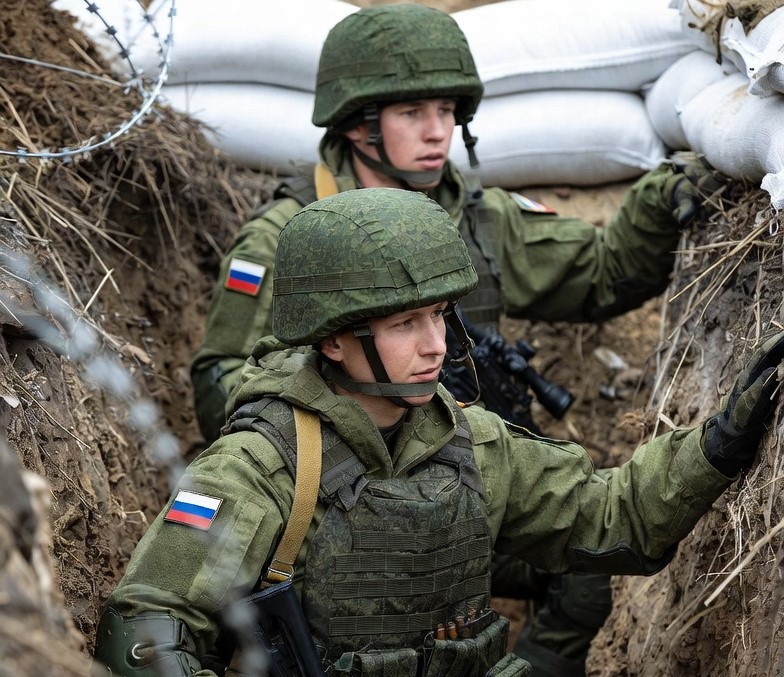
The military phase of the conflict in the south-east of Russia and Ukraine is far from over. More than 700,000 Russian servicemembers are simultaneously “on the line of contact”—and these are not experts’ estimates or opposition talking points. President Putin stated this officially on 18 September during a meeting with the leaders of political party factions in the State Duma. And this is not an estimate of the total number of veterans today; it is only those who are at one and the same time located in the combat zone.
Let us note at once that assessing the causes, the course, and especially the responsibility of the parties in the conflict in the south-east of Russia and Ukraine is not the purpose of this piece. Many materials have been published on these questions, and everyone can form their own view.
The aim of our work is to analyze how this conflict is systematically changing the domestic political field in Russia by forming a fundamentally new mass cluster of “SVO veterans,” and to examine how the Russian authorities and other political forces are organizing their work with this cluster.
The experience of Soviet veterans of the conflicts in Afghanistan and, later, in the Chechen Republic suggests to the authorities, the opposition, loyal political parties, and bureaucratic institutions alike that we are facing an entirely new, formative factor in the Russian domestic political landscape—the “SVO veterans.”
Over ten years of conflict in Afghanistan, only 546,000 Soviet soldiers served there. If we extrapolate the figures cited by the Russian president to the dynamics of personnel rotation within the active military units in the SVO zone, we can already reasonably speak of 1.1 to 1.4 million veterans. And since the hostilities are far from over, the influx of new servicemen into the SVO zone continues unabated.
Yet even more important than this enormous number are the fundamentally different qualitative characteristics of this new cluster within Russian society.
A Completely Different Forrest Gump
First and foremost, the army deployed in the conflict zone is composed on a contractual basis. The authorities recognized the mistake of September 2022, when the decision to launch a mass mobilization led both to large-scale emigration and to a surge of opposition sentiment. Almost immediately afterward, instead of continuing mobilization, Russian citizens were offered military contracts under conditions that multiplied income levels compared to the civilian sector.
For example, in Moscow, during the first year of the program, a contract serviceman received from 5.2 million rubles annually, while the average median annual salary in Russia at that time was 700,000 rubles.
This shift not only made it possible to abandon the mobilization model of recruitment but also created a surging demand for military contracts, especially in depressed regions. One can cite the phenomenon of the so-called “Buryat warriors” — modern social mythology emphasizes the particular bravery of soldiers from this region of Russia. For the purposes of our analysis, it is notable that in 2022 Buryatia ranked 69th out of 89 Russian regions in terms of civilian income levels.
Today, even the most extreme opponents of the Russian government no longer raise the issue of mobilized servicemen in the SVO zone.
Closely related to this is a second factor: the elitization of SVO contract soldiers’ families. The multiple increase in family income among those who chose a military contract in the combat zone has sharply distinguished them—both in income and consumption—from their neighbors. For some, this has become a source of envy and resentment; for others, a model and an example to follow.
In either case, this new regional mass elite—especially in depressed areas, in villages, and small towns—has begun forming a new public demand for higher-quality urban environments. This new elite is willing to pay for better conditions, yet local authorities offer them no such opportunities. This applies to modern urban planning, safety, healthcare, and children’s education. In short, families of SVO soldiers now have money, but nowhere to spend it, as the state has not created a proper environment for that.
This situation generates sharp social frustration. And even now, across various social media pages and groups of SVO servicemen, the theme is increasingly voiced: “We’ll come back and take power into our own hands at home.”
The third characteristic of the future “SVO veterans,” with which the authorities, the opposition, political parties, and even the mafia are learning to work, is the so-called “military rehabilitation” of convicted criminals.
The practice of substituting prison sentences with military service in the SVO zone, followed by full restoration of rights, began during the period of active participation in the conflict by the private military company “Wagner,” but only intensified after that structure faded from public attention.
Let us cite just one illustration of this factor. Quite recently, on September 28, information was published that members of the “Vityaz” special unit of the Ministry of Internal Affairs—who had received long prison sentences and were responsible for at least 40 deaths—have been leaving for the SVO one after another. Less than a month after his sentencing, Lieutenant Colonel Aleksei Chebotarev, who had received 15 years for 12 murders, signed a contract with the Ministry of Defense; before him, another senior officer, Andrei Yakhnev, had done the same. This process continues.
It is important to note that this information was published not by opposition outlets, but by loyal media.
Of course, it would be incorrect to claim, as some biased authors from the Russian opposition do, that “only criminals are fighting in the SVO zone.” Let us leave polemics and propaganda to their participants—on both sides. If there are 700,000 soldiers in the SVO zone, then several hundred or even several thousand convicted criminals who signed contracts under the “military rehabilitation” program constitute a statistically insignificant number.
However, not everything is determined by statistics. As we can see from the example above, this involves not ordinary gangsters but corrupt senior officers of special forces units. It is not our goal to assess the government’s decision. Its desire to make use of the combat experience of officers who fought in numerous local conflicts, earned military decorations there, and later turned to crime is debatable but understandable. Similar examples can be found in the practice of dozens of other countries, including “old democracies.”
What is important for our study is that the Russian authorities face an extremely difficult task: integrating these officer-criminals when they return home as heroes from the fronts of the military operation. Few governments that have embarked on such a path have managed to succeed in this task.
There is also a fourth feature that we would like to draw the reader’s attention to when analyzing the social profile of future “SVO veterans.” This is the group of officials who view their military contracts as a springboard for career advancement within the state apparatus.
Sergei Efremov, deputy mayor of the small district center of Ussuriysk in the Primorsky region, went to the SVO zone under contract and returned as the region’s vice-governor.
The mayor of Orenburg, Sergei Salmin, decided to leave his post and go to the zone of the special military operation (SVO). This was reported by the governor of the Orenburg region, Denis Pasler, in his Telegram channel.
“The deputy head of the city administration of Ukhta in the Komi Republic, Vitaly Zarubin, voluntarily went to serve in the zone of the special military operation,” was also announced by the regional head, Governor Vladimir Uyba.
Pavel Malykh, head of the Road Construction Department of the Ulan-Ude city administration, the capital of the Republic of Buryatia within Russia, was one of the first to move from government structures to military service back in 2022, becoming one of the creators of the positive myth of the “Buryat warrior” we mentioned earlier.
Following him, Deputy Chairmen of the Government of the Republic of Buryatia Aldar Gulgenov and Ivan Alkheev, as well as Minister of Agriculture Amgalan Darmaev, also decided to volunteer for the SVO.
Even this short list of examples shows how widespread this process has become among the Russian elite.
In many ways, Russia is simply repeating the path of the United States, where military service first became an entry ticket into politics for many and today is almost a mandatory element of nomination for elected office. Three decades of military involvement in conflicts in the Middle East have led to a situation in which, by 2023, 18% of members of the U.S. House of Representatives and 17% of senators were veterans.
Has the “Time of Heroes” arrived?
With the collapse of the Soviet regime, Russia also lost the communist system of training managerial elites.
Despite its ideological rigidity, that system was distinguished by its coherence and effectiveness in selecting promising—and, of course, loyal—technocrats.
Beginning with the identification of potential leaders at a very early age through the “Little Octobrists” movement, the system culminated in a special group of already mature leaders, informally known as the “Central Committee Nomenklatura.” This was not merely a list of positions; it also represented a personal status for an official or executive, independent of their job title. To be part of the Central Committee Nomenklatura meant receiving a mandate of trust from the top leadership of the Communist Party of the Soviet Union (CPSU)—a mandate that served as a unique springboard for career advancement.
We describe this in such detail because it was precisely the “Central Committee Nomenklatura” model that Vladimir Putin adopted as the basis for forming a managerial elite when, in October 2017, he instructed his administration to organize the “Leaders of Russia” competition for public managers. This mechanism of personnel selection proved highly effective: as of September 2025, ten current regional governors had come through the “Leaders of Russia” program. This is in addition to several dozen federal ministers and deputy ministers, mayors of regional capitals, and heads of national state corporations.
This system for generating a new technocratic, loyal, and fundamentally apolitical bureaucratic elite is an extremely interesting topic in itself; however, it is not the focus of our report.
What we would like to draw the reader’s attention to is a new offshoot within this system—the “Time of Heroes” school for senior management personnel, specifically oriented toward veterans of the military conflict in the south-east of Ukraine and Russia.
The “Time of Heroes” program was launched on March 1, 2024. And already, following the regional head elections in September of this year, a participant of the first cohort, Evgeny Pervyshov, became governor of the Tambov Region after having been appointed acting governor in November of the previous year. Another participant in the program, Maria Kostyuk, became head of the Jewish Autonomous Region, having served as acting governor since November 2024.
The Kremlin’s reliance on civilian officials who have served on the front lines carries both opportunities and risks.
It is clear that this group of officials will demonstrate higher loyalty than those who have not seen combat. Their motivation for service—in this case, in the civilian administration—will also be stronger.
However, war is a place of simple and radical decisions, not conducive to balance or compromise. It is only natural that many former officers and generals will carry this inclination toward simplicity and radicalism into their civilian service as well—a pattern observed many times in other countries that have already gone through the process of integrating military leaders into the civilian administrative system.
It is still too early to say how this systemically new phenomenon for Russia—the arrival of veterans of the southeastern conflict into positions of local power—will ultimately unfold.
The New Owners of the Electorate
Not only the Administration of the President of Russia but also political parties—across the entire legal spectrum—are striving to recruit veterans as their activists.
Today’s social structure in Russia offers few positive role models. The figure of the “warrior” is unquestionably a positive one, regardless of how various audiences may feel about the conflict itself in the south-east of Ukraine and Russia.
This is precisely what drives all political parties, without exception, to actively compete for returning veterans.
The ruling pro-Putin party United Russia offers veterans the opportunity to start a business through the “SVOy Business” program or to gain a new profession via party initiatives such as “My Career with United Russia.”
In September of this year, the Communists of the CPRF nominated “around 50” veterans for election, according to the party’s first deputy leader, Yuri Afonin. In August, the chairman of the A Just Russia party, Sergei Mironov, appealed to the Russian Ministry of Education with a proposal to involve SVO veterans in teaching a new school subject, “Fundamentals of Security and Defense of the Motherland.”
The Liberal Democratic Party (LDPR) has chosen the path of directly integrating veterans’ organizations into its party structures— in July, Oleg Panchurin, head of the Union of Veterans of the Special Military Operation, joined the party’s executive apparatus.
The Embrace of Crime
For understandable reasons, the available information cannot fully reveal how criminal structures are preparing to absorb returning veterans from the front. However, it is clear that for organized crime, this group represents an important recruitment target.
According to estimates by the Russian opposition, at least 1,130 veterans of the conflict in the south-east of Russia and Ukraine have been charged with “civilian” crimes—ranging from traffic violations to murder. In roughly two-thirds of the verdicts, judges considered participation in the “SVO” a mitigating circumstance—and this, too, attracts the attention of criminal bosses.
Another opposition source reports that over the past three years, participants in the war in Ukraine have committed at least 334 “fatal” crimes.
Of course, it should be taken into account that these data come from opposition sources, which are clearly biased in everything related to the conflict in the south-east. Nevertheless, even simple operational monitoring of crime reports shows that the phenomenon exists and is far from isolated.
As mentioned earlier in this report, a certain number of servicemen ended up on the front through the so-called “military rehabilitation” program, which allowed them to avoid criminal punishment for past offenses. The legal basis for this was provided by a special federal law, adopted on March 23, 2024.
Even if their crimes were non-violent, combat experience teaches not only the handling of weapons but also their use in real conditions. Post-traumatic stress among veterans and their social maladaptation to civilian life push some of them into criminal circles—where organized crime bosses are already waiting.
Unfortunately, this pattern is confirmed by the experience of American veterans of Vietnam, French veterans of Algeria, and likewise by the experience of some Soviet veterans of Afghanistan and Russian veterans of the conflict in the Chechen Republic.
***
In this brief report, we have outlined only the main vectors of the positive and negative reintegration of the vast social group returning from the front to civilian life. This tectonic factor for Russian society has far more dimensions and projections than could be covered here. Nevertheless, it can already be reasonably stated that it is the SVO veterans who will become the key force shaping domestic political processes in Russia in the foreseeable medium term.
Alexander Shpunt is an Israeli and Russian researcher and expert in the theory and practice of information and analytical work in the field of politics and resides in Haifa. Since 2016 he has served as a professor at the National Research University “Moscow Higher School of Economics. In 1999–2011 he also served as the executive director of the “Effective Policy Foundation”, the largest think tank in the RF at that time, and in 2011 founded and headed the Institute of Political Analysis Tools, specializing in systems for monitoring political behavior.