PSCRP-BESA Reports No 252 (November 22, 2026)
It is generally accepted that the domestic and foreign policies of countries located in regions of geopolitical or other interest to external actors—or of countries whose borders encompass such regions—are rarely the exclusive concern of those states themselves. This is most often reflected in efforts to influence election outcomes or other mechanisms for forming government institutions, thereby gaining leverage over decision-making processes. Such efforts, however, are by no means limited to these methods.
In recent weeks, for example, considerable media attention has been devoted to allegations of foreign influence on the recently concluded elections to Israel’s Knesset. Leaders and activists of the ruling Likud party and its allies in the governing bloc, which failed to secure a parliamentary majority in these elections, have accused Israel’s Arab parties, which won an unprecedented 19 of the 120 seats, of “stealing votes.”
According to proponents of this claim, the result was largely achieved through foreign funding, with Qatar most frequently mentioned in this context. They have consequently demanded that the election results be annulled and new elections held. However, according to certain journalistic investigations, the evidence available so far establishes neither voter bribery nor manipulation of the election results.
Suspicions of foreign interference, however, had already been reported before the elections. Israeli media extensively cited an analysis by the Tel Aviv-based Institute for National Security Studies (INSS), as well as research conducted by the international cybersecurity company Clear Sky. According to their findings, actors associated with Iran, Russia, and Islamist organizations had intensified their activities in Israel’s electoral arena, particularly on social media, in the run-up to the vote. (China has also faced accusations of similar activities in the past.)
US intelligence agencies have expressed similar suspicions about these same actors. According to American intelligence assessments, Russia, China, and Iran have continued conducting covert, AI-assisted influence campaigns targeting American voters ahead of the November 10, 2026, congressional midterm elections. Nevertheless, senior intelligence officials and several lawmakers have acknowledged that, although the available evidence points to systematic foreign influence operations and disinformation campaigns, no direct evidence has been obtained of foreign capabilities or intentions to interfere directly with US election infrastructure or vote counting. (Indeed, concerns have even been raised that allegations of foreign interference could provide Donald Trump with a pretext for refusing to accept the election results should they prove disappointing to his administration.)
For their part, Iranian officials and state media have rejected allegations by Western intelligence agencies and media outlets of Iranian involvement or interference in elections in Israel and the United States. The Russian leadership likewise categorically denies all accusations of interference in other countries’ political processes. In particular, representatives of the Russian Foreign Ministry and the Russian Embassy in Israel have repeatedly stated that the Kremlin is prepared to work with any legitimately elected Israeli government, while rejecting allegations of support for electoral cyberpropaganda in Israel.
The Azerbaijani Dimension
However, judging by accounts from well-informed Russian sources who shared their observations with the author of this article on condition of anonymity, Israel’s domestic political agenda does not, in fact, rank particularly high among Russia’s geopolitical priorities. Moscow is far more interested in the United States, European Union countries, and the South Caucasus, with ambitions extending beyond that region.
It all began with a seemingly unremarkable issue: on September 21, Azerbaijan adopted new regulations establishing a uniform dress code for school students, effectively prohibiting female pupils from wearing the hijab, a traditional garment associated with observant Muslim women. This requirement follows logically from the principle of secularism enshrined in Azerbaijan’s constitutional framework.
The move prompted criticism from representatives of the country’s conservative religious minority. In some places, criticism escalated into organized protests, including boycotts of classes at several schools in Baku, Masally, and Jalilabad, in the traditionally religious south of the country. Most likely, this wave of protests would have quickly subsided, especially since restrictions on religious clothing in schools have long existed in other countries, including predominantly Muslim states such as those of post-Soviet Central Asia and even the self-proclaimed Turkish Republic of Northern Cyprus.
At this point, however, Turkey—Azerbaijan’s official strategic partner, whose relationship with Baku has long been based on the principle of “One nation, two states”—unexpectedly intervened in the debate over Azerbaijani school uniforms. An adviser to Turkish President Recep Tayyip Erdoğan, along with members of parliament from the ruling party and other Turkish parties, sharply criticized the Azerbaijani authorities. Their statements received broad support in Turkey’s religious-conservative circles, although dissenting views were also expressed.
For example, representatives of the intellectual and political tradition of Kemal Atatürk, the founder of the Turkish Republic, supported the Azerbaijani leadership’s position. Among them was the prominent Turkish theologian and commentator Cemil Kılıç, who accused supporters of political Islam of attempting to damage relations between Azerbaijan and Turkey. Numerous Turkish bloggers, public figures, and journalists urged people not to succumb to attempts to turn a religious dispute into an instrument for escalating tensions between Baku and Ankara.
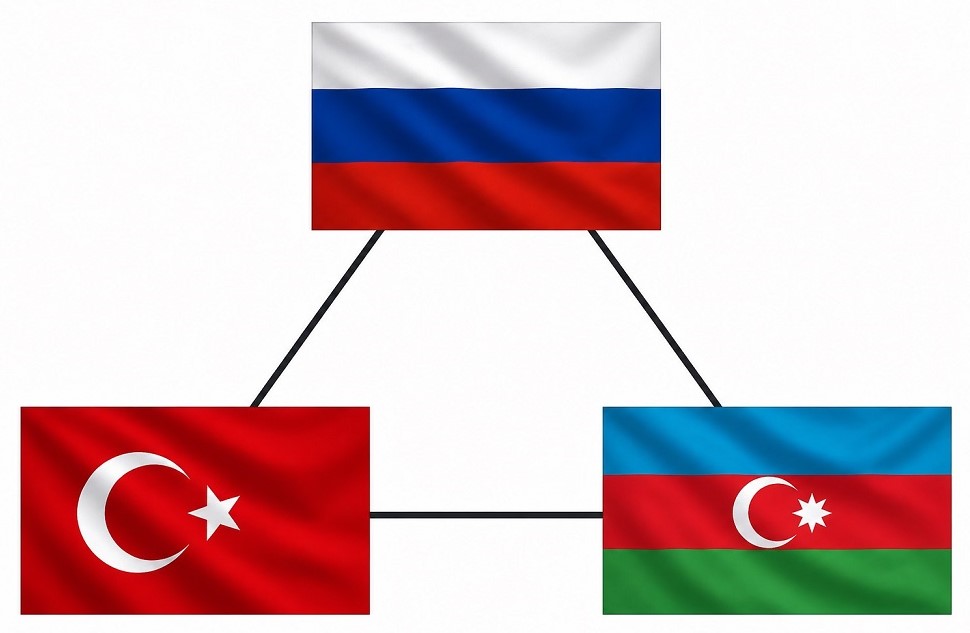
In response to Ankara’s intervention, official Baku accused Turkey of interfering in Azerbaijan’s internal affairs. The Prosecutor General’s Office placed seven Turkish journalists on a wanted list, alleging that they had disseminated social media content calling for the violent overthrow of Azerbaijan’s constitutional order. In other words, disagreements between two exceptionally close allies unexpectedly developed into an open political conflict, which soon acquired another dimension: Israel.
Indeed, signs of emerging tensions between Baku and Ankara, partly related to Israel, had already become apparent during the session of the United Nations General Assembly that opened on September 8, 2026. At that time, the Azerbaijani delegation declined to join an anti-Israeli protest by delegations from several Muslim countries, including Turkey, whose representatives demonstratively walked out of the assembly hall during a speech by Israeli Prime Minister Benjamin Netanyahu.
A similar incident occurred in mid-October at the seventh summit of the Conference on Interaction and Confidence Building Measures in Asia (CICA), held in Baku under Azerbaijan’s chairmanship. Delegations from several Muslim countries, including Turkey, left the meeting hall in protest at the presence of Israeli President Isaac Herzog, much to the irritation of the summit’s host, President Ilham Aliyev.
Azerbaijan, which maintains a de facto strategic partnership with Israel, had long been obliged to take Turkey’s positions and interests into account, including Erdoğan’s anti-Israeli sentiments and, at times, his political “whims“. On several occasions, Aliyev managed to reduce tensions between Jerusalem and Ankara and even secure, at least at the declaratory level, a normalization of their economic and diplomatic contacts. Yet Erdoğan repeatedly undermined the process from within. Nevertheless, the prevailing assumption was that Azerbaijan, particularly following the sharp deterioration of its relations with Russia, could not afford to antagonize Ankara, whose assistance—including, potentially, military support—might be needed in the event of another confrontation with Moscow.
This time, however, Ilham Aliyev has come very close to the limits of his patience. The reason the Azerbaijani president insists on maintaining close ties with Israel, even at the expense of relations with Turkey, is relatively straightforward. Israel offers Azerbaijan its strongest security guarantee against interference by its aggressive southern neighbor, Iran—a mortal enemy of both countries. Erdoğan, according to commentators, unlike Aliyev, could afford to shift his country’s political orientation in a more religious direction without worrying about the strategic influence of a neighboring state across its borders.
An equally important motivation for Turkey’s current leadership is its ambition to secure Ankara’s dominant position in the Turkic world. As part of this strategy, it seeks to establish control over Muslim religious institutions in Azerbaijan and the countries of post-Soviet Central Asia, while introducing religious norms and standards modeled on those associated with Muslim Brotherhood-style regimes, whose ideology also influences Turkey’s ruling establishment. This helps explain why the school uniform regulations adopted by the Azerbaijani leadership were perceived in Ankara as a provocation directed at Erdoğan.
Understandably, such ambitions on Turkey’s part were categorically unacceptable to Azerbaijan, where the secular character of the state is a constitutional principle. One indication of this was Aliyev’s decision not to attend the 13th summit of the Organization of Turkic States, held in Turkey on October 30. Instead, Azerbaijan was represented at the forum by Foreign Minister Jeyhun Bayramov, acting on the president’s instructions. (Officially, the decision was attributed to the Azerbaijani leader’s busy schedule: October 30 marked the conclusion of the FIFA U-15 World Championship in Baku, a tournament Azerbaijan was hosting for the first time. Ilham Aliyev personally attended the final match and participated in the awards ceremony.)
Meanwhile, pro-government Turkish media outlets and commentators used Azerbaijan’s close strategic alliance with Jerusalem as a major argument in their attacks on Baku.
It was precisely at this moment that another player entered the scene: Russia, which would presumably welcome the opportunity to reap diplomatic benefits from developments in a country with which Moscow’s relations have become increasingly strained. One possible objective would be to demonstrate that virtually no one other than Russia is capable of ensuring stability in the region. However, there is currently no direct evidence that Russia orchestrated the conflict between Turkey and Azerbaijan over the “hijab issue.”
As for the two other players, Iran and Turkey, Israeli experts believe that sources in both countries are behind an aggressive anti-Azerbaijani and antisemitic campaign, each pursuing its own objectives. For many years, Iranian propaganda has portrayed Azerbaijan as a “fake state,” hostile to Islam and aligned with Israel and the United States.
Turkey’s motives are less obvious, but it is reasonable to assume that its ruling circles would prefer Azerbaijan to abandon its secular character. This would make it easier for Ankara to impose an unequal relationship on Baku, with Turkey assuming the role of senior partner. For their part, the Azerbaijani authorities and organizations close to them, without naming any specific actors, have described the situation as a “major hybrid attack” against the country, originating in part from the territories of friendly and neighboring states.
Against this background, the further rapprochement between Jerusalem and Baku appears to be acquiring additional momentum. It is reasonable to assume that Israeli President Isaac Herzog’s October visit to Baku was far more than a purely ceremonial occasion. His meetings on the sidelines of the CICA summit with Azerbaijani President Ilham Aliyev, during which they discussed a broad range of bilateral relations and regional security issues, as well as with Bahrain’s Foreign Minister Abdullatif bin Rashid Al-Zayani, suggest at least two conclusions. First, they demonstrate the continued viability of the Arab-Israeli Abraham Accords , despite the cooling of relations caused by the war in the Gaza Strip. Second, they underscore Baku’s role as an important center of geopolitical influence not only in the South Caucasus but also in the Middle East.