
PSCRP-BESA Reports No 169 (December 5, 2025)
For Russia’s neighbors, proximity is a liability — and Kazakhstan may want to study how the Baltic states are preparing for the next shock.
Living next door to the Russian Federation is less a geographic fact than an ongoing hazard. It’s like sharing a house with a delinquent who breaks rules, intimidates the hallway and forces every neighbor to choose between appeasing him, barricading the doors or enabling his behavior. Interaction is unavoidable. And those who try to profit from his moods often discover too late that the cost of friendship with a bully can be ruinous.
Russia Tightens the Screws on Kazakhstan
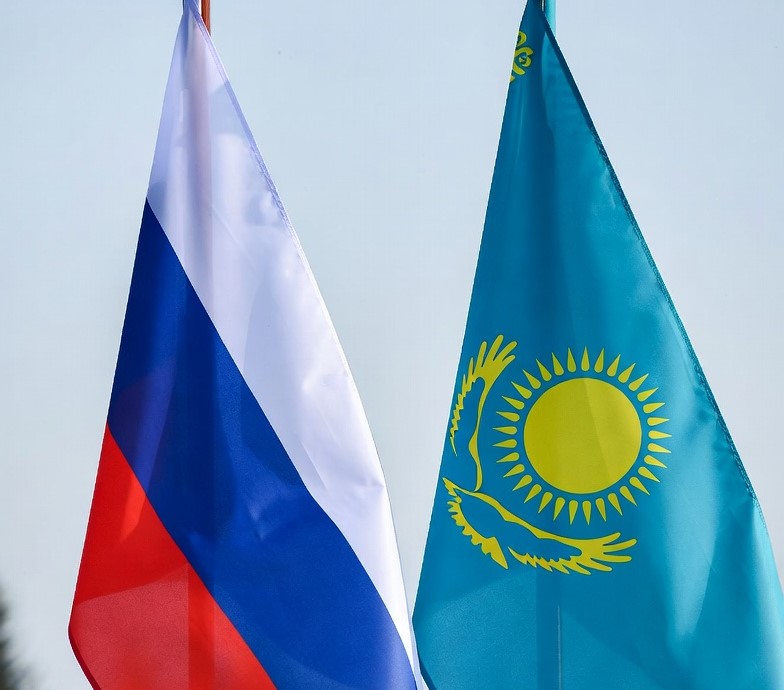
That lesson landed hard last week when Russia began arbitrary checks on the Kazakhstan border, blocking thousands of trucks and citing massive losses from unpaid duties. Moscow’s claim of “hundreds of billions” evaporating through gray imports appeared in official messaging almost overnight, as Russia imposed sudden, stringent inspections on goods crossing from Kazakhstan. The move followed years in which Kazakhstan and other neighbors quietly expanded exports of sanctioned goods — including dual-use items — into Russia. Playing supplier to a cheat, it turns out, does not protect you once he chooses to flip the table.
Russia’s justification appeared alongside reports describing the alleged revenue losses and the rapid buildup of blocked cargo at the border.
Oil Politics and the Novorossiysk Blowback
Kazakhstan’s dependence on Russian infrastructure created another shock when Ukraine struck facilities in Novorossiysk, hitting a port Kazakhstan relies on for exporting crude. Astana condemned the attack, but the real vulnerability lies in its reliance on a route it does not control. Alternatives exist, yet Kazakhstan remained tied to a corridor running through a volatile neighbor engaged in a full-scale war.
The Baltics Choose a Harder, Smarter Path
Far to the west, the Baltic states have made a different calculation. Estonia, Latvia and Lithuania openly support Ukraine and assume future aggression from Moscow is not a possibility but a timetable. Their economies are already strained by collapsing tourism, declining investment and the end of cross-border trade. They also face hybrid pressure — cyberattacks, GPS spoofing, drone incursions, weaponized migration and airspace violations that are increasingly brazen.
Meanwhile, confidence in NATO as the “police” of this dangerous neighborhood has grown more ambivalent. Analysts warn that the alliance may hesitate before engaging in direct confrontation with Russia. Europe, for its part, prefers financial relief packages over hard border protection — a posture that risks treating the Baltics like a buffer rather than integral members of the European core.
Building Their Own Security
Recognizing that they may face the first blows alone, Baltic leaders met in Riga to coordinate a unified response to persistent and evolving Russian threats. Conscription is expanding, defenses are being hardened and infrastructure once viewed as commercial — such as the Rail Baltica project — is being reimagined as a strategic artery for rapid military mobility.
In one of the region’s most consequential debates, Latvia is considering dismantling rail lines leading directly into Russia. The decision, officials stress, must be shared with Estonia and Lithuania — a rare display of regional unity born of necessity.
A Warning for Kazakhstan
Kazakhstan should take notice. Moscow has a long record of turning yesterday’s partners into today’s expendable liabilities. Diversifying trade routes, investing in non-Russian infrastructure and reducing exposure to Russian transit systems are not luxuries; they are survival strategies.
And until the most dangerous tenant in the neighborhood changes his behavior — or leaves the house — it’s best to keep the doors reinforced, the exits diversified and, figuratively speaking, an axe under the bed.