PSCRP-BESA Reports No 105 (Dec 17, 2024)
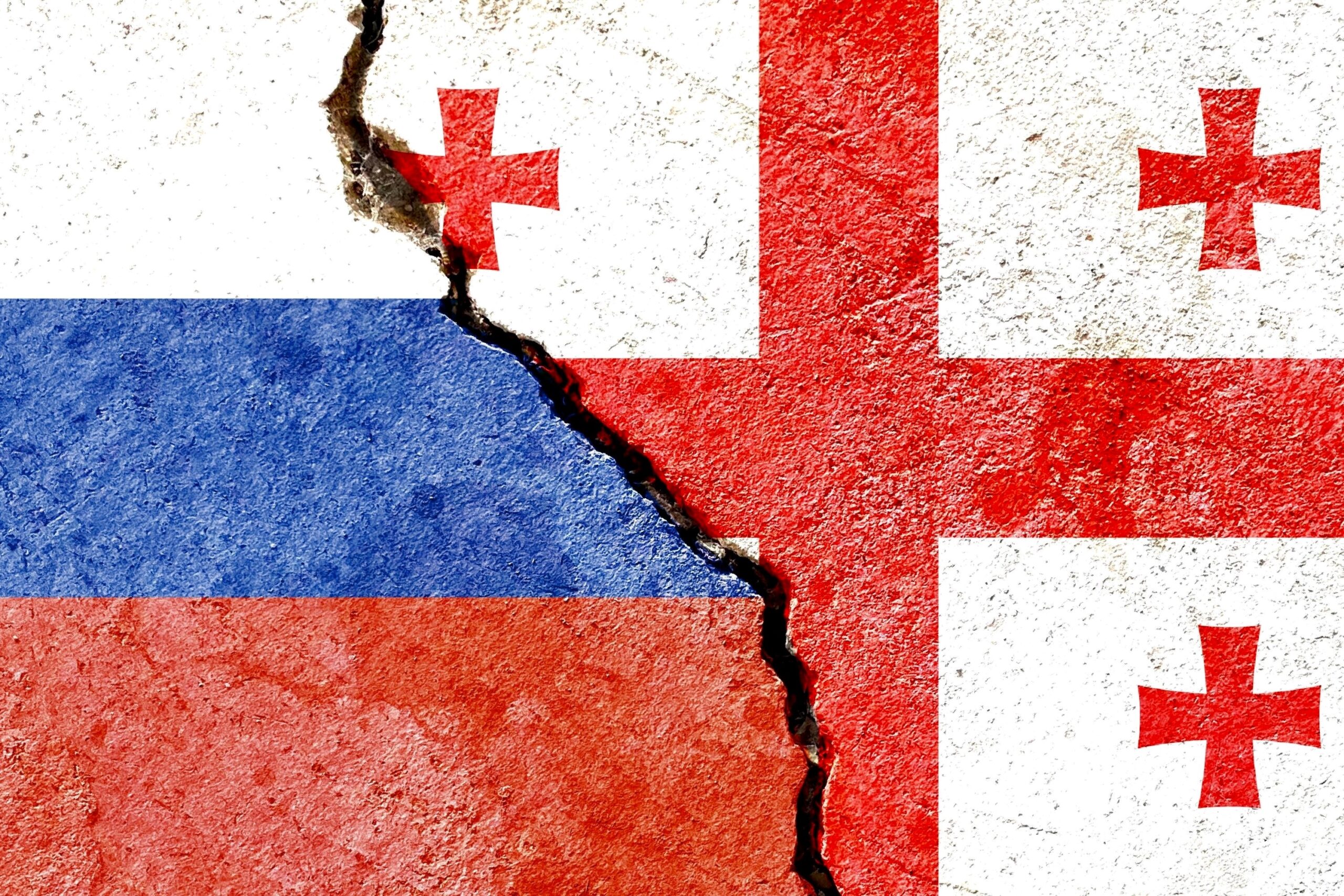
The revolutionary situation in Georgia could reach its climax on December 29, influenced by two factors: external and domestic.
The external factor relates to Salome Zourabichvili’s successful foreign visit to Paris. During the opening ceremony of the Notre Dame Cathedral, facilitated by President Macron, she met with Donald Trump and Volodymyr Zelensky. She also held talks with Italy’s Prime Minister Giorgia Meloni. Many believe that Western leaders might recognize Salome Zourabichvili’s legitimacy as president, even though her term has officially ended. Meanwhile, new presidential elections were held under the so-called “Electoral College,” consisting of 300 members, primarily parliament deputies and representatives of local governments. In a one-day vote, they elected a new president, the pro-Russian leader of the “People’s Power” movement, former football player Mikheil Kavelashvili.
The situation is expected to become most critical between December 29 and 31, when the “winner” of this political contest will be determined. Salome Zourabichvili, recognized by Western countries (except Hungary and Turkey), refuses to vacate her position despite the results of the recent elections. Much attention is now focused on the security forces, who could have the decisive say. However, the Ministry of Internal Affairs, along with special forces units such as the Defense Forces, the State Security Service (SSG), and even the General Prosecutor’s Office, currently maintain predominantly “neutral” stances.
The ruling “Georgian Dream” party and its political team face a significant “security dilemma.” How will events unfold after December 29? How will they inaugurate the newly elected favorite, Mikheil Kavelashvili? And when will the inauguration take place?
The ruling party’s candidate, Mikheil Kavelashvili, was elected by the Electoral College on December 16 with 224 votes. So far, only Serbia, Belarus, Azerbaijan, and Armenia have recognized the pro-Russian president. No other country has extended congratulations.
The situation could escalate dramatically as mass demonstrations in support of Salome Zourabichvili continue. Protesters demand that Zourabichvili remain in office.
The current government may resort to force to oust Salome Zourabichvili, potentially including her arrest. Irakli Kobakhidze has accused Zourabichvili of being a “foreign state agent.”
Will Europe or the United States support Zourabichvili? Could there be new severe sanctions against the current political leadership of “Georgian Dream,” including suspension of Georgia’s visa-free regime?
Both pro-Western and pro-Russian forces are preparing for drastic measures.
Based on these developments, three potential scenarios for the crisis can be outlined:
- The Pro-Russian Government Uses Force:
The new government, with its elected president, might attempt to resolve the situation through force. This could involve employing Russian mercenaries, various private military companies, or even representatives of Ramzan Kadyrov’s “private army.” This would result in mass political terror under the pretext of preventing a “state coup.” Martial law could be declared, limiting rights and freedoms, effectively leading to the “Belarusization” of Georgia. The West would sever all ties with Georgia. - Salome Zourabichvili Establishes a New Power Center:
Zourabichvili and opposition parties, supported by mass protests, might create a new power center, forming a “technical interim government” to prepare for new parliamentary elections. In this scenario, government structures and law enforcement officers might side with the protesters. This could resemble a “Plohatniuk 2” scenario, forcing Bidzina Ivanishvili to flee the country. - A 50/50 Compromise and Political Stalemate:
Zourabichvili could step down but refuse to recognize the current government led by “Georgian Dream.” Dual power might emerge in Georgia, leading to a sustained resistance and political imbalance. The outcome would depend on which side successfully mobilizes both internal and external forces to prevail in this confrontation.
A unique aspect of the current situation is the weakness of the Georgian opposition, which lacks charismatic leaders and a unified platform. Meanwhile, “Georgian Dream” comprises several political factions (at least five), making it susceptible to internal shocks and potential collapse. This risks plunging the country into political chaos.
Vakhtang Maisaya is a Georgian political scientist and former diplomat.