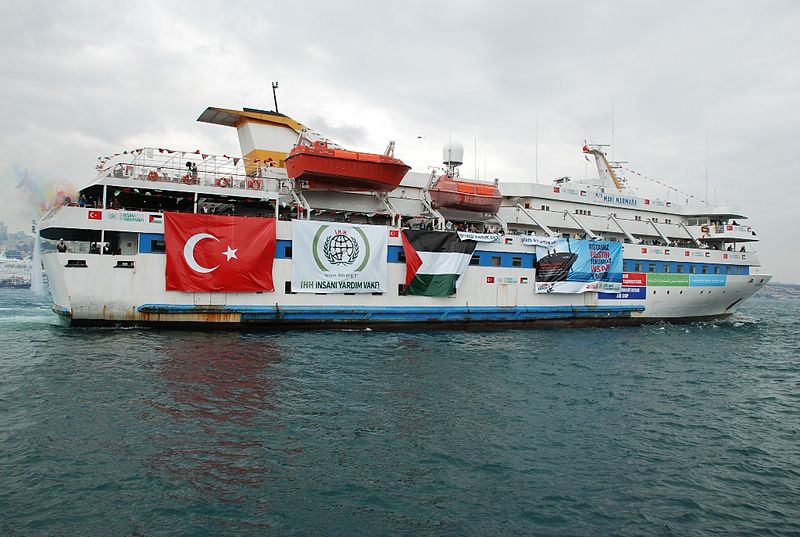
A new poll commissioned by the BESA Center reveals that 71% of Israelis believe that the Israeli apology to Turkey in the aftermath of the Mavi Marmara incident was not justified.
Shifts in Turkey’s domestic political orientation have led to a change in Ankara’s perceptions of its foreign policy roles and capabilities. The US has misunderstood and largely ignored this shift, failing to understand the implications of Turkey’s transformation under the AKP. A strong and comprehensive policy towards Turkey is long overdue.
Syria and Iraq have become battlefields on influence between Turkey and Iran. In Syria, a proxy war is underway, with Iran supplying weapons to its Alawite client and Turkey actively arming the opposition. In Iraq, Turkey and Iran vie for political influence along Sunni-Shiite fault lines.
As the turmoil in Syria continues and the security environment of Turkey worsens, two factors might lead to unilateral Turkish military intervention in Syria: a refugee crisis that forces Ankara to establish a buffer zone within Syrian territory, or defensive military measures needed to stop PKK terrorism.
With Russia and China vetoing a UNSC resolution seeking an end to the violent repression in Syria, there are almost no options left for a negotiated end to the crisis. This may bring Turkey to consider military intervention in Syria.
The recent discovery of substantial natural gas fields in Israeli and Cypriot territorial waters challenge Turkey’s claim as the central energy hub for Europe. Greece, Israel and Cyprus should increase their strategic cooperation in order to counter Turkish hostility.
Turkish demands are unreasonable and an apology will not change the anti-Israeli policy of an increasingly authoritarian and Islamist Turkey. Israel’s reluctance to criticize Erdogan’s government is construed as weakness and Jerusalem should take off its gloves in dealing with Ankara.
Turkey's foreign policy reorientation – away from the West and toward Islamist countries like Iran and Syria – changes the balance of power in the Middle East, negatively affects the pro-Western orientation of the Central Asian republics, weakens NATO, and threatens the East-West energy corridor.