
BESA Center Perspectives Paper No. 2,415, November 26, 2026
EXECUTIVE SUMMARY: The Hamas-led attack on Israel on October 7, 2023, offers a consequential lesson for countries investing in technology-intensive border security. Over many years, Israel had developed a sophisticated combination of physical barriers, surveillance sensors, communications, and remotely operated defensive systems along the Gaza border. The attackers nevertheless succeeded in disrupting that architecture by employing coordinated methods, including drones and simultaneous breaches. The significance of this failure extends beyond the particular circumstances of Gaza, as another adaptive adversary can target the links that turn observation into operational action. This tension can be thought of as the Smart Border Paradox. Integration enhances surveillance and coordination, but can also magnify the effects of disruption when essential functions share technical or organizational dependencies. To examine this problem, we propose a Detection–Communication–Interpretation–Decision–Response (D-CIDR) framework that evaluates the entire operational chain rather than individual equipment. India’s Comprehensive Integrated Border Management System (CIBMS) provides a comparative application across very different border environments. The argument is not for less technology, nor for directly transplanting Israeli arrangements elsewhere. It is for resilient integration: diversified sensing, alternative communications, sound intelligence judgment, defined local authority, robust physical response, and realistic exercises under degraded conditions. Border security should ultimately be assessed by the mission capability it retains when challenged, not solely by its performance under normal conditions.
A lesson in adaptation, not a verdict on technology
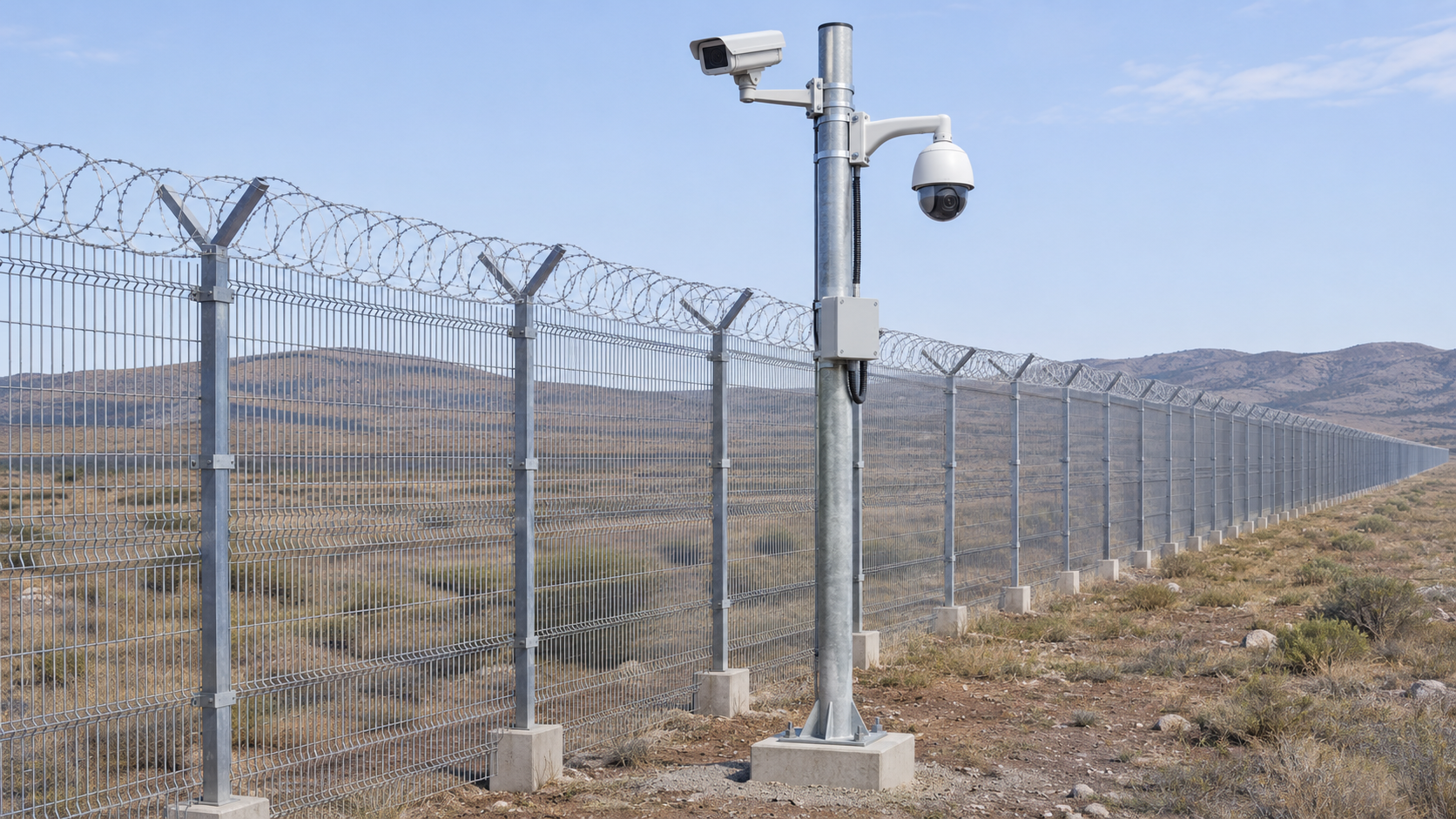
Israel has long been among the countries at the forefront of technology-enabled border protection. The Gaza perimeter incorporated physical obstacles, cameras, radar, other sensors, communications links, and remotely operated defensive capabilities. These technologies reflected a compelling operational logic: persistent observation can improve awareness, support faster decisions, and reduce the burden of continuous physical monitoring.
On October 7, 2023, Hamas-led attackers mounted a coordinated assault that combined physical breaches with attacks on parts of the surveillance and defensive infrastructure. As documented by the Center for Strategic and International Studies, commercial quadcopters dropped explosives on observation towers, while other attackers used explosives and bulldozers to open routes through the barrier. The assault also involved rocket fire and additional methods intended to complicate defense. Its scale, coordination, and deliberate adaptation to the defender’s architecture matter to the lessons drawn from it.
The purpose of examining this experience is not to render a retrospective verdict on Israeli commanders or intelligence institutions. The attack involved a distinctive political, military, and geographical setting, and the full explanation of its course extends well beyond border technology. It does, however, illuminate a question relevant to every state pursuing integrated security: what happens when the adversary attacks not only the protected boundary but also the system through which the defender observes, understands, and responds?
That question changes the unit of analysis. A camera, radar, or barrier can function as designed while the broader mission is disrupted elsewhere. Conversely, a damaged component need not cause operational paralysis if alternative means preserve the essential task. The important distinction is between the performance of a technology and the resilience of the mission it supports.
The “Smart Border Paradox”
Smart borders derive much of their value from integration. Sensors feed information to networks; networks connect operators and command posts; command systems coordinate responses. Integration can shorten reporting cycles, combine observations across sectors, and help personnel discriminate between routine activity and genuine threats. It is an indispensable feature of modern border protection.
Yet integration can create shared dependencies. Several sensors may use the same communications mast, multiple functions may rely on one power supply, and geographically dispersed units may depend on a central node to sustain their operational picture. When a common dependency is disrupted, effects may spread beyond the particular asset attacked. CSIS analysis of October 7 describes how attacks on communications infrastructure could affect both cameras and remotely operated weapons linked to it.
This is the Smart Border Paradox. Technological integration can simultaneously increase surveillance and coordination while increasing the operational consequences of failure in shared dependencies.
The paradox is a design problem, not an argument against sophisticated systems. Fragmentation carries costs of its own: slower information-sharing, duplicated effort, and inconsistent understanding. The answer is therefore resilient integration—preserving the benefits of connected systems while ensuring that their critical functions can continue after partial damage, deception, or loss of connectivity.
Resilience is not synonymous with duplicating every piece of equipment. It requires understanding which dependencies matter most, where alternative pathways are feasible, and how personnel can continue operating when the preferred technological pathway is unavailable. A system that loses one sensor but maintains coverage through another is resilient in a different way from one that retains its sensors but cannot transmit or interpret their information. Both questions must be considered together.
D-CIDR: From observation to operational effect
A practical way to assess these relationships is the five-stage Detection–Communication–Interpretation–Decision–Response framework, or D-CIDR. The stages represent a logical operational chain, not a claim that every real world incident unfolds in a neat sequence. Feedback and parallel activity occur throughout. The framework asks where mission effectiveness might be lost even when some components continue functioning.
Detection asks whether relevant activity is observed. Cameras, thermal imagers, radar, unmanned systems, patrols, and human intelligence can contribute. The design objective is not simply more sensors but varied and overlapping means of observation that are sufficient to resist concealment, destruction, deception, or saturation.
Communication asks whether the information reaches the right people in time. Power interruptions, damaged links, interference, or overloaded networks can interrupt a technically successful detection event. Alternative communications and the ability to operate locally are consequently core defensive capabilities, not optional conveniences.
Interpretation asks whether received information is assigned the appropriate significance. An alert is not yet an assessment of adversarial intent. Operators may confront ambiguous indicators, competing reports, or large volumes of routine data. Automated analysis can help, but technical collection must be combined with contextual intelligence, local knowledge, and the disciplined questioning of assumptions. This is a general requirement of intelligence work, not a judgment about any one institution.
Decision asks whether appropriate action can be authorized quickly enough. A centralized operational picture may be valuable while still leaving a unit dependent on distant permission during a time-critical contingency. Defined authority for local commanders, especially when higher-level communications are unavailable, helps connect awareness with action without sacrificing overall coordination.
Response asks whether sufficient personnel and resources can act on the warning. Mobility, trained forces, rehearsed contingencies, and alternative communications remain essential. No surveillance architecture, however advanced, can by itself physically contain every incursion. The outcome that matters is the ability to translate information into timely and effective action.
D-CIDR helps distinguish five very different situations: an event not seen; an event seen but not reported; a report received but misunderstood; a threat understood but not acted upon promptly; and a decision made without adequate means of response. Each requires a different remedy. Treating them all as a need for additional surveillance equipment risks addressing the wrong problem.
For operational assessment, the framework also suggests a more demanding exercise question: can the entire chain still function after a combination of sensor loss, communications disruption, uncertainty, and simultaneous demands on response forces? That is a test of mission resilience rather than equipment availability.
India’s CIBMS as a comparative application
India offers a useful comparison because it is pursuing technology-enabled border management across exceptionally diverse conditions. The Ministry of Home Affairs defines the Comprehensive Integrated Border Management System (CIBMS) as the integration of manpower, sensors, networks, intelligence, and command-and-control solutions to improve situational awareness and enable prompt response along the India-Pakistan and India-Bangladesh borders.
These are not replicas of the Gaza environment. The India-Pakistan border presents risks involving infiltration, unmanned aerial systems, and hostile cross-border activity. The India-Bangladesh border includes riverine stretches, populated areas, and locations where conventional fencing is difficult. India’s Dhubri project demonstrates the practical value of technical surveillance in such terrain. Differences in geography, threat, governance, and force organization limit any direct transfer of tactics or infrastructure.
The transferable lesson is architectural rather than geographic. Across these environments, D-CIDR can ask whether detection survives partial sensor loss, warnings reach local personnel when the primary network is disrupted, technical information is integrated with human intelligence, and forces can respond effectively despite simultaneous demands.
This comparison also clarifies why a uniform procurement template is insufficient. The best mix of sensors, communications, personnel, and response mobility depends on the terrain and the adversary. The underlying requirement—to preserve the end-to-end mission under stress—remains common. India can learn from Israel’s experience without assuming the two security settings are equivalent, just as Israel and other technologically advanced states can use comparative cases to test the generality of their own design principles.
Toward resilient border-security doctrine
Five priorities follow from this analysis.
First, border architectures should be mapped for common-mode dependencies. Communications, power, data aggregation, and command nodes should be assessed not only for their individual importance but for the number of operational functions that depend on them. Protecting or diversifying a critical connection may contribute more to resilience than adding another sensor.
Second, degraded-mode operations should become a routine part of training. Units should practice retaining awareness, sharing information, and mobilizing response forces when selected technical functions are deliberately made unavailable. Such exercises expose procedural dependencies that cannot be identified through equipment tests alone.
Third, intelligence fusion should be distinguished from sensor fusion. Combining feeds on a screen is valuable, but meaningful assessment also requires human sources, knowledge of adversary behavior, and mechanisms for challenging assumptions. More data is useful only when it improves understanding and action.
Fourth, command arrangements should reconcile centralized awareness with appropriately delegated authority. Higher headquarters need a coherent picture, but frontline units also need rehearsed rules for acting during disconnection or rapidly developing incidents. Resilience depends on preserving disciplined initiative when normal channels are interrupted.
Fifth, adversarial testing should be continuous. Defensive technology changes the adversary’s incentives; observable routines invite probing, deception, and circumvention. Teams should therefore test interactions among technical systems, organizational processes, and physical response, rather than examining each layer in isolation.
These priorities do not require a new technological program. They require a different criterion for judging existing and future investments. Detection probability, network uptime, and surveillance coverage remain necessary measures, but they should be accompanied by retained capability after disruption, time to restore essential functions, decision latency, and response effectiveness under stress.
For Israel, the broader strategic implication is that technological leadership and resilience must advance together. For India, the implication is that CIBMS should be evaluated as an operational architecture adapted to distinct borders, not merely as a collection of connected equipment. For other states, the same principle applies wherever integrated surveillance is expected to protect critical territory or infrastructure.
Conclusion
October 7 demonstrated the scale of the challenge that a coordinated, adaptive attacker can pose to a technologically sophisticated border. The lesson should be approached constructively. The strategic task is to ensure that advanced surveillance remains connected to effective judgment, command, and response even under deliberate attack.
The Smart Border Paradox identifies the tension between integration and shared dependency. D-CIDR offers a way to examine the complete operational chain and locate vulnerabilities without reducing complex events to a single technological explanation. India’s CIBMS illustrates the framework’s relevance beyond the Israeli context, while also showing why lessons must be adapted to local geography and threat conditions.
The next standard for smart borders should be mission resilience: not simply how well a system performs when everything works, but how much essential capability it retains when an adversary tries to make it fail.
Parag Amalnerkar is an independent strategic affairs analyst and a masters candidate in Defense and Strategic Studies at Rashtriya Raksha University, India. His work has appeared in the Vivekananda International Foundation, Pacific Forum, and Australian Outlook.
BESA Center publications and research are made possible
thanks to the generosity of Saul Koschitzky and family