
PSCRP-BESA Reports No 190 (March 17, 2026)
- Official Position: Concerns and Neutrality
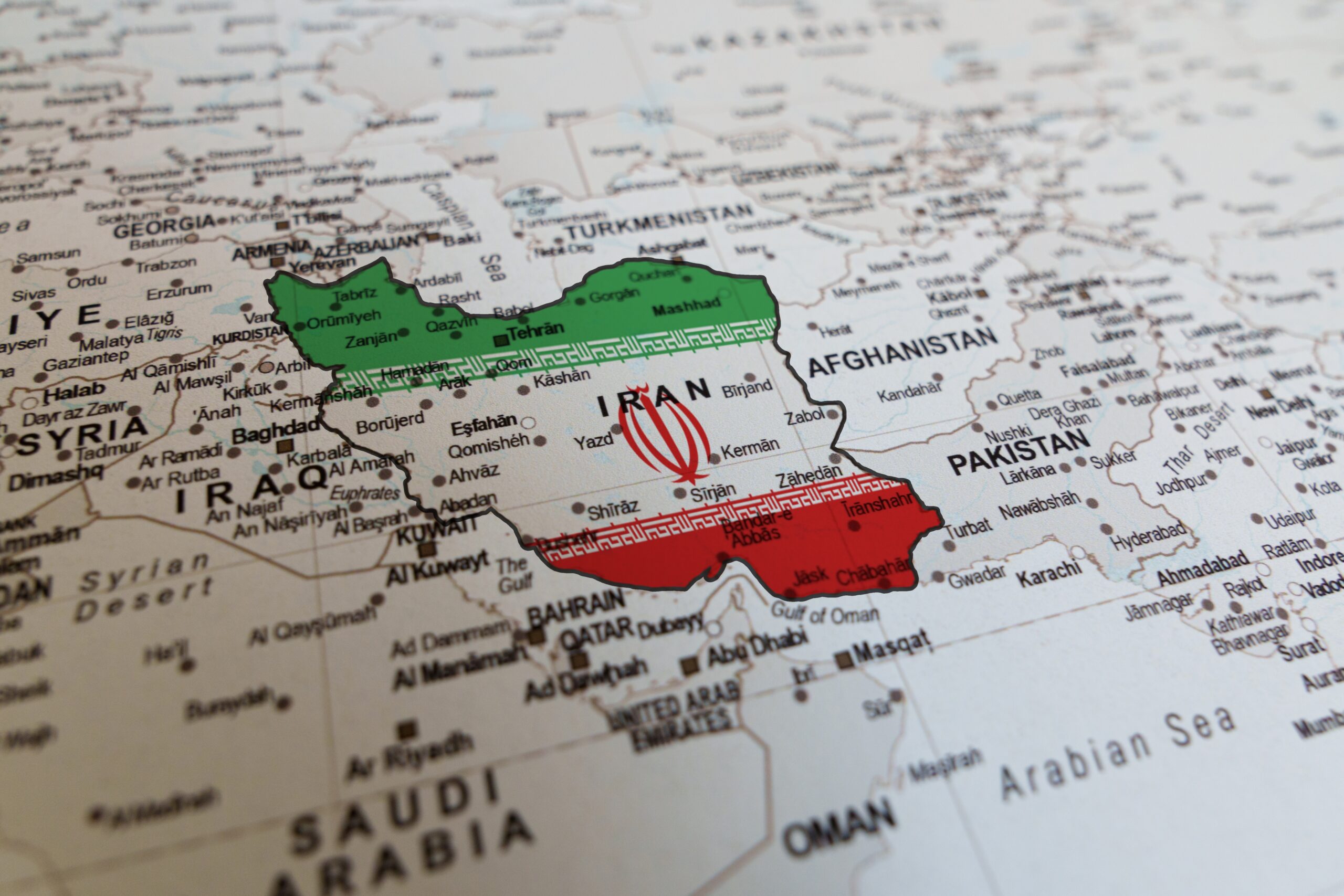
The military operation launched by the United States and Israel against Iran on February 28, 2026 may create serious economic challenges for the countries of Central Asia, particularly in the sphere of transportation. The war has significantly disrupted the functioning of two key transport corridors: the International North–South Transport Corridor (Russia – Caspian sea – Iran – India) and the southern branch of the Eurasian East–West transport corridor passing through Iran. This is unfolding against the backdrop of ongoing hostilities in the Black Sea region, which have already had a negative impact on transport routes linking the region with Europe.
Shortly before that, on February 21–22, 2026, the long-simmering conflict between Kabul and Islamabad sharply escalated. This armed confrontation may effectively block the Central Asia-Afghanistan–Pakistan–India transport routes. The hostilities in Iran may also exacerbate instability in Afghanistan due to the close economic ties between the two countries. As a result, the countries of Central Asia may either be forced to increase their involvement in addressing Afghanistan’s internal problems or face growing instability along the Tajik–Afghan and Turkmen–Afghan borders.
If hostilities were to spread to Azerbaijan (a possibility suggested by the Iranian drone strike on Nakhichevan) all international transport routes of Central Asian states could effectively be reduced to the Chinese corridor.
Across the region, there are widespread concerns that the war, and especially the potential collapse of the Iranian regime, could push the Greater Middle East (and subsequently Central Asia) into a period of geopolitical turbulence and uncertainty. Similar references to “turbulence” in the region are also widely found in the Russian press. Among the specific risks mentioned by the Central Asian experts are the possible inflow of refugees from Iran and other Middle Eastern countries into Central Asia.
At the same time, rising oil prices have had a positive impact on Kazakhstan’s economy, partly due to the shortage of oil supplies to China that previously came from the Persian Gulf. A similar dynamic may also benefit Turkmenistan to some extent. For the other countries of the region, however, rising oil prices pose significant economic risks.
Under these circumstances, the states of the region have generally adopted a neutral stance. Such a position allows them greater flexibility in managing the risks outlined above. At the same time, it broadly corresponds to the tradition of the multi-vector foreign policy that has long characterized Central Asian diplomacy.
Kazakhstan has taken a formally neutral but in practice cautiously formulated position that leans toward the Arab Gulf states. Astana has called for a peaceful settlement of the conflict but in its official statements has emphasized the security concerns of the Gulf monarchies and expressed solidarity with their leaders, while simultaneously seeking to maintain good relations with the United States and Israel. President Tokayev sent messages of support to the leaders of the United Arab Emirates, Saudi Arabia, Qatar, Bahrain, Kuwait, and Jordan and held phone conversations with several of them, including the Emir of Qatar and the President of the UAE. At the same time, Astana expressed condolences to Iran over civilian casualties and called for a diplomatic resolution of the conflict but did not issue a separate presidential condolence message regarding the death of Ayatollah Khamenei.
Kyrgyzstan has effectively distanced itself from the conflict, limiting its response to a statement by the Ministry of Foreign Affairs expressing serious concern over the escalation, calling for restraint, and urging a peaceful settlement in accordance with international law.
Uzbekistan has likewise called for a diplomatic resolution of the conflict. President Shavkat Mirziyoyev sent condolences to Iran over the death of Ayatollah Khamenei but did so in cautious terms, avoiding criticism of either the United States or Israel.
Tajikistan, which maintains the closest cultural and political ties with Iran in the region, also expressed concern over the escalation and called for an end to hostilities and a peaceful settlement. At the same time, President Emomali Rahmon was the first leader in the region to send an official telegram of condolences to the Iranian leadership and people following the death of Ayatollah Khamenei, emphasizing solidarity with the “friendly and brotherly” people of Iran. Nevertheless, Dushanbe also avoided direct criticism of the United States or Israel, seeking to maintain the balance characteristic of its multi-vector foreign policy.
Turkmenistan, following its long-standing policy of neutrality, responded in the usual restrained manner. Ashgabat described the escalation of the conflict as “regrettable” and called for a diplomatic resolution.
- Divided Societies: Regional Patterns in Public Perceptions of Iran and Its Opponents
An analysis of discussions on social media suggests that although Central Asian societies (like their political elites) generally prefer to maintain neutrality, in some cases one can observe something resembling the gap between elites and “the street” known from the Arab world in attitudes toward the United States and Israel. However, the scale of this divide remains far smaller than what is observed in the Middle East.
The depth of this division also varies significantly across the region due to Central Asia’s cultural heterogeneity. One can distinguish between the classical historical Turan — an Eurasian nomadic civilization encompassing most of Kazakhstan, northern Kyrgyzstan, and much of Turkmenistan — and regions shaped by a mixture of historical Turan and historical Iran, namely the sedentary agricultural areas that today largely belong to Uzbekistan and Tajikistan.
Accordingly, public sympathy toward Iran tends to increase significantly in areas where the influence of fundamentalist Islam is strong (notably in the Uzbek-controlled part of the Ferghana Valley) and in regions where cultural, linguistic, and political-economic ties with Iran are particularly close (especially in Tajikistan). By contrast, in the countries of what may be called classical Turan — where the legacy of Eurasian nomadic culture remains strong and the social role of Islam is somewhat less pronounced (partly in Turkmenistan and especially in northern and central Kazakhstan and northern Kyrgyzstan) — sympathy toward Iran is noticeably weaker. Consequently, the gap between elite positions and public opinion is also smaller in these areas.
This societal divide, together with the presence of certain pro-Iranian sympathies within the public sphere, acts as a constraint on Central Asian elites when it comes to cooperation with the United States and Israel. This situation is similar to the Arab nations.
These internal cultural and religious considerations operate alongside geopolitical constraints stemming from the need to maintain good relations with China and Russia. Given the regional cultural patterns described above, Kazakhstan’s leadership faces the least domestic pressure in terms of religiously motivated public sympathy toward Iran. At the same time, however, Kazakhstan is subject to a certain degree of Chinese influence and very substantial informational and cultural influence from Russia. Since both of these states support Iran, their positions inevitably shape public opinion within Kazakhstan as well. A similar combination of Chinese and Russian influence can also be observed in Kyrgyzstan.
Another important factor is the degree of state control over public expression. As early as the summer of 2025, the Uzbek authorities called on the population to exercise caution when commenting on the Iran–Israel conflict in order to prevent radicalization and potential threats to domestic security. As a result, most Uzbek media coverage limited itself to reporting factual developments and practical consequences for Uzbek citizens (for example, those evacuated from Persian Gulf countries). The same is largely true for Turkmenistan, where the authorities generally prohibit political expression on the Internet altogether.
Kazakh society, by contrast, enjoys a comparatively higher degree of freedom to discuss foreign policy issues than other Central Asian societies. For this reason, the relationship between public attitudes toward the war in Iran and broader political and identity-based orientations can be observed particularly clearly in Kazakhstan.
For Kazakhs, as for other Muslim peoples, it is significant that the hostilities coincided with the month of Ramadan. This inevitably heightens emotional reactions among fasting Muslims. At the same time, contemporary Kazakh society is highly pluralistic and characterized by a complex and multi-layered identity.
As noted above, the Kazakh people historically emerged from a Eurasian nomadic civilization that was not originally connected to the Islamized Middle East. Yet Kazakhstan has long been a crossroads of different cultural and religious traditions. As a result, several distinct influences coexist within the country today:
- the relatively liberal Hanafi school of Islamic jurisprudence within traditional Sunni Islam, which predominates among Turkic peoples;
- elements of the liberal-modernizing Jadidist Islamic tradition that spread among Turkic peoples in the late Nineteenth and early Twentieth centuries prior to the establishment of the Communist rule, and from which the contemporary liberal current sometimes described as “Euro-Islam” later developed (primarily among Turkic and Balkan Muslims);
- the influence of conservative Sunni Islamic traditionalism that expanded after the collapse of the Soviet Union and is often associated with Saudi Arabia, other Middle Eastern countries, and Pakistan;
- a composite influence of fundamentalist propaganda originating in the Middle East (Arab countries, Turkey, and Iran), including both Sunni and Shiite components;
- the legacy of the Soviet anti-religious tradition together with the growing influence of Western culture among younger generations following the economic reforms that began after the dissolution of the USSR.
Accordingly, under the influence of these different factors, very different assessments of the war can be heard both among the general public and among opinion leaders. Many Kazakh nationalists in the Kazakh-language segment of the internet supported the actions of the United States and Israel, a position that has been sharply criticized in the pro-Russian segment of the online space. Supporters of a more generalized form of Islamic fundamentalism that does not emphasize Sunni identity as in other parts of the world tend to express stronger support for Iran. Advocates of closer alignment with the “Global South” and with the countries of the Shanghai Cooperation Organization have likewise criticized the military operation against Iran.
Liberal groups that favor a pro-Western orientation, while showing a certain degree of sympathy toward the West and Israel, generally support Kazakhstan’s official policy of neutrality. Many centrist commentators similarly defend and justify the government’s neutral stance.
As a result, when the issue of Islamic solidarity arises — particularly during the month of Ramadan – it is interpreted very differently by various groups within society. For fundamentalists or supporters of the “Global South,” solidarity primarily means solidarity with Iran. For supporters of the official state position, it tends to mean solidarity first and foremost with the Arab Gulf states. For some nationalists or pro-Western groups, it may even take the form of sympathy for the Iranian opposition.
Social media activism can sometimes spill over into street-level activity. In Kyrgyzstan, for example, a pro-Iranian rally is reportedly expected to take place. In Kazakhstan, however, such public mobilization is currently unlikely because events in the Middle East are unfolding against the backdrop of more pressing domestic political developments, most notably a referendum on a new constitution on March 15. In the other Central Asian states, where political regimes are generally less liberal, authorities routinely prohibit uncontrolled public demonstrations. Nevertheless, the spread of anti-Israeli and anti-American narratives on social media, combined with the suppression of street-level protest that might otherwise release some of this pressure, may create potential security risks, including the possibility of terrorist acts by pro-Iranian activists.