PSCRP-BESA Reports No 174 (January 01, 2026)
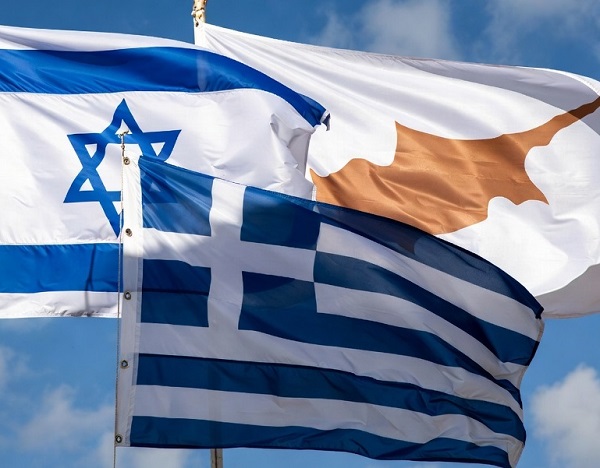
Among the important international developments of the past few days that may have a significant impact on the balance of power in regions where large-scale military conflicts and violent confrontations continue—namely, the post-Soviet space and the Eastern Mediterranean—one should also mention the latest (already the 10th) trilateral summit Israel–Greece–Cyprus, which took place on 22 December this year in Jerusalem with the participation of Israeli Prime Minister Benjamin Netanyahu, Greek Prime Minister Kyriakos Mitsotakis, and Cypriot President Nikos Christodoulides.
The Turkish factor
Apparently, we are witnessing a revival of the process of building strategic cooperation between Israel and the two “Hellenic” states, which had been developing rapidly at the end of the previous decade but later slowed down somewhat, as an alternative to Jerusalem’s former strategic partnership with Ankara. (The previous summit was held in Nicosia on 4 September 2023, shortly before the events of 7 October 2023). A certain indicator of intentions to return to “business as usual” among the three partners could be seen in recent months, when Israeli officials—such as the Prime Minister’s Military Secretary Maj. Gen. Roman Goffman, Deputy IDF Chief of Staff Maj. Gen. Gil Reich, and Israeli Air Force Commander Maj. Gen. Tomer Bar—held multiple consultations with their Greek and Cypriot counterparts on regional security and political and regional issues.
The goal of the current summit, held against the backdrop of concerns over Ankara’s rapid modernization and expansion of its military capabilities—especially in the air and naval domains —and rising tensions between Israel and Turkey, as well as between Turkey on the one hand and Greece and Cyprus on the other, is to build a mechanism of defensive deterrence vis-à-vis Turkey, in order to restrain Ankara from escalation and prevent it from turning from a rival into an enemy. Observers believe that, in this context, the meeting discussed, among other things, previously debated prospects for the creation of joint rapid reaction forces to address military challenges in the region, with a total strength of about 2,500 personnel. However, no decisions regarding the structure or mandate of such forces were taken, and the parties for now limited themselves to planning large-scale joint exercises, enhancing the operational readiness of their armed forces, and exchanging intelligence.
A separate area in which Israel, Greece, and Cyprus are strengthening trilateral ties is the energy sector. One of the initiatives discussed by the “trio” предполагает. Another key aspect is the “trio’s” partnership in the gas sector. Cyprus is exploring the possibility of building its own gas processing plant, which could potentially allow it to compete with Egypt in the region.
At the same time, Greece and Cyprus are participating in discussions on the post-conflict arrangement of the Gaza Strip, according to sources cited by Yedioth Ahronoth. Despite the fact that the transition to the second phase of conflict resolution in the coastal enclave is complicated by problems related to the creation of international peacekeeping forces and the reluctance of Hamas to disarm, Greece has already expressed interest in reconstructing local infrastructure.
In addition to a defensive alliance among the three countries, as well as cooperation in the areas of energy connectivity (for example, connecting all three countries to a common power grid, which would mean integrating Israel into the European energy network), civil protection, and innovation, the agenda also includes the topic of the “Middle Corridor” (the Middle Corridor – TITR)—a trade route from Southeast Asia to Europe through the states of Central Asia. An even more ambitious project is also under discussion—the India–Middle East–Europe Economic Corridor (IMEC), an alternative to China’s Belt and Road Initiative, which includes a 5,000-kilometer railway line, power transmission networks, oil and gas pipelines, and other infrastructure components.
It is obvious that projects to transport Israeli and Cypriot gas to Europe bypassing Turkey—discussed for almost 10 years within the framework of the trilateral Israeli–Hellenic partnership—could become an important, and possibly key, segment of a macro-regional defense and economic bloc that may take shape around the ideas of TITR and IMEC. It is therefore no coincidence that the third topic of the Jerusalem summit was the discussion of expanding the 3+1 cooperation format with the United States.
Unsurprisingly, this development provoked a sharp rejection from Ankara. According to a statement made on the eve of the trilateral summit in Jerusalem by Turkish President Recep Tayyip Erdoğan, while his country “does not want any tensions, crises, or conflicts with any country,” Ankara “will not allow its rights or what belongs to it to be violated”. This was naturally perceived as a hard confirmation of Turkey’s maritime and strategic claims.
Back in September 2025, Turkish authorities had already expressed “serious concern” over Cyprus’s intention to abandon Russian air defense systems and purchase from Israel the well-proven PULS and Barak MX air defense systems. According to Turkish Defence Ministry sources quoted by Turkish media, “as Israel and the Greek Cypriot administration, two governments harbouring hostility toward Türkiye, advance their ties, Ankara stressed it will not allow security threats to develop on the divided island”.
According to information from Erdoğan’s “court” newspaper Yeni Şafak, quoted by Israeli media, Ankara’s reaction to the current trilateral Jerusalem summit included instructions to Turkish defense and diplomatic agencies to consider Israel as “threat number one” for Turkey. An additional irritant for Turkey was the participation of Greece and Cyprus in discussions on the postwar reconstruction of the Gaza Strip.
In Ankara, this move is perceived as a challenge to its aspiration to replicate in Gaza the Syrian model—that is, to establish external control over the enclave and keep in power the radical Islamist group Hamas, ideologically close to the Turkish leadership, including through a significant presence of Turkish troops as part of future stabilization forces in Gaza. In this context, the Greek and Cypriot initiative becomes a substantial reinforcement of the categorical refusal of official Jerusalem to accept any civilian, and especially military, presence of a regime sharply hostile to Israel on its southwestern border.
Therefore, in order to “rein in” Israel and its regional partners, Erdoğan will apparently find it difficult to do without the consent and support of the US administration. And given that Trump’s attempts—despite his declared friendly attitude toward the Turkish leader—to persuade the Israelis to lift their categorical “no” have so far remained rather weak, Erdoğan will likely have to look for additional diplomatic levers of influence on Washington. For example, he may try to mobilize for this purpose those partners from the “Global South” who have a concrete interest in the situation in the Gaza Strip, as well as a desire to influence the final configuration of the “new Middle East à la Trump.”
It is quite obvious that from this not-too-long list of global and regional powers, neither China nor, even more so, Iran is suitable for this role. The Saudis, who lead the pro-American bloc of “moderate” Arab-Muslim countries, despite having formally “working” relations with Ankara, still largely share today the statement made back in 2012 by former Arab League Secretary-General Amr Moussa that the interest of Sunni Arabs in the modern era is to prevent a situation in which “the Arab Middle East will be governed by Iran or Turkey”.
There is also another rising regional center of power in the eastern segment of the “Greater Middle East”—Azerbaijan, which, among other things, is planned to play the role of a “hub” for the northern vector of the economic and geostrategic TITR and IMEC projects. Relations between Baku and Washington sharply deteriorated after the US Senate adopted a bill in November 2023 blocking American military aid to Azerbaijan, but after Donald Trump’s return to the White House in January 2025 they began to improve rapidly (including with Israel’s assistance).
Therefore, it would seem difficult to imagine a better candidate for lobbying Turkey’s interests, given the close strategic partnership cemented by an official treaty between Azerbaijan and Turkey. However, Baku is unlikely to be ready to use the still limited political capital it has built up in its interactions with the White House and the US State Department to resolve Erdoğan’s problems before addressing issues of primary national importance for itself. This is precisely why the Azerbaijani leadership’s readiness to consider the idea of sending its military contingent as part of the emerging “stabilization forces” in the Gaza Strip looks much more like a goodwill gesture toward the US president than (if at all) support for the geopolitical ambitions of the Turkish leadership.
What the Kremlin and Smolenskaya Square want
It appears that under such circumstances, Moscow remains almost the last candidate for this role, where some euphoria is still felt over the resumption of “constructive,” as it seems there, relations with the US president. And especially over Washington’s willingness—interested in a rapid end to the war in Ukraine—to take Russian conditions into account despite Kyiv’s firm disagreement with most of them.
The Russian leadership indeed views Turkey as an important partner, despite the regular ups and downs in relations between the two countries, and Moscow’s own interests may theoretically coincide with Turkey’s on certain points. However, today Russia’s position on the issue discussed in this article, unlike its relations with Tehran, looks rather ambivalent.
On the one hand, Russia’s traditionally positive relations with Greece and Cyprus (as well as, incidentally, since the mid-2000s, with Israel, though that is a somewhat different story) have shifted sharply in a negative direction due to the pro-Ukrainian stance adopted by the two Hellenic states after Russia’s full-scale invasion of Ukraine on 24 February 2022. With Athens and Nicosia joining, albeit not fully, European economic sanctions against Russia, Moscow substantially revised its more or less neutral approach toward Greece and Cyprus on issues sensitive to them and moved significantly closer to Ankara’s position.
This primarily concerned the jurisdictions of Greece and Cyprus in the Eastern Mediterranean, the Ionian and Aegean Seas, including exclusive economic zones with promising natural gas fields. In addition, Moscow was interested in preventing or limiting the expansion of Greece’s territorial waters in the Aegean Sea in order to ensure the passage of Russian warships and merchant vessels into and out of the Black Sea without the need to obtain special permits.
With regard to Cyprus, the shift in Russia’s line manifested itself in a departure from the unconditional recognition of Nicosia’s sovereignty over the entire territory of the island state, including the zone in the northeast of the country (about 37% of its total area) occupied by Turkish troops in 1974, where the “Turkish Republic of Northern Cyprus” was proclaimed in 1983. Moscow’s new approach on this issue was articulated in an interview with the official YouTube channel “Diplomat.Ru” on 14 January 2025 by Russian Foreign Minister Sergey Lavrov, according to whom the status of Cyprus should be the subject of bilateral agreements between Greek Cypriots and Turkish Cypriots. That is, de facto, Moscow placed an equals sign between an internationally recognized state and the regime of Cypriot ethnic Turkish separatists, recognized by no one except Turkey itself.
Since then, relations between Moscow and the capitals of the Hellenic states have steadily deteriorated. A telling example is the inclusion, in October this year, in the official list of authors of “Russophobic statements” for 2024 on the website of the Russian Foreign Ministry of such politicians from Cyprus and Greece as, respectively, Cypriot President and Speaker of Parliament Nikos Christodoulides and Annita Demetriou, Greek Prime Minister Kyriakos Mitsotakis, and Greek Foreign Minister Nikos Dendias.
Accordingly, by the logic of things, Russia should have supported Turkey in its confrontation with the Athens–Jerusalem–Nicosia triangle, as well as Turkish ambitions in the Gaza Strip—especially given that Moscow does not consider Hamas a terrorist organization and has officially received its leaders at the Foreign Ministry level on three occasions. And in Ankara they have taken as a given the consent of their client regime in Syria, Ahmed al-Sharaa (Abu Muhammad al-Julani), to the continued operation of Russian naval and air bases in that country.
In practice, however, everything is far more complicated. Current events are unfolding against the backdrop of Russia’s growing irritation with Turkish leadership policies, the factors of which include Turkey’s arms supplies to Ukraine, a sharp decline—compared to peak levels in 2022—in bilateral trade turnover and previously promising cooperation in the energy sphere, as well as Turkey’s overthrow of a pro-Russian and pro-Iranian regime in Syria and Ankara’s attempts to enter post-Soviet regions where Russia’s presence, weakened by the war in Ukraine, is diminishing, but which Moscow still considers zones of its exclusive interests.
Over the past couple of years, this irritation—fueled by what is perceived in Moscow as Erdoğan’s political flirtation with Trump and the EU (albeit without fundamental breakthroughs so far)—has gradually approached a critical point. One of the triggers of the current cooling in Russia–Turkey relations is widely seen as Erdoğan’s readiness to return to Russia the S-400 air defense systems purchased a decade ago, in exchange for lifting US sanctions on Turkey’s defense industry enterprises and resuming US deliveries of F-35 fighter jets to Turkey.
That is, the return of Turkish defense companies to a prestigious and promising project from which they were excluded due to the purchase of Russian-made air defense systems, costing them, according to Pentagon estimates, about $9 billion. Especially since for the Turkish army, which adheres to NATO standards, Russian air defense systems have rather limited utility. For its part, Ankara is clearly not enthusiastic about Russia’s attempts, as part of its return to Syria, to become involved in American-backed behind-the-scenes mediations in defense deal negotiations between Damascus and Jerusalem. Moreover, as Israeli media report, Jerusalem may be interested in deploying Russian troops in areas adjacent to Israel’s border on the Golan Heights as a counterbalance to Turkey, as was previously the case with Iran.
And yet, neither this storyline nor even the issue of Turkey “returning” the S-400 systems to Russia is today the main problem in bilateral relations, which could improve just as quickly as they have deteriorated. A much more significant issue is another one, related to post-Soviet Central Asia.
Moscow still believes it possible to keep this region within its sphere of influence, despite the desire of local countries—especially after Russia’s full-scale invasion of Ukraine in February 2022—to diversify their systems of strategic partnerships with global superpowers, including the United States, which has noticeably intensified its activity in this direction with the start of Donald Trump’s second term.
As far as one can judge, this trend does not yet overly concern the Kremlin and Russia’s foreign policy establishment on Staraya Square. The leaders of Central Asian states, while demonstrating rapprochement with Western countries, maintain demonstratively correct relations and cooperation with Russia. But even more important for Moscow is the fact that US President Donald Trump also considers (or at least this is what is believed in Moscow) this region to be Russia’s sphere of influence, within the framework of his vision of American foreign policy in the style of a new version of the Monroe Doctrine.
According to our interlocutor, who is well and closely acquainted with the decision-making mechanisms and the foreign and domestic political intricacies in Russia’s corridors of power, it is believed there that with regard to Russia, Trump—besides cooperation with his plan to end the war in Ukraine—is today more interested in three things. First, access to rare earth minerals, in reserves of which Russia ranks second in the world after China; second, prospective investment in and exploitation of the Northern Sea Route; and, not least, preventing China from joining Russian systems of long-range detection of military aircraft and ballistic missiles, which would be of enormous importance in the event of a direct military confrontation between the United States and China.
If this is so, then Moscow has no reason to restrain its considerable irritation with Ankara’s ambitions for leadership in the Turkic world and, accordingly, its active intervention in post-Soviet Central Asia and other zones of Russian interest. And therefore, the Turkish leadership apparently should not, for the time being, particularly count on Russia’s assistance in relations with Washington—nor, for that matter, in addressing challenges from the strengthening alliance of Israel and the Hellenic states, especially against the backdrop of a renewed, if not “special relationship,” then at least a more active dialogue between Netanyahu and Putin.
At least until the geopolitical and diplomatic winds change.