PSCRP-BESA Reports No 149 (August 26, 2025)
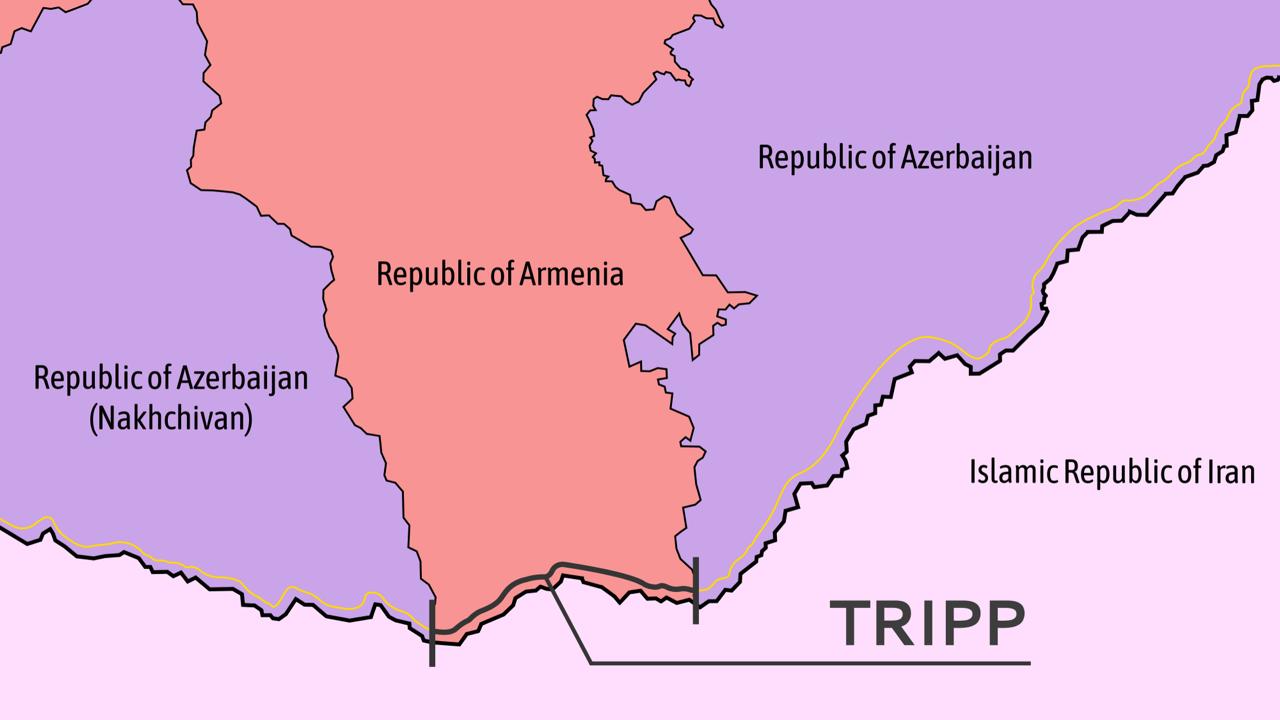
On August 8, 2025, U.S. President Donald Trump welcomed Azerbaijani President Ilham Aliyev and Armenian Prime Minister Nikol Pashinyan to the White House, where the two leaders signed a joint declaration on peace, ending nearly four decades of bitter conflict between the two post-Soviet states in the South Caucasus. The declaration, which still requires approval by the parliaments of both countries, not only ended the state of war between them and opened up travel, business, and diplomatic relations, but also paved the way for bilateral economic agreements—signed at the same meeting between each country and the U.S. — in the fields of trade, transit, energy, infrastructure, and technology. The key element of this agreement appears to be the U.S. intention to help build a major transit corridor, to be named the Trump Route for International Peace and Prosperity (TRIPP). Today thus marks a return to an issue first raised on the eve of the Soviet Union’s collapse but frozen for many years, remaining a stumbling block to resolving the smoldering and repeatedly escalating conflict in the South Caucasus. Both of its key dimensions—political and ethnic (or ethno-confessional) — have largely been tied to the so-called Zangezur corridor, a 40-kilometer extraterritorial transport artery running through Armenian territory and linking Azerbaijan with its exclave of Nakhchivan, which borders Turkey.
Post-imperial Mosaic
The problem of ethnic and religious diversity in the South Caucasus is by no means new. It is a legacy of two empires: Russia, which annexed the region during a series of Russo-Iranian and Russo-Turkish wars in the first half of the 19th century, and the Soviet empire that replaced it. In 1921, the South Caucasus was incorporated de facto into the Soviet sphere, and with the formation of the USSR in 1924, Armenia, Azerbaijan, and Georgia—states that had existed independently for just over three years (1918–1921) — were officially absorbed.
The administrative borders drawn by Moscow between these “union republics” reflected the classic imperial strategy of divide and rule. Territories claimed by the Armenian national movement were included in Soviet Azerbaijan in the form of the Nagorno-Karabakh Autonomous Oblast (NKAO) within the Azerbaijan SSR. The NKAO encompassed, among other areas, the former capital of the Karabakh Khanate – city of Shusha, which was predominantly populated by Azerbaijanis and holds major significance for their cultural and historical identity. The oblast was separated from the Armenian SSR only by the narrow Lachin Corridor, inhabited mainly by Muslim Kurds, along with a majority Azerbaijani population.
At the same time, the Nakhchivan Autonomous Soviet Socialist Republic — where, according to the 1926 census, 84.5% of the population were Azerbaijanis and 10.77% were Armenians — was placed under Baku’s administrative authority, despite not sharing a border with Azerbaijan. The Zangezur region, which separated it from the main Azerbaijani territory, was incorporated into the Armenian SSR.
In addition, four Azerbaijani villages became exclaves of the Azerbaijan SSR, surrounded entirely by Armenian SSR territory, while one Armenian village became an exclave of the Armenian SSR within Azerbaijan SSR territory. According to the 1926 census, Azerbaijanis accounted for 9.73% of the population of the Armenian SSR, while Armenians made up 12.4% of the population of the Azerbaijan SSR, including Nakhchivan and Nagorno-Karabakh.
Despite the Soviet-era declarations of “friendship between peoples,” Armenians in the Azerbaijan SSR and Azerbaijanis in the Armenian SSR were subject to migration policies and to the ethnopolitical strategies of regional elites. This contributed to the near-total ethnic homogeneity of the Nakhchivan Autonomous Soviet Socialist Republic—where, according to the 1989 census, Armenians made up only 0.65% of the population — as well as to a gradual rise in the proportion of Azerbaijanis in the Nagorno-Karabakh Autonomous Oblast (NKAO). Nevertheless, Armenians remained a stable ethnic majority in Nagorno-Karabakh, constituting about 77% of the population until the end of the Soviet period.
Meanwhile, the authorities of the Armenian SSR encouraged the repatriation of Armenians from abroad while at the same time conducting campaigns to evict Azerbaijanis. As a result, by the time of the last Soviet census in 1989, Armenians made up only 5.6% of the population of the Azerbaijan SSR (including the NKAO and Nakhchivan), while Azerbaijanis accounted for just 2.6% of the population of the Armenian SSR.
Interethnic tensions, which had simmered beneath the surface throughout the Soviet period, erupted with the first signs of weakening central authority. On February 20, 1988, the regional council of the NKAO formally appealed to the Supreme Councils of the USSR, the Azerbaijan SSR, and the Armenian SSR demanding to transfer the oblast to Armenia. A week later, pogroms started in both republics, resulting in thousands of people fleeing from both sides. These events became the catalyst for a mass exodus: Azerbaijanis left Armenia, and Armenians left Azerbaijan. As a result, by the end of the Soviet period, the Azerbaijani minority in Armenia and the Armenian minority in Azerbaijan outside Nagorno-Karabakh had effectively ceased to exist.
On September 2, 1991, a joint session of the NKAO Regional Council and the Shaumyan District Council of Azerbaijan proclaimed the Nagorno-Karabakh Republic as part of the USSR. Almost immediately afterward, the First Karabakh War broke out, lasting two and a half years, during which a de facto “exchange” of territories and populations occurred.
One of the bloodiest episodes of this conflict was the Khojaly massacre, which, even more than 30 years later, remains an unhealed wound for the Azerbaijani people. At the time, more than 600 people were killed in this act of ethnic cleansing, most of them civilians. In many cases, the killings were accompanied by abuse and desecration of the victims’ bodies, as documented by numerous Western media outlets and human rights organizations. Among those killed were several families of Meskhetian Turks, who had fled another conflict zone of the late USSR shortly before the war in Karabakh: following the infamous Fergana pogroms of 1989, many thousands of members of this ethnic group had been forced to leave Uzbekistan.
In May 1994, Armenia and Azerbaijan signed a ceasefire agreement that formalized the situation established during the war, which then remained largely unchanged for more than a quarter of a century. Azerbaijan retained parts of two districts of the NKAO, part of the Shaumyan district, and the Armenian-populated section of the Khanlar district, which was not part of the NKAO. Armenian forces captured five districts of Azerbaijan in their entirety and two districts in part—together amounting to approximately 10 percent of Azerbaijani territory — forcing the vast majority of the local population to flee. All exclaves were also seized by the opposing sides. As a result, the Republic of Artsakh (Nagorno-Karabakh), which had declared independence in December 1991, came to control a compact territory bordering the Republic of Armenia and populated almost exclusively by Armenians.
The victory in the First Karabakh War was a powerful source of national pride for Armenians, but the subsequent quarter-century proved to be an unquestionable strategic fiasco. Not only did the international community—whose key members in this case preferred to uphold the principle of “the inviolability of post-imperial and post-colonial borders” — but Armenia itself, while supporting Karabakh, refrain from officially recognizing its independence or incorporating it into its territory. In doing so, Armenia effectively acknowledged Azerbaijan’s sovereignty over Nagorno-Karabakh. More significantly, Armenian leaders were unable, and in practice made little serious effort, to encourage diaspora Armenians to resettle in Karabakh.
Throughout virtually the entire existence of this self-proclaimed republic, emigration consistently exceeded immigration. The Republic of Armenia itself experienced a similarly negative migration balance. The primary reasons for mass emigration were economic.
After numerous attempts to resolve the conflict diplomatically failed to produce meaningful results, full-scale military operations resumed in September 2020, this time resulting in a decisive victory for Baku over the unrecognized republic of Artsakh and Armenia, which had supported it. It quickly became clear that the trilateral ceasefire agreement signed by Russia, Armenia, and Azerbaijan had only temporarily stabilized the situation. The final blow came at the end of September 2023, when renewed fighting in Nagorno-Karabakh led to the dissolution of the unrecognized republic, the disbanding of its army, and the withdrawal of Armenian armed forces from the region.
The Zangezur Corridor: From Problem to Solution
At first glance, with the disappearance of its primary point of contention, the Azerbaijani-Armenian conflict might — or even should — have ended there. However, the situation proved to be more complex. Immediately after the cessation of hostilities in September 2023, Azerbaijan began negotiations with Armenian representatives in Nagorno-Karabakh on the reintegration of the region within Azerbaijan’s internationally recognized borders. According to the plan presented on September 21, 2023, the residents of Nagorno-Karabakh were guaranteed the rights to preserve, use, and develop the Armenian language and culture, to practice freedom of religion, and to ensure the protection of cultural and religious monuments.
Nevertheless, nearly the entire Armenian population of Karabakh chose to evacuate to the Republic of Armenia even before any contact between the local civilians and Azerbaijani army occurred. Together with the mass fleeing of Ukrainian citizens following the Russian invasion 3.5 years ago, this became one of the largest episodes of ethnic exodus in the post-Soviet space. In practical terms, such movements could have affected relations between Baku and Yerevan, potentially turning indirect tensions into direct armed interstate confrontation, largely—if not primarily—driven by acute mutual resentment on both sides. In addition, the issue of four Azerbaijani exclaves controlled by Armenia and one Armenian exclave controlled by Azerbaijan remains unresolved.
To this can be added the foreign policy vacillations of the Armenian leadership. On the one hand, there is irritation—both within the leadership and in society as a whole — at the actions, or rather the lack thereof, of the official guarantor of the 2020 agreements, the Russian Federation. Preoccupied with the war in Ukraine, Russia did not provide Yerevan with the support it expected. Meanwhile, Russian peacekeepers along the line of contact in Karabakh chose not to intervene. In this context, the course of action pursued by Nikol Pashinyan’s government — seeking rapprochement with the West as an alternative to reliance on Russia—seems quite logical.
However, despite promising statements and isolated steps taken by Washington and Brussels, Yerevan remained uncertain for quite some time about the seriousness of its Western partners’ intentions. This uncertainty was heightened by the lack of a unified strategic line among Western leaders regarding the region. In particular, France, which has traditionally sympathized with Armenia, pursued its own agenda and, by the end of 2020, had almost officially sided with Armenia in its conflict with Azerbaijan. Paris was also concerned about the growing geopolitical activity of Turkey, a close ally of Azerbaijan in the region. As a result, Pashinyan’s team — “triangulating” between Russia, the West, and Iran — was in no hurry to abandon its partnership with Russia or its role as an important intermediary in the Moscow-Tehran strategic axis.
One potential way out of this, let us call it, “persistently unstable situation,” could be a compromise on an issue of critical economic and geostrategic importance to most of the major political players in the South Caucasus. In fact, such an issue was the creation of the “Zangezur corridor” mentioned at the beginning of this article — a 40-kilometer extraterritorial transport artery passing through Armenian territory and connecting Azerbaijan with its exclave of Nakhchivan on the border with Turkey.
Azerbaijan and Turkey pushed for the creation of such a corridor, while Armenia—like its recent patron Iran—traditionally opposed the plan. If implemented, Armenia would lose its border with Iran, while Azerbaijan would gain a land route to Turkey, transforming it into a major hub for transporting its own and Central Asian hydrocarbons and other goods to Europe, bypassing Iran, which perceives the corridor as a potential threat to its influence in the region. Russia’s position on the issue was initially, to say the least, ambiguous.
As a result, the issue—which, if resolved, could have paved the way for ending the Azerbaijani-Armenian conflict, brought enormous economic benefits to both countries, and, most importantly, created a mutually acceptable plan for the return or adaptation of Armenian, Azerbaijani, and other forced migrants and displaced persons — seemed to have no solution for a long time.
The situation changed with the start of U.S. President Donald Trump’s second term, when he returned to the White House with ideas for ending regional conflicts he considered “unnecessary” for America. Among other initiatives, he decided — and, as events have shown, quite successfully so far — to address the conflict in the South Caucasus. Trump apparently believed, not without reason, that the current balance of power in the region is closely linked to the broader Middle East confrontation between the United States’ strategic ally, Israel, and its partners, and the radical Islamist “axis of evil” led by Tehran.
The moment to take practical action arrived when Israel weakened Hamas, decapitated Hezbollah in Lebanon, and struck the Houthis in Yemen; when Iran’s key ally, the Assad regime in Syria, collapsed; and when the outcome of Israel’s 12-day war—with U.S. participation—against Iran resulted in an apparent defeat for the Islamic Republic. All of these developments cast serious doubt on the Ayatollah regime in Tehran’s claims to set the agenda in the regions it considers its sphere of influence.
While Iran remains unequivocally opposed to this U.S.-led initiative, which alters the balance of power in the South Caucasus, Russia — expected to play only a limited role in the project — has so far been very cautious in its public statements. This is hardly surprising: Russia is currently heavily dependent on its relationship with Turkey, particularly in areas such as trade and energy diversification, according to Israeli and Kazakhstani foreign policy expert Andrei Kazantsev-Vaisman. “… Moscow’s focus on the conflict in Ukraine, its influence in the post-Soviet space, especially in the South Caucasus and Central Asia, has weakened considerably. It is therefore unlikely that Moscow will confront Turkey, especially over the Armenian issue, where Russia has already lost much of its former influence after the Second Karabakh War.”
Within this framework, the issue of the Zangezur corridor shifts from being a problem to becoming a key element of its solution. The same applies to Armenia, which gains the opportunity to stabilize its domestic situation and, without losing its previous ties while acquiring new partners, strengthen its international standing.