

1 August – 5 September 2024
WHAT HAS HAPPENED?
Israel-Hamas negotiations:
Not much has changed since the last report.
The negotiations continue, with rumors abounding about supposed changes in Israel’s or Hamas’s positions. But every time the smoke clears, it is apparent that in the central issue, which is the prerequisite for everything else, nothing has changed: Hamas still demands a total cessation of Israeli operations and total withdrawal of all Israeli troops from the Gaza Strip, with international guarantees that after the return of the kidnappees Israel will not resume its offensive, and Israel continues to refuse to accept this condition. Hamas is also demanding that “someone” will fund the rebuilding of all the damage to Gaza’s infrastructure (buildings, electricity, sewage, water, etc.).
All supposed progress in the negotiations is about details – how many kidnappees will be returned at what timetable and how many captured Palestinian terrorists Israel will give in return.
After the IDF recovered the bodies of six kidnappees who had been executed by Hamas two or three days before their bodies were discovered, the internal debate in Israel on whether to accede to Hamas’s demands heated up, with more pressure being brought to bear on the government by those who support doing so. So far, this has not brought about a change in the government’s policy.
Prime Minister Netanyahu conducted a televised speech followed by questions from the media. He stated that the maintenance of an IDF presence along the border with Egypt (an area called the Philadelphi Corridor) and a number of other locations inside Gaza was key to Israel’s being able to prevent the resurgence of Hamas. When asked if he would be willing to hand over these locations to a third party, Netanyahu answered that if it were possible to rely on a third party, then that could be a solution, but that he does not believe there is such a party.
Israel’s experience with “third parties” is grim. UN forces have been stationed on most of Israel’s borders since 1949 (Egypt, Syria and Jordan), but no UN force has ever prevented a single attack on Israel. UNIFIL in Lebanon, created in 1978, is a good example of this kind of total failure. From 1978 till 1982, UNIFIL allowed the PLO to operate freely along Israel’s border. Since Israel’s withdrawal from Lebanon in 2000, UNIFIL allowed Hezbollah to operate freely in the areas from which it was supposed to keep Hezbollah from operating. Hezbollah spent many years massively arming itself under UNIFIL’s nose with no pushback of any kind from the UN organization, which was there expressly to ensure that Hezbollah remain disarmed.
In 2005, when Israel withdrew from Gaza (including the Philadelphi Corridor), there were supposed to be EU representatives monitoring the border to ensure that there was no smuggling of weapons into Gaza from Egypt. Those representatives were threatened by Hamas and fled home after a few weeks. Egypt was supposed to prevent the smuggling of weapons from its territory into Gaza but has not done so. Most of the weapons in Gaza were smuggled in via Egypt.
Lebanon:
The focus of attention since the last report has been the Lebanese front: when and how Hezbollah will retaliate for the killing of Nasrallah’s deputy Fuad Shukr. Meanwhile, another casualty in the Israeli attack that killed Shukr was revealed: an Iranian liaison officer to Hezbollah who was meeting Shukr at the time of the attack.
For three weeks, Hezbollah threatened a devastating retaliation that would “change the rules of the game”. Meanwhile, it hurriedly transferred its headquarters, personnel, equipment, and storage sites from Beirut to other locations in expectation of Israel’s response to the threatened devastating attack. It also began a series of internal arrests of members of the organization it suspects are working for Israel, including at least one senior officer.
During those three weeks, many Lebanese Shiite civilians began evacuating their homes in the Shiite quarter of Beirut, the Dakhya, where Hezbollah facilities are embedded among and beneath the residential areas. They attempted to rent apartments or rooms in the Christian and Druze quarters of Beirut and surrounding towns (areas without a Hezbollah presence and which are therefore unlikely to be targeted by Israel). This caused a steep rise in rent prices and also aroused calls from Christian and Druze activists, who are against Hezbollah’s war against Israel, to refuse to rent to evacuating Lebanese Shiites. Economic activity in Dakhya has gone down.
During the three-and-a-half week wait for Hezbollah’s response, the regular exchange of fire between Israel and Hezbollah continued, with Hezbollah launching a few dozen to a hundred rockets and exploding drones every day and the IDF attacking Hezbollah targets (personnel and equipment) in Lebanon and Syria. The attacks in Syria were aimed at equipment in transit to Lebanon from Iran. One Israeli Arab civilian was killed and several wounded when a rocket landed in their village. In a separate incident, an Israeli soldier was killed and a few more wounded.
On the night of 24-25 August, IDF intelligence detected and located Hezbollah preparations for a massive strike that morning. At approximately 04:00 am, the IDF conducted a preemptive strike with approximately 100 aircraft on 40 concentration areas of rocket and drone launchers, destroying several hundred of them. At about 05:00 am, Hezbollah managed to launch about 320 rockets and exploding drones – a fraction of the number planned. Almost all were intercepted, and most of those that weren’t fell in open areas.
It is unclear how many Hezbollah actually planned to launch as reports vary considerably. Given that many (most?) of the rocket launchers had multiple barrels, it could have been up to a couple of thousand. According to Hezbollah statements, targets included Israeli military and intelligence facilities in the Tel Aviv area. Thus, the “changing of the rules” was to have included, for the first time, strikes further than 20 or so kilometers south of the border. The size of the strike was also intended to be a “rule change”.
Hezbollah claimed to have hit some of these facilities and said the Israeli government was covering up the results of the strike. Such a cover-up is impossible, as the strike would have been seen and heard by tens of thousands of Israelis. All the exploding drones aimed at these targets were destroyed either before launch on the ground or enroute. The actual damage was restricted, as in the past, to the northern part of Israel and was minimal relative to Hezbollah’s intent.
In the Hezbollah attack, one Israeli civilian was wounded in the northern city of Acre, which had not previously been attacked. One soldier was killed and a few wounded, also in the north. Following the preemptive strike, Israeli aircraft continued attacking Hezbollah facilities throughout the day.
From the beginning of the Israeli preemptive strike, Ben-Gurion Airport, which is southeast of Tel Aviv, was closed to arrivals (arriving aircraft were told to land in Cyprus) and take-offs. The airport resumed normal operations at 07:30 am.
Hezbollah declared its operation to be a success and said it had now avenged the death of its most senior commander. It returned to its pre-revenge operation mode of firing approximately 50 to 100 rockets and exploding drones per day, with the most being approximately 120 in a single day.
The total fired by Hezbollah into Israel from 8 October 2023 to date is approximately 8,500 rockets and drones and a few hundred guided anti-tank missiles. In the period from 26 August to 5 September, two Israelis were wounded: a civilian and a soldier.
A few days before the revenge attack, Hezbollah published a video showing a huge tunnel with trucks loaded with missile launchers driving through it. It also showed an underground launcher with a camouflaged roof that opens to fire the missile. The camera passed a series of such positions located at intervals along the tunnel.
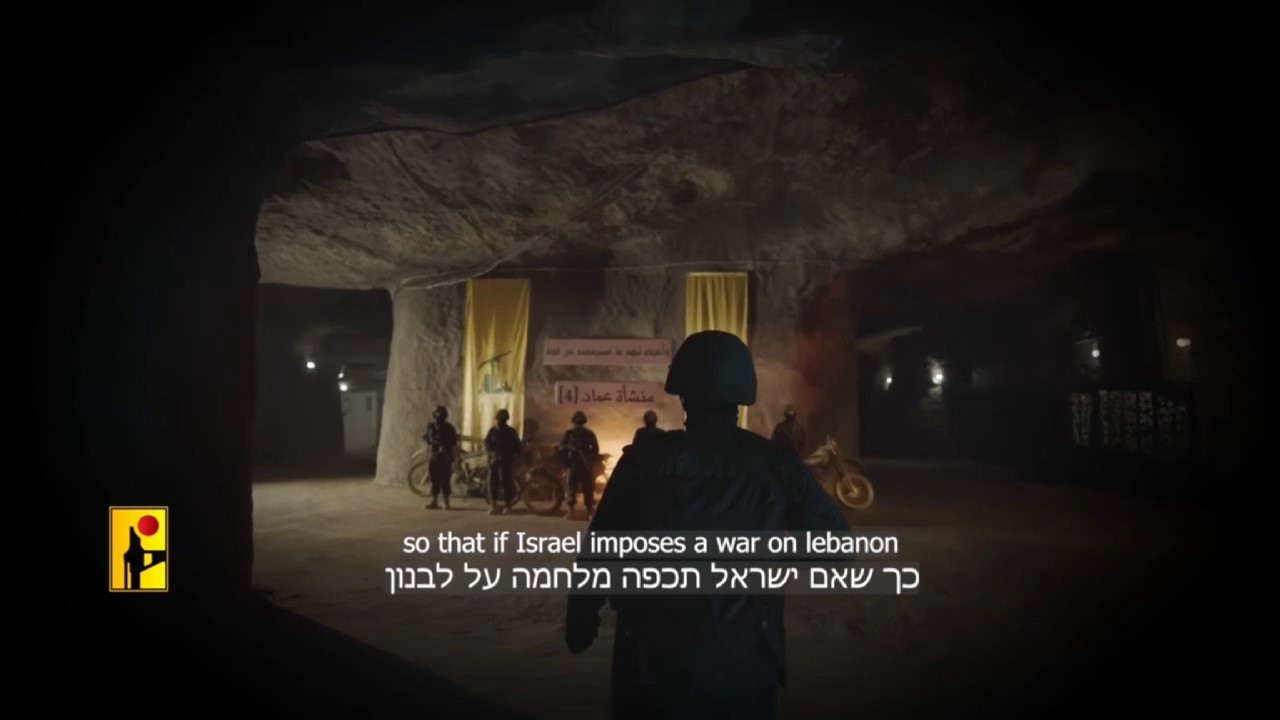
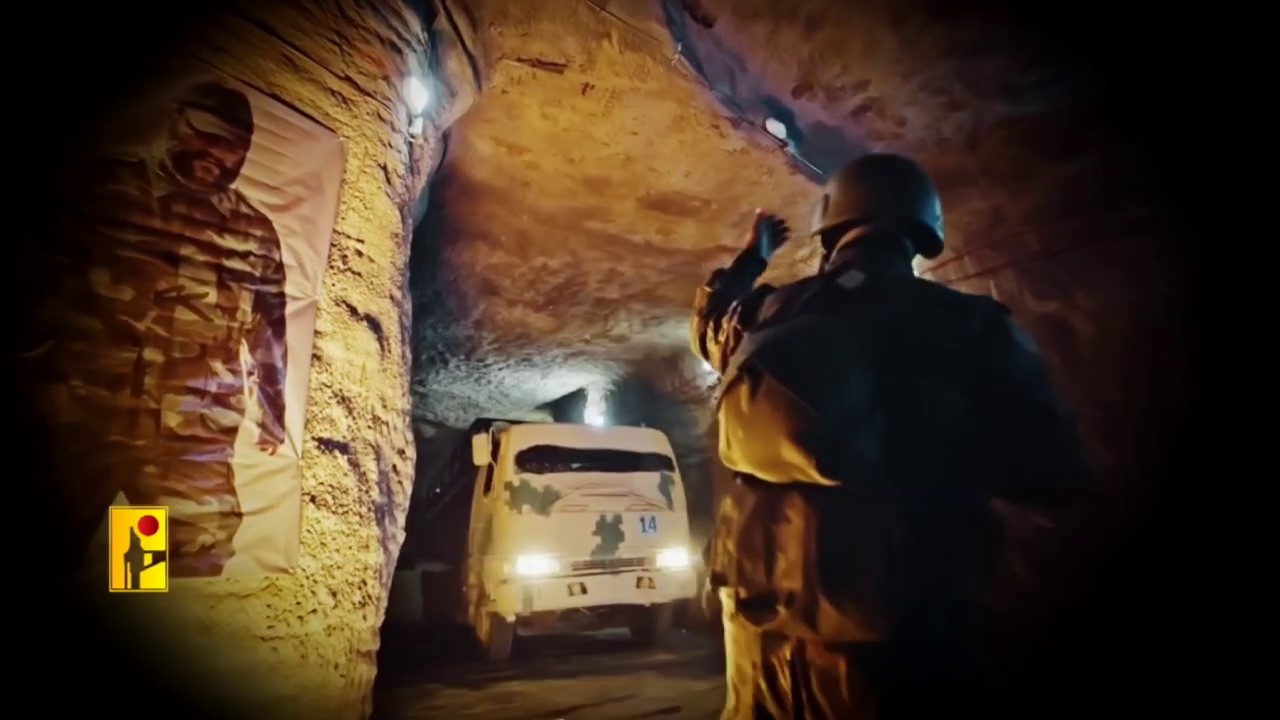
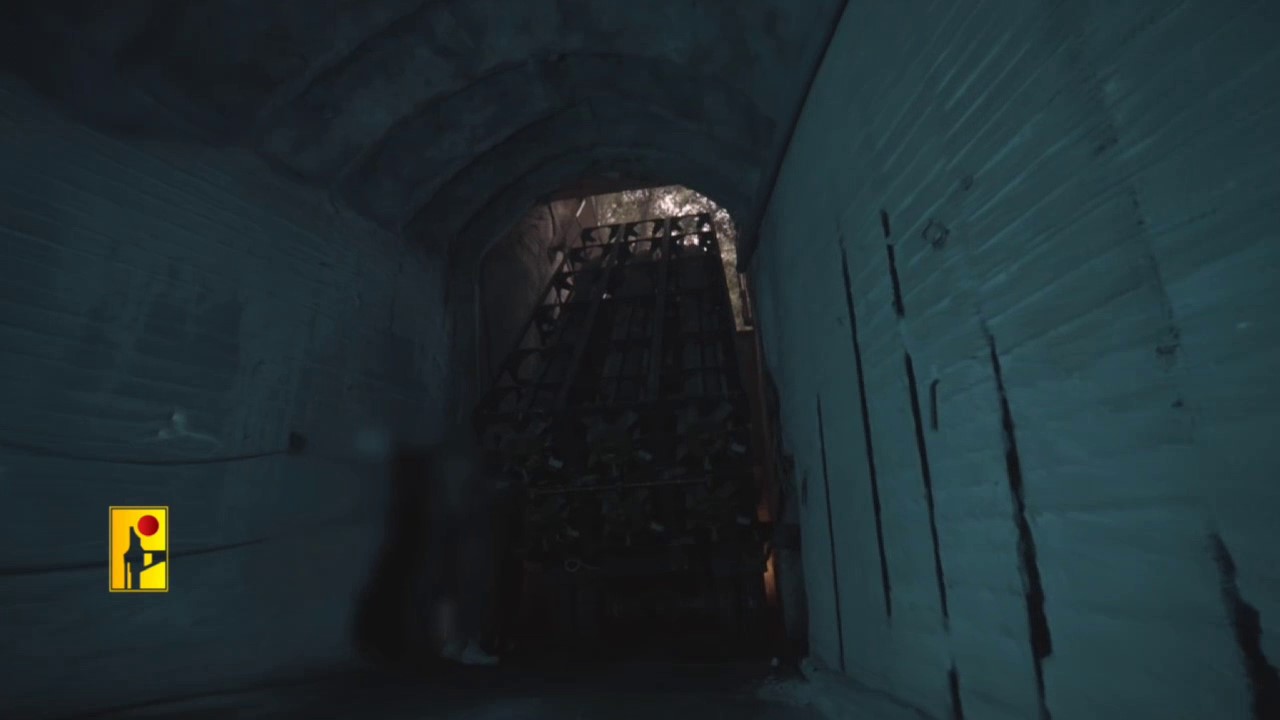
The name of the tunnel, according to a sign on one of the walls, was Imad-4, hinting that this was just one of a number of such tunnels. The commentator mentioned that Hezbollah has missiles capable of covering all of Israel’s territory, all the way from the border with Lebanon to its southernmost point, the city of Eilat.
The Lebanese government has reported that since the beginning of the war, approximately 620 people have been killed and approximately 2,000 wounded. It did not provide a breakdown differentiating between military personnel and civilians, but the casualty numbers among military personnel admitted so far by Hezbollah and other organizations participating in the fighting are about 600 of the total. The casualty breakdown is as follows:
- According to Hezbollah, 435 of its personnel have been killed (48 more since my last report)
- An undisclosed number of Iranian advisers have been killed. At least one was with Hezbollah’s senior military deputy to Nasrallah at the time of his killing, and others have apparently been killed in attacks on Hezbollah storage sites and command posts
- Perhaps as many as 50 non-Shiite members of Hezbollah (at least five and perhaps more since the last report)
- A few dozen members of other Lebanese militias (there are a wide variety – Amal, for example, is a Shiite rival to Hezbollah – and various small Sunni groups)
- At least 90 members of Lebanese-based Palestinian organizations, including Hamas and Palestinian Islamic Jihad (this is new information that significantly increases the number relative to previous reports)
- Numbers of wounded are more difficult to collect, but from anecdotal evidence and the fact that most of the civilian population of southern Lebanon has evacuated north, the vast majority of the 2,000 wounded appear to be military personnel
- Total Lebanese military casualties are now two killed and approximately 10 wounded
The Lebanese government has stated that approximately 102,000 Lebanese civilians have evacuated southern Lebanon (most within the first couple of months of the war) and approximately 20,000 houses across southern Lebanon, as well as a few further north, have been damaged.
Gaza:
The fighting in the Gaza Strip continues at the same reduced pace and with the same methods on both sides. The IDF is deliberately setting the pace, slowly combing through the Rafah area against small pinprick ambushes and raids by Hamas and other groups. IDF units operate both above and below ground.

Since the last report, the IDF also conducted a number of raids into northern Gaza in the Nusayrat and Burayj areas as well as the Khan Yunis area.
In the Rafah area, one hostage (an Israeli Bedouin) was rescued, but his rescue apparently prompted the guards imprisoning six other Israeli hostages at a different site to execute them. Their bodies were discovered in a tunnel a few days later. A Hamas spokesperson said that following the earlier rescue of four hostages in early June, “new instructions” had been given for “action” when Israeli troops approach a location containing hostages. This was essentially a threat that Hamas will kill hostages if IDF units are detected in their vicinity.
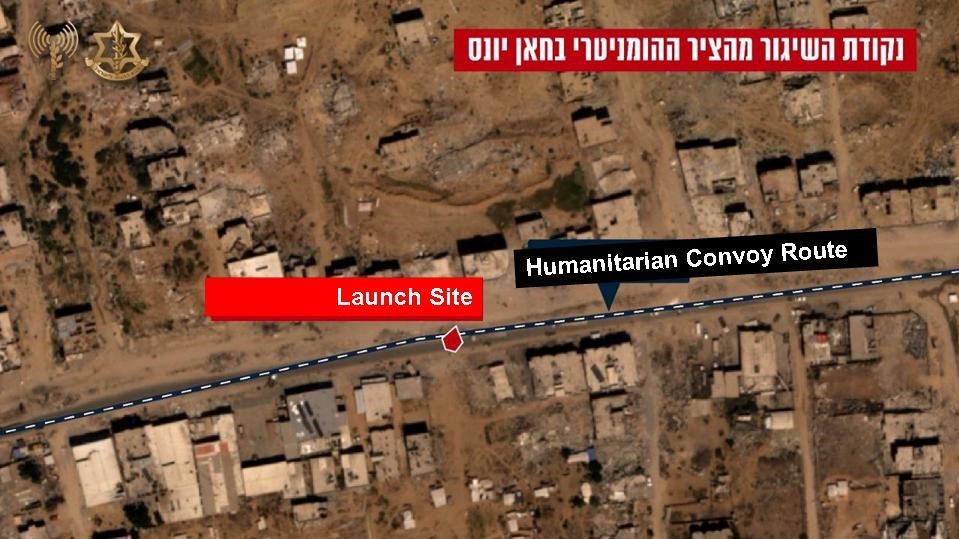
Hamas and other groups are still managing to fire a few rockets per week into Israel, though no Israeli casualties have been reported. One rocket landed in the sea just south of Tel Aviv, most were intercepted or landed on open ground in the areas around Gaza, and some failed to cross the border and landed inside Gaza. To protect themselves, the terrorist launching teams operate from within the safe haven declared by Israel, near the road on which the humanitarian supply convoys travel, or inside schools, mosques, and UNRWA facilities.
A typical example of a rocket launch site adjacent to the Humanitarian Supply Convoy Route. This was the launch site of the rocket fired at Tel Aviv
In another case, a convoy of the humanitarian NGO ANERA was halted by Hamas personnel who commandeered one of the vehicles to travel to an undisclosed location “protected” by the convoy. This was observed by the IDF via a drone monitoring the convoy’s movement and the specific vehicle was destroyed. No ANERA personnel were hurt.
To operate against the launch teams, the IDF periodically changes the instructions to the Gaza population about areas where they can be and areas to which they must evacuate. It also conducts precision strikes on specific targets. Hamas responds by invariably claiming large numbers of civilian casualties in these strikes.
In one example, on 10 August the IDF attacked a Hamas command post during a meeting there and killed 31 Hamas commanders and other personnel, all of whom were verified by name. Hamas claimed that none of its personnel were there and that the IDF had massacred about 100 civilians. On local social media in Gaza, obituaries naming only 33 people were published, of which 31 corresponded to the IDF’s list. Furthermore, Hamas claimed that the IDF had used a one-ton bomb (the type President Biden refuses to provide Israel), but photographs of the damage published by Hamas and Gazan individuals do not show the level of damage such a large bomb would have caused. The IDF stated that three small precision munitions had been used, and a nearby school and mosque were not damaged.
As usual, a flood of condemnations of Israel in Western media and by Western politicians was quickly issued, all accepting Hamas’s version and dismissing Israel’s and without bothering to check the facts.
The IDF found several dozen smuggling tunnels between the Rafah area in Gaza and Egypt. These are the tunnels through which Hamas and the other groups imported their heavy weapons. These discoveries are increasing tensions between Egypt and Israel, as it is Egypt’s responsibility to prevent the existence of the tunnels. There have been reports that not only did it stop doing so, but high-ranking members of the Egyptian regime receive commissions on the operation of these tunnels.
A smuggling tunnel crossing the border into Egypt. The vehicle parked inside it is Israeli to show its dimensions
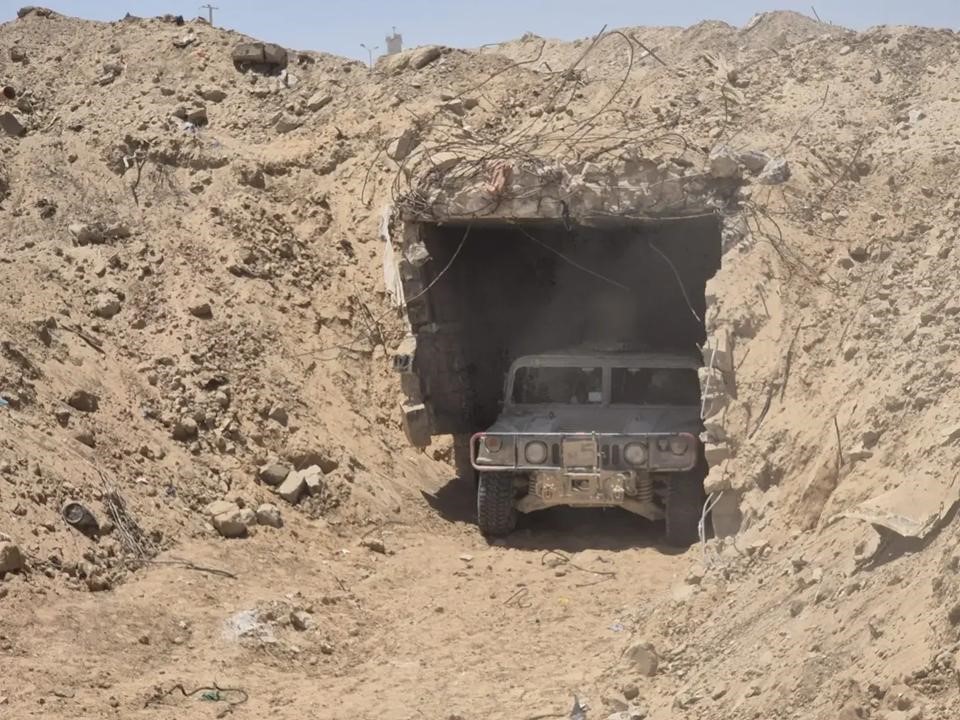
(This is not the original entrance to the tunnel. To bypass explosive booby-traps, the IDF digs into located tunnels through the roof)
Inside Gaza, in addition to fighting Israel, Hamas is busy asserting its threatened dominance over other Palestinian factions. There are reports by Gazans of executions, abductions, and beatings of critics or members of other factions that have taken too independent a stance. Hamas of course reports all these cases as dealing with “collaborators with the Zionists”. For all the talk of “the day after”, there can be no day after so long as Hamas remains the most powerful force in Gaza.
The IDF published numbers for the supplies being provided to the population of Gaza:
- First, on the issue of preventing casualties by warning the population of impending operations: the IDF has dropped 9.3 million leaflets with instructions, conducted 100,000 telephone conversations with locals, and sent 15.5 million text messages and 17 million recorded messages.
- As to supplies being sent into Gaza: Up to the beginning of September 2024, more than 49,100 trucks carrying supplies and 9,930 air-dropped packages entered the Strip. These included food, medical supplies, some 25 million liters of gasoline, and 20,000 tons of cooking gas.
- Electricity: Before the war, Israel provided electricity to Gaza on 10 lines. Hamas cut nine of them, and now complains that there is a drastic reduction in electric power available for civilian use.
- Water: Before the war, Israel provided Gaza with drinking water through pipes. It has built another pipe and Egypt has built two more. Among the trucks sent into Gaza, almost 2,500 carried water.
- Health: Gazan civilians in need of medical care have been evacuated through Israel. Also, in addition sending copious amounts of medical equipment and medicines into Gaza, Israel sent 1.26 million polio vaccines into Gaza via its own territory last week. Within three days of their arrival, already approximately 200,000 Gazans were vaccinated.
Judea and Samaria:
Throughout August there has been an escalation in Palestinian attacks in Judea and Samaria or emanating from that area into Israel. The difference is not in the total number of attacks but in the methods. There have been more attempts to conduct suicide bombings, with individuals carrying bombs on their bodies and cars loaded with explosives.
The Israel Security Agency’s Monthly Summary for August – number of attacks on Israelis in or from Judea and Samaria
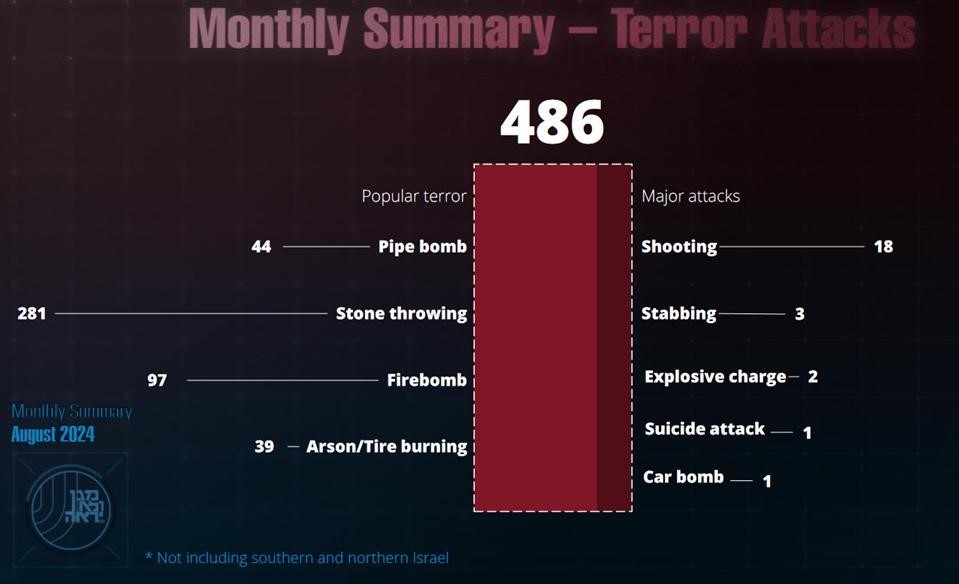
Thus: in July, there were 500 attacks, but 343 were stone-throwing whereas in August there were more attacks involving firearms, explosives, and fire bombs. Also, there were three failed attempts to drive cars filled with explosives into Israeli villages. One was a failed attempt to explode a bomb next to a passing civilian bus. The bus was damaged but no one was hurt.
These attacks killed four Israeli civilians and wounded 12. Also killed were four Israeli soldiers and policemen. Seventeen more were wounded.
In response to this escalation, the IDF escalated its offensive counter-terrorist operations and on 29 August began its biggest offensive operation since 2002. While the operation was conducted in a number of Palestinian towns and villages, in other areas, Palestinian terrorists continued to attack passing cars or roadblocks and to infiltrate into Israeli villages.
Each IDF entry into Palestinian towns faces varying intensities of resistance, including bombs dug under roads (which are cleared by bulldozers that tear up the asphalt), rifles, machine guns, grenades, and improvised hand-thrown bombs as well as petrol bombs. During the operation a number of Israeli soldiers and policemen were wounded.
The Palestinian Authority stated that 39 Palestinians had been killed and 145 wounded all together. From the obituaries published, almost all were members of Hamas, Palestinian Islamic Jihad, the Fatah militia, and a few Palestinian Authority personnel who, contrary to orders, joined the fight against the IDF. Hundreds of members of the various groups were captured and a large quantity of weapons stores were taken and cleared or destroyed in situ.
Apart from the official response, there was also an escalation of violence by Israeli civilians who conducted revenge raids on Palestinian villages from which they were attacked. The IDF and Israeli police had to send troops to these villages to force these Israelis away, and they arrested a number of them.
Throughout the month, there have been gunfights between the official Palestinian Authority security forces, controlled by the Fatah, and the militias of other Palestinian factions. The Palestinian Authority security forces cleared bombs placed by Hamas, etc., arguing that they threatened the lives of Palestinian civilians living near or driving on the roads beside which they had been placed.
The Palestinians claim that more than 10,200 people have been arrested since 7 October 2023, but the official Israeli number is approximately 4,950 (about 700 more since my last report), of whom approximately 2,000 belong to Hamas and the others to other groups. The discrepancy is apparently because the Palestinians count anyone who was detained as “arrested” even if they were released after questioning. They also claim that more than 690 Palestinians have been killed since 7 October 2023, but do not provide a breakdown between armed personnel of the various factions and civilians. This figure is 170 more than in my previous report, but not that many Palestinians have been reported killed in this period. The reason for this discrepancy is not clear.
Iran and its proxies versus the US and its allies:
On the Yemen/Red Sea front, strikes and counterstrikes continue. The total number of Houthi attacks on ships since the beginning of the war is approximately 340.
Most of the Houthi attacks over the past month failed to cause damage, but a few ships were hit. The most serious damage was sustained by a Greek ship carrying oil that was attacked first by manned boats that tried to close to it and board it – the attackers were driven back by fire from the ship’s security detail – and was then hit by two or three missiles that set it on fire, forcing the crew to abandon it. This ship has been burning for a week and has begun to leak.
American and British airstrikes on the Houthis have caused them some casualties and damage but have not had any effect on the frequency of their attacks. The Houthis claim to have shot down an American Reaper attack drone, the seventh so far.
In Iraq and Syria there has been an escalation in attacks on US camps by Iraqi Hezbollah. Approximately 10 US personnel were wounded in two separate attacks. After one incident the US retaliated with an airstrike than killed 6-8 Iraqi Hezbollah personnel and wounded 15.
Israeli casualties:
The total number of Israelis confirmed killed in this war is now 1,664 (15 more since my previous report) with another 17,809 wounded (636 more since my previous report, the majority of them soldiers).
Of the above 1,664 Israelis killed, the total currently confirmed killed on the single day of 7 October is 1,184 – civilians, military, police, firefighters, medical personnel, etc. The body of the last person who was defined as missing since 7 October has been located inside Israeli territory and identified – a 76-year-old resident of a village near Gaza. Some of the people kidnapped to Gaza were dead when taken or have died in captivity and are still not confirmed as dead.
There are still 101 kidnapped Israelis and non-Israelis in Gaza. The current estimate is that at least 35 of them are dead and perhaps more. Some were killed on 7 October and their bodies taken to Gaza and some were killed during their captivity. In the negotiations with Hamas, Israel has demanded a list of those alive and those dead, but Hamas refuses to provide such a list. Furthermore, Hamas claims not to know the whereabouts of a few dozen of the kidnappees. Some are in the hands of other groups or even “private” clans that joined the assault on Israel in the third wave of the Hamas attack on 7 October.
A total of 19 Israeli civilians have been killed in Hamas rocket attacks since 7 October 2023, all in the first couple of months. Twenty-six have been killed by Hezbollah (three more since the last update) and one by a Houthi exploding drone that hit Tel Aviv for a total of 46 Israeli civilians killed after 7 October (not including kidnappees murdered while in captivity).
As of 5 September 2024, a total of 706 IDF soldiers have been killed on all fronts (17 more since my last update, including newly confirmed deaths that occurred on 7 October and among kidnappees).
Initially the number of Israelis who were forced to leave their homes in 64 villages and towns along the borders with Gaza and Lebanon reached approximately 250,000. The number of those returning to their homes since my last report has grown, mostly in the areas around Gaza, so the current number of Israeli refugees is approximately 143,000 (about 7,000 fewer than in my last report). Some sources claim that more have since returned to their homes, but the number is not clear.
Palestinian casualties:
The Gaza Health Ministry, which is controlled by Hamas in its role as the government of Gaza, claims that so far approximately 40,900 Gazans have been killed and approximately 94,400 wounded. They do not differentiate between personnel of Hamas and other terrorist organizations and civilians. According to IDF statements, at least 17,000 Hamas and other terrorists have been killed and several thousand more wounded. The IDF has also captured many terrorists, though the exact number has not been divulged. From anecdotal information the figure can be estimated as approaching 3,500.
Given that Hamas and the other groups had 40,000 to 50,000 personnel between them (possibly more, as different sources provide different numbers and there is a problem counting part-timers as opposed to regulars or official “reserves”), the dead, wounded and captured, who number almost 30,000, represent a sizeable chunk of their manpower. However, we have no information on the recovery rate of wounded. A report has come out claiming that Hamas has recruited about 3,000 new personnel.
WHAT NEXT?
In essence, the situation has not really changed from previous updates.
Hezbollah’s revenge attack was planned to be much more powerful than any previous attack, but it failed. At least for the moment, it seems that Hezbollah prefers to pretend it succeeded rather than try again. It has reverted to the level of attacks before the revenge operation.
Iran is still promising retribution but has not yet conducted any clear action other than to increase its efforts to smuggle arms into Judea and Samaria.
Of course, Hezbollah might be pretending to have backed off in order to rethink its strategy, which clearly failed on 26 August, and Iran may be planning an operation that requires more time – that is, not just a repeat of the missile strike of a few months ago.
It is possible that the failed terrorist attack attempted in Argentina was part of this retribution operation, but it is not clear whether it was in the name of Hezbollah or Iran.
The negotiations between Israel and Hamas continue, but no real progress is likely so long as Hamas continues to demand a complete cessation of the war and withdrawal of Israeli troops from Gaza and Israel continues to refuse to accept these conditions.
As things seem now, the most likely scenario for the near future is the continuation of the current level of fighting on all the borders.
All eyes in the Middle East are on the American elections in November and the question of what American policy toward the region will be. Will it change? And if so, in what direction? Will there be more pressure on Israel to halt the war without achieving its goals or more support for Israel to achieve those goals?
***
21 – 31 July 2024
WHAT HAS HAPPENED?
Israel-Hamas negotiations:
Not much has changed since the last report.
The negotiations continue with rumors abounding about supposed changes in Israel’s or Hamas’s positions, but every time the smoke clears, it becomes clear that nothing has changed with regard to the central issue, which is the prerequisite for everything else: Hamas still demands a total cessation of Israeli operations and total withdrawal of all Israeli troops from the Gaza Strip, with international guarantees that after the return of the kidnappees Israel will not resume its offensive. Israel continues to refuse to accept these conditions.
All supposed progress in the negotiations is about details – how many kidnappees will be returned on what timetable and how many captured Palestinian terrorists Israel will give in return.
Lebanon:
The focus of attention since the last report has been the Lebanese front.
The exchange of fire on the Israel-Lebanon border continues at a varying but fairly low intensity. However, one incident overshadowed all others: the killing of 12 children in the Druze village of Majdal Shams on the Golan Heights and wounding of 20. The rationale behind Hezbollah’s shooting in the direction of these villages is not clear. The villages and population are regarded by Syria as theirs, and officially, most of the population are Syrian citizens, not Israeli. Israel annexed the Golan Heights in 1981 and has allowed, but not compelled, those Druze who live there to acquire Israeli citizenship. Few have done so because they have families in Syria and do not want reprisals against them; and in any case, they receive the benefits of being permanent residents in Israel even without Israeli citizenship. A minority is ideologically committed to being Syrian.
Before the civil war in Syria, which began in 2011, many Golan Druze studied at Syrian universities or conducted business there. The civil war more or less brought this to a halt, and more Druze accepted their status as residents of Israel.
However, attacking them makes no political sense for Hezbollah. The rocket strike angered the Lebanese Druze, who are semi-allies of Hezbollah, as well as Druze across the Syrian border who have relatives living in villages in the Israeli Golan. (The Syrian Druze were allies of the Syrian regime and Hezbollah during the civil war, and some of them helped Hezbollah conduct attacks on Israel from their villages in 2014 until Israel responded forcefully – simultaneously saving them from an offensive by Syrian rebels, in a typical example of the complex nature of Middle Eastern politics.) The Syrian regime claimed that the attack that killed the 12 children was perpetrated by Israel itself, and that Israel had falsely blamed Hezbollah. The Golan Druze did not accept this claim. Ascribing the attack to an aiming error is problematic because from the source of fire to the villages, there are no Israeli targets to be missed. Nor are there any in the immediate vicinity of the Druze villages.
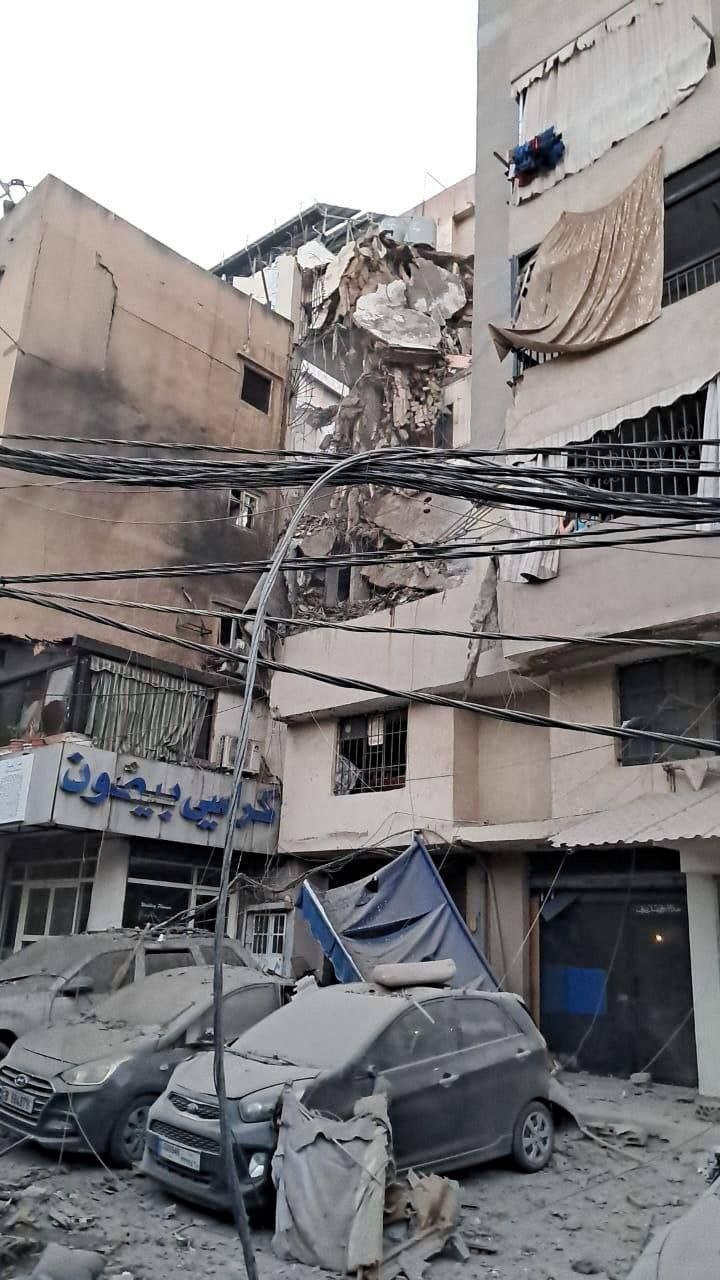
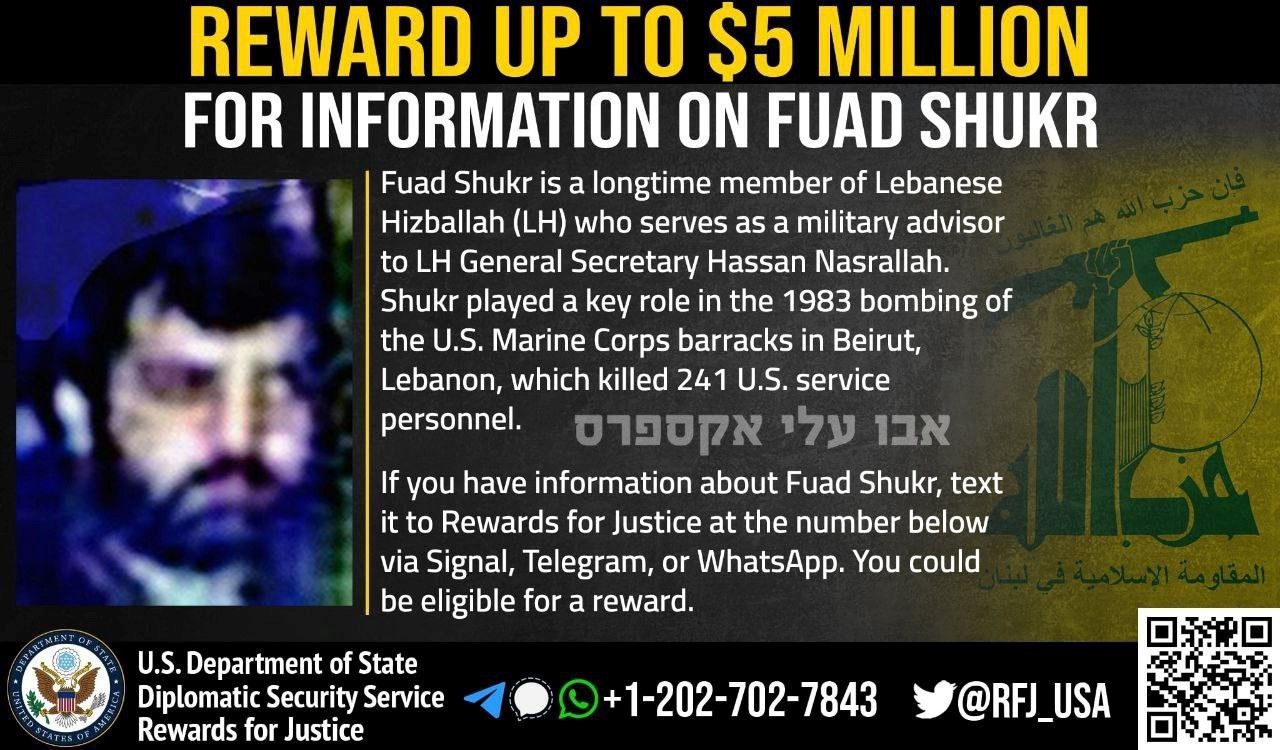
On 30 July, after a few days of deliberations and a very slight escalation in attacks by the IDF, Israel conducted a strike inside the Hezbollah-controlled district of Lebanese capital Beirut – the first in the entire war. The target was the highest-ranking commander in Hezbollah since the killing of Nasrallah’s predecessor in February 1992. Fuad Shukar was Nasrallah’s military deputy and commander of the Hezbollah Strategic Forces (rockets, surface-to-surface missiles, exploding drones, shore-to-sea missiles) – i.e., the commander directly in charge of conducting the bombardment of Israel over the past 10 months.
Now the ball is in Hezbollah’s court.
Before Israel’s response, a series of airlines cancelled flights to Lebanon and various foreign embassies urged their citizens to leave the country.
There is growing criticism by non-Shiite politicians of Hezbollah’s actions. Most of the critics are Christians. The Majdal Shams incident elicited a mild rebuke from the Lebanese Druze leaders, who are Hezbollah’s allies.
The building hit in Beirut (From a Lebanese social media site via Israeli blogger Abu Ali Express)
An American Wanted poster about the target of the Israeli attack
In a separate incident, another Israeli civilian was killed by a rocket that managed to penetrate Israel’s rocket defenses and hit a kibbutz below the Golan Heights, about 15 kilometers west of Majdal Shams.
Since the last report, Hezbollah has fired approximately 500 more rockets, exploding drones, and long-range anti-tank missiles into Israel, bringing the total since 8 October 2023 to approximately 6,200 rockets and drones and a few hundred guided anti-tank missiles (mostly Kornets, some the latest Russian version with ranges of up to 10 kilometers, and al-Mas, which are high-trajectory missiles that can be fired over ridges to targets hidden behind them).
Hezbollah has admitted that 387 of its personnel have been killed so far (another 14 since my last report). At time of writing, they have not officially admitted the death of Fuad Shukar, claiming all the casualties in the Israeli strike (four killed and 74 wounded) were civilians.
This number does not include non-Shiite members of Hezbollah who probably add at least a few dozen more to the total (a handful more since the last report). In addition to those killed, several hundred have been wounded. No official number has been released, and Hezbollah’s reporting of wounded is vague.
Other Lebanese and Lebanese-based Palestinian organizations (including Hamas) have participated in exchanges of fire and a few more members of these groups have been killed since the last report, though I have not found reliable numbers. The total is approximately 90 (the lowest estimate I have seen is at least 50) since 7 October.
Total Lebanese military casualties are now two killed and approximately 10 wounded (a few more than in the last update).
The Lebanese government reported that 98,000 Lebanese civilians have left their homes in southern Lebanon to escape the fighting. Not stated is that they are predominantly Shiites, as the Christian and Druze communities of southern Lebanon (a numeric minority) do not feel directly threatened and generally resist Hezbollah’s attempts to use their villages for operations against Israel. On 23 July (eight days ago), they provided casualty figures of 490 killed and approximately 1,900 wounded. However, they did not state who the casualties were. A UN report claimed that about 100 civilians have been killed, but Hezbollah had already admitted by that date that it had lost approximately 380 personnel and that all other military casualties had reached at least 50 and possibly up to 90, so the actual number of civilian fatalities is less than the UN claim.
Gaza:
Not in Gaza, but directly related to it: Ismail Haniyeh, chief of the Hamas political wing since 2017 (essentially the political leader of the organization), and one of his bodyguards were killed in Tehran, the capital of Iran. Haniyeh was there to attend in the inauguration of Iran’s new president (the previous president was killed in a helicopter crash a few months ago). Haniyeh was killed several hours after returning to his Tehran residence.
The fighting in the Gaza Strip continues at the same reduced pace and with the same methods on both sides.
The IDF is setting a deliberate pace, slowly combing through the Rafah area against pinprick ambushes and raids by Hamas and other groups. Apparently, most of the Palestinian terrorists fled along with the civilians when the IDF provided evacuation notices to the latter and are now trickling back to fight. Preventing the flight of terrorists with the civilians would have required the IDF to first conduct a rapid attack through the area north of Rafah to cut off access between it and Khan Yunis and the designated safe haven, but that would have increased civilian casualties and so was not viable politically.

The latest IDF raid into eastern Khan Yunis lasted two weeks. During that raid, IDF soldiers found the bodies of five more Israelis who were killed on 7 October and then abducted dead. They were hidden inside a tunnel behind a false wall. According to one report, the information enabling their recovery was acquired from a captured Hamas terrorist. The IDF reported that during this raid, 150 terrorists were killed. The population that had been evacuated from the area of the raid prior to its start was allowed to return.
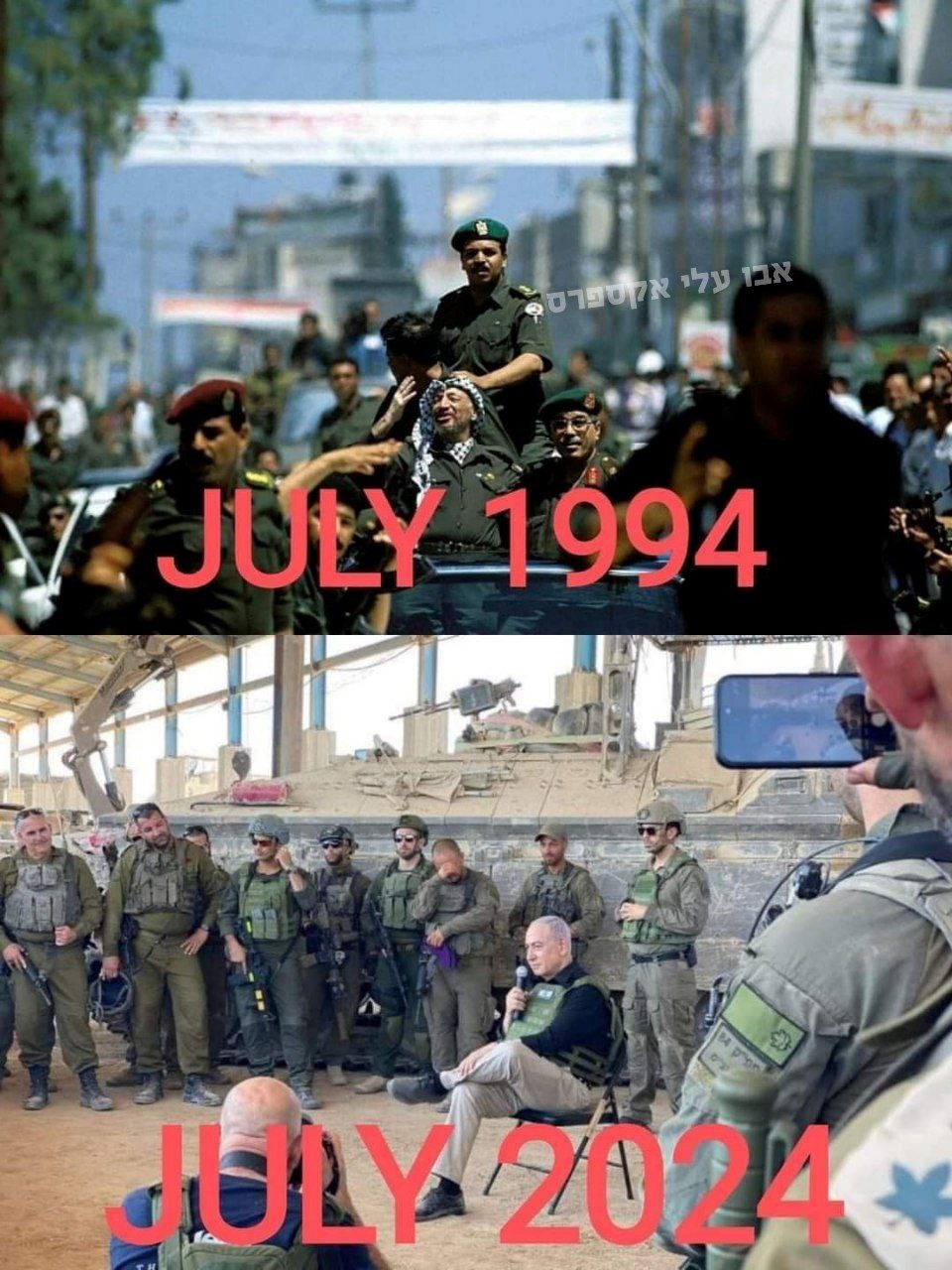
Fatah propaganda against Hamas (provided by Israeli blogger Abu Ali Express from Palestinian social media):
In July 1994 Arafat entered Gaza following the Oslo Accords; In July 2024 Israeli Prime Minister Netanyahu entered Gaza. (photograph from a visit at the front in Rafah) The message: We, Fatah, liberated Gaza, and you, Hamas, destroyed it.
The latest IDF raids into northern Gaza were also withdrawn. Conversely, the population of the northern area of Nusayrat and Burayj (south of the IDF cordon separating northern Gaza from the rest of the Gaza Strip) was told to evacuate and airstrikes and small raids have been conducted there.
The IDF conducts airstrikes in areas where its ground troops are not operating. These strikes are based on intelligence, and last-minute evacuation orders are provided to civilians living in or very near the target. Hamas and the other groups have been using UNRWA facilities, schools, and other “sensitive” locations to protect their personnel; the IDF locates them, monitors them, and then strikes them. Each time this occurs, Hamas claims that all the casualties incurred were civilians. The IDF provides information that they were mostly terrorists, though unfortunately some civilians have been hit too.
Hamas fired rockets from inside the safe haven area, so a portion of it was declared a combat zone and the population there told to evacuate. Some of the rockets fell inside Gaza, including on an UNWRA school in Khan Yunis, causing Palestinian casualties.
During the fighting in Gaza, three Israeli soldiers have been killed since my last update and a few dozen wounded (a few severely but most of them only lightly).
As time passes, it seems more and more likely that the Hamas supreme military commander, Muhammad Deif, was indeed killed in the airstrike reported in the last update.
On a completely different note: Only a few days after signing a conciliation agreement with Fatah in Beijing, Hamas initiated a series of arrests of Fatah personnel in northern Gaza. The number of such agreements signed and broken since the all-out 2007 civil war between the two Palestinian factions, which left Hamas in control of Gaza and Fatah in control of Judea and Samaria, is beyond counting.
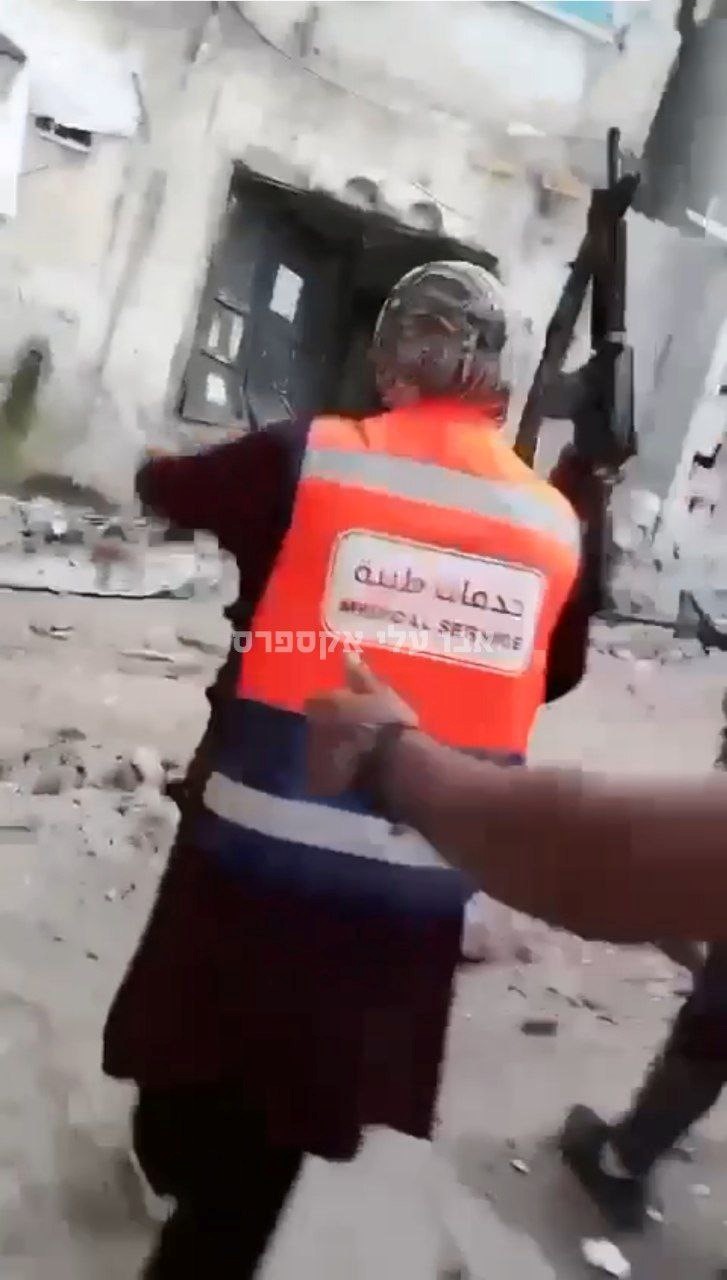
Palestinian “civilian” medic in action (from a video posted on Palestinian social media, provided by Israeli blogger Abu Ali Express)
Judea and Samaria:
The fighting in Judea and Samaria continues.
Each IDF entry into Palestinian towns faces varying intensities of resistance, including bombs dug under roads (cleared by having bulldozers tear up the asphalt), rifles, machine guns, grenades, and improvised hand-thrown bombs as well as petrol bombs.
Since my last report there have been a couple of hundred more Palestinian attacks in or emanating from Judea and Samaria, bringing the total number of Palestinian attacks since 7 October 2023 to approximately 4,000. Several Israeli civilians and soldiers were wounded but none killed. An Israeli soldier wounded inside Israel on 14 July, when he was deliberately run over by a Palestinian driver, died of his wounds. The total since 7 October is 16 Israeli civilians and 13 soldiers killed in Judea and Samaria and approximately 85 Israeli civilians and 140 soldiers wounded.
The Palestinians claim that more than 9,855 people have been arrested, but the official Israeli number is approximately 4,250 (no official update since my last report, but partial reporting adds a few dozen arrested all told) of whom approximately 50% belong to Hamas and the others to other groups. The discrepancy is apparently explained by the fact that the Palestinians count anyone who was detained, even if they were released after questioning. Approximately 520 terrorists have been killed (approximately 10 more since my last report), mostly during Israeli raids on their bases in the major Palestinian towns and the rest while conducting attacks on Israeli soldiers and civilians. The majority of those killed are Hamas, some are Palestinian Islamic Jihad, but quite a few are also from Fatah-controlled armed groups. Fatah governs the Palestinian Authority in Judea and Samaria and officially supports the peace treaty with Israel, but unofficially (for deniability reasons) maintains armed groups that conduct terrorist attacks. These are often manned (supposedly while off duty), funded, and trained by the official armed forces of the Palestinian Authority.
Occasional skirmishes continue between the Palestinian Authority’s security forces and Hamas and Palestinian Islamic Jihad cells. In at least two cases, these have included the detonating of bombs targeting Palestinian Authority security patrols inside the Authority’s sovereign controlled territory. At least one security officer was wounded. In another case, Palestinian Authority security personnel entered a hospital in Tulkarem to arrest a Palestinian Islamic Jihad commander wounded in a skirmish with Palestinian Authority security forces (a bomb he tried to hurl at them exploded prematurely), but he managed to escape with the help of civilians in the hospital and other armed members of his faction. His escape was afterwards feted by a street celebration. This suggests the relative popularity among the local population of Fatah, which dominates the Palestinian Authority, and its rivals.
Such skirmishes are not infrequent, especially since the full-blown civil war in summer 2007 that separated control over the Palestinian Authority between Fatah in Judea and Samaria and Hamas in Gaza. The Palestinian Authority appears to have decided that the use of under-road and side-of-road bombs against Israeli forces entering its territory is causing more damage to Palestinians than to Israelis and has conducted clearing operations to get rid of them. Hamas and Palestinian Islamic Jihad have criticized the Fatah-controlled security forces for assisting the IDF.
During their skirmishes, the factions often cooperate to attack Israelis. Symbolic of this occasional cooperation is that during the funeral of a killed terrorist, his body was draped in the flags of Fatah-affiliated organizations while being carried to the grave and then in Palestinian Islamic Jihad flags at the grave itself.
Iran and its proxies versus Israel:
There is little to report in this area. The IDF reported shooting down a couple of exploding drones flying from the east, apparently launched by Iraqi Hezbollah (technically, they are divided into several organizations with different names, but the concept is the same as that of Lebanese Hezbollah, so for the sake of brevity I am using this term).
The Houthis reported that casualties of the Israeli airstrike, reported in the last update, on Yemen’s Hoodeyda port – a strike that was in response to the killing of an Israeli and wounding of four Israelis in Tel Aviv by a Houthi drone – were six killed, 83 wounded and three missing. A petrol farm was destroyed along with cranes for unloading ships, though some are still functioning. The port began to receive ships again a few days after the strike.
The inauguration ceremony of the new Iranian president included a portion dedicated to cries of “Death to Israel!” and “Death to America!”
Iran and its proxies versus the US and its allies:
Following the Israeli strike on the Yemenite port, the US and Britain attacked another port and have conducted other strikes as well. The Houthis launched a few more attacks on ships passing through the Bab al-Mandab Straits but there were no reports of major damage.
Meanwhile, there has been a minor escalation over the past few weeks in attacks on American bases in Syria and Iraq (no casualties reported). There has been at least one American retaliation (casualties were reported at one of the Iraqi Hezbollah organizations).
Turkey:
Turkey’s president again criticized Israel, claiming it is conducting a genocide in Gaza more severe than that conducted by Hitler against the Jews. In a separate statement given on another occasion, he said, “Just as we entered Karabakh and Libya, we will do the same to Israel“. In other words, he threatened to use the Turkish military to attack Israel.
Turkey has the second-largest military force in NATO, and that force is considerably bigger than that of Israel. However, Turkey and Israel are separated by Syria, which is hostile to Turkey because of Turkey’s incessant support for the Syrian rebels as well as its occupation of enclaves in northern Syria and on the Mediterranean Sea. Employing the Turkish military at a distance of more than 500 kilometers from Turkey’s southern coast would of course reduce the effectiveness of its air force and navy and drastically limit the size of the ground forces it could employ (Turkey has only a limited amphibious capability with which to bypass Syria). They could shorten the route to about 280 kilometers by using bases in Turkish Cyprus, but that would require overt preparations that would bring them closer to an Israeli response capability.
Israel’s foreign minister responded by reminding Erdogan that Saddam Hussein made similar threats, and his life didn’t end well.
Beyond measuring Erdogan’s ability to carry out his threat, the question that arises is how serious he was when he made it. Erdogan has made such threats before. The hostile relations between Turkey and Israel have brought Israel closer to both Greece and Greek Cyprus in military cooperation. Israeli forces have been allowed to conduct training in both countries, and the IDF and Israeli military industries have provided them with knowledge and technical capabilities.
The reference to Karabakh and Libya is interesting. The Turkish military presence in Libya is known and overt. It involves mostly drone support and perhaps some special forces. Turkey has always, however, denied involvement in the Karabakh wars (and Azerbaijan quickly denied it again after Erdogan’s statement). It was claimed, with minimal evidence, that Turkish operators flew combat drones supplied by Turkey, that Turkish fighter jets were present (Armenia claimed that one of them shot down an Armenian aircraft), that a Turkish AWACS aircraft provided air control and intelligence, and that Turkish special forces participated in the ground fighting. Is the reference to these cases merely a political example, or does it provide a hint of the expected extent of Turkish intervention if Erdogan orders it? Answering that would be pure speculation.
After the killing of Ismail Haniyeh, Erdogan published a statement that “I strongly condemn the treacherous assassination of my brother…“.
Israeli casualties:
The total number of Israelis confirmed killed on and since 7 October 2023 is now 1,649 (29 more than my previous report) with another 17,173 wounded (almost 200 more than my previous report, most of them soldiers).
Currently the total confirmed killed for the single day of 7 October is 1,183 – civilians, military, police, firefighters, medical personnel, etc. Some people are still unaccounted for, and some of those kidnapped to Gaza were dead when taken or have died in captivity and are still not confirmed.
There are still 111 kidnapped Israelis and non-Israelis in Gaza. How many are alive and how many dead is not known, though the current estimate is that at least 35 are dead and probably more. In the negotiations with Hamas, Israel has demanded a list of those alive and those dead, but Hamas has refused to provide it. Furthermore, Hamas claims not to know the whereabouts of more than a few dozen of the kidnappees, some of whom are in the hands of other groups or even “private” clans who joined the assault on Israel in the third wave of the Hamas attack on 7 October.
Nineteen Israeli civilians have been killed in Hamas rocket attacks since 7 October 2023, all in the first couple of months; 23 by Hezbollah (13 more since the last update); and one by a Houthi exploding drone that hit Tel Aviv, for a total of 43 Israeli civilians killed after 7 October (not including kidnappees murdered while in captivity).
As of 20 July 2024, a total of 689 IDF soldiers have been killed on all fronts (seven more since my last update, including newly confirmed deaths since and including 7 October; two are newly confirmed as having been killed on 7 October).
Of the almost 17,200 Israeli wounded, nearly 2,000 were wounded on 7 October. Approximately 3,650 are civilians and approximately 13,550 are soldiers (career personnel, conscripts, and reserves). In early June, the number of IDF soldiers reportedly admitted to rehabilitation treatments (signifying a higher level of injury) was updated to approximately 10,000. There has been no update since then.
Initially the number of Israelis who were forced to leave their homes in 64 villages and towns along the borders with Gaza and Lebanon reached approximately 250,000. The number of those returning to their homes has grown (mostly in the areas around Gaza), bringing the current number of Israeli refugees to approximately 150,000. Some sources claim that more have since returned, but the number is not clear.
Palestinian casualties:
The Hamas-controlled Gaza Health Ministry claims that so far, approximately 39,400 Gazans have been killed and approximately 91,000 wounded. They do not differentiate between personnel of Hamas and other terrorist organizations and civilians. According to the IDF, at least 16,000 Hamas and other terrorists have been killed and several thousand wounded. The IDF has also captured many terrorists, though the exact number has not been divulged. From anecdotal information it can be estimated as approaching 3,500.
Given that Hamas and the other groups had 40,000-50,000 personnel between them (possibly more, as different sources provide different numbers and there is a problem counting part-timers as opposed to regulars or official “reserves”), the dead, wounded, and captured, who total almost 30,000, represent a sizeable chunk of their manpower. However, we have no information on either the recovery rate of the wounded or the recruitment rate of new personnel, who may be less trained but still add to the numbers. Hamas youth movements (equivalent to Scout movements) conduct basic firearms training from an early age, so Hamas has a recruitment pool of teenagers available to join the fighting. The incidence of surrendering rather than fighting to the death has increased, indicating morale problems, but not to a significant degree. The fighting is far from over and the organizations have not yet been broken.
WHAT NEXT?
In essence, the situation has not really changed from previous updates. However, the question now on the table is how Hezbollah and Iran will respond to the killing of Nasrallah’s deputy in Beirut and Hamas’s political leader in Tehran. A limited response would continue the trends described up to today. A powerful response could sharply change the trends to a much more severe escalation between Israel and the two Shiite allies.
It should be remembered that the Second Lebanon War began with a similar set of incidents. At that time, an escalatory tit-for-tat became a very low-intensity war that then became a medium-intensity one. Despite officially claiming victory in that war, Nasrallah stated afterwards that had he foreseen the Israeli response to the Hezbollah attack that set off the escalation, he would not have ordered it. Furthermore, whereas prior to the war Hezbollah had conducted a smattering of sporadic small-scale attacks on Israel, it refrained from doing so directly from Lebanon for nine years afterwards. It did attempt covert attacks abroad against Israeli diplomats and tourists (a few of which were successful, especially the attack on a tourist bus in Bulgaria that killed five Israelis, but most failed), and in 2014 it attempted several attacks from Syrian territory.
Throughout the present war in Gaza, Hezbollah and Israel have maintained a certain “agreed” level of fire exchanges with minor escalations as described in these updates. A dramatic escalation could see all of Israel bombarded by tens of thousands of Hezbollah rockets, missiles, and exploding drones aimed at civilians and national infrastructure (Nasrallah has already mentioned targeting Israel’s electricity infrastructure and petrol storage facilities, and has spoken in the past of targeting an industrial ammonia storage site that if hit could release a poisonous cloud over nearby towns.) Israel’s response to such an escalation could involve the destruction of major parts of Lebanon’s infrastructure – especially those parts relevant to the Shiite community – and perhaps a ground offensive into southern Lebanon as well. If these occur, the fighting would be much more intense than what we have seen in Gaza even at its highest intensity. That is because Hezbollah has more forces, is better equipped and better trained than Hamas, and would likely receive reinforcements from other Iranian proxy organizations manned by Iraqi, Pakistani, and Afghan Shiites and perhaps even Iranian forces.
***
20 June – 20 July 2024
WHAT HAS HAPPENED?
Israel-Hamas negotiations:
Not much has changed since the last report.
The negotiations continue, with rumors abounding about supposed changes in Israel’s or Hamas’s positions – but every time the smoke clears, it becomes clear that nothing has changed on the central issue, which is the prerequisite for everything else. Hamas still demands a total cessation of Israeli operations and total withdrawal of all Israeli troops from the Gaza Strip, with international guarantees that after the return of the kidnappees Israel will not resume its offensive. Israel continues to refuse to accept this condition.
All supposed progress in the negotiations is about details: how many kidnappees will be returned, on what timetable, and how many captured Palestinian terrorists Israel will give in return.
Gaza:
Israeli forces continue to gradually work their way through the Rafah district, where they are discovering and destroying Hamas infrastructure. IDF units are operating simultaneously both above ground and in the tunnels underneath. Maintaining coordination in such an operation is difficult because of communications difficulties (the deep tunnels prevent the use of wireless communications with units above ground).
According to the latest reports, approximately 1,000 Hamas personnel have been killed in the Rafah area since the beginning of the Israeli offensive there, about half that figure since the last update. Though there is quite a bit of fighting, the Hamas units are not so much defending territory as conducting “hit and run” actions. They are hunted by some IDF units while other units focus on destroying Hamas infrastructure.
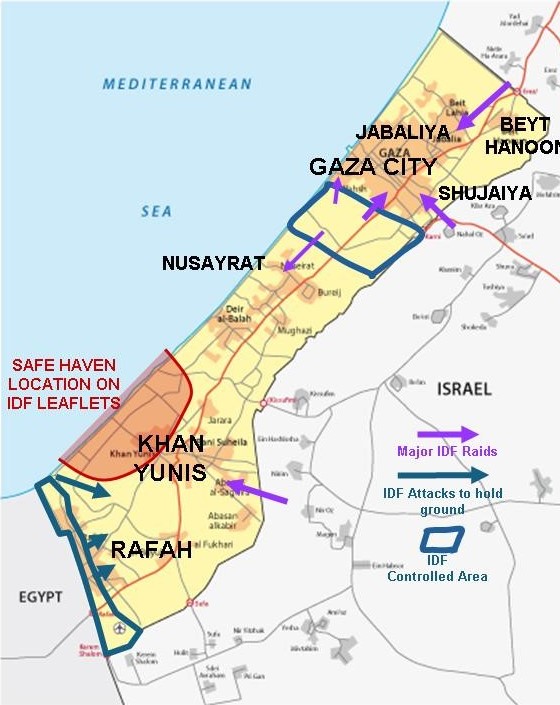
The IDF has also continued to conduct raids into northern Gaza and Khan Yunis whenever concentrations of returning Hamas and Palestinian Islamic Jihad terrorists are discovered, as well as into the Nusayrat area between Gaza City and Khan Yunis. Over the past two weeks, the IDF conducted raids mostly into northern Gaza, while this past week it increased its efforts to cause the remaining population in that area to evacuate south. In response to the IDF’s original calls to evacuate in October-November 2023, about 80% of the population of northern Gaza evacuated the area. More have left since then, and videos on Palestinian social media show the movement of more people on the routes shown in IDF leaflets.
The raids are aimed at concentrations of Hamas and other militant personnel who are attempting to reassert control and rebuild capabilities in northern Gaza and Khan Yunis. Each raid ends within a few days to a couple of weeks, after the Hamas personnel have been killed or captured or have fled the area. Reports indicate that since the last update, a couple of hundred terrorists have been killed in these raids.
Sixteen Israeli soldiers have been killed in the fighting in Gaza since my last update and a few hundred wounded (some severely, but mostly with light wounds).
The IDF has also conducted several focused air strikes on high-ranking Hamas personnel and concentrations of Hamas personnel in areas where its ground forces are not present. In each case, Hamas has claimed the deaths of dozens of civilians, whereas the IDF has claimed that most if not all the casualties were combatants. In some instances, Hamas personnel were detected in or adjacent to UNRWA sites or similar sites (schools, hospitals, mosques). Two possible casualties in the Israeli strikes include the Hamas supreme military commander, Muhammad Deif, and the brigade commander for Khan Yunis. They were attacked based on intelligence information on their whereabouts. The death of the brigade commander has been confirmed, but that of Deif has not. Hamas insists that he survived but has provided no proof. The bodies of the people killed in that strike have been collected.
In a rare statement, Palestinian president Mahmoud Abbas criticized Hamas for using civilians as human shields in Gaza.
Occasionally, Hamas or Palestinian Islamic Jihad manages to fire a few rockets at Israeli villages near the border and (more rarely) at towns further away. No casualties have been reported so far as most of the villages are still empty following the 7 October attack. Other rockets have either missed or were intercepted..
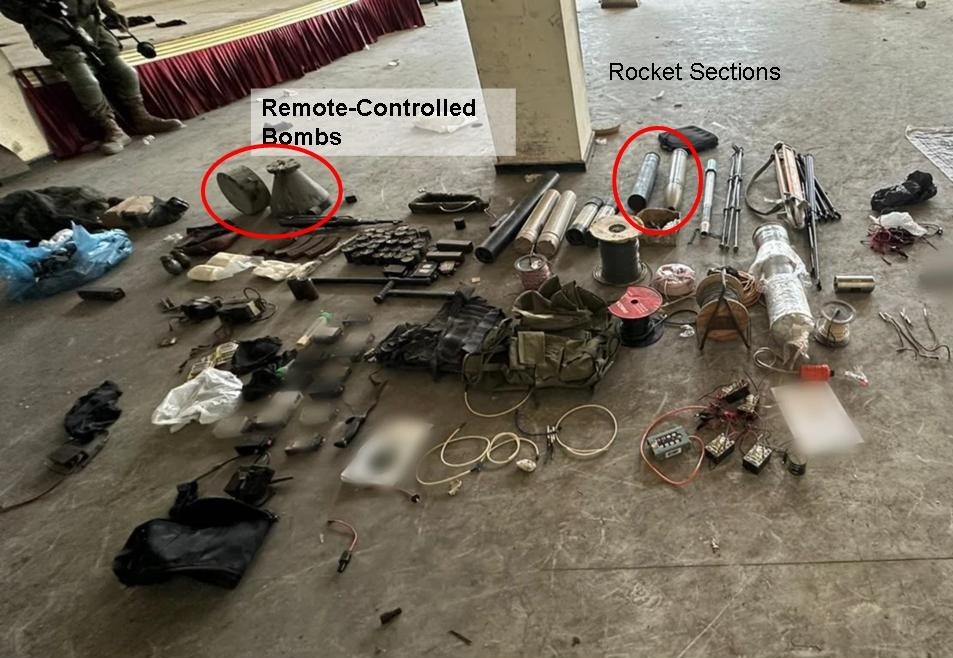
Weapons found in an UNRWA compound: Rocket sections, remote-controlled bombs, drone being assembled, equipment for planting and controlling bombs, infantryman’s equipment vest
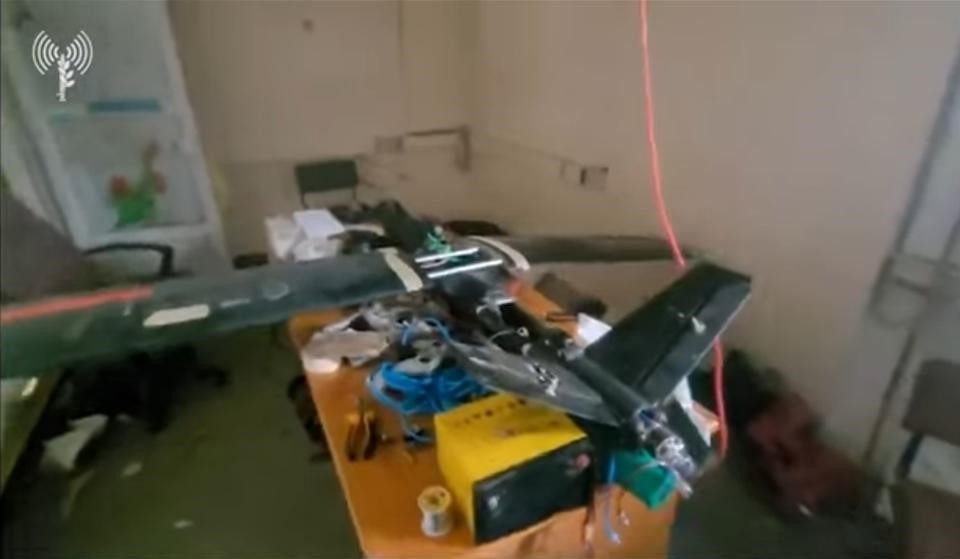
After spending an estimated $320 million on building a floating pier to provide humanitarian supplies for Gaza (as of mid-June; the figure is probably higher by now given the need to repair sections and operate tugs and other equipment since then), it is reported that the US will permanently dismantle the pier, as it proved incapable of withstanding the buffeting of the waves. It broke apart once, and the pieces were towed to an Israeli port for repair and to await the calming of the sea. Once repaired, the pier was returned to the Gaza coast, but when the sea conditions worsened once again, the Americans pulled it out a second time. The pier was apparently returned to the Gaza shore but will be permanently dismantled and removed in the coming days or weeks.
As noted in the last update, the total amount of supplies that actually landed in Gaza via the American pier was minimal – about 9,000 tons in three months. Supplies brought in via the Israeli ground entrances, on the other hand, have grown to 5,000 to 6,000 tons each day. One report claims that some of that tonnage is piled up on the shore near the pier and has not been distributed.
The main problem with getting supplies to Gazans is not the Israelis. The problem is the distribution of the supplies once they are inside Gaza in areas Israel does not control. Supplies are piling up and not being distributed. A report on the Palestinian Sawa Foundation website quotes UN sources as saying there are more than 1,300 trucks standing on the Gaza side of the Kerem Shalom crossing that are loaded and waiting to be distributed.
Furthermore, trucks carrying supplies and occasionally storage areas are attacked and looted by Hamas personnel (for their own use or for sale in the marketplace), by criminal gangs (for sale), and in some cases by the general population itself. UNRWA and the other humanitarian organizations are simply not up to the task of policing this problem.
Despite this, reports of a supposed famine – certainly all claims that Israel is deliberately causing one – are false. There is no doubt that people and families are receiving or buying less than they need, but no one is dying of hunger.
Over the past month, there have been reports of increased fighting among Palestinian factions inside Gaza, though this is still occurring on a small scale. It includes political rivalries as well as clan and personal rivalries as well as criminal enterprises fighting either each other or Hamas over sources of revenue. In one case, a social activist was kidnapped and had both legs and arms broken by Hamas personnel for publishing criticism on Facebook about Hamas’s management of the war and blaming Hamas for the suffering of the Palestinian population.
Military equipment found in an apartment building: Hand grenades, bomb manufacturing materials, and equipment for remote-controlling bombs
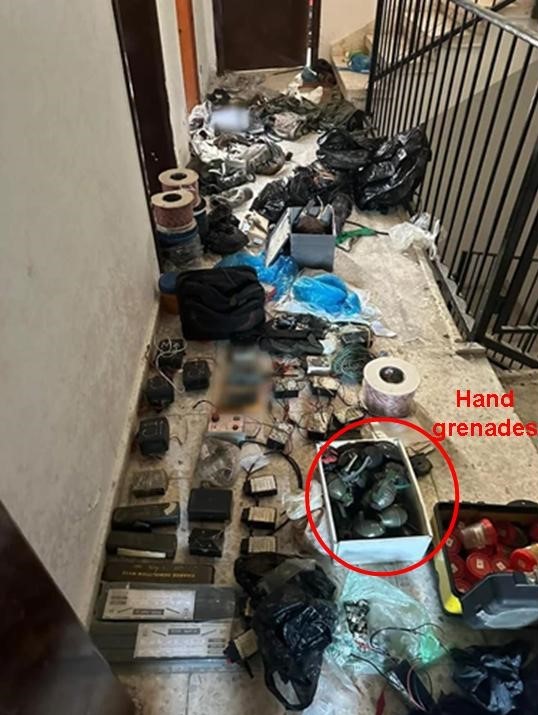
Lebanon:
The exchange of fire on the Israel-Lebanon border continues at a varying but fairly low intensity. Over the past few weeks, Israeli attacks have escalated in the choice of targets: they are no longer only near the border but are also aimed at Hezbollah installations in central and northern Lebanon. Hezbollah has responded by increasing the size of its rocket and exploding drone salvos into Israel as well as attacking Israeli villages that had not yet been attacked. There are reports that to reduce casualties, Hezbollah has withdrawn much of its personnel several kilometers north of the border and is conducting almost all its fire from a distance.
Since the last report, Hezbollah has fired approximately 600 more rockets, exploding drones, and long-range anti-tank missiles into Israel, bringing the total since 8 October 2023 to slightly more than 5,700 rockets and drones and a few hundred guided anti-tank missiles. (These last are mostly Kornets, the latest Russian version with ranges of up to 10 kilometers; and al-Mas, which is a high-trajectory missile than can be fired over ridges to targets hidden behind them.)
Three Israeli civilians and three soldiers have been killed and a few dozen wounded since my last report. Most of the casualties were on the Golan Heights. While this area borders Syria, the casualties were caused by rockets and exploding drones fired from Lebanon.
Hezbollah has admitted that 373 of its personnel have been killed so far (24 more since my last report). This does not include non-Shiite members of Hezbollah, a handful of whom have been killed since the last report (bringing their likely total to at least a few dozen). In addition to those killed, several hundred have been wounded, but no official number has been released and the reporting of wounded Hezbollah personnel is vague.
In addition to the numerical increase in Hezbollah casualties, there has also been an increase in their ranks and importance. The commander of one of Hezbollah’s three divisions in south Lebanon was killed (the second Hezbollah division commander to be killed in southern Lebanon), as well as some senior technical staff personnel in the rocket and drone units and in one surface-to-air missile unit.
Other Lebanese and Lebanese-based Palestinian organizations (including Hamas) have also participated in the exchanges on the Lebanese border. Approximately 15 more members of these groups have been killed since the last report, bringing the total to approximately 85 since 7 October.
Total Lebanese military casualties are now two killed and half a dozen wounded.
Judea and Samaria:
The fighting in Judea and Samaria continues.
Each IDF entry into Palestinian towns faces varying intensities of resistance, including bombs placed under roads (cleared by having a bulldozer tear up the asphalt), rifles, machine guns, grenades, and improvised hand-thrown bombs as well as petrol bombs.
Over the past four weeks, in response to the IDF tactic of having bulldozers uncover bombs planted beneath or adjacent to the roads, the Palestinians have planted larger bombs deeper underground. On two occasions, these bombs managed to destroy Israeli armored vehicles carrying infantry, causing multiple casualties. Two soldiers were killed and at least 25 wounded. The IDF responded by having the bulldozers dig deeper.
Since my last update, there have been a few hundred more Palestinian attacks in or emanating from Judea and Samaria, resulting in a total so far of almost 4,000 Palestinian attacks since 7 October 2023. One Israeli civilian was killed (16 since 7 October) and a few wounded (80 since 7 October). Two Israeli soldiers were killed (12 since 7 October) and about 25 wounded (135 since 7 October).
The Palestinians claim that more than 8,000 people have been arrested in Judea and Samaria, but the official Israeli number is only about 4,210 (160 more since my last report), of whom approximately 50% belong to Hamas and the others to other groups. The discrepancy is apparently because the Palestinians count anyone who was detained even if they were released after questioning. Approximately 510 terrorists have been killed (approximately 10 more since my last report). Most were killed during Israeli raids on their bases in major Palestinian towns and the rest while conducting attacks on Israeli soldiers and civilians. The majority of the killed are Hamas, some are Palestinian Islamic Jihad, but quite a few are also from Fatah-controlled armed groups. Fatah governs the Palestinian Authority in Judea and Samaria and officially supports the peace treaty with Israel, but unofficially (for deniability purposes) maintains armed groups that conduct terrorist attacks. These are often manned (supposedly when off-duty), funded, and trained by the official armed forces of the Palestinian Authority.
Occasional firefights continue between the Palestinian Authority’s security forces and Hamas and Palestinian Islamic Jihad cells. This is not an infrequent occurrence, especially since the full-blown civil war of summer 2007 that separated control over the Palestinian Authority between Fatah in Judea and Samaria and Hamas in Gaza. The Palestinian Authority appears to have decided that the use of under-road and side-of-road bombs against Israeli forces entering its territory is causing more damage to Palestinians than to Israelis and has conducted several clearing operations of these bombs. Hamas and Palestinian Islamic Jihad have criticized the Fatah-controlled security forces for assisting the IDF.
Iran and its proxies versus Israel:
On 19 July, an exploding drone launched by the Houthis in Yemen reached Tel Aviv and hit an apartment building near the US embassy. One Israeli was killed and four wounded. The drone appears to have been routed over Egypt because it arrived in Israel from the west, over the Mediterranean Sea, instead of from the south, which is a more direct line between Yemen and Israel. Preliminary reports from the IDF state that the drone was sighted but mistakenly dismissed as an irrelevant target by the Israeli air defense. Why this mistake occurred is now being studied. The initial hypothesis is that the drone flew across Sinai in Egypt and then into the Mediterranean so was deemed not a threat, but then turned and attacked Israel from the west.
This is the first success by the Houthis in striking a target inside Israel. Iranian proxies in Iraq and Yemen have repeatedly reported firing long-range missiles and exploding drones towards Israel and have claimed various levels of damage to targets in Israel (military bases, cities, and industrial areas, and even, supposedly, an Israeli merchant ship in the Mediterranean). Until 19 July, none of those claims of damage were true. In fact, about half the claims of attacks were either false or occasions in which unintercepted missiles or drones failed to reach Israeli airspace. The other half either were intercepted or fell on empty ground at a safe distance from any possible target. An Iraqi exploding drone did hit a building in Eilat some months ago, but the damage was minimal and there were no casualties.
At roughly the same time that the exploding drone was reaching Tel Aviv from the west over the Mediterranean Sea, the Israeli air force shot down another drone entering Israel from the east, through Jordanian airspace.
Unlike in the previous instances of Houthi attacks on Israel, none of which caused casualties or much damage, Israel responded this time. On 20 July, Israel conducted an air strike on the Houthi-controlled port of Hoodeyda. Initial reports claim that 10 targets were bombed. The Houthis have said there were casualties, though at time of writing they had not provided a number. The targets apparently included oil refining and oil storage infrastructure, and large fires are now burning in those areas. An electricity generation plant was also attacked.
The selection of targets reflects Israel’s response not only to the attack on Tel Aviv but also to the repeated Houthi attacks on ships transiting the Bab al-Mandeb straits, which have shut down the operation of Israel’s southern port, Eilat.
The Houthis have declared that they will retaliate.
Fires in Hoodayda port. Downloaded by Israeli blogger Abu Ali Express from Yemenite social media.

Firing by proxies in Syria onto the Israeli Golan Heights, adjacent to the border with Israel, is more common, though it is usually intercepted. Several Israelis have been wounded in these attacks. Israel has responded by targeting the attackers and continuing its strikes on bases supporting them. It has also conducted at least one strike with artillery and tanks at Syrian troops near the border.
Iran and its proxies versus the US and its allies:
Exchanges of fire between the Houthis in Yemen and the combined American and European fleets in the Red Sea have continued unabated, though they remain small in scale. Most attacks have failed, but one ship, a Greek-owned vessel carrying oil from Russia to China, was hit, this time by a remotely piloted exploding boat. An oil slick about 220 kilometers long was created as the oil exited the hole in the ship’s side. The ship reversed course to an Egyptian port for repairs.
The Houthis claim to be attacking ships connected to Israel, whether Israeli-owned or carrying merchandise to or from Israel. In fact, most of the ships attacked so far have had nothing to do with Israel. It was reported a few months ago that the Russians and Chinese had received promises from the Houthis that ships belonging to them or carrying their merchandise would not be attacked, but this was not the first time such vessels have been struck. Houthi intelligence on ship identities does not appear to be good enough for them to keep their promise.
The Houthi attacks have virtually halted all arrivals and departures of ships at the Israeli port of Eilat, creating a serious problem for the port authorities and raising the cost of merchandise that must instead by sent around Africa, adding weeks to travel time. Egypt is also suffering economically because the Houthi attacks have cut traffic through the Suez Canal, its main source of international currency, by half.
Iraqi proxies of Iran claimed to have conducted two attacks with exploding drones on an American base in Iraq.
Israel’s relations with Arab states:
Israel’s relations with the Gulf States of the Abraham Accords, Egypt, Jordan, and Morocco continue to be cordial and include an increasing exchange of goods. According to the Arab Post, even firms in Tunisia and Saudi Arabia – neither of which has official diplomatic relations with Israel – are selling products to Israel.
Contrary to most expectations in the West and to the chagrin of the Palestinians, Saudi Arabia is continuing to pursue a policy of rapprochement with Israel, according to President Biden. One of their conditions is that the US build a civilian nuclear power plant in Saudi Arabia.
Israeli casualties:
The total number of Israelis confirmed killed on and since 7 October 2023 is now 1,633 (24 more than my previous report) with another almost 17,000 wounded (almost 500 more than my previous report, most of them soldiers).
The total confirmed killed on the single day of 7 October is now 1,170, including civilians, military, police, firefighters, medical personnel, etc. Some Israelis are still unaccounted for, and some of the people kidnapped to Gaza were dead when taken or have died in captivity and are still not confirmed.
There are still 116 kidnapped Israelis and non-Israelis in Gaza. How many are alive and how many dead is not known, though the current estimate is that at least 41 are dead and probably more. In the negotiations with Hamas, Israel has demanded a list of who is alive and who is dead, but Hamas has refused to provide such a list. Furthermore, Hamas claims not to know the whereabouts of dozens of the kidnappees, some of whom are in the hands of other groups or even “private” clans who joined the assault on Israel in the third wave of the Hamas attack on 7 October.
In addition, a total of 19 Israeli civilians have been killed in Hamas rocket attacks since 7 October 2023 and 10 by Hezbollah (three more since the last update). On 19 July, one Israeli was killed by a Houthi exploding drone that hit Tel Aviv. The total number of Israeli civilians killed after 7 October (not including kidnappees murdered while in captivity) is 30.
As of 20 July 2024, a total of 682 IDF soldiers have been killed (20 more than my last report) on all fronts since and including 7 October.
Of the almost 17,000 Israeli wounded, nearly 2,000 were wounded on 7 October. Approximately 3,600 are civilians and approximately 13,400 are soldiers (career personnel, conscripts, and reserves). The number of IDF soldiers admitted to rehabilitation treatments (signifying a higher level of injury) was recently updated to approximately 10,000.
The initial number of Israelis who were forced to leave their homes in 64 villages and towns along the borders with Gaza and Lebanon was approximately 250,000. The number of those returning to their homes has grown, mostly in the areas around Gaza. The current number of Israeli refugees is now approximately 150,000. Some sources claim that more have since returned, but the number is not clear.
Palestinian casualties:
The Gaza Health Ministry, which is controlled by Hamas in its role as the government of Gaza, claims that approximately 38,500 Gazans have been killed so far and approximately 89,000 wounded. They do not differentiate between personnel of Hamas and other terrorist organizations and civilians. According to the IDF, at least 15,000 Hamas and other terrorists have been killed and several thousand wounded. The IDF has also captured many terrorists, though an exact figure has not been divulged. From anecdotal information it can be estimated at nearly 3,500.
Given that Hamas and the other groups had 40,000 to 50,000 personnel among them (possibly a low figure as different sources provide different numbers, and there are difficulties counting part-timers as opposed to regulars or official “reserves”), these numbers – almost 30,000 – represent a sizeable chunk of their manpower. However, we have no information on the recruitment rate of new personnel, who may be less trained but still add to the numbers. Hamas youth movements (equivalent to Scouts movements) conduct basic firearms training from an early age to ensure that a recruitment pool of teenagers is always available to join the fighting. The incidence of surrender rather than a fight to the death has increased, indicating morale problems, but not to a significant degree. The fighting is far from over and the organizations have not yet broken.
IDF soldier stands guard over captured terrorists in Rafah Note that all are wearing civilian clothes, which assists the Hamas propaganda claim that the Israelis are targeting civilians. (The smiley covering the Israeli’s face was in the original to protect his identity)
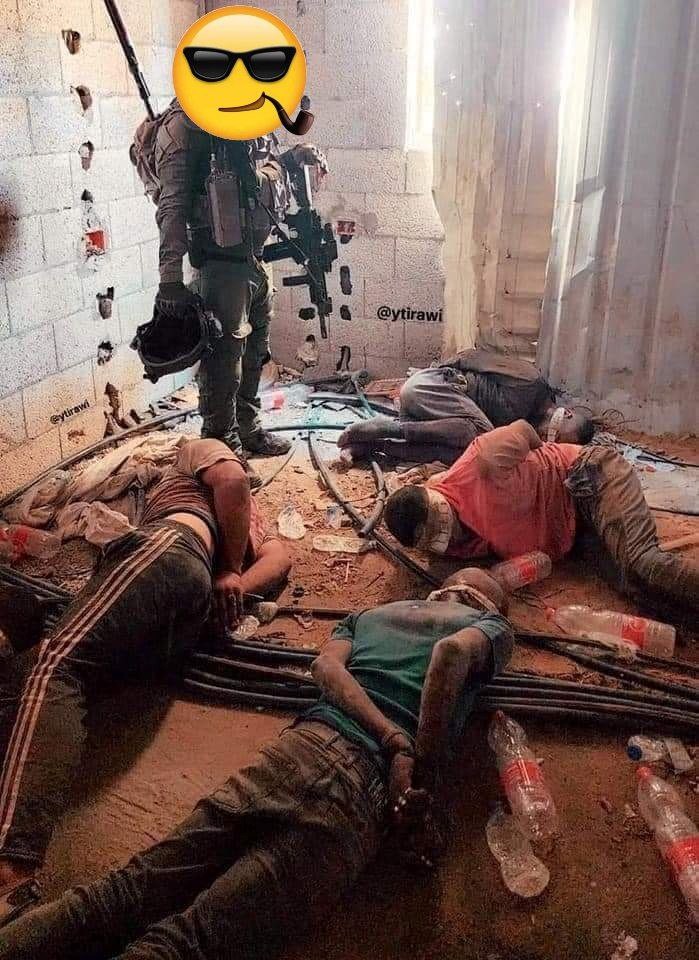
Until 6 May, the UN claimed (quoting Hamas numbers) that of the nearly 35,000 Gazans killed in the war till then, 9,500 were women and 14,500 were children, or approximately 68.5% of those killed. Suddenly, two days later, the UN roughly halved the numbers to nearly 5,000 women and 7,800 children – i.e., approximately 36.5% of those killed.
Israel has consistently claimed that its combatant/non-combatant casualty ratio is one of the best and perhaps the best ever achieved by any army fighting in urban areas. These new numbers prove it. In fact, given that the term “children” includes anyone under 18 and that Hamas and the other organizations employ teenagers younger than that as combatants (15 to 18 year olds have participated in combat as a matter of course, as have even younger children), then the ratio is in fact even better than these numbers show. Any civilian deaths are regrettable, but unfortunately any combat where civilians are present means casualties among them are likely. When one side deliberately uses them as human shields, it becomes inevitable.
As noted in a previous update, the accusation that Israel has deliberately induced starvation of the Gazan population has suddenly been put into question in a UN report.
A recent UN report claims that about 137,300 buildings in Gaza have been damaged in the war. Of these, about 35,000 have been destroyed, about 14,000 severely damaged, and the rest moderately damaged. The UN assesses the cost of clearing the rubble at $500-600 million. According to one estimate, there are about 250,000-plus buildings in Gaza, so if the UN estimate is correct, the damaged buildings represent about half of all the buildings in Gaza.
About 30% of the buildings the IDF has entered have had bombs planted inside them, with booby traps or remote controls used to explode them. Most buildings also contain at least one weapons cache and many contain several that are scattered across multiple apartments. Many buildings also have shafts in the basement leading down to tunnels. In nearly every new building (i.e., built over the past 10 years), the shafts are integral to the building plans. In older buildings they were added later and required more complex work to hide and excavate without damaging the buildings’ foundations.
WHAT NEXT?
The situation has not changed sufficiently from the previous report to require a change in forecast.
Hamas continues to refuse to accept Israel’s conditions for a ceasefire and exchange of the kidnappees for captured Hamas personnel.
During the 2000-2006 war between the Palestinians and Israel, after an initial defensive-only phase lasting 1.5 years and the transition to offensive operations commencing with Operation Defensive Shield in April-May 2002, it took approximately 3.5 years of repeated raids by the IDF to finally quell Palestinian terrorist attacks on Israel (from a peak of 7,500 in 2001 to about 1,000 in 2007). Barring a political turnabout (i.e., a ceasefire agreement), the expectation is that these repeated raiding operations into Gaza will continue for several months at least and probably longer.
The Rafah offensive continues despite pressure on Israel to desist from this action. This pressure includes deliberate delays by the US in the supply of various weapons to Israel. Israel’s response has been that we will make do with what we have. The Israeli action has increased criticism and diplomatic pressure on Israel, but so far, the Israelis are ignoring the pressure and continuing the offensive. The IDF has been simultaneously conducting raids into areas from which it had previously withdrawn to attack Hamas and other organizations’ personnel who are re-emerging from their hideouts.
Regarding the Rafah area, there is a debate in Israel on whether to stay long term to prevent Hamas from recovering access to weapons smuggling operations through Egypt or withdraw and make do with raids. In the previous update I wrote that the debate seems to be leaning towards withdrawing and transitioning to a raiding strategy similar to that employed elsewhere in the Gaza Strip. It appears that the preference is shifting to completing clearing operations, building a protected corridor like the one separating northern Gaza from central Gaza, and remaining there. However, a final decision has not been announced. Prime Minister Netanyahu visited the Israeli troops fighting in the Rafah corridor on 18 July and said he is becoming convinced of the need to stay there. This, however, could be a bargaining position.
Meanwhile, on the Lebanese border, the tit-for-tat exchanges of fire continue. Tactically the IDF is winning, as shown by the casualty ratio of approximately 15 to 1 in its favor. However, strategically, the situation is in Hezbollah’s favor, as the approximately 100,000 Israeli civilians from the northern towns and villages who have become refugees inside Israel still cannot go home. For them to return requires either that Hezbollah agrees to withdraw all its forces at least 10 to 15 kilometers from the border or is forced to do so by an Israeli ground offensive advancing to that depth or more and conducting a massed bombing campaign on Hezbollah’s rear areas. Israeli leaders say they would prefer a diplomatic solution, but if that fails, they will order the military to attack into Lebanon. They have issued statements to this effect, including a statement that the IDF’s proposed operational plan for an offensive into Lebanon has been approved by the government. There are consistent reports in the media of IDF exercises in northern Israel.
***
4 May – 19 June 2024
WHAT HAS HAPPENED?
Israel – Hamas Negotiations:
Not much has changed since the last report.
The Biden administration and the United Nations Security Council have in theory accepted Israel’s position vis-à-vis the acceptable terms of ending the war in Gaza, but Hamas has refused to accept these terms.
Gaza:
The Israeli offensive in the Rafah area gradually took all the ground adjacent to the border between Gaza and Egypt. Over the past few days there have been reports of Israeli forces now conducting attacks from the area taken northwards, both in the relatively open area between the city of Rafah and the coast and inside Rafah itself.
Virtually the entire population that was reported to have been in the Rafah area, both the original inhabitants and those evacuated to Rafah from the more northern areas of Gaza, have moved to the safe havens allotted by the IDF. The resistance by the US government to the Rafah operation was based on the premise this would not happen. Just as in the previous IDF offensives in northern Gaza and the Khan Yunis area, the rate of evacuation is one of the factors determining the rate of advance of the IDF units.

During the clearing operations in each area taken, the IDF units have uncovered hundreds of tunnels, including dozens crossing the border into Egypt. These tunnels were used for smuggling weapons from Egypt into Gaza as well as civilian traffic, both people and goods. Officially the Egyptians destroy all tunnels they discover on their side of the border, but apparently over the past few years they have reduced this effort considerably – these tunnels all have large openings on the Egyptian side of the border, they are not small or camouflaged, and the traffic through them was not a trickle. Also found adjacent to the Egyptian border were rocket launchers and stocks of rockets. Additionally, more evidence has been found in Rafah of the use of UN sites and mosques by Hamas.
The IDF has also continued to conduct raids into northern Gaza and Khan Yunis whenever concentrations of returning Hamas and Palestinian Islamic Jihad terrorists are discovered, as well as raids into the Nuseyrat area, between Gaza and Nuseyrat.
The Nuseyrat area is the only one in which the IDF has not yet conducted a major offensive operation – only raids from the beginning of the war. In a much publicized raid on 8 June, conducted by a Police Force special unit supported by the IDF, four kidnappees held in two separate private homes (one belonging to a news photographer who has published in Al-Jazeera) were rescued. An Israeli officer was killed in this raid and a few others wounded. The Palestinians, as usual, claimed enormous casualties to civilians living in the area of the raid. Again as usual, there is no evidence that the published number was anywhere near the truth. Given similar events in the past – when numbers claimed by the Palestinians of hundreds of civilians killed by the IDF were later found to be grossly exaggerated, to have included many terrorists, and to have included Palestinians killed or wounded by Palestinian fire, the reliability of these numbers must be regarded as suspect.
Use of UN school, mosque and Infirmary by Hamas
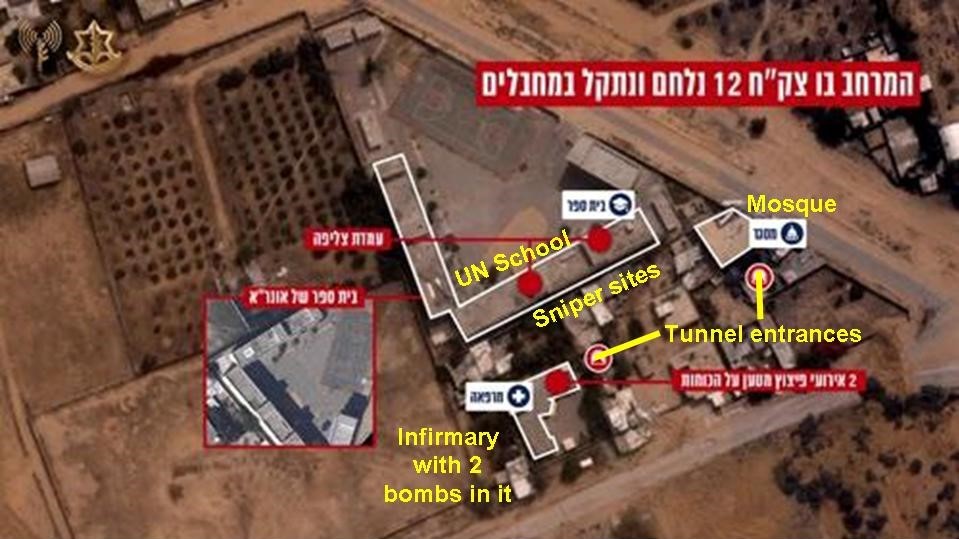
Also found over the past few weeks were the bodies of a number of kidnappees killed on 7 October whose bodies were taken to Gaza, as well as a few who were kidnapped alive and then killed while being held. One more body was discovered inside Israel. The number of kidnappees still held by Hamas is down to 116. There is evidence that at least 41 of these are dead, including two Thais who had come to Israel to work. Some are currently alive, but the status of a few dozen is not known.
After spending an estimated $320 million on building a floating pier to provide humanitarian supplies, it seems the US will permanently dismantle it. It was incapable of withstanding the buffeting of waves and broke up once. The pieces were then towed to an Israeli port for repair and to await a calming of the sea. Afterwards it was returned to the Gaza coast, but when the sea conditions worsened again, the Americans pulled it out again. All in all, from 17 May until 15 June, the amount of supplies that landed was much less than that brought in by other means. The total over the month was approximately 3,500 tons, which is less than the tonnage of supplies than can and often are brought in via the border crossings from Israel in single day.
Because the IDF captured the Gaza side of the Rafah border crossing, Egypt refused to continue sending humanitarian supplies through it. However, supplies increased through the other crossings between Israel and Gaza, thereby bypassing Hamas tax-collectors. According to posts published by Gazans on social media, this lowered the prices of commodities in Gaza. One Facebook post said:
“During the 7 months our people and an Arab state (without naming names) held the Rafah crossing: one egg cost 6 Shekel, 1 kilogram of sugar cost 80 Shekel, a bag of instant coffee cost 5 Shekel.
During the two weeks the criminal Nethanyahu has been holding the crossing: 10 eggs cost 10 Shekel, 1 kilogram of sugar costs 6 Shekel and the instant coffee is 10 bags for 10 Shekel.“[1]
On 8 June the United Nations Office for the Coordination of Humanitarian Affairs (UNHCA) published a report stating that the claim that there is a famine in Gaza is not based on supporting evidence:
“The FRC does not find the FEWS NET analysis plausible given the uncertainty and lack of convergence of the supporting evidence employed in the analysis. Therefore, the FRC is unable to make a determination as to whether or not famine thresholds have been passed during April.“[2]
They qualify that statement by claiming they are physically incapable of acquiring sufficient reliable evidence. However, photographs posted on social media by Gazans show that the real problem is less a matter of lack of foodstuffs and more an issue of inefficient distribution. The IDF spokesperson has reported that much of the supplies are simply being stored inside Gaza and awaiting distribution because the organizations in charge of distribution are incapable of meeting the rate of supplies flowing into Gaza. Furthermore, Gazans are complaining openly that Hamas is deliberately taking much of the supplies and hoarding them to sell at high prices to raise funds for its operations. They also complain of theft of supplies by criminal organizations for the same purpose.
Lebanon:
In a speech given on 19 June by Hezbollah General Secretary Hassan Nasrallah, he claimed that:
- Hezbollah has 100,000 troops all told and has therefore turned down requests by other organizations of the Iranian-led Shiite alliance to send contingents to Lebanon.
- Hezbollah has the full panoply of weapons to conduct ground, air and sea combat, it manufactures weapons at home, and it is receiving weapons from Iran despite Israel’s attempts to prevent this.
- He also claimed that Hezbollah has information that Cyprus has agreed to allow Israel to use its airports if Israeli airports are damaged by Hezbollah fire. He threatened that if Cyprus does this, it too will become a target of Hezbollah’s firepower.
This is not the first time Nasrallah has mentioned the 100,000 troops figure. This is considerably more than all previous reports, which ranged from a low of 45,000 to a high of 60,000. The previous occasion was in October 2021 when internal tensions in Lebanon threatened to boil over into a possible civil war. If he is speaking the truth, then Hezbollah has more men than the official Lebanese army (85,000). The Hezbollah forces are certainly better trained on average than the Lebanese army, and they are also better equipped in some areas.
The exchange of fire on the Israel-Lebanon border continues at a varying but fairly low intensity. Over the past few weeks Israeli attacks have escalated in the choice of targets, which are now no longer only near the border but also include Hezbollah installations in central and northern Lebanon. Hezbollah has responded by increasing the size of its rocket and exploding drone salvos into Israel. There are reports that to reduce casualties Hezbollah has withdrawn many of its personnel several kilometers north of the border and is conducting almost all its fire from a distance.
In the six weeks since my last report, Hezbollah has fired approximately 600 more rockets, exploding drones and long-range anti-tank missiles into Israel, bringing the total since 8 October 2023 to slightly more than 5,100 rockets and drones and a few hundred guided anti-tank missiles (mostly Kornets, some with ranges of up to 10 kilometers, the latest Russian version, and al-Mas).
Hezbollah managed to shoot down another two Israeli reconnaissance drones, for a total of five since the war began.
One Israeli soldier and one civilian have been killed and a few dozen wounded since my last report.
Hezbollah has admitted that so far 349 of its personnel have been killed (another 50 since my last report). This does not include non-Shiite members of Hezbollah who probably add at least a few dozen to the list.
In addition to the numerical increase in Hezbollah casualties, there has also been an increase in their ranks and importance. The commander and some senior staff members of one of Hezbollah’s three divisions in south Lebanon were killed, as were some senior staff members of another division.
Other Lebanese and Lebanese-based Palestinian organizations have also participated in the exchanges. Approximately 10-15 members of these have been killed since the last report, bringing the total to 80-85.
Total Lebanese military casualties are now two killed and half a dozen wounded.
Judea and Samaria:
The fighting in Judea and Samaria continues.
Each IDF entry into Palestinian towns faces varying intensities of resistance, including bombs placed under roads (cleared by bulldozers that tear up the asphalt), rifles, machine guns, grenades, and various improvised hand-thrown bombs, as well as petrol bombs.
Since my last report there have been a few hundred more Palestinian attacks in or emanating from Judea and Samaria, reaching a total of approximately 3,600 Palestinian attacks since 7 October 2023. No Israeli civilians were killed in this period (15 since 7 October) and only a few were wounded (for a total of 76 wounded since 7 October). Two Israeli soldiers were killed (for a total of 10 since 7 October) and six wounded (for a total of 111 since 7 October).
The Palestinians claim that more than 8,000 people have been arrested, but the official Israeli number is only about 4,150 (450 more since my last report), of whom approximately 50% belong to Hamas and the others to other groups. The discrepancy is apparently because the Palestinians count anyone who was detained even if they were released after being questioned. Approximately 500 terrorists have been killed (approximately 25 more since my previous report), most during the Israeli raids on their bases in the major Palestinian towns and the rest while conducting attacks on Israeli soldiers and civilians. The majority of those killed are Hamas, some are Palestinian Islamic Jihad, but quite a few are also from Fatah-controlled armed groups. Fatah governs the Palestinian Authority in Judea and Samaria and officially supports the peace treaty with Israel, but unofficially (for purposes of deniability) maintains armed groups that conduct terrorist attacks. These are often manned (supposedly when off-duty), funded and trained by the official armed forces of the Palestinian Authority.
Over the past month there have been several firefights between the Palestinian Authority’s security forces and some Hamas and Palestinian Islamic Jihad cells. This is not an infrequent occurrence, especially since the full-blown civil war that erupted in the summer of 2007 that separated control over the Palestinian Authority between Fatah in Judea and Samaria and Hamas in Gaza.
Iran-Israel confrontation:
Since the resumption of Israeli strikes in Syria against Iranian targets (including the killing of an Iranian officer) and Iranian-proxy forces, there have been no overt Iranian counterstrikes against Israel.
Iran and its proxies versus the US and its allies:
The exchanges of fire between the Houthis in Yemen and the combined American and European fleets in the Red Sea have continued unabated, though they remain small in scale. The Houthis have continued to attack merchant ships, and a number have been hit and one sunk. They claim to have hit American naval vessels as well, but there is no corroboration of these claims. They have shot down a few American drones flying over their positions and provided photographic corroboration.
The Americans and British responded with air strikes on Houthi camps and combat positions in an attempt to destroy their launch capabilities. Though they have reported successes, they have not yet reached a level sufficient to force the Houthis to desist. Over the past week the focus seems to be attacking Houthi radar systems. According to one report at least 11 have been hit so far.
Israeli casualties:
The total number of Israelis confirmed killed on and since 7 October 2023 is now 1,609, with another approximately 16,500 wounded.
Currently the total confirmed killed for the single day of 7 October is 1,170, including civilians, military, police, firefighters, medical personnel, etc. There are still some unaccounted for, and some of the people kidnapped to Gaza were dead when taken or have died in captivity and are still not confirmed. The body of one more civilian killed on 7 October was discovered inside Israel and the bodies of others have been recovered inside Gaza.
There are still 116 kidnapped Israelis and non-Israelis in Gaza. How many are alive and how many dead is not known, though the current estimate is that at least 41 are dead and probably more. In the negotiations with Hamas Israel demanded a list of those alive and those dead, but Hamas refused. Furthermore, Hamas claims not to know the whereabouts of more than a few dozen of the kidnappees. Some are in the hands of other groups or even “private” clans who joined the assault on Israel in the third wave of the Hamas attack on 7 October. Thus, for example, the four Israelis rescued since my last report were all held in the private homes of “civilians”.
In addition, 19 Israeli civilians have been killed in Hamas rocket attacks and seven by Hezbollah.
As of 14 May 2024, a total of 662 IDF soldiers have been killed (42 more than my previous report) on all fronts since and including 7 October. The number for that day is periodically updated as more are confirmed killed who were previously listed as missing; this includes IDF soldiers whose bodies were taken into Gaza and who have not yet been confirmed as dead.
Of the approximately 16,500 Israelis wounded, nearly 2,000 were wounded on 7 October. Approximately 3,550 are civilians and approximately 13,450 are soldiers (career personnel, conscripts and reserves). Two months ago, the IDF reported that since the beginning of the war, 7,200 soldiers have been admitted to rehabilitation treatments (signifying a higher level of injury). It has not provided an update on that number.
Initially the number of Israelis who were forced to leave their homes in 64 villages and towns along the borders with Gaza and Lebanon was approximately 250,000. The number of those returning to their homes has grown, mostly in the areas around Gaza. The current number of Israeli internal refugees is now approximately 150,000. A new decision this week opened more areas for civilians to return.
Palestinian casualties:
The Gaza Health Ministry, which is controlled by Hamas in its role as the government of Gaza, claims that approximately 37,500 Gazans have been killed so far and approximately 85,000 wounded. They do not differentiate between personnel of Hamas and other terrorist organizations and civilians, but according to the IDF, at least 15,000 Hamas and other terrorists have been killed. The IDF has also captured many terrorists, though the exact number has not been divulged. From anecdotal information it can be estimated at 3,000-3,500 (there have been no reports of major surrenders over the past month).
Given that Hamas and the other groups had 40,000-50,000 personnel between them (different sources provide different numbers, and there is a problem counting part-timers as opposed to regulars or official “reserves”), these numbers represent a sizeable chunk of their manpower. However, we have no information on the recruitment rate of new personnel, who are perhaps less trained but still add to the numbers. Hamas youth movements (equivalent to Scout movements) conduct basic firearms training from an early age, so they have a recruitment pool of teenagers available to join the fighting. The incidence of surrendering rather than fighting to the death has increased, indicating morale problems, but the fighting is far from over and the organizations have not yet broken.
Photograph of a 15-year-old recruit serving in Palestinian Islamic Jihad in Samaria (killed in a skirmish with Israeli forces – in Gaza, names, details and photographs of killed terrorists are not published)

Until 6 May, the UN claimed (quoting Hamas numbers) that of the nearly 35,000 Gazans killed in the war till then, 9,500 were women and 14,500 were children; i.e., approximately 68.5% of the killed. Suddenly, two days later, the UN approximately halved the numbers to nearly 5,000 women and 7,800 children; i.e., approximately 36.5% of the killed. It should be noted that Israel has been consistently claiming its combatant/non-combatant ratio is one of the best and perhaps the best ever achieved by any army fighting in urban areas. These new numbers prove it. In fact, given that the term “children” includes anyone under 18 and that Hamas and the other organizations employ teenagers younger than that as combatants (15-18 year-olds have participated in combat as a matter of course, as have a few even younger children), the ratio is in fact even better than these numbers show. Any civilian deaths are regrettable, but they are unfortunately inevitable whenever combat occurs where civilians are present. When one side deliberately uses them as human shields, this of course happens even more.
As noted above, the allegation that Israel is supposedly deliberately inducing starvation among the Gazan population has been put into question by a UN report.
WHAT NEXT?
The current situation has not changed significantly from the previous report to require a change in the forecast.
Hamas continues to refuse to accept Israel’s conditions for a ceasefire and exchange of the kidnappees for captured Hamas personnel.
The Rafah offensive was commenced and is ongoing despite pressure on Israel to desist from this action. This pressure includes deliberate delays by the US in the supply of various weapons to Israel. Israel’s response has been that “we will make do with what we have”. The Israeli action has increased criticism and diplomatic pressure on Israel, but so far the Israelis are ignoring this pressure and continuing with their offensive. Simultaneously, the IDF has been conducting raids into areas from which it had previously withdrawn to attack Hamas and other organizations’ personnel who are reemerging from their hideaways. After completing the Rafah operation, the IDF is likely to transition to a similar mode of operation. The issue in question is whether it will completely withdraw from a section along the border with Egypt as this would open a military supply route for Hamas.
During the 2000-2006 war between the Palestinians and Israel, after an initial defensive-only phase lasting 1.5 years and a transition to offensive operations with Operation Defensive Shield in April-May 2002, it took approximately 3.5 years of repeated raids such as this to finally quell Palestinian terrorist attacks on Israel (from a peak of 7,500 in 2001 to about 1,000 in 2007). Barring a political turnabout, the expectation is that repeated raiding operations in Gaza will continue for several months at least, probably more.
Meanwhile, on the Lebanese border, the tit-for-tat exchange of fire continues. Tactically the IDF is winning, as shown by the casualty ratio of approximately 15 to 1 in its favor. However, strategically, the situation is in Hezbollah’s favor. The approximately 100,000 Israeli civilians from the northern towns and villages who have become refugees inside Israel still cannot return home. For them to return requires either that Hezbollah agrees to withdraw all its forces at least 10-15 kilometers from the border or is forced to do so by an Israeli ground offensive advancing to that depth or more and conducting a massed bombing campaign on Hezbollah’s rear areas. Israeli leaders say they would prefer a diplomatic solution, but if that fails, they will order the military to attack into Lebanon. They are making statements to this effect, including a statement that the IDF’s proposed operational plan for an offensive into Lebanon has been approved by the government.
[1] Quoted from Abu Ali Express, an Israeli blogger who monitors Arab, especially Palestinian, social media.
[2] Quoted from page one of the report: Famine Review Committee: Review of the Famine Early Warning Systems Network (FEWS NET) IPC-Compatible Analysis for the Northern Governorates of the Gaza Strip – Conclusions and Recommendations, (May 2024), https://reliefweb.int/report/occupied-palestinian-territory/famine-review-committee-review-famine-early-warning-systems-network-fews-net-ipc-compatible-analysis-northern-governorates-gaza-strip-conclusions-and-recommendations-may-2024.
****
15 April – 13 May 2024
WHAT HAS HAPPENED?
Israel – Hamas Negotiations:
Despite various statements by interested parties, the negotiations between Israel and Hamas have been and are still stuck. Hamas continues to demand a total cessation of Israel’s military operations and withdrawal of all Israeli forces from Gaza and the opening of Gaza for unimpeded and unchecked imports (i.e., the ability to import weapons to rebuild their forces) in return for a slow dribble of kidnappees totaling approximately 30 to 35 (including dead ones) of the 132 (including dead) kidnappees still in Palestinian hands. In other words, it demands the ability to rehabilitate its control over Gaza to be able to continue to attack Israel.
The Israeli government has so far refused to accept these terms. It is willing to exchange some imprisoned Palestinian terrorists (the exact numbers are not clear – before the war there were approximately 5,000 Palestinians in custody for terrorist activity and during the war many more have been captured – a few thousand in Judea and Samaria and a few thousand in Gaza) and accept a temporary ceasefire only. The issue of whether to accept or not has caused friction inside Israel with some groups demanding the government accede to the terms. Currently the majority of Israelis, according to polls, still support the government’s position.
Israel – USA relations:
The Biden administration has halted supplies to Israel of various weapon types in order to stop it from conducting the Rafah operation. Washington’s excuse is that the administration is worried about civilian casualties.
This is on top of the Biden administration’s demand that Israel refrain from responding to both the unprecedented drone and missile attack launched upon it by Iran, and the Houthi attacks on Israel itself and on ships heading toward Israel – as well as the demand that Israel refrain from doing anything more than conduct fire-strikes on Hezbollah in response to its constant bombardment of northern Israel, which necessitated the evacuation of tens of thousands of civilians from the towns and villages along Israel’s border with Lebanon. (The famous “don’t” message in Biden’s speech was aimed no less at Israel than it was against Hezbollah).
In the initial weeks immediately after the 7 October attack on Israel, the Biden administration also pressured Israel not to conduct a full-scale offensive operation in Gaza but to make do with commando operations and aerial bombing. There are even reports (I don’t know how credible) that on the night of 7-8 October, Secretary of State Blinken actually tweeted in response to the Hamas attack that Israel should show restraint and not respond. He then erased this tweet after being criticized.
Israel ignored the US pressure not to invade Gaza to eliminate Hamas’s military capability (something commando operations and bombing could never have achieved) and is now ignoring US pressure not to advance into Rafah.
So far, Israel has not conducted anything more serious than counter-fire strikes on Hezbollah. These are causing Hezbollah casualties and damage, but cannot (and can never) be enough in and of themselves to push Hezbollah far enough away from the border to enable the return to their homes of approximately 100,000 Israeli refugees. Achieving that will require a ground offensive.
Israel partially ignored the pressure not to respond to the Iranian attack and did conduct a small “signal” response. After a brief pause it also resumed attacks on Iranian assets in Syria.
The American (plus allies) response to the Houthis is essentially failing. They have caused miniscule damage to the Houthis and have not diminished their determination to attack. They have managed to shoot down most of the missiles, etc. launched by the Houthis but have not enabled the renewal of traffic on the threatened shipping route. In fact, the opposite has occurred. The threatened area has grown, requiring ships to move further away from Houthi territory. Israel’s southern port, Eilat, is essentially closed down. Furthermore, Egypt’s revenue from the Suez Canal (one of its major sources of income) has dropped considerably (one report claims it has halved).
The American administration’s treatment of its ally Israel during this crisis is sending the message to all the US’s other Middle Eastern allies that the US cannot be relied upon under pressure.
Gaza:
Fighting inside Gaza continues as described in previous reports: low-intensity guerrilla warfare. Hamas and other groups conduct small-scale raids or ambushes against Israeli units and Israeli forces reciprocate. Israel has withdrawn almost all its forces from inside the Gaza Strip, including those in the Khan Yunis area. Currently, the only permanent Israeli presence is along a line separating the northern Gaza Strip and Gaza City from the rest of the Gaza Strip. Instead of installing a permanent presence, Israeli forces have launched a number of large raids into areas previously vacated by them. Since the last report, at least four such raids have been initiated; two are still in progress at time of writing (the Zaytoon and Jabaliya neighborhoods).

Despite incessant American and European and Egyptian demands that Israel not conduct its planned offensive into the Rafah area, Israeli commenced this operation over the past week. Initially leaflets were dropped recommending the population in the eastern area of Rafah move west and northwest. To aid the movement of the population, the IDF has provided thousands of tents (there are reports the IDF procured some 40,000 tents in all) and other provisions to be located in the area to which the population is being told to move. The movement directions were gradual; every couple of days an area further west was declared dangerous prior to the entrance of IDF units.
Then, after series of airstrikes on known locations of Hamas positions, an Israeli combined-arms division advanced several kilometers to the outskirts of the city of Rafah. According to reports on Palestinian social media, the attack is being conducted on separate axes: one near the border with Egypt, which has the Rafah terminal through which all official travel between Gaza and Egypt takes place; and the other some kilometers further north. Facing them is the Rafah brigade of Hamas, reinforced by other terrorist groups. There are probably at least 5,000 enemy combatants.
After a couple of days clearing the taken area (mopping up Hamas units that had not yet retreated, destroying above-ground and underground storage sites for weapons and other military equipment) the Israelis began dropping leaflets on the next section of ground. By 14 May there were reports that about 450,000 Palestinians had moved in the direction recommended by the IDF.
The general humanitarian effort continues. The Egyptians are refusing to send trucks through the Rafah terminal while it is in Israeli hands, but the other crossings are open, including a new one in northern Gaza. (Previously, provisions for northern Gaza were sent through the southern crossings from Israel and Egypt.) However, as the majority of trucks entered Gaza from Egypt, their refusal to allow the trucks to continue using the Rafah terminal has reduced the total flow considerably. Parachuting of supplies continues, and the Americans have almost completed preparations of a floating dock to be located near the Gaza coast. Israel has prepared a pier on the shore for the unloading of supplies just south of Gaza City.
The Egyptians have also threatened to reduce the level of diplomatic relations with Israel and to join the South African lawsuit at the International Court.
Lebanon:
The exchange of fire on the Israel-Lebanon border continues at a varying but fairly low intensity. Over the past few weeks Israeli attacks have escalated in the choice of targets, which are no longer only near the border but also include Hezbollah installations in central and northern Lebanon. Hezbollah has responded by increasing the size of its rocket and exploding drone salvos into Israel.
Hezbollah has fired more than 4,500 rockets and exploding drones into Israel as well as a few hundred guided anti-tank missiles (mostly Kornets, some the latest Russian version with ranges of up to 10 kilometers). Over the past month, Hezbollah stated that some of the rockets and exploding drones it fired were new models.
According to the Lebanese government, from 7 October 2023 through 30 April 2024 the IDF conducted approximately 4,010 strikes inside Lebanon using aircraft, artillery, tanks and other weapons systems. The Israeli count is approximately 1,450 strikes. The discrepancy is probably due to what each side counts as a separate strike – i.e., the Israelis count as one strike the hitting of separate targets within the context of a one particular action, whereas the Lebanese count each individual target as a separate strike even if they occur more or less simultaneously.
Israeli casualties on the Lebanese border since 7 October are 18 soldiers (four more since my last report) and six civilians and several dozen wounded (including about a dozen more since my last report).
Hezbollah has admitted that so far, 299 of its personnel have been killed (another 26 since my last report). This figure does not include non-Shiite members of Hezbollah who probably add at least a couple of dozen more to the list.
Other Lebanese and Lebanese-based Palestinian organizations have also participated in the exchange and approximately 70 members of these have been killed too.
Total Lebanese military casualties are now two killed and half a dozen wounded.
13 May was Memorial Day in Israel, the day on which Israelis honor all the Israelis killed in the more than a hundred years of war between the Jews and Arabs. 14 May is Israel’s Independence Day.[1] Hassan Nasrallah, head of Hezbollah, exploited the timing to give a speech extolling the success of Hamas and Hezbollah in this war. He claimed that Israel has lost 1,500 soldiers and is hiding the true number (the actual number is 620). He added that polls in Israel show that 30% of its Jews have lost hope for Israel’s existence and that many are already emigrating. He claimed that the decision of many states to recognize the existence of a Palestinian state was one of the victories of the war, and that the many demonstrations calling Israel a genocidal state rather than one adhering to liberal democracy were the result of the successful prosecution of the war against Israel. Nasrallah went on that Israel’s policy and strategy are at a dead end because it has failed to destroy and replace Hamas, and the Arab states that had reached accommodation with Israel are refusing to help it. Hezbollah’s attacks on northern Israel would not cease, he said, until Israel surrenders to Hamas’s demands in Gaza, and the Israeli refugees from the north will not be able to return to their homes until this happens.
Judea and Samaria:
The fighting in Judea and Samaria continues.
Each IDF entry into Palestinian towns faces varying intensities of resistance, including bombs placed under roads (which are cleared by bulldozers tearing up the asphalt), rifles, grenades, improvised hand-thrown bombs, and petrol bombs.
Since 7 October there have been approximately 3,100 Palestinian attacks on Israelis in or emanating from Judea and Samaria. Fifteen Israeli civilians and five soldiers (no additions to my last report) have been killed and 73 Israeli civilians and 105 soldiers (30 more since my last report) wounded in these attacks by Palestinians from Judea and Samaria. Some Israelis were attacked in Judea and Samaria and some inside pre-1967 Israel by terrorists who managed to infiltrate.
The so-called Green Line separating the two areas from 1949 is a tortuous line through hilly, vegetation-covered terrain. Though Israel built a fence along it (called a “wall” by Israel’s detractors, though only 10% is a wall, to prevent direct flat trajectory fire at Israeli villages or roads adjacent to the line) that is constantly patrolled and has electronic surveillance devices, no such protection is ever 100% – especially as some areas contain a mixed population.
The Palestinians claim that more than 8,000 people have been arrested, but the official Israeli number is only about 3,700 (100 more since my last report), of whom approximately 50% belong to Hamas and the others to other groups. The discrepancy is apparently because the Palestinians count anyone who was detained even if they were released after being questioned. Approximately 475 terrorists have been killed (approximately 50 more since my previous report) – most during Israeli raids on their bases in the major Palestinian towns, and the rest while conducting attacks on Israeli soldiers and civilians.
The majority of the killed are Hamas and some are Palestinian Islamic Jihad, but quite a few are also from Fatah-controlled armed groups. Fatah governs the Palestinian Authority in Judea and Samaria and officially supports the peace treaty with Israel – but maintains unofficial (for deniability of responsibility) armed groups that conduct terrorist attacks. These are often manned (supposedly when off-duty), funded and trained by the official armed forces of the Palestinian Authority. The Palestinians have also reported 5,000 wounded (about 400 more than my previous report) but have not published details breaking down this number between terrorists and civilians.
Iran – Israel confrontation:
Israel responded to the Iranian missile attack with a small “for show” strike.
Several Israeli drones were reported by Iran as having been shot down. Israeli aircraft launched a small number of missiles that destroyed at least one Iranian anti-aircraft missile battery, perhaps more. The importance of this strike was not the damage to the anti-aircraft battery per se, but the location of that battery – near the city of Isfahan, which includes an important industrial area and a concentration of Iran’s nuclear development program sites. In essence, the Israelis were saying: “you cannot stop us from coming here and we could have done more…”
Officially Iran has claimed that the attack was completely foiled with no damage incurred. However, civilian satellite imagery showed damage before the Iranians could clear it and replace the damaged equipment.
It is assumed that Tehran understood the message. Iran’s official statements say that as far as they are concerned the confrontation is over.
After a few weeks of no Israeli attacks on Iran-associated targets in Syria, the Israeli air force struck a number of warehouses with no Iranian response.
Iran and its proxies versus the US and its allies:
The exchanges of fire between the Houthis in Yemen and the combined American and European fleets in the Red Sea have continued unabated, though they remain small-scale. The Houthis continued to attack merchant ships. The Americans and British responded with air strikes on Houthi camps and combat positions, attempting to destroy their launch capabilities. Though they have reported successes, they have not reached a level sufficient to force the Houthis to desist from their attacks.
Over the past month there have been a few attacks on American forces in Iraq and Syria.
Israeli casualties:
The total number of Israelis confirmed killed on and since 7 October 2023 is now 1,559 with another approximately 15,000 wounded.
Currently the total killed for the single day of 7 October is 1,160, including civilians, military, police, firefighters, medical personnel etc. There are still some unaccounted for, and some of the people kidnapped to Gaza were dead when taken or have died in captivity and are still not confirmed. Since my last report, one more missing person was found dead. On rechecking the grave of another victim, it was discovered that some of the body parts therein were from a different person. This occurred because of the extensive mutilation of many of those killed on 7 October. In some instances, body parts were mingled at the killing sites.
There are still 132 kidnapped Israelis and non-Israelis in Gaza. How many of them are alive and how many are dead is not known, though the current estimate is that at least 30 are dead and probably more. In negotiations with Hamas, Israel has demanded a list of those alive and those dead, but Hamas has refused to provide this information. Furthermore, Hamas claims not to know the whereabouts of more than a few dozen of the kidnappees. Some are said to be in the hands of other groups or even of “private” clans who joined the assault on Israel in the third wave of the Hamas attack on 7 October.
In addition, 19 Israeli civilians have been killed in the Hamas rocket attacks and six by Hezbollah.
As of 14 May 2024, a total of 620 IDF soldiers have been killed on all fronts (16 more than my previous report) since and including 7 October. The number for 7 October is periodically updated as more are confirmed killed who were previously listed as missing. This includes a number of IDF soldiers whose bodies were taken into Gaza and have not yet been confirmed as dead.
Of the approximately 15,000 Israeli wounded, nearly 2,000 were wounded on 7 October. Of the total, approximately 3,500 are civilians and approximately 11,500 are soldiers (career personnel, conscripts and reserves). The IDF has published that since the beginning of the war, 7,200 soldiers have been admitted to rehabilitation treatments. Approximately 3,000 more were wounded but released after initial treatment without needing extensive rehabilitation treatment.
Initially the number of Israelis who were forced to leave their homes in 64 villages and towns along the borders with Gaza and Lebanon reached approximately 250,000. The number of those returning to their homes has grown, mostly in the areas around Gaza. The current number of Israeli refugees is approximately 150,000.
Palestinian casualties:
The Gaza Health Ministry, which is controlled by Hamas in its role as the government of Gaza, claims that so far almost 35,200 Gazans have been killed and approximately 79,000 wounded. Hamas does not differentiate between personnel of Hamas and other terrorist organizations and civilians. According to the IDF, at least 14,500 Hamas and other groups’ terrorists have been killed. The IDF has also captured many terrorists, though the exact number has not been divulged. From anecdotal information it can be estimated at around 3,000, perhaps as many as 3,500 (about 1,000 more than the last report).
Until 6 May the UN claimed (quoting Hamas numbers) that of the nearly 35,000 Gazans killed in the war 9,500 were women and 14,500 were children – i.e. approximately 68% of the killed. Suddenly, two days later, the UN approximately halved the numbers to nearly 5,000 women and 7,800 children – i.e. approximately 36.5% of the killed. 10,000 are adult men and approximately 1,900 are “elderly”. It should be noted that Israel has been consistently claiming its combatant/non-combatant ratio is one of the best and perhaps the best ever achieved by any army fighting in urban areas. These new numbers prove it. In fact, given that the word “children” includes anyone under 18 and that Hamas and the other organizations employ teenagers younger than that as combatants (15 to 18 year olds have participated in combat as a matter of course, as have even younger children), the ratio is even better than these numbers show. Any civilian deaths are regrettable, but unfortunately any combat where civilians are present inevitably results in civilian casualties. When one side deliberately uses them as human shields, this happens even more.
Turkish President Erdogan has stated that more than 1,000 wounded Hamas personnel are being treated in Turkey. They only way they could have reached Turkey is if they exited via Egypt – in other words, with Egyptian approval.
Given that Hamas and the other groups had 40,000 to 50,000 personnel between them (different sources provide different numbers, and there is a problem counting part-timers as opposed to regulars or official “reserves”), these numbers, almost 30,000, represent a sizeable chunk of their manpower. However, we have no information on recruitment of new personnel who may be less trained but still add to the numbers. Hamas youth movements conduct basic firearms training from an early age, so they have a recruitment pool of teenagers available to join the fighting. The incidence of surrendering rather than fighting to the death has increased, indicating morale problems, but the fighting is far from over and the organizations have not yet broken.
The Palestinians have been claiming that their population is in a general situation of starvation. The only photographs of supposedly starving people have been shown to be fakes. Other photographs, taken from the social media of locals, show that food may not be plentiful but is available. If there are problems, they are distribution problems created by Hamas. The UN, via UNRWA, claims 27 cases of death by starvation but hasn’t provided any proof.
WHAT NEXT?
The Rafah offensive has commenced despite pressure on Israel not to go through with it. This pressure includes deliberate delays by the US in the supply of various weapons to Israel. Israel’s response has been that we will make do with what we have. The Israeli action has increased criticism and diplomatic pressure on Israel, but so far the Israelis are ignoring this pressure and continuing with their offensive. Simultaneously the IDF has been conducting raids into areas from which it had previously withdrawn to attack Hamas and other organizations’ personnel that are re-emerging from their hideaways. After completing the Rafah operation, the IDF is likely to transition to the same mode of operation.
During the 2000-2006 war between the Palestinians and Israel, after an initial defensive-only phase lasting 1.5 years and the transition to offensive operations commencing with Operation Defensive Shield in April-May 2002, it took approximately 3.5 years of repeated raids such as this to finally quell Palestinian terrorist attacks on Israel (from a peak of 7,500 attacks in 2001 to about 1,000 in 2007). Barring a political turnabout, the expectation is that these repeated raiding operations in Gaza will continue for several months at least.
Meanwhile, on the Lebanese border the current tit-for-tat exchange of fire continues. Tactically the IDF is winning, as shown by the casualty ratio of approximately than 15 to 1 in its favor. However, strategically, the situation is in Hezbollah’s favor – the approximately 100,000 Israeli civilians from the northern towns and villages who have become refugees inside Israel can still not return home. For them to return requires either that Hezbollah agrees to withdraw all its forces at least 10-15 kilometers from the border or is forced to do so by an Israeli ground offensive advancing to that depth or more and conducting a massed bombing campaign on Hezbollah’s rear areas. Israeli leaders say they would prefer the diplomatic solution, but if it fails, they will order the military to attack into Lebanon.
[1] The two days are adjacent on purpose – to remind us of the cost of our independence. A week before is the Holocaust Memorial Day for the Jews murdered in the Nazi extermination program during the Second World War.
****
14 April 2024
WHAT HAS HAPPENED?
Israel – Iran:
Over the past six weeks there has been an escalation in Israeli air strikes against Iranian, Hezbollah, and other pro-Iranian militia locations in Syria. The most powerful strike, on 1 April, killed the commander, the deputy commander, and several staff members of the Iranian Revolutionary Guard force coordinating the actions of all the allied and proxy Iranian forces operating against Israel. These are the highest-ranking Iranian officers to have been killed since the 2020 assassination by the US of Qassem Soleimani, who was chief of the Iranian al-Quds organization and responsible for all Iranian operations outside Iran aimed at the US, Israel, and pro-western Arab states. The targets of the 1 April strike were convening in a building adjacent to the Iranian embassy in Damascus. The Iranians claim the building was in fact a consulate, so Israel placed its embassies across the world on alert for a tit-for-tat retaliation.
During the night of 13-14 April, after two weeks of threats, the Iranians retaliated with their first-ever direct attack from Iranian territory into Israel. The operation is called “The True Promise.” According to Israeli officials, Iran launched a barrage containing 185 explosive drones (nicknamed “suicide-drones”), 36 cruise missiles, and at least 110 ballistic missiles. In addition to the direct Iranian action, their various allies and proxies – the Houthis in Yemen, Iraqi Hezbollah forces in Iraq and Syria, and the Lebanese Hezbollah – also fired at Israel.
The attack appeared to involve four waves of launches: two of explosive drones, then the cruise missiles and then the ballistic missiles. The wave sequence, which closely resembles the tactic used by Russia in its strikes on Ukraine, was intended to do two things:
- First, to deliver the different weapons so their arrival at their targets would be either simultaneous or with only short intervals between them. Each weapon flies at a different speed (drones are the slowest and ballistic missiles the fastest). They may have been flown on different routes to achieve near-concurrent arrival timing.
- Secondly, to inundate Israel’s anti-rocket/missile defenses; compel it to use up its stores of ready-to-launch interceptor missiles to combat the first, less powerful drones (40-50 kilograms of explosive each) just prior to the arrival of the heavier explosive-payload-carrying missiles (depending on the model, they range from a few hundred to 1,200 kilograms each); and deprive Israel of sufficient time to reload the interceptor batteries before the latter arrived.
To reach Israel from Iran, the drones and missiles flew over Iraq, with some then proceeding through Syria and others through Jordan. Another possible route was over Saudi Arabia, then over southern Jordan or northeastern Egypt, but there have as yet been no reports suggesting the Iranians used this route.
Probable Flight Routes
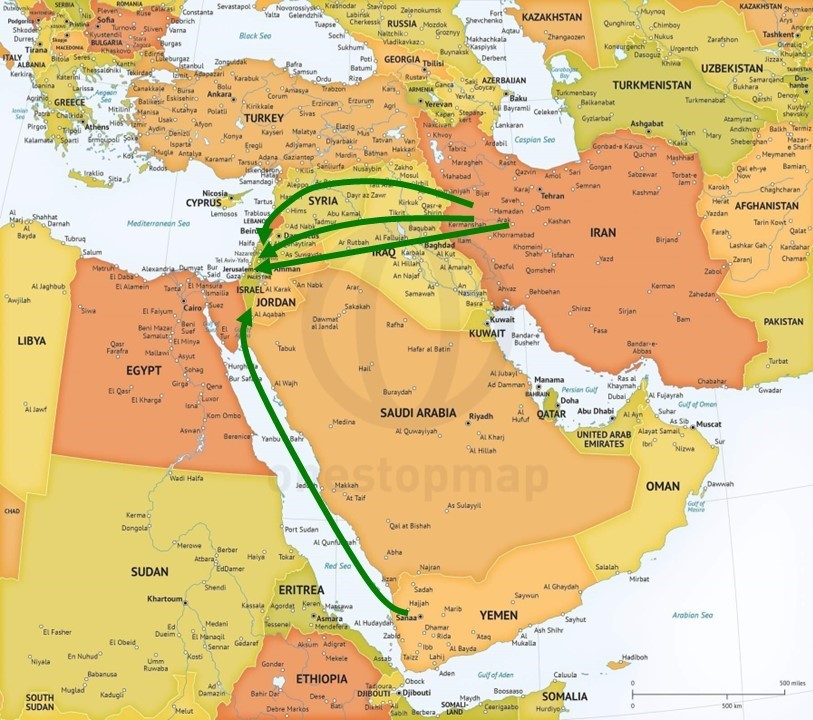
Israeli defenses contain five layers:
- The best known is the Iron Dome system, which is optimized to intercept low-flying rockets and certain types of drones. A new variant called the Sea Dome, which is mounted on a ship, was used for the first time a few days ago to defend against drones or missiles launched from Yemen towards the Israeli southern port of Eilat. They participated again during the April 13-14 attack.
- The Magic Wand system, which works against medium-altitude rockets and missiles. This system first became operational a couple of years ago.
- The Arrow system, which works against high-altitude missiles. This is the most veteran of Israel’s systems.
- A new variant of the Arrow system that works against exo-atmospheric missiles.
- To combat drones, Israel uses fighter aircraft and attack helicopters. Drones are essentially small unmanned aircraft, so shooting them down with other aircraft is a fairly similar process to ordinary air combat. That said, drones are smaller and therefore harder to detect. They are also slower, which requires faster responses by the pilots who must avoid overtaking them before shooting them down. (To stay airborne, aircraft need to maintain a minimum speed, and fighter jets have a higher minimum speed than drones. This is easier for helicopters, but they don’t carry radar and so must conduct visual detection, which is almost impossible at night.) On the other hand, current models cannot conduct evasive maneuvers to throw off the aim of the attacking aircraft.
During the attack of April 13-14, a sixth layer of defense was created by other states supporting Israel. The American and British air forces participated in defending Israel by intercepting drones in Iraqi air space and in eastern Syria. According to reports, they employed fighter aircraft, which suggests that they participated in shooting down drones. French “capabilities” (whatever that means) also participated in defending Israel, and the IDF spokesperson said other unspecified countries participated as well.
Some of the Houthi launches may have been intercepted by American and British warships in the Red Sea firing anti-missile interceptor missiles, which they have been doing for the past few months (perhaps the reference to the French is also in this area?). Jordanian air defenses also reported intercepting a number of drones and/or missiles, and Jordan reportedly allowed Israeli aircraft to enter its airspace to conduct interceptions. It is possible that some of the longer-range Israeli interceptor missiles also overflew Jordan. Israeli aircraft also entered southern Syria to intercept incoming drones before they reached Israeli territory.
The final stage of Israel’s defense was its anti-rocket/missile systems. Apparently, the vast majority of the drones and missiles flying towards and into Israel were shot down. Only a handful landed inside Israeli territory – inside an air force base in southern Israel (causing minimal damage and apparently ineffective, as the base continues to operate as usual). The Iranians claim the air force base was the one from which the Israeli aircraft that attacked their commanders in Damascus took off.
A ten-year-old Israeli Bedouin child living in southern Israel was seriously wounded when fragments hit her head (it is not yet clear if they were fragments from a successful interception or a drone or missile explosion on the ground). There is also a report from Jordan that three civilians were killed and several others wounded by fragments from destroyed drones or missiles falling to the ground. Other interceptions occurred over northern Lebanon with no casualties reported.
According to photographs posted on social media in Iraq, at least one Iranian missile fell inside the Iraqi capital, Baghdad, and others in northern Iraq.
The Biden administration is reportedly pressuring Israel NOT to respond to the Iranian attack.
In Israel the current debate is whether to respond relative to the size of the Iranian attack, or, given its general failure, only relative to its miniscule achievements.
In Iran the leadership is crowing about a huge success. It is claiming that the attack achieved its purpose and says Iran will now desist unless Israel retaliates.
Billboard in Palestine Square in Tehran: A message to Israel, the caption in Hebrew – “The Next Mistake Will Be the End of Your Fake Country“
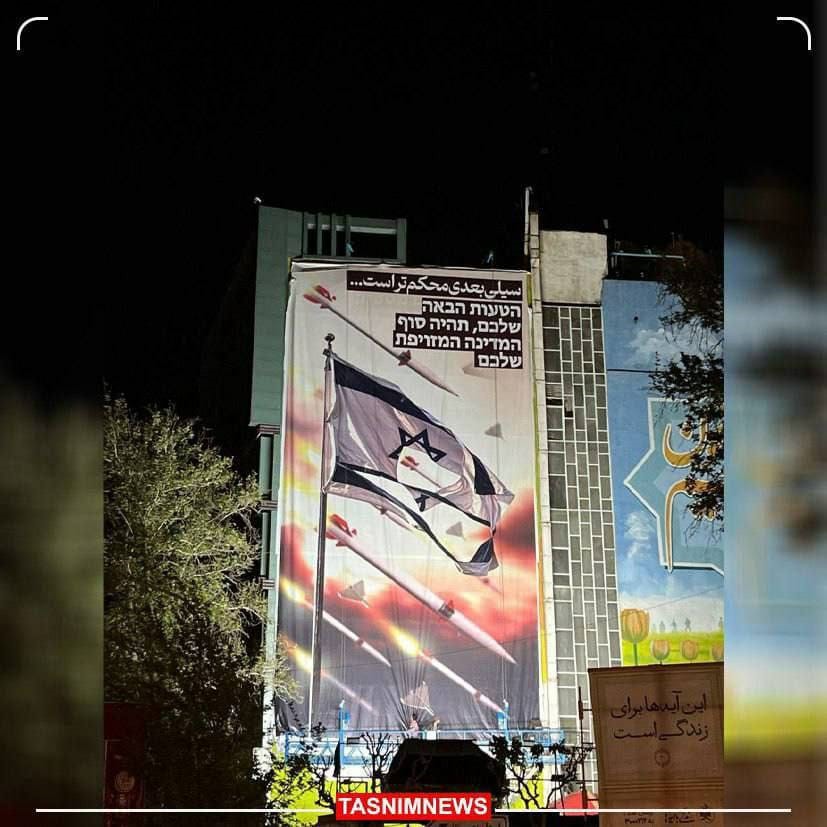
Forgotten because of the missile attack is the incident of the Iranian military’s hijacking of a container ship because it belongs to a company partially owned by an Israeli. This is not the first such attack – over the past few years, oil-carrying ships have been targeted for hijacking or explosive-drone attack by the Iranians – but it is apparently the first Iranian attack on a ship carrying shipping containers rather than oil.
Israel – Hamas Negotiations:
The negotiations between Israel and Hamas have been stuck for over a month. Hamas continues to demand a total cessation of Israel’s military operations and the withdrawal of all Israeli forces from Gaza in return for the hostages. In other words, it demands the ability to rehabilitate its control over Gaza so it can continue to attack Israel. The Israeli government has so far refused to accept these terms. It is willing to exchange some imprisoned Palestinian terrorists (the exact numbers are not clear; before the war there were approximately 5,000 Palestinians in custody for terrorist activity, but during the war many more have been captured – a few thousand in Judea and Samaria and a few thousand in Gaza) and accept a temporary ceasefire only. The issue of whether or not to accept Hamas’s terms has caused friction inside Israel with some groups demanding the government accede to them. According to polls, the majority of Israelis still support the government’s position.
The latest Hamas refusal to accept less than its original demand was received on 13 April, a few hours before the Iranian attack. It can be safely assumed that Hamas leaders are hoping the Israel-Iran confrontation will escalate and save them by forcing Israel to redirect most of its energy away from Gaza to new fronts in Lebanon, Syria and Iran. They have been asking Iran to order a general offensive against Israel since 7 October 2023. The Iranians have consistently refused, agreeing only to the low-intensity offensive described in these reports over the past six months.
Gaza:
Fighting inside Gaza continues as described in previous reports: low intensity guerrilla warfare. Hamas and other groups conduct small-scale raids or ambushes against Israeli units and Israeli forces reciprocate. Israel has withdrawn almost all its forces from the Gaza Strip, including those in the Khan Yunis area. At present, the only permanent Israeli presence is along a line separating the northern Gaza Strip and Gaza City from the rest of the Gaza Strip. Instead of establishing a permanent presence, Israeli forces have launched a number of large raids into areas they had previously vacated. The most important and successful of these was conducted at Shifa Hospital in Gaza City.
Acting on information that a group of terrorists had returned to Shifa Hospital to use its facilities, an Israeli force returned to the location and surrounded it. There were about 6,500 civilians in the hospital grounds and at least 600 Hamas and Palestinian Islamic Jihad terrorists, including several high-ranking officials from the political, administrative and military organs of those organizations. To facilitate the operation, the IDF opened an exit route for the civilians, which included a filtration passage that enabled the detection of terrorists as they attempted to use it to escape. Along the route, leading south from Gaza City along the coast, the IDF placed food and water supplies at a series of locations for civilians to take as they passed. Especially important, given the hot weather (above average for this time of year), was the water.
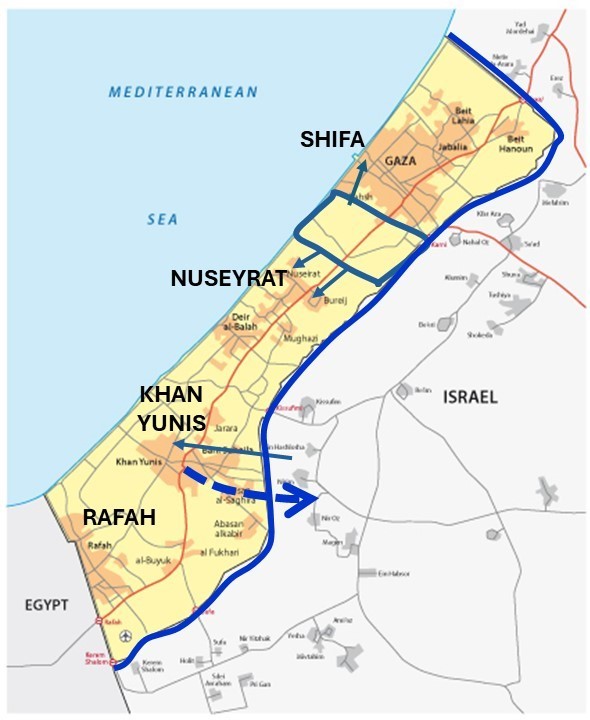
The Israeli forces operating in the hospital cleared a few buildings (special forces teams combed the buildings room by room) and then brought in medical equipment (respirators, surgical equipment, etc.) and supplies, as well as Israeli doctors and medical staff. They then helped the Palestinian medical staff transfer their patients from other buildings into the cleared ones, and combed the evacuated buildings as well. In two of the buildings fighting intensified as most of the terrorists inside conducted a defensive battle. They were armed with assault rifles, light machine guns, hand grenades and explosive charges, and used hospital machines and other medical equipment to build barricades. These are the two buildings that are shown as severely damaged in media reports.
Meanwhile, other forces from Hamas and Palestinian Islamic Jihad assembled from across their hideouts in Gaza City and attempted unsuccessfully to break through the Israeli cordon to reach the hospital.
The battle ended when the last terrorist inside the hospital had been killed or surrendered. All together, inside and outside the hospital about 210 terrorists (including a few suicide bombers) were killed and about 555 surrendered (another approximately 365 individuals were detained and released after it was clarified they were ordinary civilians). As noted, some of those arrested were high-ranking members of Hamas and Palestinian Islamic Jihad. No civilians were killed in the fighting. Large stockpiles of weapons were captured, as well as the equivalent of about $3.25 million in Israeli shekels, Jordanian dinars and American dollars. Three Israeli soldiers were killed and a few dozen wounded during this battle.
The fact that so many terrorists, senior commanders and officials had congregated in the hospital suggests (as some of them admitted in video recordings of their interrogations) that they felt safe there and were completely surprised by the Israel action.
Simultaneously with the hospital operation, a similar operation was conducted by Israeli forces in Khan Yunis. A neighborhood that had been taken, cleared and evacuated by Israeli forces was raided again, netting dozens of killed or captured terrorists who had returned to the evacuated area.
Also, over the past week Israeli forces have increased their raids into the Nuseyrat area in central Gaza, between Khan Yunis and Gaza City. To date, Israeli forces have not attempted to conduct a full-scale operation in this area, conducting only limited ground raids and air strikes.
Since the last report more than six weeks ago, 15 Israeli soldiers were killed and approximately 1,000 Hamas and other armed groups’ terrorists were killed.
Over the past couple of months there have been escalating reports of famine in Gaza. The United Nations Secretary General even claimed it to be the worst such situation in his jurisdiction. This is a ridiculous exaggeration. Perhaps he should take a less propagandistic tone and compare the situation in Gaza to actual starvation situations in Yemen and the Horn of Africa.
The problem in Gaza is not a lack of supplies entering it but the deliberate misdistribution of the supplies. Some of that misdistribution is the product of simple incompetence and some is deliberate. Supplies are standing undistributed in UN compounds, or are taken over by Hamas and distributed according to its own priorities. Some are sold instead of distributed, stolen enroute by various factions, or deliberately withheld to create a propaganda show for the purpose of vilifying Israel.
A partial solution has been to parachute aid. This, as noted in a previous report, has its own complications: at least 30 people have been reported killed by parachuted supplies landing on them or in fights over access to the supplies. Twelve people were reported to have drowned trying to retrieve supplies that were accidentally dropped into the sea. These numbers have to be treated with caution – as usual, they are controlled by Hamas itself or by pro-Hamas reporters (especially the local branch of the Qatari Al-Jazeera news/propaganda network).
To summarize: there are definitely insufficient supplies of food in some areas inside the Gaza Strip, but not because of Israel. There are areas where food is sufficient, even plentiful. The problem is internal distribution, which is plagued by a mixture of incompetence, corruption and deliberate actions by Hamas.
Lebanon:
The exchange of fire on the Israel-Lebanon border continues at a varying but fairly low intensity. Over the past few weeks, Israeli attacks have escalated in the choice of targets: they are no longer operating only near the border but are also striking Hezbollah installations in central and northern Lebanon. Hezbollah has responded by increasing the size of its rocket and exploding drone salvos into Israel.
Hezbollah participated in the Iranian retaliation by firing several dozen rockets into northern Israel.
Israeli casualties on the Lebanese border since 7 October have been 20 killed (six of them civilians) and several dozen wounded. All told, since the beginning of the war Hezbollah has fired more than 4,000 rockets and exploding drones into Israel as well as a few hundred guided anti-tank missiles (mostly Kornet, some the latest Russian version with ranges of up to 10 kilometers).
Hezbollah has admitted that 273 of its personnel have been killed so far. This number does not include non-Shiite members of Hezbollah who probably add at least a couple of dozen to the list.
Other Lebanese and Lebanese-based Palestinian organizations have participated in the exchanges and approximately 45 of their members have been killed too. Total Lebanese military casualties are now two killed and half a dozen wounded.
Three UNIFIL troops were wounded in southern Lebanon. Israel was initially blamed for firing at them, but further investigation proved that it was an IED emplaced by a local group, probably Hezbollah. Earlier, in October 2023, another UNIFIL soldier was wounded by a mortar bomb.
Judea and Samaria:
The fighting in Judea and Samaria continues with the IDF intensifying its raids especially in the Jenin area (the northern edge of Samaria). Each IDF entry into Palestinian towns faces varying intensities of resistance, including bombs dug under roads (cleared by bulldozers that tear up the asphalt), rifles, grenades, and improvised hand-thrown bombs as well as petrol bombs.
The Palestinians claim that almost 8,000 people have been arrested but the official Israeli number is only about 3,600, of whom approximately 50% belong to Hamas and the others to other groups. The discrepancy is apparently because the Palestinians count anyone who was detained even if they were released after being questioned. Approximately 425 terrorists have been killed, most during Israeli raids on their bases in the major Palestinian towns and the rest while conducting attacks on Israeli soldiers and civilians. The majority of those killed are Hamas and some are Palestinian Islamic Jihad, but quite a few are also from Fatah controlled armed groups. Fatah governs the Palestinian Authority in Judea and Samaria and officially supports the peace treaty with Israel, but unofficially (for deniability purposes) maintains armed groups that conduct terrorist attacks. These are often manned (supposedly when off-duty), funded and trained by the official armed forces of the Palestinian Authority. The Palestinians have also reported 4,600 wounded, but have not published details breaking down this number.
Iran and its proxies versus the US and its allies:
Exchanges of fire between the Houthis in Yemen and the combined American and European fleets in the Red Sea have continued unabated, though they remain small-scale. The Houthis continued to attack merchant ships and even succeeded in sinking one. The Americans and British have responded with air strikes on Houthi camps and combat positions, attempting to destroy their launch capabilities. Though they have reported successes, these have not yet reached a level sufficient to force the Houthis to desist from their attacks.
Over this period there has been a general ceasefire by the Iranian proxies against American forces in Iraq, Syria and Jordan. There have been a couple of incidents.
Israeli casualties:
Currently the total number of Israeli casualties for the single day of 7 October is 1,160, which includes civilians, military, police, firefighters, medical personnel, etc. There are still some people unaccounted for, and some of the people kidnapped to Gaza were dead when taken or have died in captivity and are still not confirmed.
After the rescue operation in the heart of Rafah, there are still 132 kidnapped Israelis and non-Israelis in Gaza. How many are alive and how many dead is not known, though the current estimate is that at least 30 are dead and perhaps more. In negotiations with Hamas Israel has demanded a listing of both living and dead hostages, but Hamas has refused to provide any such information.
In addition, 19 Israeli civilians have been killed in Hamas rocket attacks and six by Hezbollah. Another 20 Israelis have been killed and 140 wounded by Palestinians from Judea and Samaria; some Israelis were attacked in Judea and Samaria and some inside pre-1967 Israel by terrorists who managed to infiltrate. The so-called Green Line separating the two areas from 1949 is a tortuous line through hilly and vegetation-covered terrain. Though Israel built a fence along it (called a “wall” by Israel’s detractors, though only 10% is a wall, to prevent direct flat trajectory fire at Israeli villages or roads adjacent to the line) that is constantly patrolled and has electronic surveillance devices, no such protection is ever 100% – especially as in some areas there is a mixed population.
As of 5 April 2024, a total of 604 IDF soldiers have been killed on all fronts since and including 7 October (the number for 7 October is periodically updated as more are confirmed killed who were previously listed as missing).
The total number of Israeli wounded is approximately 14,000. The IDF has published that since the beginning of the war 6,800 soldiers have been admitted to rehabilitation treatments. This suggests that the majority of the 14,000 mentioned above are soldiers, because statistically, if 6,800 need post-injury rehabilitation treatment, there are probably a few thousand very lightly injured who do not.
Initially the number of Israelis who were forced to leave their homes in 64 villages and towns along the borders with Gaza and Lebanon reached approximately 250,000. The number of those returning to their homes has grown, mostly in the areas around Gaza.
Palestinian casualties:
The Gaza Health Ministry, which is controlled by Hamas in its role as the government of Gaza, claims that so far almost 34,000 Gazans have been killed and approximately 76,000 wounded. They do not differentiate between personnel of Hamas and other terrorist organizations and civilians, but according to the IDF, at least 14,000 Hamas and other groups’ terrorists have been killed. The number of estimated wounded has not been updated but is probably similar to the fatalities. Though Hamas reported last month that at least 6,000 of their personnel had been killed, a high-ranking official admitted that actually they do not know the number. The IDF has also captured many terrorists, though the exact number has not been divulged. From anecdotal information the figure can be estimated at around 3,000, or perhaps as many as 3,500 (about 1,000 more than the last report).
Given that Hamas and the other groups had 40,000 to 50,000 personnel between them (different sources provide different numbers and there is a problem counting part-timers as opposed to regulars or official “reserves”), the figure of almost 30,000 represents a sizeable chunk of their manpower. However, we have no information on recruitment of new personnel, who may be less well-trained but are still adding to the numbers. Hamas youth movements conduct basic firearms training from an early age, so they have a recruitment pool of teenagers available to join the fighting. The incidence of surrendering rather than fighting to the death has increased, indicating morale problems, but the fighting is far from over and the organizations have not yet broken.
The Palestinians have been claiming deaths from starvation but have not yet proven a single case. The only photographs have been shown to be fakes.
WHAT NEXT?
The current situation has been defined by the IDF as “Phase 3” of the Israeli strategy against Hamas. The final goal declared by the Israeli government is still quite a ways off, as Hamas personnel return to every area the Israelis evacuate. This was expected, as in each area, Hamas, after suffering heavy casualties, began to hide rather than fight. The current phase is composed of the raids described above – as Hamas personnel return to an area they are targeted and raided. This does not preclude a major ground operation to reenter and re-clear any chosen area.
The Rafah operation is still on the table. Prime Minister Nethanyahu has declared that a date has been set but has not stated what that date is. Part of the withdrawal of IDF units from Khan Yunis was in preparation for this operation, as the units need time to recuperate and plan the attack.
Meanwhile, on the Lebanese border the tit-for-tat exchange of fire continues. Tactically the IDF is winning, as shown by the casualty ratio of more than 15 to 1 in its favor (given the small total numbers, any single addition to the Israeli casualty total significantly changes the ratio). However, strategically, the situation is in Hezbollah’s favor. The approximately 100,000 Israeli civilians from the northern towns and villages who have become refugees inside Israel still cannot return home. For them to return home requires either that Hezbollah agrees to withdraw all its forces at least 10 to 15 kilometers from the border or is forced to do so by an escalated Israeli offensive taking the ground to that depth or more and conducting a massed bombing campaign on Hezbollah’s rear areas. Israeli leaders state they would prefer the diplomatic solution, but if it fails, they will order the military to attack into Lebanon.
The central question now is the continuation of the direct confrontation between Israel and Iran. What will be Israel’s response to the Iranian attack? As noted, the debate inside Israel is whether to respond in a manner commensurate with the size of the attack or commensurate with the size of the results. The United States is very clearly opposed to a powerful Israeli response. Assessing the results of a response is also important. Would there be a repeat performance by Iran? Something much smaller? Something different?
ON THE HUMANITARIAN ISSUE
What is being done to facilitate the supply of humanitarian aid to Gaza?
The following is from the Israel Foreign Ministry’s page on the issue:
https://www.gov.il/en/Departments/General/swords-of-iron-faq-6-dec-2023#5
Israel is constantly facilitating humanitarian assistance into Gaza and is working with international stakeholders to advance this objective. At the same time, genuine concern for the humanitarian situation cannot ignore Hamas’s efforts to divert and steal aid, nor can it ignore the fact that the humanitarian threat faced by the Palestinians of Gaza begins from Hamas’s total contempt for Palestinian welfare. Critically, demanding aid flow into Gaza, without also demanding that Hamas release the supplies it has stolen from the civilian population, is effectively rewarding the reprehensible behavior of Hamas and asking others to ensure that Hamas retains the capacity to launch armed attacks against Israel.
The current hostilities, which were initiated by Hamas, have resulted in a significant deterioration in the humanitarian situation in Gaza. The primary cause for the current situation is Hamas’s treatment of the Gazan population during the 16 years it has ruled over them. Hamas has explicitly said that it considers itself to have no responsibility for the care of the population it controls. Hamas has failed to improve the situation of the civilian population, has not invested in critical infrastructure, and did not prepare its population for the inevitable effects of the war it started with Israel. Hamas has continued to invest in its military buildup and its attacks against Israel, using its resources to further this agenda rather than supporting its population.
In the lead-up to the current hostilities, Hamas continued to divert aid intended for the civilian population for terrorist purposes, including by using concrete intended for housing construction to build its massive underground tunnel network. Generous funding provided by the international community to assist the civilian population has ended up in Hamas’s coffers, supporting the luxury lifestyle of its leaders and advancing its terrorist agenda.
By contrast, Israel has continued to directly provide services to Gaza, despite ongoing attacks against it. For example, prior to October 7, Israel supplied 50% of Gaza’s electricity and up to 10% of Gaza’s water. Israel also operated border crossings to facilitate the flow of goods and aid into Gaza. Similarly, prior to the current hostilities, almost 20,000 Gazans entered Israel daily for work.
On October 7, nine of the 10 electricity lines coming in from Israel were hit by Hamas fire. One of the three water pipes from Israel was likewise hit by Hamas fire. [NOTE: One of the pipelines, to central Gaza, has since been repaired and provides some 400,000 people another 42 liters per person per day.] Hamas invaded the Erez Crossing (through which people from Gaza pass into Israel with work permits, for medical treatment and travel purposes, and through which personnel from international organizations pass into Gaza) in the north, murdered and abducted personnel, and caused significant damage. It has put the Kerem Shalom crossing (the crossing through which goods and aid passes through into Gaza) in the south under constant fire.
The humanitarian situation in Gaza has also been affected by Hamas’s placement of rocket launching sites and other military assets within and adjacent to critical infrastructure (see, for example, a rocket launching site adjacent to a water desalination plant funded by the international community), thus willfully exposing them to harm. Hamas hoards supplies such as fuel and has stolen other supplies from international organizations that were intended for the civilian population (as publicly acknowledged by the UN). Hamas has also harmed and even caused the cessation of the provision of medical services in Gaza by using hospitals for military operations, thus necessitating IDF operations at such sites and the evacuation of patients and staff for their safety. Finally, Hamas’s abuse of the civilian environment and use of civilians as human shields results in direct harm to civilians and civilian infrastructure.
As stated clearly and repeatedly by Israel’s senior political and military leadership, Israel does not wish to harm civilians in Gaza and is taking steps to facilitate and expand the flow of aid to the civilian population. Under the law of armed conflict, parties to an armed conflict are required to allow and facilitate access to consignments of supplies essential for the survival of the civilian population if it is not adequately provided. This obligation is subject to important conditions, including that there are no serious reasons to fear that consignments will be diverted from their civilian destination or otherwise accrue to the advantage of the enemy’s military efforts. International law does not obligate a party to a conflict to provide supplies to the territory of the other party.
In practice, the entry of several hundred tons of humanitarian supplies every day is now being facilitated by Israel even though Hamas possesses many essential supplies that it could itself provide to the civilian population. Israel is also providing water to Gaza from its own supplies. Israel has facilitated the establishment of field hospitals in southern Gaza and floating hospitals in the sea, and is working with third parties to establish additional field hospitals. Israel has facilitated the movement of people out of Gaza to receive medical treatment as well as the entry of medical supplies and equipment into Gaza, and provided its own medical supplies to patients and staff at Shifa Hospital during IDF operations to uncover and disable Hamas’s military infrastructure, which was inside the hospital complex. For more information, see COGAT’s website.
Genuine concern for the humanitarian situation must begin with a demand that Hamas stopping stealing aid and release the supplies it has stolen from the civilian population to sustain its terrorist objectives.
The following is from the IDF department responsible for this issue:
COGAT – IDF – Humanitarian aid to Gaza
https://govextra.gov.il/cogat/humanitarian-efforts/home/
Humanitarian aid including only food, water, medical supplies and shelter equipment is routed to Egypt and then forwarded to undergo Israeli security screening at either Nitzana or Kerem Shalom Crossings. From there, UN aid is sent to the Gaza Strip via Kerem Shalom, and the rest is sent to Gaza via the Rafah crossing in Egypt.
A humanitarian aid delivery channel via Jordan is operational, and additional delivery channels are in the planning process.
The volume of humanitarian aid is determined, among other factors, by the ability of humanitarian organizations within the Gaza Strip to absorb the aid.
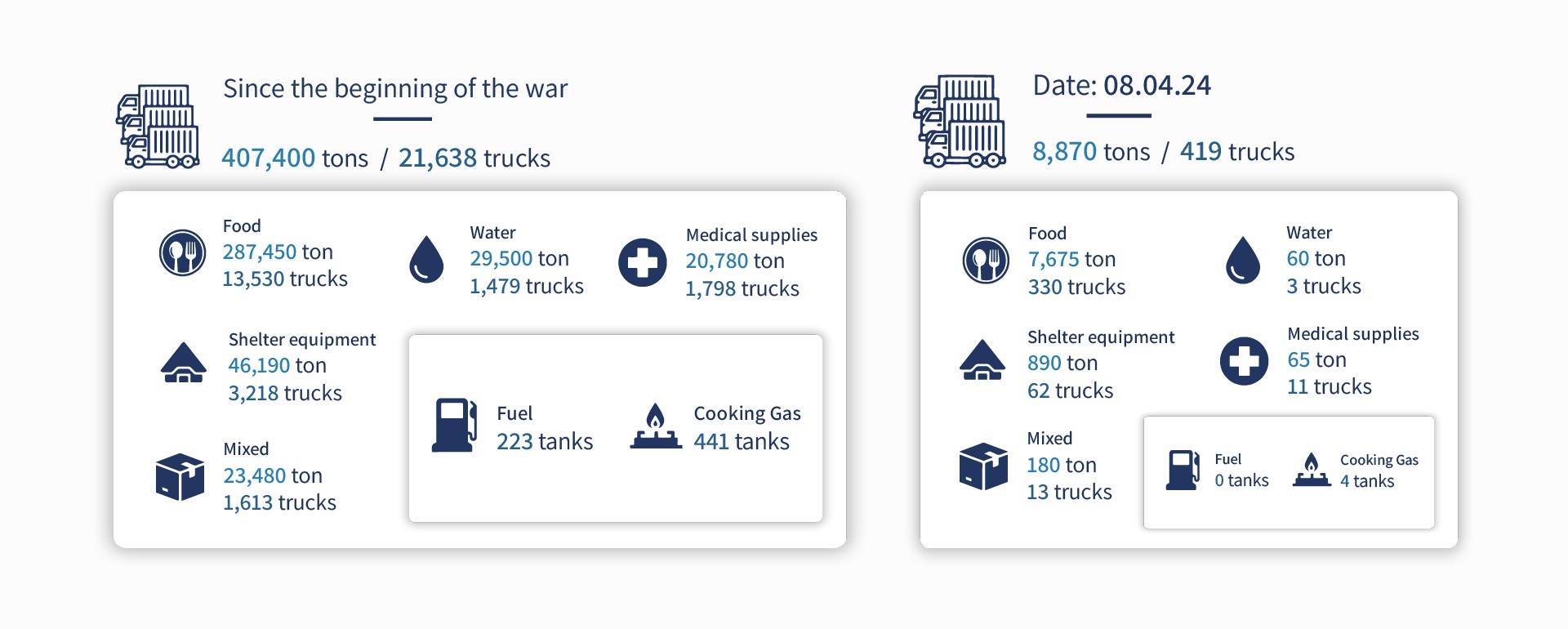
Hamas controls the delivery of aid to the population according to its priorities. Much of the aid is not handed out but instead appropriated and then sold in the markets.
The following photograph shows a collection of containers with aid waiting in a United Nations storage site inside Gaza.
Published by the IDF Spokesperson’s Office – The problem is not Israel delaying aid, but the inefficient and corrupt distribution of aid inside Gaza.
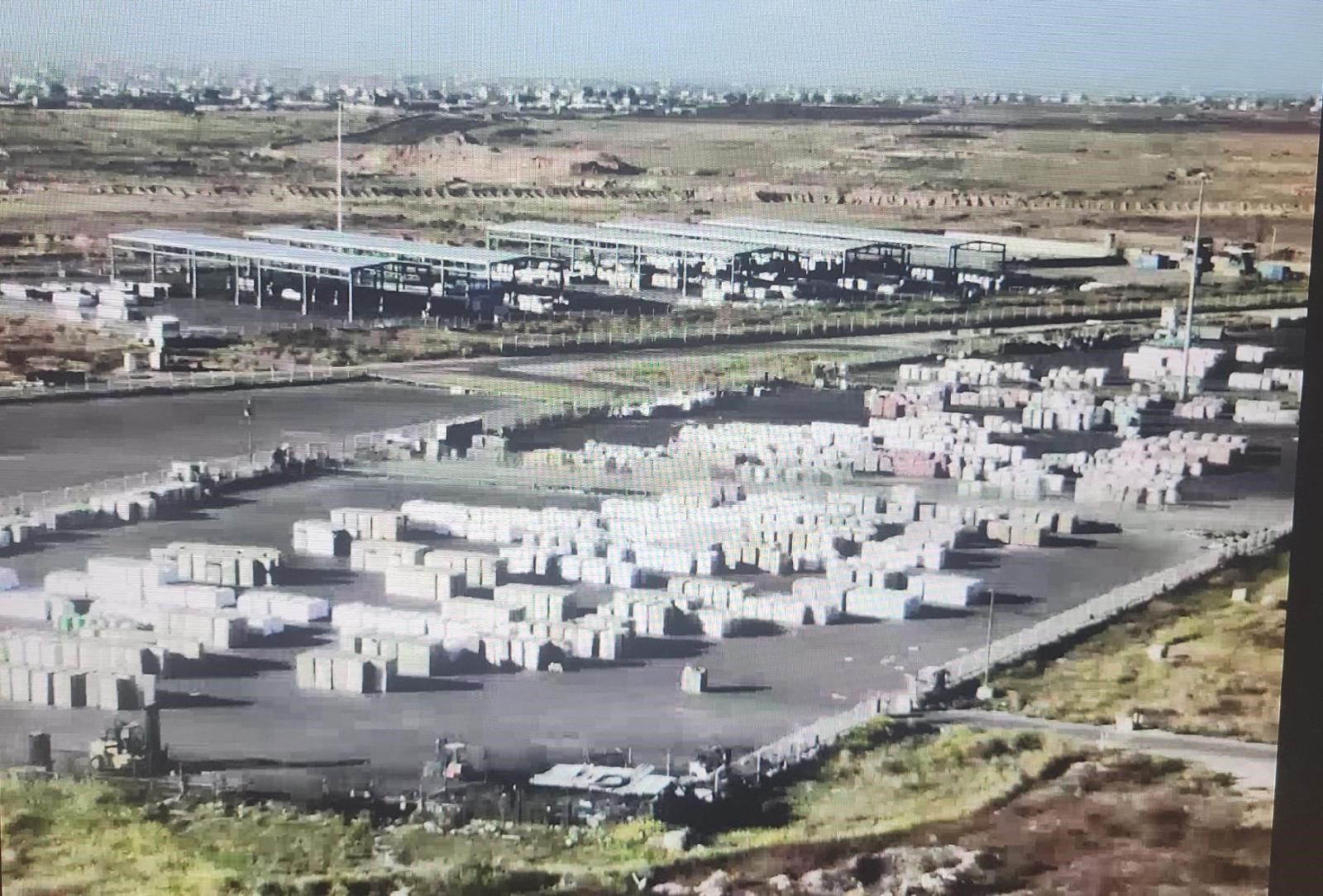
***
18 January – 3 February 2024
WHAT HAS HAPPENED?
Negotiations:
The negotiations referred to in last month’s update have continued but have not yet achieved an agreement. The reasons for this have not changed. In return for handing over the remaining hostages, Hamas and its partner/rival, Palestinian Islamic Jihad, are demanding a complete and final ceasefire, total Israeli withdrawal from Gaza territory, the release of all the thousands of their members held in Israel (totaling more than 6,500, including those captured during the current war), and international guarantees that Israel will not renew its offensive afterwards.
Israel obviously refuses to accept these conditions, and, despite the media noise surrounding the demonstrations by some of the hostages’ families and various support groups calling for Israel to accept these demands (not all the families agree), polls show that the vast majority of the Israeli public are not willing to accede to these demands of Hamas and Palestinian Islamic Jihad, and so far, neither is the government. The argument put forward by those against the deal is that accepting it might save the current hostages, but would cost many more times that number of Israeli lives in the future.
Meanwhile, Israel has demanded a list of the kidnappees and who among them is alive. Hamas has refused to provide this information.
Gaza:
Demobilized Israeli reservists who participated in the battles in Gaza City and Khan Yunis said virtually every building they entered either had a weapons cache inside it or was rigged to explode, either via booby-traps designed to be tripped by an unwary soldier or via cameras set up to view the entrance of the Israeli soldiers and set off the charges remotely. Hamas fighters would also often move between buildings without weapons to appear like ordinary civilians, then take the weapons cached in the new building, shoot from the windows or a position adjacent to the building, put the weapons back, and move – again without weapons – to another building.
Fighting in the Khan Yunis area continues as previously described: a deadly form of “hide and seek” through buildings and streets. However, in addition to fighting above-ground battles, Israeli units have apparently begun entering the tunnels under Khan Yunis and are fighting underground as well. Previously, underground operations were carried out only after an area had been cleared of Hamas in order to search for information before destroying the tunnels. Now it seems that Israeli troops are advancing underground while fighting continues above-ground.
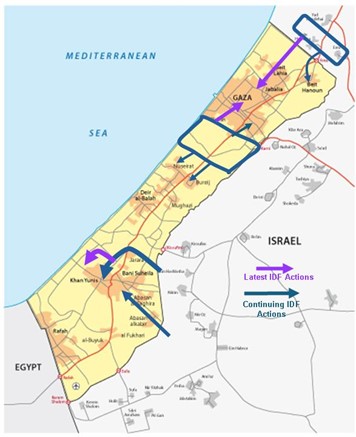
Israeli forces have gradually moved through more and more of Khan Yunis. Hamas continues to conduct hit-and-run attacks and hides both underground and inside hospitals. One Israeli effort is to go through the hospitals and other “innocent” facilities like UNRWA buildings. Thus, in Nasser Hospital, the Israelis captured some 200 terrorists, including several staff members who were carrying weapons. A central command post of Hamas was found underneath the UNRWA headquarters building, connected to the electricity of that facility. That command post contained the central computer farm for Hamas’s command network and its central computerized intelligence depository.
A new angle of attack in the area of Khan Yunis is an outflanking move around and into the neighborhood of Hamad.
In northern Gaza, more and more Hamas personnel have appeared in the open following the departure of Israeli forces. They are trying to reorganize and rebuild their infrastructure. The Israeli forces have responded by conducting focused raids with tanks and infantry supported by aircraft and artillery. These raids have netted several dozen Hamas personnel as prisoners and killed several times that number. The division commander conducting one of the raids stated that at the beginning of the war, three divisions were needed to reach the area in the center of Gaza City at which the raid was aimed, whereas now two battle groups are sufficient.
In southern Gaza an Israeli special forces unit infiltrated into the heart of Rafah and rescued two kidnappees. The withdrawal was contested and heavy supporting fire was required to evacuate the force and the rescued kidnappees. The final stage of the evacuation was by a helicopter that flew into the Rafah area, picked up the force and flew back out. Hamas spokesmen and media ignored the rescue of the hostages and focused instead on the fighting and the casualties they claim were inflicted on local civilians. When they finally mentioned the rescue, they claimed that the two Israelis had been held by a local family and not by Hamas.
Hamas is still firing rockets into Israel, but the frequency and total numbers have dropped. There were only about 165 rockets over the entire month, which is roughly equivalent to the daily average during the first weeks of the war.
Among the materiel captured by the IDF from Hamas is a large amount of cash. In the Khan Yunis tunnels alone, approximately $5.5 million in various currencies was found as well as records indicating that Iran has transferred $150 million to Hamas over the past ten years.
Over the past month, 24 Israeli soldiers were killed and a few hundred wounded (the exact number has not been published). Approximately 3,000 Hamas and other armed groups’ personnel were killed and a similar number were probably wounded.
In Gaza itself, more Palestinians are criticizing Hamas for initiating this war and are demanding that it surrender the hostages to stop their suffering. As yet, only a small minority are daring to come out in the open, so it is not clear how representative they are of the majority of the population. The general tone is less criticism of Hamas’s goals and more criticism of its method of achieving them, which has exacted a terrible cost for the general population. There are also social media posts and demonstrations supporting Hamas. Again, it is not clear how much these reflect broad opinion or are organized “by the party”.
The humanitarian situation in Gaza is gradually worsening as the supplies provided by donors are both insufficient and plundered by Hamas. This is one of the reasons for the increasing criticism of Hamas by the Palestinian population. Many critics claim that Hamas is deliberately depriving the population of the aid. There is mounting pressure on Israel to allow more aid to enter Gaza, but that means the trucks will not be checked diligently enough to prevent weapons and other equipment from being brought in for use by Hamas and the other armed groups. Smuggling from Egyptian territory on trucks and through tunnels was Hamas’s and other groups’ main source of weapons prior to the war. There have also been attempts to smuggle through Israel (in one case a couple of years ago, Israeli security personnel found that a shipment of canned food had electronics for military equipment inside the cans instead of food). During the current war, Israeli security has found and captured items for military use when searching humanitarian supply trucks.
Two other issues are delaying the transfer of supplies into Gaza:
- Egyptian truck drivers are complaining that when their trucks cross the border they are damaged by crowds of Gazans charging them to unload the supplies. More and more drivers are refusing to enter Gaza and are demanding that Palestinian trucks come to the border and transfer the loads, which of course delays the transport.
- Small numbers of Israeli protesters sometimes block the entrances from Israel and demand that the continuance of supplies be conditional on the release of the hostages.
In one incident, in order to prevent Hamas from taking incoming aid supplies, Palestinian civilians broke into the border terminal with Egypt to ransack trucks before they crossed the border. Hamas police opened fire on them, killing a teenager. In response, his family attacked the policemen, killing two of them. Such events have been recurring. In another incident a truck driver was killed by stones thrown at him. In another, a crowd charged a moving truck and many were run over. Locals have also reported on social media that trucks passing from southern to northern Gaza to feed the population there were ransacked enroute by groups of Palestinians who then sold the goods at the market.
A partial solution has been to parachute in aid. This has its own complications. The first is controlling air traffic over Gaza during combat operations to prevent accidents. Then there is the issue that flying high enough to prevent aircraft being shot down by Hamas means the dispersal of the supplies being dropped is greater (there have been reports of the wind carrying some supplies into the sea and some into Israel). Ensuring that the supplies do not land on the people waiting below means dropping them over empty areas that are harder for the recipients to reach and more difficult to carry back supplies from. (Shortly after writing this, I received a report that a number of Palestinians had been killed by a supply drop that landed on them.) Furthermore, Hamas controls travel in the areas not occupied by Israeli forces, so air drops can only partially bypass its control. They cannot prevent Hamas from grabbing the supplies for its own use, just as it does with the truck convoys.
So far most of the air drops have been by the Jordanians flying through Israel, and this past week there was also an American supply drop. Apparently Egypt, Qatar, the Gulf Emirates and France have also volunteered to send parachuted supplies to Gaza.
A final issue is that parachuted supplies cannot be checked. This is not a problem with the Americans and probably not with some of the Arab states, but Qatar is a supporter of Hamas and has funded it for many years. Any air drops provided by Qatar would be suspect.
Another side of the humanitarian issue is that it is concentrated in certain areas of the Gaza Strip. The photograph below, published on 28 February, shows the local market in the town of Nuseyrat:
(photograph from Palestinian social media by Israeli blogger Abu Ali Express)
Another issue that has appeared on the social media of Gazans is that the aid is not being handed out but rather sold at exorbitant prices. This means that instead of the aid donated by foreign states and NGOs being treated as donations, Hamas is using it to earn cash at the population’s expense.
The Egyptian army has considerably reinforced its border obstacle with Gaza with concrete walls, barbed-wire fences, and so on to prevent Gazans from moving into Egypt.
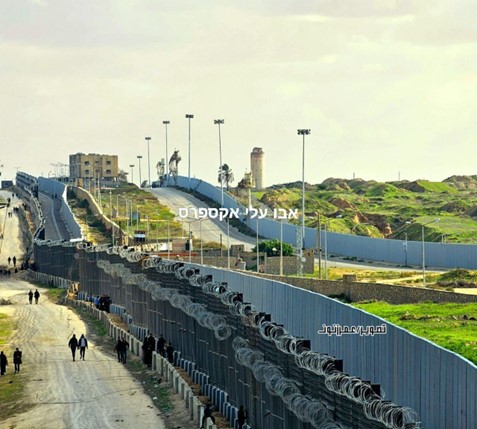
The Egyptian Reinforced Border Obstacle
Gaza on the left, Egypt on the right
(photograph from Palestinian social media by Israeli blogger Abu Ali Express)
Lebanon:
The exchange of fire on the Israel-Lebanon border continues at a varying but fairly low intensity.
Israeli casualties on the Lebanese border since 7 October have been 15 killed (four of them civilians) and several dozen wounded. All told, since the beginning of the war Hezbollah has fired approximately 4,000 rockets and exploding drones into Israel as well as a few hundred guided anti-tank missiles (mostly Kornet, some the latest Russian version with ranges of up to 10 kilometers).
Hezbollah has admitted that so far 239 of its personnel have been killed (20 of them in Syria). This number does not include non-Shiite members of Hezbollah who probably number at least a couple of dozen.
Other Lebanese and Lebanese-based Palestinian organizations have also participated in the exchanges and approximately 45 of their members have been killed. Another Lebanese soldier was killed this month, so total Lebanese military casualties are now two killed and half a dozen wounded.
An interesting story circulating in Lebanese social media is that anonymous Lebanese are phoning people living in various villages in southern Lebanon and telling them to leave before an imminent Israeli attack. It is not clear if these are youngsters pulling pranks or part of a political demonstration against Hezbollah.
Syria:
Though there have been some exchanges of fire involving Shiite militia rocket attacks and Israeli air strikes, artillery fire and tank fire, their frequency has gone down. Israeli attacks have killed at least a dozen Iranian officers, Hezbollah personnel and other Shiite militias. (There are several thousand Shiite troops from Pakistan, Afghanistan and Iraq in Syria right now. They are funded, organized, equipped, trained and operated by the Iranians.)
Judea and Samaria:
The fighting in Judea and Samaria continues with the IDF intensifying its raids, especially in the Jenin area (the northern edge of Samaria). Each IDF entry into Palestinian towns faces varying intensities of resistance, including bombs planted under roads (cleared by bulldozers that tear up the asphalt), rifles, grenades and improvised hand-thrown bombs, as well as petrol bombs.
The Palestinians claim that almost 7,400 people have been arrested but the official Israeli number is only about 3,000, of whom approximately 50% belong to Hamas and the others to other groups. The discrepancy is apparently because the Palestinians count anyone who was detained even if they were released after being questioned. Approximately 410 terrorists have been killed, most during Israeli raids on their bases in the major Palestinian towns and the rest while conducting attacks on Israeli soldiers and civilians.
The majority of the killed are Hamas and some are Palestinian Islamic Jihad, but quite a few are also from Fatah-controlled armed groups. Fatah governs the Palestinian Authority in Judea and Samaria and officially supports the peace treaty with Israel, but unofficially (for purposes of deniability) maintains armed groups that conduct terrorist attacks. These are manned (supposedly when off-duty), funded and trained by the official armed forces of the Palestinian Authority. The Palestinians have also reported 4,600 wounded but have not published details breaking down this number.
Children are being used in combat in the West Bank. In one instance, a 14-year-old attacked an Israeli check-post. He walked up to an Israeli soldier standing near the post, began talking to him, then pulled out a knife and attempted to stab him. He was killed and will be declared an “innocent child” who was killed by the Israelis.
Iran and its proxies versus the US and its allies:
Following the attack that killed three Americans and wounded approximately 40 more in northeastern Jordan last month, and the American response, which killed a number of Shiite militia commanders and more “regular” troops, there has been near quiet on that front. There are reports that Iran has ordered the Shiite militias of Iraq, which had been conducting the attacks on the Americans, to cease.
Contrarily, the exchanges of fire between the Houthis in Yemen and the combined American and European fleets in the Red Sea have continued unabated, though they are still small-scale. The Houthis continue to attack merchant ships and have even succeeded in sinking one. The Americans and British have responded with air strikes on Houthi camps and combat positions, attempting to destroy their launch capabilities. Though they have reported successes, they have not yet reached a level sufficient to force the Houthis to desist from their attacks.
The Houthis have made their first use of a remotely piloted exploding submersible. It was detected and destroyed before hitting any targets. They also managed to shoot down an American remotely piloted aircraft that was flying over their positions.
Towards the end of February, the Houthis added a new target: submarine internet cables that connect parts of eastern Africa and the Arabian Peninsula to the international internet. The Houthis officially denied that they tore the cables. It should be noted that damage to such cables is a fairly common occurrence around the world. It is often the result of natural causes (sea floor landslides or earthquakes, shark bites, etc.), accidents (passing ships that dropped anchors or fishnets) or criminal actions (the cables are very expensive and there have been numerous cases in which sections have been cut, stolen and sold on the black market).
Throughout the entire confrontation, an Iranian intelligence-gathering ship has been sailing in the southern Red Sea, sometimes exiting to the Indian Ocean. It is assumed that they are helping the Houthis find targets.
Meanwhile, truck convoy alternatives have been initiated to transport merchandise to and from the Persian Gulf through Saudi Arabia and Jordan, thereby bypassing Yemen. These are less financially efficient than ships so are relevant only as a stop-gap measure.
In Iran itself, a central gas pipe exploded on the night of 13-14 February. The Iranians are blaming Israel. The explosion cut off the main supply route for gas from the processing plants adjacent to the Persian Gulf to Isfahan, Qom and Tehran in northern Iran.
Israeli casualties:
Currently the total for the single day of 7 October is 1,150 – civilians, military, police, firefighters, medical personnel, etc. Some are still unaccounted for, and some of the people kidnapped to Gaza were dead when taken or have died in captivity and are still not confirmed.
After the rescue operation in the heart of Rafah, there are still 132 kidnapped Israelis and non-Israelis in Gaza. How many are alive and how many dead is not known, though the current estimate is that at least 30 are dead and perhaps more. In the negotiations with Hamas, Israel has demanded a listing of all hostages both alive and dead, but Hamas has refused to provide it.
In addition, 19 Israeli civilians have been killed in Hamas rocket attacks and five by Hezbollah. Another 17 Israeli civilians have been killed and 132 wounded by Palestinians from Judea and Samaria. Some Israelis were attacked in Judea and Samaria and some inside pre-1967 Israel by terrorists who managed to infiltrate. The so-called Green Line separating the two areas from 1949 is a tortuous line through hilly and vegetation-covered terrain. Israel built a fence along it (called a “wall” by Israel’s detractors, though only 10% is a wall, to prevent direct flat trajectory fire at Israeli villages or roads). The fence is constantly patrolled and has electronic surveillance devices, but no such protection is ever 100% – especially as in some areas there is a mixed population.
As of 8 March 2024, a total of 587 IDF soldiers have been killed on all fronts since and including 7 October (the number for 7 October is periodically updated as more are confirmed killed who were previously listed as missing).
The total number of Israeli wounded is approximately 14,000. The number of IDF personnel within this figure has not been updated.
Initially the number of Israelis who were forced to leave their homes in 64 villages and towns along the borders with Gaza and Lebanon reached approximately 250,000. Over the past couple of weeks many have returned home, though the exact number is not clear; there are probably approximately 200,000 Israelis who are still refugees inside Israel. Most are receiving government aid, some have moved into kibbutzim that have donated housing and other assistance to the families, and some are receiving assistance from private individuals or voluntary aid committees.
Palestinian casualties:
The Gaza Health Ministry, which is controlled by Hamas in its role as the government of Gaza, claims that so far almost 32,000 Gazans have been killed and approximately 72,000 wounded. They do not differentiate between personnel of Hamas and other terrorist organizations and civilians.
According to the IDF, at least 13,000 terrorists from Hamas and other groups have been killed and probably another 13,000 wounded. Hamas admits to 6,000 of its personnel killed – the first time they have provided any real number. The IDF has also captured many terrorists, though the exact number has not been divulged. From anecdotal information it can be estimated at around 2,000, or perhaps as many as 2,500. Given that Hamas and the other groups had 40,000 to 50,000 personnel between them (different sources provide different numbers, and there is a problem counting part-timers as opposed to regulars or official “reserves”), these numbers represent a sizeable chunk of their manpower.
The Palestinians have also been claiming deaths from starvation but have not provided any corroboration. One photograph depicting an emaciated child in a hospital showed his father sitting next to him in full health and sound body, suggesting that the child was suffering from an illness, not starvation.
Several studies of the casualty numbers provided by the Palestinians – numbers that are quoted as fact by the UN, NGOs and many media outlets – indicate that those numbers are likely fictitious. They are too precise and too repetitive in terms of numbers per day and percentages of men, women and children. These and other issues seem to show that they are not based on actual information collection. A typical example is: https://www.tabletmag.com/sections/news/articles/how-gaza-health-ministry-fakes-casualty-numbers.
It should be noted that in all previous confrontations with Hamas a similar process was identified, and later reviews and studies revealed that Hamas exaggerated the civilian component of Palestinian casualties. Often, the IDF’s initial numbers and totals were closer to the reality.
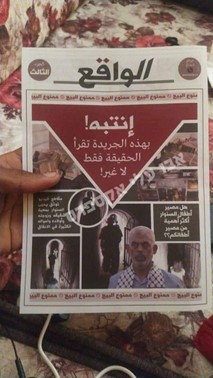
Israeli propaganda leaflet:
Is the fate of Sinwar’s children more important than the fate of your children?
(after airing of footage showing Sinwar’s family hiding in the tunnels)
WHAT NEXT?
If there is no agreement for a ceasefire in the coming weeks, the probable development will be that as the fighting in Khan Yunis winds down, the IDF will begin to attack in Rafah. Prior to this it will have to move the population that has concentrated there from the other areas; there are now approximately 1 million people there in addition to the original 300,000 who were living there prior to the war.
There are two directions in which they can theoretically be moved:
- Into Egypt. This is not an option, as the Egyptians have made clear that they will not allow this under any circumstances. They have beefed up the border obstacle and military presence near the border in order to prevent this.
- Further north along the coast. This would require setting up new camps to accommodate the population.
Another area the Israelis have not yet entered in force is the urban conglomeration around Nuseyrat, between Khan Yunis and Gaza City. So far they have only conducted raids into this area, some small (companies or battalions) and some brigade-sized, lasting a few days each.
Taking the Rafah corridor will disconnect Gaza from the border with Egypt and enable the Israelis to search for and destroy the numerous smuggling tunnels dug by the Gazans under that border. Originally there were a couple of thousand tunnels (many big enough to allow the passage of small trucks), but in the summer of 2013, then-new Egyptian president al-Sisi ordered his army to shut them down. The Egyptians also dug a moat along the border to prevent new tunnels being dug and razed all of southern Rafah on their side of the border to a distance of 1 kilometer in order to increase the length necessary to reach built-up areas before coming to the surface. These measures reduced the number of tunnels, but gradually the Gazans managed to maintain several dozens of active tunnels.
The Israeli civilian and military leadership is stating that achieving the final objective of destroying Hamas’s military power will take many more months of continuous and repetitive operations. After a few months in which the strategy as been massed offensives to locate and kill as many Hamas personnel as possible, it is now changing to a strategy of gradual attrition as Hamas attempts to play the long game, operating only in small hit-and-run teams.
Hamas leaders are banking on the western states pressuring Israel to halt. Thus, their strategy is to try to draw out the war. They are willing to do some damage to the Israeli forces, but not to concentrate in such a way as to conduct full-scale battles that would expose their personnel to rapid mass casualty infliction by the IDF.
A new idea is being discussed for increasing humanitarian aid to the population of Gaza:
“The [United States] Department of Defense has announced that over 1,000 Soldiers with the U.S. Army’s 7th Expeditionary Transportation Brigade out of Fort Eustis in Norfolk, Virginia will Participate in the Construction of a Temporary Floating-Pier that will be Anchored off the Coast of the Gaza Strip and will be Built utilizing Joint Logistics-Over-the-Shore (JLOTS) Elements from the U.S. Army and Navy, with the Pier expected to take Two Weeks to Construct and eventually providing over 2 Million Meals a Day; they further state that the Operation is now underway with Forces currently preparing to Deploy, but that it will not require “Boots on the Ground” in the Gaza Strip with U.S. Ground Troops only involved in Anchoring the Pier.”
(https://twitter.com/sentdefender/status/1766195262387552754?t=0shb4N8q4sOEO2VfsadJRQ&s=08)
I am not sure how the meals will be transferred from the floating pier to the shore or who will defend the pier from Hamas.
Meanwhile, on the Lebanese border, the current tit-for-tat exchange of fire continues. Tactically the IDF is winning, as shown by the casualty ratio of almost 20 to 1 in its favor. However, strategically the situation is in Hezbollah’s favor. The approximately 100,000 Israeli civilians from the northern towns and villages that have become refugees inside Israel are still unable to return home. For them to return would require either that Hezbollah agrees to withdraw all its forces at least 10 to 15 kilometers from the border or is forced to do so by an escalated Israeli offensive taking the ground to that depth or more and conducting a massed bombing campaign on Hezbollah’s rear areas. Israeli leaders say they would prefer a diplomatic solution, but if it fails they will order the military to attack into Lebanon.
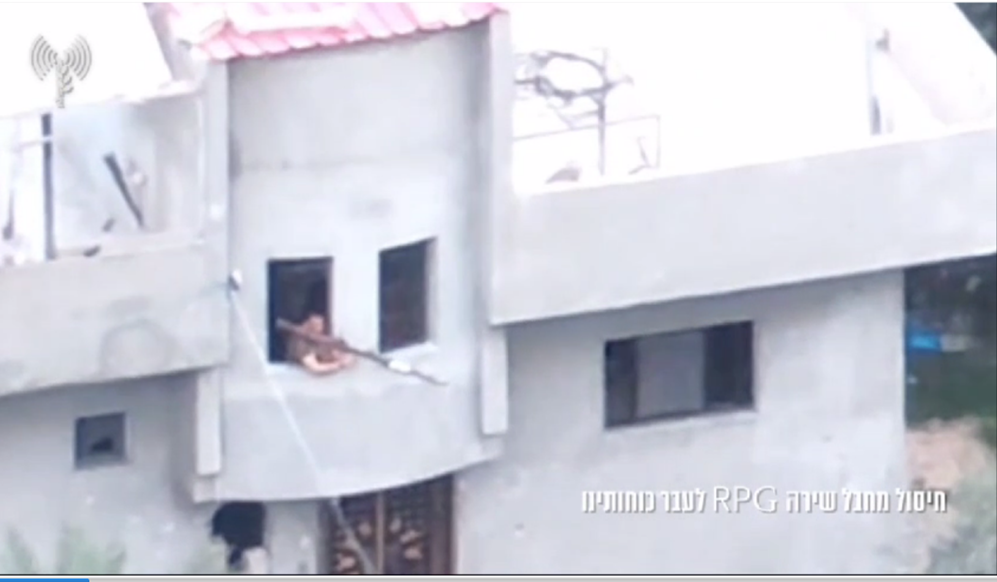
Palestinian firing an RPG from a second storey window.
Behind him is another man.
In response the house was hit by an aerial bomb.
(IDF Spokesperson’s Office)
Negotiations:
There have been many reports of negotiations between Israel and Hamas but no concrete results.
In return for handing over the remaining hostages, Hamas and its partner/rival the Palestinian Islamic Jihad are demanding a complete and final ceasefire, total Israeli withdrawal from Gaza territory, the release of all their members held in Israel (more than 5,000), and international guarantees that Israel will not renew its offensive afterwards.
Israel obviously refuses to accept these conditions. Despite the media noise around demonstrations by families of hostages and groups supporting them who demand that Israel accept these demands (not all the families agree), polls show that the vast majority of the Israeli public does not agree, and so far, neither does the government. The argument put forward by those against the deal is that accepting it might save the current hostages but would cost many more times that number of Israeli lives in the future.
Israel has sent a counteroffer, but details have not been published by reliable sources.
In Gaza itself, more citizens are criticizing Hamas for initiating the war and demanding that it surrender the hostages to stop Gazan suffering. As of yet, only a small minority has dared to come out in the open with these sentiments, so it is not clear how representative they are of the majority of the population. The general tone is less critical of Hamas goals and more critical of the failure of the way Hamas chose to achieve them, and the cost the general population is paying for that failure. There are also social media posts and demonstrations in the opposite direction that support Hamas, but there too, it is not clear how much these expressions reflect Gazan general opinion or are organized “by the party”.
Iran and its proxies versus the US and its allies:
The sporadic exchanges of fire in eastern Syria, western Iraq and northeastern Jordan between US forces and Iranian proxy militias climaxed on 28 January with the killing of three Americans and the wounding of approximately 40 more in an attack by a pro-Iranian Iraqi militia. The attacked American base is in northeastern Jordan near the border triangle of Jordan-Syria-Iraq. The American camp is near a training camp for a Syrian rebel group that is supported by the US with funding, weapons and training. Since the Hamas terror offensive on 7 October and Israel’s counter-offensive in Gaza, there have been more than 160 attacks on American bases in Syria, Iraq and Jordan. However, until the 28 January attack, only one American was reported to have died (from a heart attack during one attack) with approximately 70 wounded. The US has usually responded with measured aerial strikes.
At time of writing (3 February), the US has conducted a retaliatory airstrike. American aircraft bombed three sites in Iraq and four in Syria belonging to the Iranian Revolutionary Guards Quds Force and various Iraqi proxy groups. The Revolutionary Guard Quds Force is the organization responsible for “exporting the Islamic revolution” by supporting non-Iranian Shiite militias and other offensive actors around the world. According to the official US declaration, more than 125 guided munitions were launched at 85 separate targets located at command centers, missile and drone facilities, and logistical facilities.
According to Iraqi authorities and residents of the targeted areas in Iraq, the militia personnel located at those sites exploited the five-day delay in the American response to vacate. The sites are located inside residential areas, so most of the 16 people killed and 23 wounded in the American strikes were (they claim) uninvolved civilians. The spokesperson for the Iraqi army declared the American strikes to be an infringement of Iraqi sovereignty. This was not the first such declaration by an official of the Iraqi government. Ater a previous American airstrike responding to attacks on American bases, an Iraqi official said Iraq would demand that the US remove its troops from the country. Whether this is just internal political posturing or a change in the official policy of Iraq is not yet clear.
According to the Syrian Observatory for Human Rights, 23 people were killed in the American attacks on Syrian territory. Other sources report that there were at least 25 killed and at least 16 wounded.
According to al-Jazeera, Iraqi Shiite militias have retaliated for these attacks by firing at two American bases in eastern Syria and one in western Iraq. It appears that at least one of these attacks did not really occur and the report was mere propaganda.
One strange statement quoted an American official as saying that Iran is not really responsible for the strikes on Americans because it does not have full control over the proxies it manages. This statement was probably made to enable the US to refrain from directly striking Iran in response to the recent deadly attack.
The obvious question that now arises is whether there are more American operations planned and how Iran and its proxies will respond. Parties on both sides say they do not want all-out war or a direct confrontation. Following the attack on the American base and before the US response, one Iraqi militia said it would cease attacking American bases – clearly a ploy to protect itself from the expected response. Will it indeed stop, or will it resume following the American retaliation?
What is clear for now is that none of this is likely to affect the confrontation in the Red Sea between the Yemenite Houthis and Western navies. Exchanges of fire there have continued unabated, though they are still small in scale. By 2 February there had been some 30 attacks on merchant ships sailing through the Red Sea. Of these, 13 were hit by missiles or exploding drones and one was hijacked. One attempt to hijack a ship was thwarted. There have been reports of missiles fired at military ships as well, but most have not been confirmed. In one case the US Navy reported that some missiles fired at one of its ships had been intercepted and fell into the sea.
Meanwhile, truck convoy alternatives to transport merchandise to and from the Persian Gulf, bypassing Yemen, have been initiated. These are financially less efficient than ships so are relevant only as a stop-gap measure.
The Hague – South Africa’s attempt to convict Israel of genocide:
The judges on the panel of the International Court of Justice decided to evade the issue. They accepted as true the Hamas claims of numbers of Palestinian casualties, but did not accept the South African claim that there is sufficient evidence to warrant an investigation into a possible genocide by Israel of the Palestinians. It declared that Israel must refrain from beginning to conduct a genocide and said it should take care to reduce civilian casualties and enable humanitarian assistance to reach Gaza. Israel is already doing all of these things in any case. The judges also refrained from demanding an immediate ceasefire.
UNRWA:
The United Nations Relief and Works Agency (UNRWA) has come under intense scrutiny and sanctions following the release by Israel of evidence that some of its personnel were actively involved in the 7 October attack on Israel. A gradually growing number of Western states (16 at last count) have announced that they will cease funding the organization. These 16 states collectively provide about two-thirds of UNRWA’s budget. Spain, Belgium and Scotland have said they will not stop funding the organization, but are unable to replace the shortfall. Interestingly, of the top ten donors to UNRWA, only one is an Arab state (Saudi Arabia) and one other is a non-Arab Muslim state (Turkey). At the lower levels of funding there are another two Arab states (Qatar and Bahrain). The three Arab states together provide approximately the same amount as Germany alone.
The revelations about UNRWA’s participation in the October 7 massacre do not surprise Israelis. Israel has been saying for quite some time that the organization has the personnel of Hamas and other terrorist groups on its payroll, and that those employees were actively using UNRWA grounds, facilities and funds to support the activities of their terrorist employers. Weapons and other equipment have been found by IDF troops in UNRWA sites.
UNRWA was established during the 1948 war between the Jews and the Arabs. It was supposed to receive the Arab refugees from the war, sustain them and prepare them for new lives. However, what UNRWA actually did was entrench their refugee status as permanent.
A separate UN organization, the United Nations High Commissioner for Refugees (UNHCR), caters to the needs of all other refugees around the world. UNRWA supports 5.4 million alleged Palestinian refugees whereas UNHCR supports more than 70 million refugees from other nations. Yet the budget per person for UNRWA is almost double that of UNHCR. Furthermore, UNRWA has approximately 30,000 members of staff (one per 180 alleged refugees), whereas UNHCR has a staff of approximately 16,800 (one per approximately 4,200 refugees).
I have written “alleged refugees” for the Palestinians because if the UN’s own rules were applied, most of them would not be considered refugees. For example, many Palestinian refugees received Jordanian citizenship but are still considered refugees. Any UNHCR refugee who receives citizenship from another country automatically loses refugee status.
Gaza:
Fighting in the Khan Yunis area continues as described in earlier updates – a deadly form of “hide and seek” through buildings and streets. However, in addition to fighting the above-ground battle, Israeli units have apparently begun entering the tunnels under Khan Younis and are fighting underground as well. Previously, underground operations were carried out only after an area had been cleared of Hamas in order to search for information before destroying the tunnels. It appears that now, Israeli troops are advancing underground while the fighting is still ongoing above ground.
For a few days before Israeli forces entered Khan Yunis, they dropped leaflets calling on the population to leave, but the percentage that did so was much lower than in Gaza City. Over the past few days, there has been an increasing movement of Palestinian civilians out of the battle area, and the IDF has opened ceasefire corridors to allow them to do so. It has placed cameras to observe the people walking through these corridors to catch known terrorists and has arrested approximately 340.
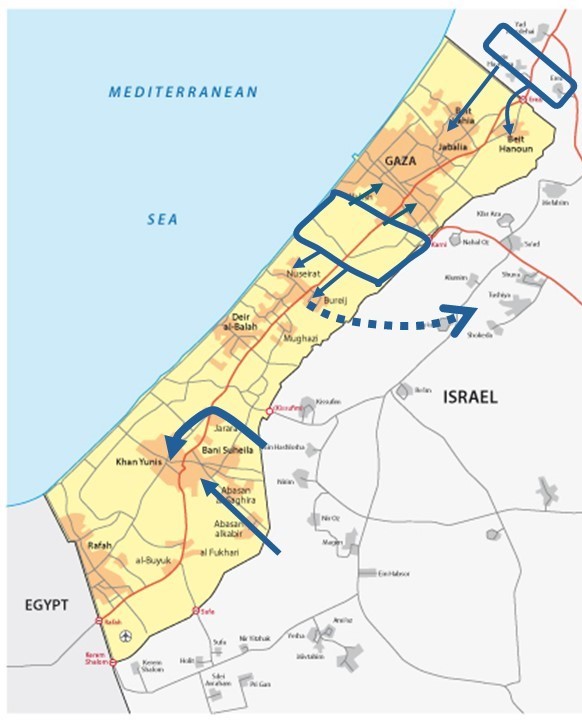
In northern Gaza there are indications that Hamas personnel are reappearing more and more. Occasionally there are skirmishes between them and Israeli forces patrolling or raiding into the area. These are not only people who hid during the fighting there, but also terrorist personnel who came up from the south via tunnels that connect Gaza City to other areas. These tunnels pass beneath the Israeli blocking force. The IDF has been searching for these tunnels and on 24 January destroyed one of them. The question is, how many more are there?
Over the past couple of days, the IDF has once again begun to drop flyers in Gaza City telling the population to move south. This might suggest an intention to return to that area, even if only to conduct patrols or raids against returning Hamas personnel.
Photograph published in Palestinian social media of an IDF flyer telling them to move south from Gaza City
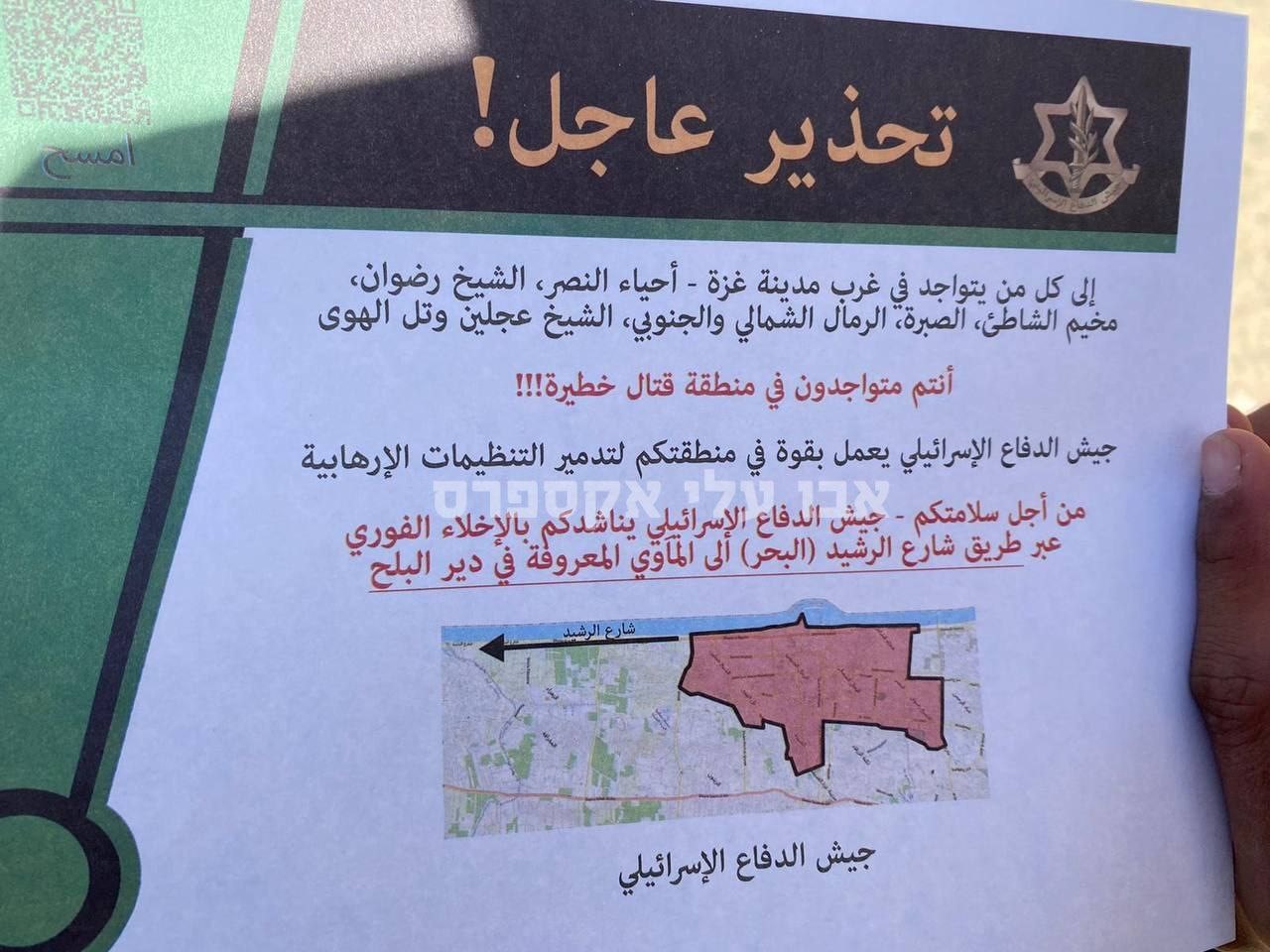
Source: Israeli blogger Abu Ali Express, who collects and translates posts in Arab social media
Israeli fatalities in Gaza have approached 225. One major incident, on 22 January, caused the largest number of Israeli casualties in a single incident since 7 October, with 21 fatalities and nine wounded. It occurred near the border of Gaza with Israel. An Israeli unit ordered to clear the near-border area to enable a clear view of the ground from the Israeli side was preparing buildings for demolition. They made the mistake of connecting the charges before all their personnel had withdrawn from the buildings. An RPG (shoulder-launched rocket) fired by a Hamas team hidden in an orchard hit one building and set off a chain reaction of explosions that collapsed the buildings on top of the Israeli soldiers still inside. This was similar to the incident described in the last update, but that one occurred in open ground.
Hamas is still firing rockets into Israel – mostly toward the areas close to Gaza, but occasionally toward Beersheva, Ashdod and Tel Aviv as well. The number of total launches per day is fairly small, with at most a few dozen and usually fewer, and on some days there are no launches at all. To achieve maximum effect, Hamas is attempting to launch rockets in concentrated salvos. The total number of rocket launches identified to date is approximately 10,500, but only about 9,000 crossed the border into Israel; the remainder fell inside Gaza.
Israel has officially mentioned the existence of an operation to flood the tunnels in Gaza City. This project began about a month into the war, but the results have been partial at best. The underground tunnels are not all connected, many have blast-proof and waterproof doors, and there are various other problems. So while the operation worked, its results were not enough to solve the problem of the tunnels.
During this period the size of the Israeli force inside Gaza has been gradually reduced, and more reserve units have been demobilized.
Egypt has begun a project to provide fresh water to Gaza with pipes laid near the shore of the Mediterranean. Most of the fresh water in Gaza comes from wells into the aquifer, but overuse has caused many to become less useable. The other source is water pipes from Israel.
Truck convoys with humanitarian supplies are entering Gaza through Israel on a daily basis. Israel inspects these supplies and in at least one case found equipment for Hamas (kits for assembling quadcopters used for surveillance when dropping bombs). Some inside Israel argue that these convoys should be halted until Hamas returns the hostages, and on a few occasions small groups of protesters have blocked entry routes until they were moved aside or apprehended by Israeli police.
Israel has released a few hundred Palestinian civilians captured in Gaza after it was determined that they were not members of Hamas or other terrorist organizations. Israel has also returned bodies of Palestinians collected from areas taken by the IDF during the war.
Lebanon:
The exchange of fire on the Israel-Lebanon border continues at a varying but fairly low intensity.
Israeli casualties on the Lebanese border since 7 October have been 14 killed (four of them civilians) and several dozen wounded. All told, Hezbollah has fired approximately 2,500 rockets and exploding drones into Israel since the beginning of the war.
Hezbollah says 179 of its personnel have been killed (15 of them in Syria). According to Israel, the actual figure is approximately 200 if one includes non-Shiite members of Hezbollah who are generally not admitted to be part of the organization and therefore do not appear in official Hezbollah reports.
Other Lebanese and Lebanon-based Palestinian organizations have also participated in the exchanges, and at least 25 of their members have been killed as well. One Lebanese soldier was killed accidentally and three wounded in an IDF strike, for which Israel issued a formal apology to the Lebanese government.
There have been reports in the Israeli media of IDF ground units conducting training relevant to the Lebanese theater.
Syria:
Exchanges of fire across the Syrian border have continued since the last update but were still minimal, especially compared to the Lebanese front. Since the beginning of the war, Iranian proxies and Hezbollah stationed in Syria have fired a few hundred rockets into Israel and Israel has responded with airstrikes and tank fire. There have been no Israeli casualties on this front, but some Hezbollah personnel, Iranian proxies (Iraqis, Afghans, Pakistanis), Syrians, Iranians, and Palestinians belonging to Hamas and Palestinian Islamic Jihad have been killed or wounded.
An Israeli strike in Damascus on 19 January killed five senior personnel of the Iranian Revolutionary Guards stationed there as well as six Syrian officers. A few days later reports began to circulate that Iran was withdrawing some personnel. Iran has denied these reports, claiming it was withdrawing only the families of personnel stationed in Syria.
Judea and Samaria:
Fighting continues in Judea and Samaria with the IDF intensifying its raids, especially in the Jenin area (the northern edge of Samaria). Each IDF entry into Palestinian towns faces varying intensities of resistance, with bombs planted under roads (these are cleared by using bulldozers to tear up the asphalt), rifles, grenades and improvised hand-thrown bombs, as well as petrol bombs.
Updates on events in this area have been scarce and partial.
The Palestinians claim that almost 5,000 people have been arrested but the official Israeli number is only about 2,550, of whom approximately 1,300 belong to Hamas and the others to other groups. The discrepancy is apparently because the Palestinians count anyone who was detained even if they were released after questioning. Approximately 380 terrorists have been killed, mostly during Israeli raids on their bases in the major Palestinian towns and the rest while conducting attacks on Israeli soldiers and civilians.
The majority of the killed are Hamas and some are Palestinian Islamic Jihad, but quite a few are also from Fatah-controlled armed groups. Fatah governs the Palestinian Authority in Judea and Samaria and officially supports the peace treaty with Israel, but unofficially (for reasons of deniability) maintains armed groups that conduct terrorist attacks. These are often manned (supposedly when off-duty), funded and trained by official armed forces of the Palestinian Authority. A particularly interesting event was the infiltration of an Israeli force dressed as medical staff into a hospital in Jenin where two terrorists belonging to Palestinian Islamic Jihad and one from Hamas were hiding and planning an attack on Israeli settlements. All three terrorists were killed. There were no other casualties.
Iraq-Israel:
An Iraqi Shiite militia funded by the Iraqi government has declared its intention to lay a maritime siege on Israel in the Mediterranean Sea. Iraq does not have access to the Mediterranean, but the militia claimed to have launched attacks on Israel’s two international seaports at Haifa and Ashdod. It is not known whether they launched attacks or not, but no missiles or exploding drones came anywhere near these towns on the days when the militia alleges the attacks were conducted. There were reports of “aerial targets” intercepted over northern Israel, but it is not clear if these were from Lebanon or eastern Syria or Iraq.
Israeli casualties:
The total for the single day of 7 October has risen to 1,140 – civilians, military, police, firefighters, medical personnel, etc. There are still some people unaccounted for, and some of the people kidnapped to Gaza were dead when taken or have died in captivity and are still not confirmed.
There are still almost 130 kidnapped Israelis (since the last update a few more of the missing have been confirmed to have been kidnapped) and nine non-Israelis in Gaza. How many are alive and how many dead is not known, though the current estimate is that at least 20 are dead.
In addition, 19 Israeli civilians have been killed in Hamas rocket attacks.
As of 31 January 2024, a total of 561 IDF soldiers have been killed on all fronts since and including 7 October (the number for 7 October is periodically updated as more are confirmed killed who were previously listed as missing).
The total number of Israeli wounded is approximately 14,000. The number of IDF personnel within this figure has not been updated.
Initially, the number of Israelis who were forced to leave their homes in 64 villages and towns along the borders with Gaza and Lebanon was approximately 250,000. Over the past few weeks many have returned home, though the exact number is not clear; there are probably about 200,000 Israelis still living as refugees inside Israel. Most are receiving government aid, some have moved into kibbutzim that have donated housing and other assistance to the families, and some are receiving assistance from private individuals or voluntary aid committees.
Palestinian casualties:
The Gaza Health Ministry, which is controlled by Hamas in its role as the government of Gaza, claims that so far nearly 27,500 Gazans have been killed and approximately 66,500 wounded. They do not differentiate between personnel of Hamas and other terrorist organizations and civilians. According to the IDF, at least 10,500 terrorists from Hamas and other groups have been killed and more than 10,000 wounded. The number of terrorists wounded was last updated a few days ago, so it is probably higher by now. The IDF has also captured many terrorists, though the exact number has not been divulged. From anecdotal information it can be estimated at around 1,000. Given that Hamas and the other groups had 40,000 to 50,000 personnel between them (different sources provide different numbers and there is a problem counting part-timers as opposed to regulars or official “reserves”), these numbers represent a sizeable chunk of their manpower.
WHAT NEXT?
The IDF is toning down its operations in Gaza and releasing more and more reservists, though many have already received orders for re-enlistment at a future date to enable a rotation of forces. However, the government continues to insist that the goal has not changed: the destruction of Hamas, though this will take many more months of operations to achieve.
The Gaza Strip is roughly divided into four areas: the north around Gaza City, the south along the border with Egypt and the city of Rafah, and two strips in the center, with Nuseyrat near the northern area and Khan Yunis between Nuseyrat and Rafah. The IDF conquered the northern area and has since moved gradually out of it. It is now concentrating its operations on Khan Yunis, with a much smaller effort in the Nuseyrat area as well. It has not yet entered the Rafah area with ground troops.
Attacking into Rafah is not just a military issue because this area borders Egypt, and Egypt does not want the Palestinian population crossing the border into Egyptian territory. Since the war began it has built a strong wall and fences along the border and placed forces near it. Before Israel operates in the Rafah area it will need to coordinate this action with the Egyptians.
After having withdrawn from northern Gaza, the IDF is now indicating, with flyers to civilians, that it intends to continue operating there. The object is to attack Hamas personnel that stayed hidden during the initial IDF offensive and those who have come up from the southern areas via tunnels.
On the Lebanese border there has been a slight escalation in the intensity of fighting, but so far it is still small-scale. The Israeli government has declared that it prefers a diplomatic solution that pushes Hezbollah north (something the UN forces in the area were supposed to do from 2006 on, but never really attempted). If this is not achieved, Israel will push Hezbollah back to enable its civilians to return safely to their homes near the border.
The IDF has released reports on units conducting training specific to the situation in the north (Gaza is flat – Lebanon is hilly; Gaza is urban – south Lebanon is mostly villages; Hezbollah has different weapons and tactics than Hamas; etc.). However, given the mass demobilization of reserves, an Israeli escalation in the north is unlikely to occur over the next few weeks. The government and the IDF want the reserve personnel to rest and recuperate with their families and want to ease the economic situation. Furthermore, any diplomatic solution will take time to achieve and if that is really what they prefer, they will have to give it time.
Meanwhile, there has been an escalation in fighting between the US and Iranian proxies and allies. Will both sides pull back from the brink of what seems to be the beginning of a much greater cycle of escalation, or will they continue to exchange ever-heavier blows? For the US there are also internal considerations. This is an election year – how will such an escalation play out in the minds of the voters? As it is, President Biden is facing severe criticism from a large group of his typical voters because of his support for Israel. Will a more aggressive US policy against forces considered to be supporting the Palestinians, even though they are also attacking American assets, be more or less conducive to an election victory for Biden? Furthermore, the US is already finding it difficult to support Ukraine’s needs in its war with Russia, and now it is supporting Israel – to some degree at Ukraine’s expense. The war in Ukraine revealed that NATO’s military manufacturing capability had been reduced well below red lines across the board. An American war against anybody would make this problem even worse.
***
The Gaza Terror Offensive – 25 December 2023 – 4 January 2024
Dr. Eado Hecht, a senior research fellow at the BESA Center, is a military analyst focusing mainly on the relationship between military theory, military doctrine, and military practice. He teaches courses on military theory and military history at Bar-Ilan University, Haifa University, and Reichman University and in a variety of courses in the Israel Defense Forces.