Iran

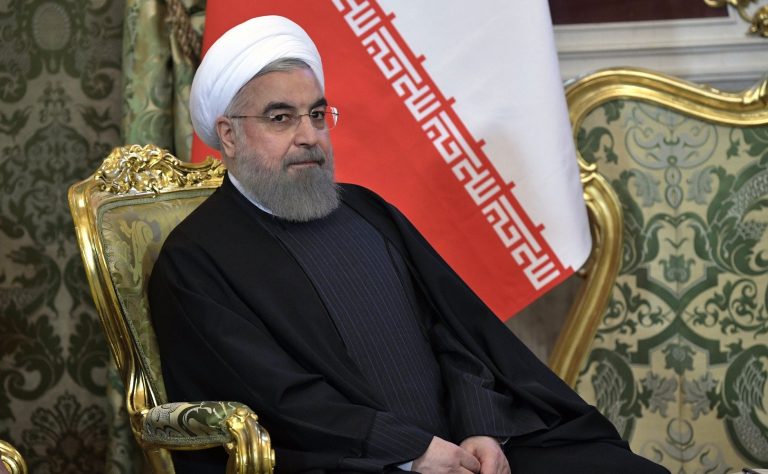
Iran is now openly threatening to dismember Saudi Arabia for its support for Kurdish independence and secession from Iraq. This ratcheting up of tensions has implications not only for those two countries but for the region and the world at large. Israel would do well to remember that the Middle East is growing ever more volatile, and the US should sharpen its resolve to contain Iran.
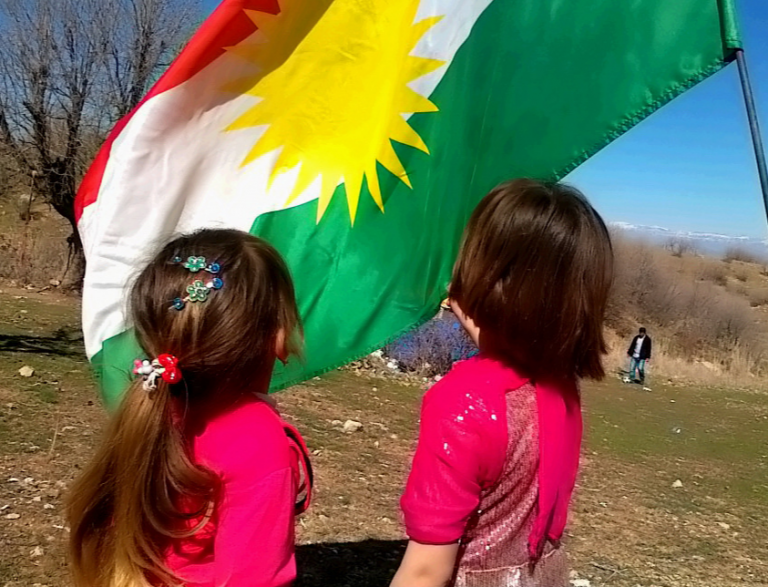
The national aspirations of the Kurdish minority in Iraq pose considerable challenges to all four countries that contain large Kurdish populations. It is not surprising that the decision to hold a referendum on Kurdish independence sparked angry reactions among the leaders of Iraq, Iran, Turkey, and Syria. However, Tehran’s staunch opposition does not stem solely from fear that the referendum’s passage will kindle separatist tendencies among the Kurds of Iran. The Iranians have other geopolitical and geostrategic concerns that can be affected should Kurdistan become independent.
The latest parade of the Iranian Revolutionary Guard displayed a new ballistic missile, the Khorramshahr. Though it had been modified to appear less threatening, the new missile matches a North Korean ballistic missile known by different names in the West, including BM25. The Khorramshahr could eventually enable Tehran to threaten the capitals of Europe with nuclear warheads, and it raises the level of the Iranian missile threat to Israel.
Despite President Donald Trump’s disapproval of the JCPOA agreement with Iran, which he promised during his election campaign to “rip up,” he has been persuaded by his advisers to recertify it. He has also, however, gotten the UN Security Council to impose sanctions on Iran as a penalty for developing nuclear missiles, supporting terror, and undermining international order. The Iranian leadership responded with a threat to quit the JCPOA and renew uranium enrichment at a high level. Though the IAEA has not yet determined that Iran has violated the agreement, Western experts view Iran’s behavior as problematic. They fear Iran could break the rules and renew its nuclear weapons program, and that it will be encouraged to do so by North Korea’s provocative stance toward the US.
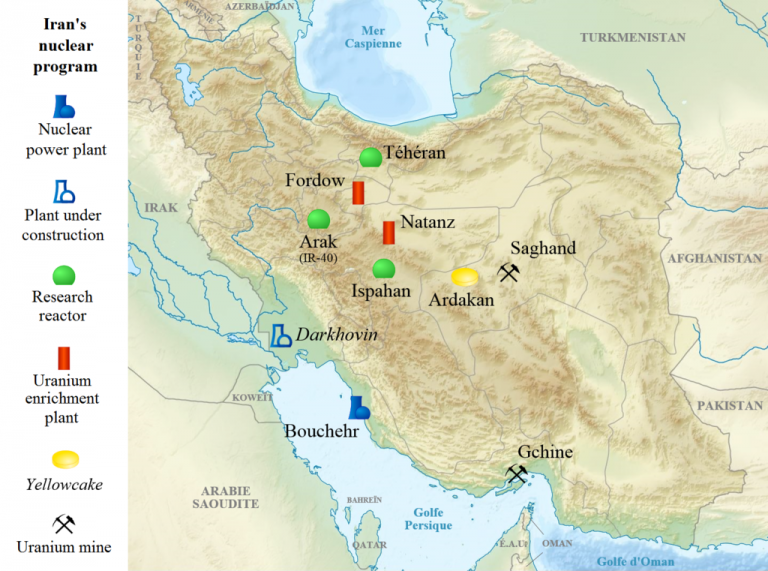
There are many questions about Tehran’s long-term foreign policy following the lifting of western sanctions in 2016. To answer these questions, it is helpful to consider Iran’s geography and the way it affects the country’s behavior in terms of international relations. Iran’s geopolitical imperatives to defend its core land, project power where necessary, and limit foreign encroachments have remained largely unchanged throughout many centuries of its history.
North Korea’s nuclearization has implications for Israel's nuclear deterrence posture. There are several plausible means by which a nuclear conflict could arise in the Middle East. It may be time to consider a phase-out of Israel's "deliberate nuclear ambiguity" and to focus Israeli planning around evaluations of enemy rationality.
The winds of war blowing between Saudi Arabia and Qatar, as well as Iranian subversion, are destabilizing the Persian Gulf principalities. To make matters worse, the economic situation, which has worsened in recent years because of ill-advised decisions, is stoking fears of popular uprisings and widespread disturbances. These internal crises could lead to a new “Arab Spring” in which some of the Gulf monarchies might fall. The main winner would be Tehran, for which the current crisis, along with the boycott imposed on Qatar, has opened a path to a takeover of Bahrain – and Iran has already, in effect, taken over Baghdad, Damascus, Beirut, and Sana’a.
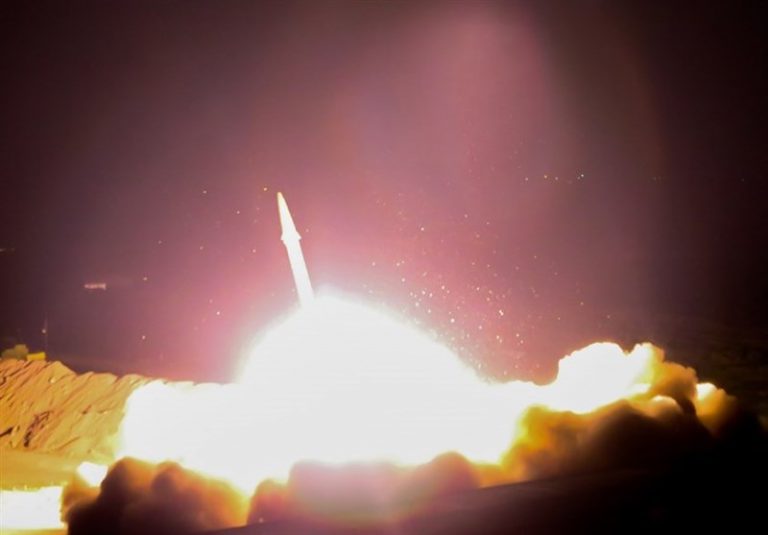
The lethal June 7 terror attack in Tehran that left 18 people dead was carried out by ISIS. Not unexpectedly, Iran vowed revenge. On June 17-18, this revenge materialized in the form of a volley of Iranian precision ballistic missiles fired at ISIS strongholds in the Syrian town of Deir ez-Zor. The Islamic Republic exploited the event to flex its missile muscles, a display designed to broadcast that it is a force to be reckoned with on a par with Russia and the US. It can project power hundreds of kilometers away from its borders and has the willpower and resolve to use force to promote its interests in the region.
The two recent US air strikes on a Syrian convoy heading to the al-Tanf military base in the southern Syrian Desert a few miles from the Jordanian-Syrian border have major strategic importance. The attack signaled for the first time since the Syrian civil war broke out in 2011 that the US would not countenance the reemergence of the Iranian-controlled Shiite crescent that Iran had created through Teheran, Baghdad, Damascus, and Beirut after the US exited Iraq in 2010.

Accessibility Toolbar