
PSCRP-BESA Reports No 195 (April 9, 2026)
by Boris Ginzburg
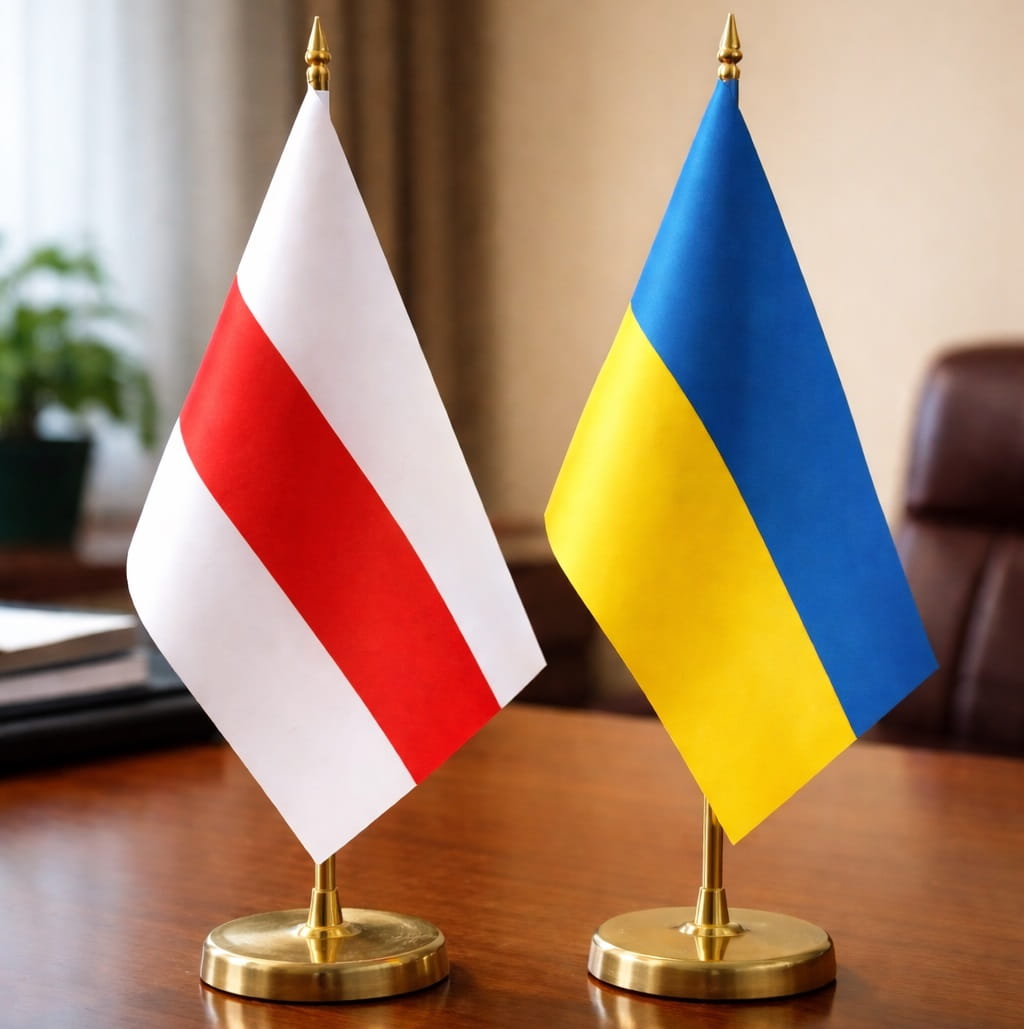
Several international media outlets have euphorically portrayed the first official meeting between Ukrainian President Volodymyr Zelenskyy and Belarusian opposition leader Sviatlana Tsikhanouskaya in Vilnius on January 25, 2026, as a fundamental moral shift in Kyiv’s stance toward the Belarusian opposition – from strategic distance to meaningful cooperation. Several interpretations presented the alleged motives behind Ukraine’s adapted policy toward the Belarusian dissidents, while ignoring the argumentative weak spots within them. This analysis reassesses the so-called “first official” Zelenskyy-Tsikhanouskaya Meeting and it presents interpretations not mentioned yet in the public discourse: these include Ukraine’s motives to (1) strengthen the pro-European branch of the Belarusian opposition in exile, (2) gain leverage in negotiations with Washington, (3) promote Ukraine’s fast-track EU accession, and (4) Ukrainian domestic politics. These developments can affect Israel’s security policies especially during its ongoing second war with the Mullah Regime in Tehran and even afterwards.
1. Introduction
Since the beginning of 2026, Zelenskyy’s tone towards the Lukashenka regime in Belarus has indeed grown harsher. During a speech at the annual Davos Economic Forum on January 22, 2026, Zelenskyy criticized his Western allies for failing to take decisive action against the Lukashenka regime during the violent crackdown on the protests against the rigged presidential elections in Belarus in August 2020. Three days later – in Vilnius on January 25, 2026 – Zelenskyy dedicated an immense part of his speech to the Belarus issue during a commemoration of the 1863 January Uprising – a revolt against the Russian tsarist empire on the territories of today’s Ukraine, Poland, Lithuania, and Belarus. According to him, Minsk now poses a direct threat to Ukraine and Europe due to the deployment of the Russian Oreshnik missile systems. During this event, what Belarusian exile media dubbed the “first official meeting” between Ukrainian President Volodymyr Zelenskyy and Belarusian opposition leader Sviatlana Tsikhanouskaya took place (even though there had already been several sporadic encounters between the two politicians on the sidelines of international forums). It was reportedly at this meeting that Zelenskyy invited Tsikhanouskaya to visit Ukraine for the first time.
On February 18, 2026, the Ukrainian president also announced that he had imposed targeted sanctions against the Belarusian leader Alyaksandr Lukashenka because of the deployment of the Russian Oreshnik system and Minsk’s provision of its own infrastructure to the Kremlin for controlling Russian combat drones. On February 23, Zelenskyy followed up with further actions. For the first time since the start of the second Russian invasion of Ukraine in February 2022, the Ukrainian president, after several cancellations, gave an interview to a Belarusian exile media outlet – in this case, “Zerkalo.” In it, he stated his intention to differentiate between the Belarusian regime and its citizens. However, he simultaneously issued indirect threats against Belarus, claiming that the Belarusian regime, with its anti-Ukrainian behavior of recent months, was putting all of Belarus at “great risk”, adding that NATO should view the Oreshnik system in Belarus as a legitimate military target. On March 11, 2026, Ukrainian parliamentarians also addressed the issue of Belarus by formally requesting five EU member states – Poland, Finland, Lithuania, Latvia, and Estonia – to completely cease all transit activities between themselves and Belarus, as well as Russia, since the proceeds from it would benefit the Russian war machine.
Due to this, one can witness a flood of comments on this issue within several media outlets during the last weeks, euphorically portraying the so-called “first official meeting” between Zelenskyy and Tsikhanouskaya as a starting point of a fundamental moral shift in Kyiv’s stance toward the Belarusian opposition, from a strategic distance in the past to an alleged meaningful cooperation. Indeed, although Belarus assisted Russia logistically at the beginning of Russia’s second invasion into Ukraine in February 2022, Kyiv was not eager to deepen its cooperation with Lukashenka’s exiled opponents. Instead, Ukraine kept the opposition at arm’s length, trying not to provoke the Lukashenka regime into sending its own troops to Ukraine via the 1000-km long Belarusian-Ukrainian border. Along with other factors, Kyiv was most concerned about the possibility of having to stretch its military forces further along its northern border at the expense of protecting its south-eastern front.
However, this analysis calls for prudence. A reflection on the possible motives behind Ukraine’s cautious overtures in favor of the Belarusian opposition in exile reveals that Kyiv’s slightly adjusted foreign policy approach may be linked to (1) the emergence of a new actor on the Ukrainian-Belarusian track, (2) to gain leverage vis-à-vis Washington, and (3) to promote Ukraine’s fast-track EU accession. (4) Domestic political factors, too, may play a decisive role. In sum, the following will show why this foreign policy adjustment reflects Kyiv’s adaptation to gradually changing geopolitical developments in Eastern Europe that will not lead to a complete shutdown of relations between Kyiv and Minsk and will not prompt Kyiv to put all its eggs in one basket, namely, the basket of the exiled Belarusian opposition.
2. Evaluating previous interpretations and reactions
Previous comments on the Vilnius meeting between Zelenskyy and Tsikhanouskaya showed a wide range of diverse reactions and possible interpretations. However, the relevance of these arguments depends very much on the strength of their argumentation:
- Additional Gains in Soft Power and Normative Differentiation from the EU’s Belarus Policy: Some commentaries evolved into speeches of gratitude toward the Ukrainian president, as he dedicated a significant portion of his speech in Vilnius in January 2026 to the issue of Belarus. Particular emphasis was placed on Zelenskyy’s words of reproach directed at Ukraine’s European partners for their alleged inaction during the violent suppression of protests by the Belarusian regime in August 2020, which allowed that regime to remain in power. However, this narrative overlooks the fact that, compared to the EU (which condemned the repression), it was actually Kyiv itself that failed to show much diplomatic sensitivity toward the Belarusian civil society: On August 11, 2020—two days after the crackdown on protests began on August 9, 2020—the then-Ukrainian Minister for Economic Development, Trade, and Agriculture, Ihor Petrashko, met in Kyiv with the then-Belarusian Minister of Agriculture and Food, Ivan Krupko. The subject of their discussion was the promotion of bilateral agricultural cooperation between the two states. This meeting took place during Zelenskyy’s presidency.
- Russian Oreshnik missile systems on Belarusian soil: One of the motives that the Ukrainian president himself frequently cites as the official reason is the deployment of the Russian Oreshnik missile system in Belarus. There is no doubt that this—much like the alleged use of Belarusian infrastructure to control Russian drones targeting Ukraine—poses a direct threat to the Ukrainian state. However, the Kremlin has already demonstrated that it does not rely on Belarusian territory to use these weapons against Ukraine. The Oreshnik attacks on Ukraine known to date—those targeting Dnipro in November 2024 and Lviv in January 2026—were launched from Russian territory.
- Lukashenka’s changed calculus due to the US-Belarus reapproachment: Similarly, assuming that Ukraine no longer needs to appease Lukashenka, since the Belarusian autocrat has no interest in a direct conflict with Ukraine, given its reapproachment with the White House since January 2025, falls short. The contact between Kyiv and Minsk will remain necessary not only because of political considerations (e.g., preventing Lukashenka from falling entirely into the Kremlin’s hands), but also for humanitarian reasons. Those include maintaining future prisoner-of-war exchanges with Moscow via Belarusian territory. The last exchange of this kind took place in Belarus on March 6, 2026, and thus right in the middle of the current Ukrainian-Belarusian disputes. Moreover, it seems unlikely that Kyiv will risk obstructing the return of abducted Ukrainian children, who were left behind by Russian forces in Belarus, as well as the humanitarian corridor via Belarusian territory for Ukrainians who try to leave the Russian-occupied Ukrainian territories in order to reach the Ukrainian mainland.
- The appointment of Budanov as the new head of the Ukrainian Presidential Office: The replacement of the long-serving head of the Ukrainian Presidential Office—Andriy Yermak—on January 2, 2026 (amidst a corruption scandal surrounding the Ukrainian president’s closest circle) by the military intelligence chief, Kyrylo Budanov, is also a very frequently cited argument. The former was a harsh critic of the Belarusian dissidents due to their ambiguous positions on the pre-2022 Russo-Ukrainian relations. The latter, however, functioned as the official responsible for Kyiv’s policy toward the Belarusian opposition in exile since the war began in 2022 (including its political wing, represented by the Tsikhanouskaya camp, as well as its former armed wing, the so-called “Kastus Kalinouski Regiment”). Yet, the proponents of this line of argument fail to note that Budanov played a dual role in this regard: In parallel, he has also served as the personified channel of communication between the Zelenskyy administration and official Minsk since the beginning of the war. Consequently, one should not be too quick to assume that, from now on, only the Belarusian opposition possesses a direct line to the Ukrainian Presidential Office. The aforementioned recent Ukrainian-Russian prisoner exchange conducted on Belarusian territory in March 2026 also points to Kyiv’s continuous contact with Belarusian officials.
So how can Kyiv’s softening attitude toward the Belarusian opposition around Sviatlana Tsikhanouskaya be explained?
3. Reassessment of the “first official” Zelenskyy-Tsikhanouskaya Meeting in Vilnius
3.1. Strengthening the pro-European Branch of the Belarusian Opposition in Exile
As the author of this analysis wrote in his policy memo for the “Program on New Approaches to Research and Security in Eurasia (PONARS Eurasia)” at the George Washington University in February 2026, analysts should pay much more attention to the details of how the December 13, 2025, prisoner release in Belarus unfolded. Here, he wants to elaborate more on this thought:
First, during this event, 123 Belarusian political prisoners were released by the Lukashenka regime. 114 of them were then deported to Ukraine at once, and the other nine to Lithuania. This procedure was particularly unusual: In the past, Minsk handled such releases differently, deporting all released dissidents mainly to Lithuania. Strikingly, among the 112 people deported to Ukraine were the two most internationally famous members of the Belarusian opposition (besides Tsikhanouskaya). One of them was Viktar Babaryka, the former head of Belgazprombank, a subsidiary of Russia’s Gazprom, and later a presidential candidate in the fraudulent 2020 Belarusian elections. The other one was his chief of staff during the 2020 presidential election campaign, who later became a central opposition figure, Maria Kalesnikava. Both received political asylum in Berlin, Germany, after their release. Due to their biographical ties to the Kremlin and their very ambiguous and evasive statements about the Russo-Ukrainian war shortly after their release, one should view them as powerful parts of a, if not pro-Russian, then at least of a Russian-affine sentiment within the Belarusian opposition in exile. Taking this viewpoint, it cannot be in Ukraine’s interest to allow this actor to rise on the horizon of the Ukrainian-Belarusian conundrum. Kyiv is thus well-advised to soften its stance towards the Tsikhanouskaya camp, which represents the Belarusian opposition’s pro-European wing. Consequently, Zelenskyy’s readiness to set up the first official meeting with Tsikhanouskaya in Vilnius on January 25, 2026, could also be interpreted as a preventive move to strengthen the Belarusian opposition’s pro-European camp.
Second, the release of Belarusian political prisoners via Ukrainian territory in December 2025 signaled that Minsk does not fear the contact between Kyiv and its own dissidents. Thus, should Tsikhanouskaya indeed visit Ukraine in the near future, as she states, Minsk will unlikely rethink its attitude towards Ukraine – at least not as long as Kyiv does not introduce Tsikhanouskaya as an official representative of Belarus (but rather as a “private” individual or activist). Moreover, the December 2025 release once again demonstrated the existence of a functioning communication channel between Kyiv and Minsk.
Third, to some degree, preventing the rise of the Russian-affiliated branch within the Belarusian opposition movement becomes, paradoxically, a “common interest” among Kyiv, Minsk, and the Tsikhanouskaya camp: Kyiv does not need an additional internationally active player on the Ukrainian-Belarusian track with an ambiguous position on the Russo-Ukrainian war. Lukashenka’s goal to minimize his dependence on Moscow and to secure an advantageous power transfer for his clan in the future – as hinted at by the constitutional amendments in Belarus on February 27, 2022 – also prevents him from passively observing the rise of additional internal opponents with ties to the Kremlin. Thus, through Ukrainian involvement, both Kyiv and Minsk intertwined Babaryka’s and Kalesnikava’s post-release images with the Ukrainian state. Should they ever again take an unclear position on the Russo-Ukrainian war, or even nurture their Russia-affine stance in the future, it could create an internationally visible reputational burden on both oppositionists. Both would appear ungrateful towards Kyiv on the one hand, which was involved in their liberation, as well as towards their European host countries on the other hand, which follow a clear “Ukraine-First” line. Consequently, Kyiv’s move to set up a short video conference on the next day of the respective prisoner release between Zelenskyy and some of the released dissidents – including Babaryka and Kalesnikava – should be considered a well-thought-out political move by Kyiv. Both dissidents had to publicly and on record state their gratitude to the Ukrainian state and express condemning words about Russia’s war of aggression against it.
Even Tsikhanouskaya should be interested in minimizing the influence of this sentiment within her movement. Not only because figures like Kalesnikava express interest in finding common ground with Lukashenka (whereas Tsikhanouskaya seeks more pressure), but also to weaken such strong competitors to her leadership. It is important to note that such an intersection of interests does not mean that all parties are aware of it or have pre-discussed their overlapping priorities. Rather, the calculus of each party could be based on a more solo-conducted rational level, which can sometimes result in a paradoxical intersection of interests between conflicting parties.
3.2. Bargaining Chips vis-à-vis Washington
Previous comments saw in Kyiv’s alleged course correction towards the Belarusian opposition a clear counter-signal to the Trump administration’s gradual rapprochement with Minsk since January 2025. This lens has some inherent weaknesses, such as the point that Ukraine is unlikely to anger Washington too much while seeking American security guarantees in a post-war period, especially not for the sake of the Belarusian opposition movement. However, a deeper look at the content of the recent Ukrainian sanctions package against Lukashenka and the Ukrainian parliament’s appeal to Poland, Finland, and the three Baltic States suggests that Kyiv is indeed worried about where this recent American-Belarusian détente could lead.
It is striking, in fact, that both Ukrainian initiatives advocate tightening restrictions on the transit of (mineral) resources into and out of Belarus. Indeed, the recently enacted U.S. sanction waivers against the Belarusian potash sector can only take their full effect if Minsk gets access to ports in Lithuania, Latvia, Poland, and/or Ukraine. Among U.S. circles dealing with Belarus, some voices view the prospect of Belarusian potash transit through Ukrainian ports in Odesa not merely as an economic advantage, but also as a peace initiative—one that economically binds two hostile states together, thereby potentially minimizing future military conflicts (resembling, to some degree, the logic behind the European Coal and Steel Community of 1951, which established economic interdependencies primarily between the two former European belligerents: Germany and France). Thus, Kyiv’s call for stricter trade sanctions against Belarus—along with its overtures to Lukashenka’s political opponents—can be interpreted, on the one hand, as a signal of opposition to Washington’s visions for the future of Ukrainian-Belarusian relations. On the other hand, however, it can also be viewed as a bargaining chip vis-à-vis Washington, aimed at securing satisfactory American security guarantees for Ukraine in a post-war period.
3.3 Other possible reasons
However, two additional reasons also deserve attention:
I. Fast-track EU accession: One can also view the first formal meeting between Zelenskyy and Tsikhanouskaya as a political investment by Kyiv in its relations with Lithuania and Poland, whose officials were also present in Vilnius. Both countries are considered the most prominent supporters of the exiled Belarusian opposition and the fiercest critics of the Lukashenka regime. Moreover, Lithuania will assume the EU Council Presidency in the first half of 2027 and promises to keep Ukraine on the EU agenda. In recent weeks, Zelenskyy has once again announced his interest in Ukraine’s fast-track EU accession by 2027. With Poland, on the other hand, Kyiv is trying to intensify its energy and air defense partnership.
II. Presidential election/Strongman-Image: Zelenskyy’s harsher tone towards the Lukashenka regime may also be linked to domestic political developments. Should negotiations for a ceasefire between Kyiv and Moscow prove successful, the presidential elections—which were postponed due to the wartime situation in Ukraine—would have to take place. Here, Valerii Zaluzhnyi could be Zelenskyy’s strongest rival in this context. Zaluzhnyi has served as Commander-in-Chief of the Armed Forces of Ukraine since July 2021. After disagreements with Zelenskyy, he lost his position in February 2024 and was sent to the United Kingdom in July 2024 to serve as Ukraine’s Ambassador there. Followingly, Zelenskyy’s more robust stance toward Belarus allows him to style himself as a “strongman” and, potentially, minimize the reputational contrast between himself and the seasoned military figure Zaluzhnyi. By the same logic, one can also view Zelenskyy’s changed communication strategy since January 2026. Not only does Belarus get rhetorically targeted by the Ukrainian politician (Zelenskyy on January 25, 2026: “For now, Lukashenka’s white spitz has more rights than the people of Belarus, unfortunately” (own translation)). Similarly, Zelenskyy relies on a populist-tinged rhetoric against other critics of Ukraine—such as Hungarian Prime Minister Viktor Orbán (Zelenskyy on March 5, 2026: “[…] we will pass this man’s [Orbán] address to the [Ukrainian] armed forces — let them call him and speak to him in their own language”)—or against Chechen leader Ramzan Kadyrov. Following the United States’ removal of Venezuela’s authoritarian ruler, Nicolás Maduro, on January 3, 2026, Zelenskyy proposed to Washington on January 7, 2026, that it apply the same procedure to Kadyrov.
4. Conclusion: Why Israel should care
This analysis reassessed the so-called “first official” Zelenskyy-Tsikhanouskaya Meeting in Vilnius on January 25, 2026, and its meaning for Ukrainian-Belarusian relations. By highlighting argumentative strengths and weaknesses within the common explanations of this first offical encounter between both politicians, this policy paper presented to the reader analytical lenses not applied yet: these were (1) the strengthening of the pro-European branch of the Belarusian opposition in exile, (2) gaining leverage in negotiations with Washington, (3) the promotion of Ukraine’s fast-track EU-accession, and (4) Ukrainian domestic politics. It is important to emphasize that the mentioned motives do not exclude one another.
To what extent are these developments on the Ukrainian-Belarusian track actually relevant to Israel from a security policy perspective? The Belarusian opposition in exile is, in its majority, generally regarded as being sympathetic to Israel—a sentiment demonstrated particularly by its clear stance of support toward Israel and its existential struggle against the Iran-led Shiite Axis following the Hamas terrorist attack on October 7, 2023. The Minsk regime, conversely, is considered a key ally of the Mullah regime in Iran. Following Israel’s successful elimination of Iranian Supreme Leader Ali Hosseini Khamenei on February 28, 2026, Lukashenka hosted the Iranian Ambassador to Belarus, Alireza Sanei, at his residence on March 4, 2026. During the meeting, the Belarusian leader expressed his condolences and described Khamenei as a “humanist.” However, it remains an open question—not only for Israel but also for Ukraine and Europe—how much the Belarusian opposition in exile actually has serious channels of influence within Belarus’s domestic political landscape that could prove relevant in a post-Lukashenka era.
For now, the above-described developments on the Ukrainian-Belarusian track could have only indirect implications for Israel: During a visit by Lukashenka to China in August 2025, Beijing allegedly emphasized that Belarus’s role as a transit country for Chinese goods into Europe had grown significantly—particularly in the wake of the “12-Day War” between Iran and Israel in the summer of 2025—as that conflict had starkly highlighted the vulnerability of the transit routes for Chinese goods passing through the conflict region. The Chinese calculus behind this statement was based on the hindsight-correct assumption that a new round of the Israeli-Iranian conflict was imminent. Consequently, Beijing urged Minsk not to unnecessarily strain its relations with other transit states, such as Poland and Lithuania. Thus, if Zelenskyy now specifically intends to target Belarus’s role as a transit hub—as outlined above—such a move could run counter not only to American (and European) economic interests but also to Chinese ones. Consequently, this could provide yet another reason for Beijing to exert pressure on one or all of the current belligerents in the ongoing second Iran war. This applies even to the aftermath of the conflict – when the guns will fall silent – to prevent future military eruptions.
However, this analysis casts doubt on whether Kyiv will succeed in compelling Belarus’s EU neighbors to impose stricter restrictions on the movement of (mineral) resources through and from Belarus. Within these EU states, debates are already underway regarding the extent to which the wording of the EU sanctions against Minsk actually prohibits potash imports from Belarus at all. Even a final judicial decision in a legal dispute between Minsk and Vilnius on this matter is awaited by 2027. Additionally, doubts among the Polish and Lithuanian political elites arise regarding the economic and political rationale for these potash sanctions against Minsk, as, on the one hand, the European dependence on Russian potash increases (which is not under EU sanctions). On the other hand, it also multiplies Belarus’s economic and political dependence on access to Russian ports, thereby bringing more money into the Kremlin’s coffers and forcing Minsk to tolerate Moscow’s revisionist plans.
Boris Ginzburg is a political scientist at the Institute for East European Studies (Politics Department) at the Freie Universität Berlin (Germany)