Perspectives Papers

Perspectives Papers provide analysis from BESA Center research associates and other outside experts on the most important issues pertaining to Israel and the Middle East.

View Archive

Israeli Jewish leftists and Israel’s Arab politicians have been the major detractors of the newly passed “Basic Law: Israel as the Nation-State of the Jewish People.” Ibn Khaldun’s concept of “asabiyya” (collective esprit de corps) must be marshalled to protect Israel from its enemies and to rein in Israel’s unrealistic “liberals.”
Last month, 28-year-old Alexandria Ocasio-Cortez upset highly regarded Democrat Joe Crowley – considered number 4 in the Democratic Party and a staunch supporter of Israel – to win the Democratic primary for US Congress in New York's Queens district. This surprising victory shows the growing strength of the leftist-socialist-progressive wing of the Democratic Party – a wing that supports anti-Israeli positions and advocates the removal of members of the party's moderate liberal wing. Israel must prepare for the day when the leftist-socialist-progressive wing gains hegemony, first in the Democratic Party (which now seems almost certain) and then perhaps in the US Congress and the presidency.
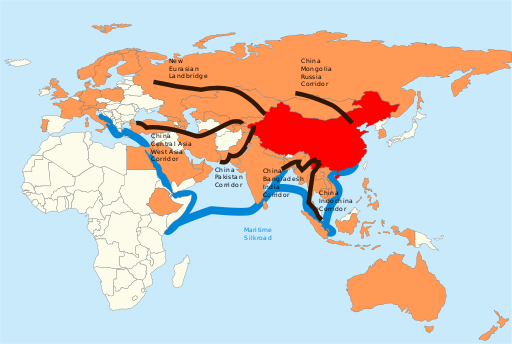
Chinese Eurasianism, which – if the Belt and Road Initiative (BRI) is successful – will give Beijing new foreign policy tools to use against Washington, could prove more threatening to the US in the long run than the USSR was during the Cold War.
The public debate attending the Nation State Law is a clear indicator of Israel’s vibrant democracy and an illustration of the freedom of expression that characterizes the Israeli state of mind. Arabs, Druze, and Jews expressed their views on this matter, both pro and con, notwithstanding the fact that the core argument is essentially political rather than substantive. With that said, the protests in Israel against the new law are a red alert. They reflect an emerging tendency among liberal streams in Israeli Jewish society to undermine the long-accepted principle that Israel is the national home of the Jewish people.
The Assad regime's recapture of the Syrian Golan Heights is advantageous to Israel, in light of the Israeli-Russian understanding to predicate the situation there on the May 1974 disengagement. Even if the new arrangement does not lead to a forty-year-long de facto peace like the one that prevailed prior to the eruption of the Syrian civil war, Assad will need to focus on rebuilding his regime, reconstituting Syria, and ensuring the continuation of Alawite rule. In these circumstances, not only does military confrontation with Israel not entail any conceivable gains but it would likely wreck the regime’s fragile recovery.
Donald Trump and Vladimir Putin held a historic summit in Helsinki, Finland on July 15 that was assessed by many as a defeat for US prestige and interests. The summit should not, however, be construed as a Russian victory. US foreign policy moves after the summit indicate that there is little chance for meaningful improvement in bilateral relations. The complexity of issues surrounding Syria, Ukraine, Georgia, and Iran will continue to weigh heavily on US-Russian diplomatic efforts.

Accessibility Toolbar