
Perspectives Papers
Perspectives Papers provide analysis from BESA Center research associates and other outside experts on the most important issues pertaining to Israel and the Middle East.
- Lt. Col. (res.) Dr. Shaul Bartal
- Paper No. 2230
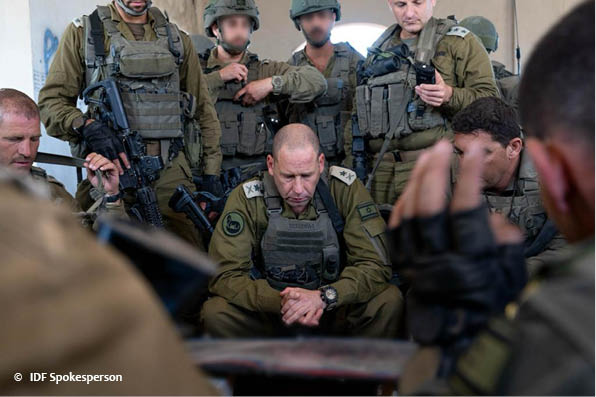
Infiltrations of armed militants for the purpose of killing and looting are nothing new in the troubled history of the Gaza Strip. The attack by Hamas on October 7, 2023, which led to the deaths of approximately 1,500 people, most of whom were Israeli citizens, is just one link in the chain of suffering between Israel and the Gaza Strip. Only when a determined governing authority held full control over the Strip, as Egypt did from 1956 to 1967 and Israel did from 1967 to 1993, could the development of the western Negev and southern Israel thrive. Israel has spent 17 years trying to disengage from Gaza without success, and there has been round after round of fighting. Despite its economic dependence on Israel, Gaza has remained a significant security problem that only worsened over time. The Swords of Iron War could be an opportunity to change the reality in the Gaza Strip, but it might require the return of Israeli military governance until, with the help of regional and local actors and international support, a solution is found - a solution that does not merely establish temporary quiet but that ensures peace and stability in the Gaza region for all.
- Prof. Eitan Shamir
- Paper No. 2229
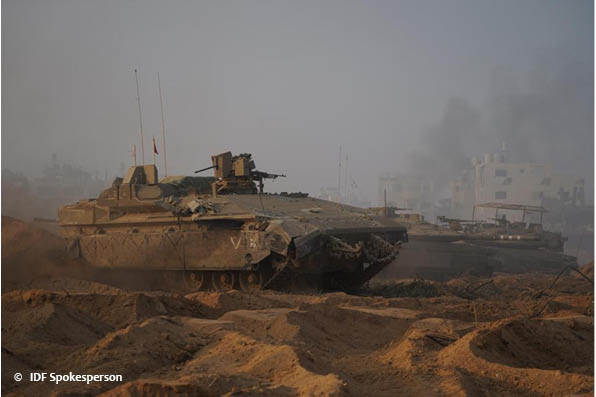
Over six and a half years ago, two researchers from the BESA Center, Dr. Eado Hecht and Prof. Eitan Shamir, warned of a development that could lead to a scenario similar to the one that occurred on October 7 in the Gaza envelope. They and others made similar warnings about Hezbollah, but few pointed to the possibility of such a scenario unfolding in the south.
The BESA researchers not only outlined a scenario markedly similar to what actually happened in the south on 7th October 2023 but made practical suggestions regarding the force-structure required by the IDF to provide an effective response to such a scenario. They criticized the significant reduction in ground forces, especially in the armored and artillery units. The authors analyzed the various non-state military organizations facing Israel, including Hamas, and revealed the goal of their force build-up: creating the capacity to launch incursions with significant forces to occupy Israeli settlements close to the border. The researchers argued that in view of this enemy strategy, the IDF’s continued reduction and neglect of major ground forces, coupled with reliance on precision weaponry and airpower, constituted a flawed strategy.

- Yaakov Lappin
- Paper No. 2228
The IDF’s new multi-year strategy, Ma’alot (Ascent), led by IDF Chief of Staff Lt. Gen. Herzi Halevi, was formulated before the Hamas mass murder attack on Israel of October 7, 2023. It was intended to build upon its predecessor, Momentum, emphasizing human capital, countering Iranian threats, boosting land maneuvers and border defenses, and refining organizational culture. It will need a drastic update following the war.

- Dr. Galit Truman Zinman
- Paper No. 2227
Are Hamas’s brutal patterns of action, especially those of Saturday, October 7, 2023, comparable to those of ISIS? A comparison of the two Islamic terrorist organizations indicates a conceptual and practical similarity, including: shared fundamentalist ideology, their status as hybrid entities, their control over populations, Islamic indoctrination, education to hate, brutal operating methods, and commitment to jihad. The State of Israel, which just experienced the worst terrorist attack since its establishment, must continue to advance its tactical and strategic goal of eliminating Hamas with the clear message: Hamas is equal to ISIS.
- Prof. Louis René Beres
- Paper No. 2226
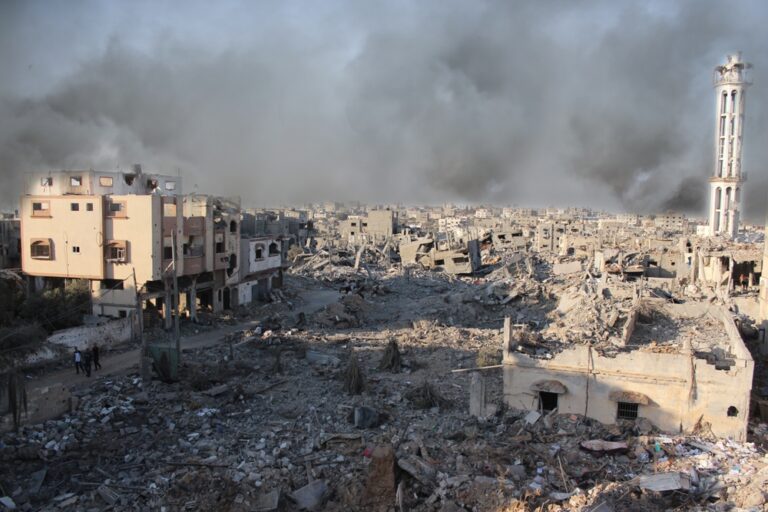
In its obligatory war against Palestinian terror – a criminal process encouraged and sustained by Iran – Israel is acting within the bounds of pertinent international law. Though this assessment is difficult to acknowledge by many who can see only the tangible effects of Israeli military counterterrorism, it is offered here from the informed standpoint of authoritative legal standards. Palestinian civilian casualties of Operation Swords of Iron are the predictable and indeed intended result of Hamas’s perfidy. It is beyond legal question that the original Hamas terror acts of October 7, 2023, which included murder, rape, and hostage-taking, represent egregious, Nuremberg-level violations of humanitarian international law.

- Prof. Jonathan Rynhold
- Paper No. 2225
Israelis have united around the goal of toppling the Hamas regime, but little has been said about what would come after. This issue is critical to Israel’s security and must be addressed. Israeli interests are best served by establishing in Gaza a PA-linked administration alongside a massive reconstruction program backed by the US and other international and regional actors. Israel’s declaration of support for establishing such a regime in Gaza as soon as possible would provide a political direction to the military operation and enhance its international legitimacy. Defeating Hamas must ultimately mean not only its military destruction but the empowerment of a moderate Palestinian alternative.

- Col. (res.) Shay Shabtai
- Paper No. 2224
Unlike during previous conflicts, Israel is not constrained this time by a “political hourglass” and it would be wise to remove this concern from the table if a decisive outcome in the ground operation against Hamas is to be achieved. The ability to maintain this situation over time is in Israel’s hands. Seven clear decisions, detailed below, will be required to strengthen Israel’s hand, along with the establishment of mechanisms necessary for their implementation.
- Prof. Eitan Shamir
- Paper No. 2223
On October 7, 2023, Israeli deterrence completely collapsed. As a result of a surprise attack by Hamas, Israel suffered a severe defeat in terms of casualties and property losses. The enemy infiltrated Israeli territory, captured cities and towns, decimated their populations, and held them for many hours. The only way to turn this achievement by Hamas into a pointless endeavor is for Israel to dismantle the Hamas regime in Gaza and destroy its military capabilities. This is for two reasons. First, in order to ensure the safe return of Israeli citizens to the Gaza periphery, the threat must be removed completely and their sense of security fully restored. Secondly, an end to the war without the destruction of the Hamas regime in Gaza would be considered a success for the terrorist regime and serve as a model and inspiration for other actors in the radical axis who seek the elimination of Israel.
- Dr. Galit Truman Zinman
- Paper No. 2222
In order to understand the nature of the strategic surprise inflicted by Hamas on Israel on October 7, it is essential to understand its jihadist orientation, which was formulated on the movement’s founding and has never changed. While Israel employs a Western military concept that avoids war and sanctifies the value of life, the jihadist concept aspires to self-sacrifice, death, and a cosmic religious struggle against “Jewish infidels.” Hamas has no concern whatsoever for the welfare of the local Gazan population, which means it does not have the Achilles’ heel of the Israeli side: the commitment to uphold the sanctity of life for both its citizens and its soldiers. Israel continues to operate using a Western democratic approach in the face of an eternal jihad. It will have no choice but to fight the jihadist mindset without any containment or restraint.