Perspectives Papers

Perspectives Papers provide analysis from BESA Center research associates and other outside experts on the most important issues pertaining to Israel and the Middle East.

View Archive

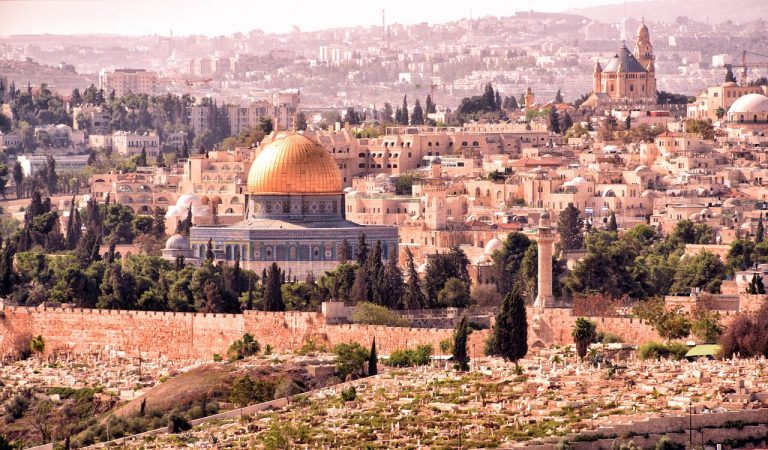
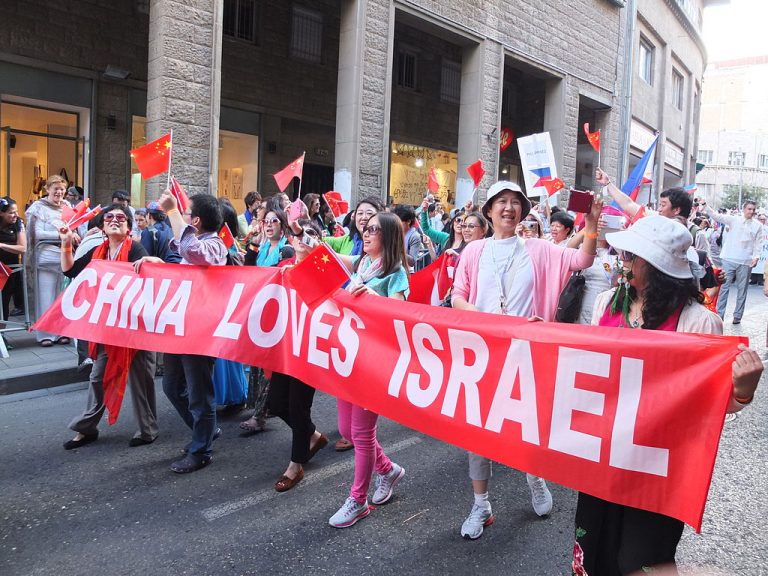
While he was on the campaign trail, Donald Trump promised to recognize Jerusalem as the Israeli capital and start plans to move the US embassy from Tel Aviv to Jerusalem. On December 6, 2017, he made good on that promise. Like media elsewhere around the world, Chinese newspapers – which express the positions of the central government in Beijing – had much to say on the matter. The Chinese responses cast light on two areas: Israeli-Chinese relations and Chinese foreign policy towards the greater Middle East.
Speculation is rife about the possibility of normalizing relations between Israel and the nations of the Arabian Peninsula (Saudi Arabia, the UAE, Kuwait, and Qatar). If such negotiations do take place, the Israeli government will need to approach them in such a way as to avoid repeating mistakes that were made in the peace agreements with Egypt and Jordan.
Only in the “Israeli occupation” could such an event have taken place: an Israeli officer and his NCO, standing near a home in a village near Ramallah, stood passively as they were verbally assaulted, slapped, and kicked. The IDF must not only not adopt a turn-the-other-cheek doctrine but should prosecute those involved in such provocations to the fullest extent of the law.
The Arab proverb "we are with the staunch wall" outlines a path to survival, especially in periods of transition, recommending one to cleave faithfully to the rising force portrayed as a staunch wall. From this point of view, recent events connected with the regional turmoil are bound together, including the Kurdish failure in Kirkuk, the fighting in the Druze village of Khader, the Palestinian reconciliation, and the Saudi-led resignation of the Lebanese prime minister. At the same time, the Israeli "Villa in the Jungle" strategy of entrenchment within its borders disregards the need to find overt and covert routes of intervention that would enhance Israel's image as a “staunch wall” for its allies.
In a December 6, 2016 telephone conversation, then President-Elect Donald Trump and Czech President Milos Zeman agreed to meet in April 2017 – but the visit appears to have been indefinitely postponed. This is unwise. Zeman, like Trump, is a staunch supporter of Israel, opposes Europe’s “Munich attitude” of appeasement, and is a foe of Islamic terrorists. He should be treated by the White House as the ally he is.
Reports emerged recently suggesting that Iran-backed forces are closer to controlling the Syria-Iraq border. This would mean Tehran will now be able to link up with its Lebanese proxy, Hezbollah. If this scenario is correct, after 12 years of conflict in Iraq and another conflict in Syria, Iran is steadily transforming into a more powerful geopolitical player whose influence will be projected hundreds and maybe thousands of kilometers beyond its borders.

Accessibility Toolbar