
Perspectives Papers

Perspectives Papers provide analysis from BESA Center research associates and other outside experts on the most important issues pertaining to Israel and the Middle East.

View Archive

Israel is upgrading its economic relations with Asia by negotiating Free Trade Agreements (FTAs) with China, South Korea, Vietnam, and India. These agreements will allow Israel to increase trade with Asia and improve its regional status, further solidifying Israel's pivot to Asia.
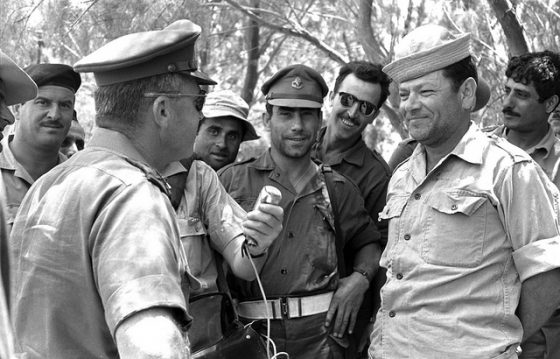
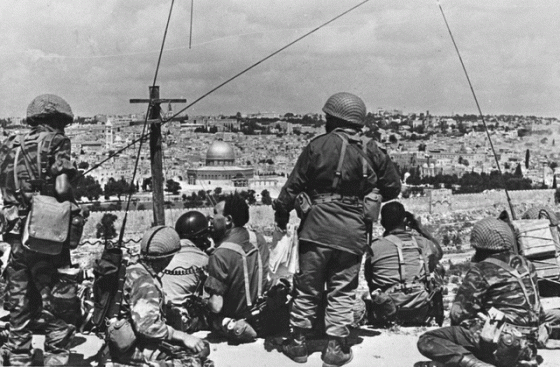
When Israeli officials seemingly questioned their country’s narrative of the Six-Day War, politicized historians and commentators seized on their words as vindication of their claim that Israel had been the aggressor. But what these officials had actually said was abridged, misrepresented, and taken out of context. This distortion provided fodder for a tendentious rewriting of history.
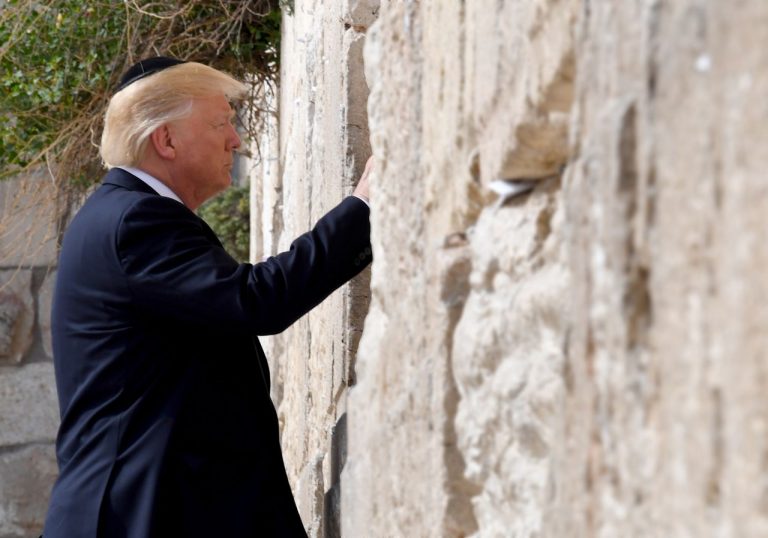
In his recent visit to the Middle East – his first visit abroad, and one fraught with symbolic messages – President Donald Trump achieved most of his goals. Never has a US president been received with so much tribute, praise, appreciation, and admiration by both Muslim and Jewish leaders. Heads of the most important states in the Arab world lauded his friendship, qualities, and strategic aims. There is no great surprise here. Trump completely reversed the attitude of Obama, which verged on hostility, towards both the pro-American Arab states and Israel. The Saudi royal reception for Trump was a particularly vivid response to Obama’s policy. The huge arms deal Trump signed with Saudi Arabia could challenge Israel's national security. Trump failed to implement his election promise to move the US embassy from Tel Aviv to Jerusalem, primarily because it seemed to contradict his plan to engineer an "ultimate deal" between Israel and the Palestinians.
The overwhelming victory of the 1967 Six-Day War is sometimes used by proponents of an Israeli withdrawal from the West Bank as proof that Israel can defend itself from behind the “green line.” They argue that Israel won the 1967 conflict from behind the pre-1967 borders, and is therefore capable of doing so again, and from the same lines, if necessary. This, they claim, clears the path to a withdrawal. However, this argument ignores all the military-strategic changes that have washed over the region in the fifty years since that conflict. It fails to take into account that the Six-Day War was a one-time event, with unique circumstances that will not be seen again.
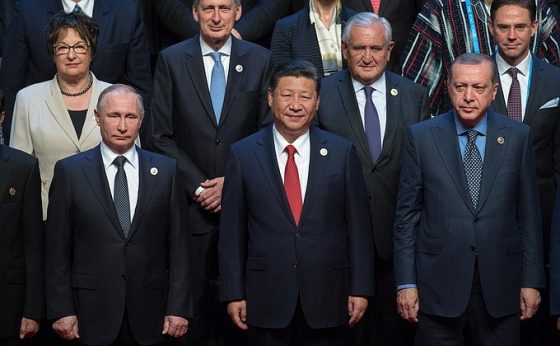
On April 14-15, 2017, Chinese President Xi Jinping conducted a summit on the Chinese initiative to connect Europe, the Middle East, Africa, and Asia. In attendance were high-ranking representatives from Egypt, Iran, Kuwait, Saudi Arabia, the UAE, Turkey, Syria, and Tunisia. The object of the summit was to clarify the Chinese initiative in the wake of uncertainty that has surrounded it ever since it was announced by Xi in 2013. Israel was not included in the summit, but is nevertheless very much in the picture.
Arguing that the continuation of Assad’s brutal regime is a vital Israeli interest does not make strategic sense. A Syria embroiled in a civil war has much less energy and means for hurting Israel than a strong Syria. Nor is the Syria of today able to wage an effective diplomatic and/or military campaign aimed at the return of the Golan. Above all, the survival of the Assad regime is a victory for Iran – the main source of trouble in the Middle East and Israel’s arch-enemy. Expressing support for the Assad regime, which is responsible for hundreds of thousands of casualties, for using chemical weapons, for ethnic cleansing, for massive destruction, and for creating waves of millions of refugees, is also morally reprehensible.
Seventy-six years after the mass massacre of the Baghdad Jews, in which the then-leader of the Palestinian Arabs, Hajj Amin Husseini, was deeply involved, his heirs to the Palestinian leadership still sustain an anti-Israel and anti-Jewish campaign of racial and political incitement unparalleled in scope and intensity since Nazi Germany.
The two recent US air strikes on a Syrian convoy heading to the al-Tanf military base in the southern Syrian Desert a few miles from the Jordanian-Syrian border have major strategic importance. The attack signaled for the first time since the Syrian civil war broke out in 2011 that the US would not countenance the reemergence of the Iranian-controlled Shiite crescent that Iran had created through Teheran, Baghdad, Damascus, and Beirut after the US exited Iraq in 2010.
Trump’s first 100 days have yet to provide a clear indication of US policy and how he believes he can achieve an Israel-Palestinian deal. The major changes during this period have occurred in areas mostly relevant to Israel: foreign policy and national security. It will take at least 100 more days to figure out how and where Trump wants to lead the US in the near future.

Accessibility Toolbar