Perspectives Papers

Perspectives Papers provide analysis from BESA Center research associates and other outside experts on the most important issues pertaining to Israel and the Middle East.

View Archive

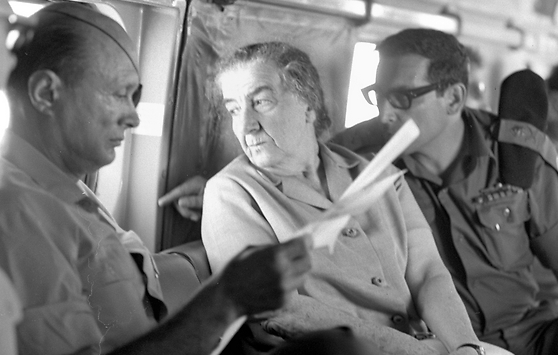
Although Israeli PM Golda Meir lacked military knowledge, her questions during government discussions on the eve of the Yom Kippur War exposed the fact that deterrence and early warning, the two cornerstones of Israel’s security conception, had not been adequately addressed. If the IDF officers and the many bithonistim (officials with a security background) in her government had heeded her questions, the war could have gone very differently and perhaps even have been averted.   
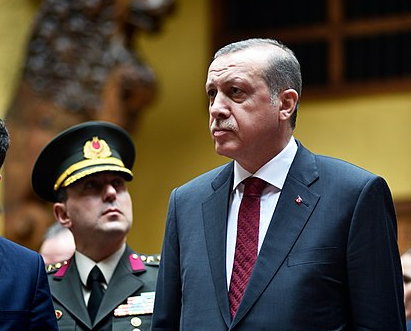
After the infamous Mavi Marmara incident of May 2010, Turkish president Recep Tayyip Erdoğan and then foreign policy tzar Ahmet Davutoğlu (later PM and now an Erdoğan opponent) pledged to internationally isolate Israel. This was intended to help them advance their Islamist agenda and augment an emerging unity in the umma, preferably under Turkish leadership. A decade later, pragmatic Arab states are lining up to normalize relations with Israel, leaving state actors Iran and Turkey as well as non-state actor Hamas in a punishing position of international isolation—exactly where Turkey wanted to push Israel.
For decades, there has been a steady stream of complaints about the BBC’s anti-Israel bias. Yet other than criticize the BBC publicly, there was little anyone could do. That may have changed. In June 2020, Tim Davie became the BBC’s new director general. He wants to make the BBC’s reporting impartial. This would be a good occasion for the publication of the secret 2004 Malcolm Balen report about BBC reporting on the Israeli-Palestinian conflict.
Given the historical ties of Athens with Middle Eastern countries, Greece is an ideal candidate to play a pivotal role in a Mediterranean bloc to include Israel, Gulf States, and European countries with the object of repelling Turkey's expansionist ambitions. The participation of Greece could help the region reach its economic and political potential amid the dispute over local energy reserves.
Two messages continue to ring out on the eve of the anniversary of the Yom Kippur War. One concerns the severity of the intelligence failure at the time, and the other promises that the right lessons have been learned and the IDF is now prepared for any scenario. When the failure is portrayed as essentially the lack of an intelligence warning, it is easy to promise that it has been diagnosed and remedied in a way that prevent its future recurrence. But an in-depth look at the war shows that the reasons for the fiasco went far beyond the intelligence failure.

Accessibility Toolbar