
Perspectives Papers

Perspectives Papers provide analysis from BESA Center research associates and other outside experts on the most important issues pertaining to Israel and the Middle East.

View Archive

Zionist organizations and the Israeli government devote incalculable resources to the effort to contain the damage caused by news reports and opinion pieces that portray Israel inaccurately and unfairly. The conventional response is for Israeli diplomats and hasbara activists to bombard journalists with angry emails and reader comments. It would be much more productive to encourage journalists to learn both sides of the story, even compensating them financially to do so.
China and the US have different views on how the coronavirus originated, how it spread, and how it should be fought. These opposing narratives arise out of a context of ideological divide that will only be deepened by the crisis. Smaller states will have to decide which narrative they are going to accept, a trend that could widen existing gaps between the great powers and their allies.
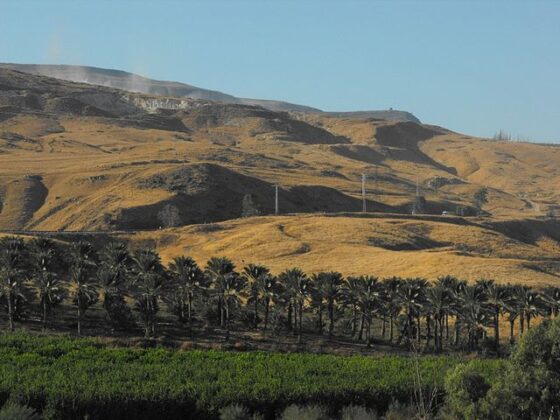
The declared intention of the new Israeli government to pave the way for the implementation of sovereignty in certain parts of the West Bank, with the blessing of the Trump administration, is prompting vigorous debate. The dark prophecies by “liberal” Israelis as well as EU officials about the dire consequences that would result from annexation are exaggerated, and they obscure the vital strategic value of the Jordan Valley for Israel’s security.
There are several intersections between policy responses to the coronavirus pandemic and environmental issues. The decision to maintain social distancing measures, for example, has implications for the environment that need to be considered. The clash of economic and environmental interests, which was already an issue before the outbreak, will undoubtedly heat up further as the world emerges from the worst of the crisis.
A comprehensive planning blueprint is needed for the western Land of Israel from the Jordan River to the Mediterranean Sea. It should set out the required spatial balance among the infrastructures for transportation, water, electricity, housing, sewage removal, and green-space preservation. Concomitantly, the application of sovereignty calls for the strategic governmental formulation of a new national master plan for the development of Israel’s eastern rampart.
Data and analysis of surveys of American public opinion on three issues—views of Israel vs. the Palestinian Authority, sympathies with the two sides, and support for the establishment of an independent Palestinian state—reveal that from 2000 to 2020, Americans have consistently viewed Israel favorably and the Palestinian Authority unfavorably and shown much more sympathy for Israelis than for Palestinians. They are increasingly supportive of the establishment of an independent Palestinian state in the West Bank and Gaza, a trend that might have resulted from the inclusion of a Palestinian state in President Donald Trump’s peace plan.  
Between 1994 and 2015, the Kurdish vote in Turkey rose from 4.1% to 13.1%. A greying Turkey is facing a baby boom in Kurdistan: the Kurdish fertility rate, at 3.41, is a demographic weapon against the Turkish fertility rate of 2.09. These numbers suggest that Kurds could be the kingmakers in Turkey’s presidential election in 2023.
Turkish president Recep Tayyip Erdoğan is faced with a dilemma: in order to avoid US sanctions, he must keep the S-400 system he purchased from Russia unopened, but doing so might open Turkey up to Russian sanctions. Erdoğan’s worst nightmare is President Donald Trump following through on his threat last year to “devastate the economy of Turkey.”
The Financial Action Task Force (FATF) recently added Iran to its Black List as a means of increasing pressure on the regime to stop financing terror. While this belated decision was a good move, it is unlikely that it troubled Tehran particularly. Iran has been on the Black List before and been removed from it despite its persistent state sponsorship of terror, which goes back decades. The plenary continues to ignore the terror financing of numerous other states as well as Iran, including Qatar and the Palestinian Authority, rendering its effectiveness minimal.

Accessibility Toolbar