Gaza

In the aftermath of October 7, there is a clear need to reexamine Israel’s principles of defense. It is already clear that a considerable military build-up and additional investments will be required. However, we must be careful not to repeat the mistakes of the past. More of the same – the restoration of a strategy based on deterrence, greater firepower, a wider order of forces, and more durable fortifications – may prove unsatisfactory and even distracting. This study seeks to contribute to the formulation of a sustainable strategy. We will do this not by citing principles that should be added to the concept of security but by addressing the type of discussion that is required. Along the way we will question some of the automatic responses to the crisis.
Ten months after the surprise attack by Hamas on October 7, it is possible to assess the strategic achievements of the antagonists. In addition to inflicting heavy casualties and many wounded on the Israelis, Hamas succeeded in undermining Israeli society and causing divisions within it on the issue of the hostages. Hamas also succeeded in undermining Israel’s international status. Israel’s economic situation has been severely damaged and continues to deteriorate. Hamas brought the Palestinian issue back to center stage as a condition for a regional settlement, and recruited the Iranian proxies, mainly Hezbollah and the Houthis, for a war of attrition against Israel. Perhaps its greatest achievement is the evacuation of the populations of Jewish settlements within sovereign Israel for the first time since the establishment of the state. On the other hand, Israel is on the verge of crushing Hamas as an organized military force and removing one front from the “ring of fire" created by Iran around Israel. The Iranian attack on Israel proved the effective cooperation of a regional military coalition under the leadership of US Central Command and proved that Israel has an effective defense system against ballistic missiles. Israel regained its trust in the major ground maneuver and reserve soldiers were reestablished as an effective force in the IDF. Civil society also demonstrated its ability to mobilize. Hamas was unable to mobilize the Israeli Arabs to join it nor to mobilize the West Bank for a significant uprising. At this point, Israel is faced with a difficult dilemma. However, it is possible that a major strategic shift in events, should one occur, will not be related to regional developments but to developments in the global order, as has happened before in the region’s history.
Israeli history must be retold as a sequence of three long historical wars. The Iron Swords War does not stand on its own. The campaign in Gaza is a critical transition stage, both conceptual and practical, during which Israel is moving from defense to offense in a long war with Iran's proxies. To realize its achievements, Israel needs a pause of a few years during which the strategy and military power for the offensive will be formulated. True learning is required at the political and military levels, and national reconciliation is required. Decisive emergency steps will have to be taken to build a military power that is more suitable to the broader war.
The Hamas invasion of Israel on October 7, 2023 was quickly characterized by Hamas as fulfillment of a prophecy about the destruction of Israel. Hamas cast the invasion as a Palestinian version of the Battle of Badr, a battle in which a small force of Muslim believers under the command of the Prophet Muhammad succeeded in defeating a large force of Quraysh and Makkah who had opposed his prophecy. The battles of October 7 were labeled a divine victory by believers over the enemies of Allah, and many verses in this spirit were broadcast. However, more recent articles published on the Hamas website suggest that its view has undergone a transformation. Hamas has apparently shifted from extolling its “divine victory” on October 7 to admitting that it has been defeated in battle again and again. The great suffering Hamas has inflicted on the Gaza Strip has put it in the position where it must now explain to the Palestinian public why it started the war in the first place, why it did not expect a massive military response from Israel to its atrocities and attempt at genocide, and why the suffering of the Palestinians of the Gaza Strip is not in vain.
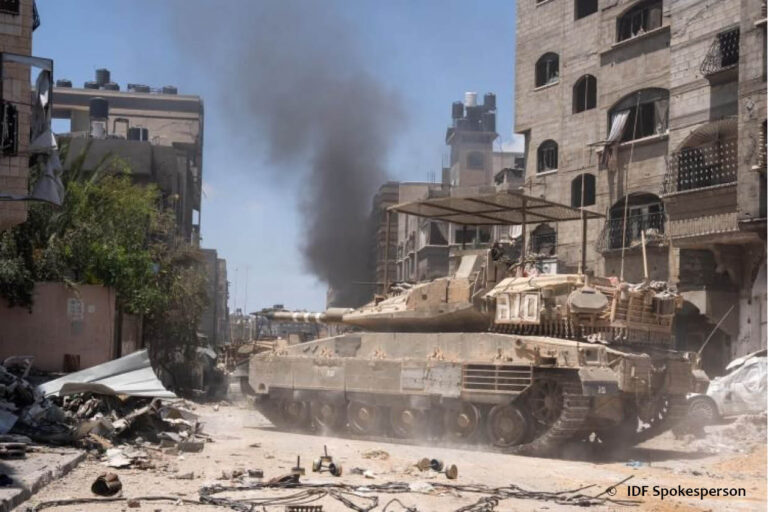
IDF Spokesperson
In this article I will present five alternatives for the future of Gaza. Israel’s long-term strategy to ensure its continued existence entails the accomplishment of these goals: destruction of Hamas's military capabilities, abolition of Hamas control in Gaza, and the preservation of good relations with the United States. Less core strategic considerations are the return of the abductees, the crisis on the northern front, relations within the region, and Israel’s legitimacy. The alternatives for Gaza’s future are: the Hamas option, which is the most problematic; the revitalized Palestinian Authority option; the military-civilian option, which seems the most balanced; the chaos option; and the sovereignty option, which is also very problematic. It is essential to conduct a far-reaching discussion on all these alternatives and to avoid attachment to any one of them.
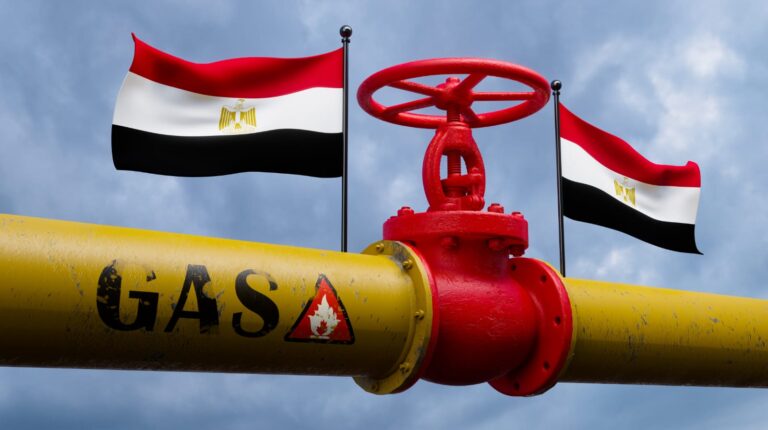
Developments in the Eastern Mediterranean over the past decade have placed Egypt at the center of a regional cooperation system regarding energy and political strategy. Gas discoveries in Egypt's economic waters, significant investments by the Egyptian government in the energy sector, the 2019 establishment in Cairo of a regional gas forum, and the presence of two existing liquefaction facilities in Egypt (in Idku and Damietta) all augur well for Egypt's ambition to be the regional hub for gas exports. The export of gas from Israel to Egypt also contributes to Egypt's energy security, both in terms of the regular supply of electricity to the local economy and the export of a significant amount of gas to Europe in exchange for foreign currency urgently needed in Egyptian coffers. The war in Gaza has added complexity to Egypt's policy towards Israel since the imports of gas from Israel are essential to its energy stability. Moreover, the Houthi attacks have decreased traffic in the Suez Canal and caused serious damage to Egypt’s economy.
Although the war in Gaza is still in its early stages, Israel must begin learning from it now. The next challenge, a war in the north, might be imminent. The primary lesson taught by the war in Gaza is that no military-size terror threat should ever again be allowed anywhere on Israel’s borders. Such threats should be removed by force on the other side of the border. A concentrated force-design process, focused on four or five plans, in addition to basic preparations will enable the creation of a sharper and readier military force. Israel should focus on embarking on about two years’ worth of preparations for the next war.
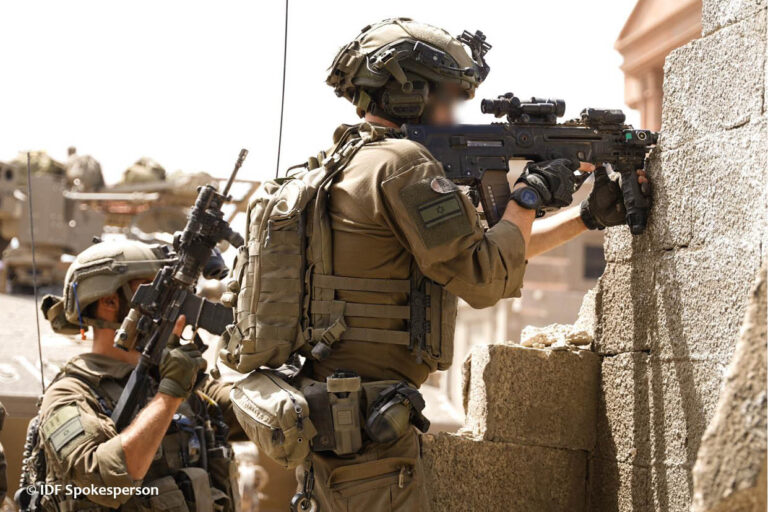
IDF Spokesperson
Executive Summary: Israel's wars, according to Israel's traditional defense strategy, are aimed at thwarting and removing military threats, not at politically shaping the region. Hence our familiar focus on the military dimension. But the goal of the war in Gaza is more ambitious: the destruction of the Hamas regime. Accordingly, its realization depends on additional dimensions. A slow reconstruction of parts of Gaza based on military achievements can regain the initiative, transfer the pressure back to Hamas, and serve as a lever for a hostage deal. This is also a one-time opportunity for Israel to physically shape the ruined Strip according to its interests. Once we finally get out of the strategic corner we've fallen into, we would be wise to return to the more modest Israeli approach to war. We will focus on the effective removal of threats and leave the business of political engineering to the powers.
IDF Spokesperson
Israel's main objective in the Iron Swords War is to topple the Hamas regime – an ambitious goal that seeks to change the political-strategic reality in Gaza. To achieve it, international cooperation is required to ensure legitimacy for the new regime as well as funding for the reconstruction of the Gaza Strip, establishment of its civilian administration, transfer of Gazan public servants to a new employer, de-radicalization, and internal security. The war must therefore be conducted by a coalition. Indeed, the war began with an unprecedented alignment of the United States, the West, and moderate Arab countries on Israel's side. But Israel’s refusal to conduct a dialogue with the international partners on the nature of the regime that will replace Hamas, foot-dragging on the humanitarian issue, extremist messaging, and poor management of the legal dimension have resulted in severe damage to Israel's legitimacy and ability to harness the international community’s help in achieving the war's objectives. The damage was done with no associated gains, as the Israeli government's conduct has steered it away from, rather than toward, achieving the goals of the war. Unless there is a profound change in the way the government conducts itself (and if it is not already too late), Israel's situation in the coming years will be worse than it was before the war.

Accessibility Toolbar