
Gaza

The war in Gaza has revealed serious weaknesses in the Israeli electricity sector that do not have an immediate solution, and there is no unanimity on the extent of the damage that will be caused if the war in the north expands. Extreme scenarios range from several hours to several days without electricity in the major cities and the center of the country and several weeks of such conditions in the border areas. These scenarios would require the Israeli citizen, who is not used to power outages, to be calm and patient. In the long term, the security of the Israeli electricity sector will require the installation of expensive infrastructures and a significant easing of regulations that will take years to implement and require direct government support. These moves include the search for additional gas fields and the construction of backup gas pipelines, greater decentralization of the electricity sector through solar technologies, upgrading of power transmission lines, promotion of hydrogen technologies for electricity storage, and greater storage of emergency fuels. One bright spot concerns Israel's regional status with regard to connectivity and energy exports. The dependence of Egypt and Jordan on Israeli gas proved to be a moderating factor in the war, and plans to connect pipelines and power lines from the Gulf countries to Europe through Israel received an additional incentive following the Houthi attacks on Bab al-Mandab.
IDF Spokesperson
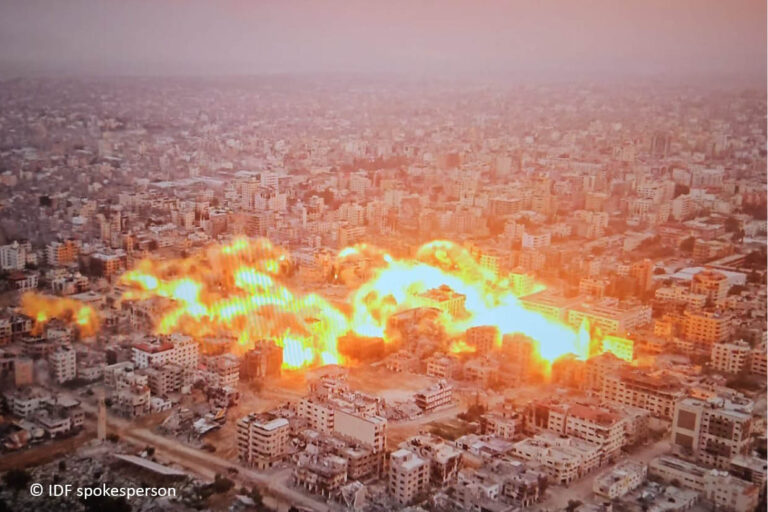
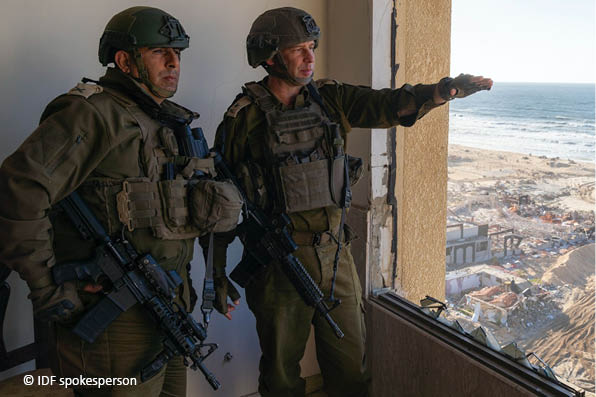
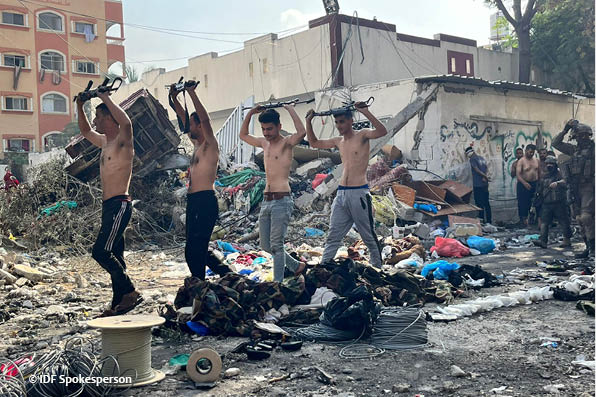
What are the lessons for IDF force build-up following the Hamas attack on October 7 and the Iron Swords War? A recent article by Prof. Azar Gat concludes that "there is no need to increase the scope of the forces and the existing force build-up should be continued, the main [element] of which is investments in technologies that are the key to the advantage of the IDF on the battlefield and for the current achievements." We do not agree with this conclusion and believe it to have negative strategic consequences. The continuing inability of the IDF to realize the goals of the current war is mainly the result of a lack of ready and available maneuvering units, a lack that military technology cannot compensate for no matter how good it is. If the IDF is to be able to fulfill its responsibilities, it needs more well-trained maneuver divisions to resurrect the territorial defense organization as well as maintain technological superiority.
© IDF Spokesperson
In the wake of the massive intelligence failure of October 7, fundamental changes will have to be made to Israeli national security doctrine. The intelligence community is obliged to improve its early warning capabilities – not merely in an attempt to prevent another great failure of the kind that might occur once in 50 years, but to improve its ability to contribute to the ongoing security effort. Israeli intelligence committed seven “sins” in the lead-up to October 7 that will have to be examined closely if the required changes are to be put in place. Those “sins” are politicization, certainty, preoccupation with cyber, targeting, professionalism, understanding, and risk management.
IDF Spokesperson
Preventive war/the preemptive strike, defined as the identification of a major threat developing among one’s enemies and the taking of action to remove that threat before it materializes, was once central to Israel's security concept. Since the rise of Hamas to power in Gaza and the Second Lebanon War against Hezbollah, however, the IDF has abandoned this practice. Instead, strategies were developed to keep escalation below the threshold of war – the “Campaign Between the Wars” in the north and repeated limited operations in Gaza. Notwithstanding these efforts, both Hamas and Hezbollah subsequently evolved, over the course of almost two decades, into terrorist armies that are a significant threat to Israel. Two recent cases illustrate this trend: Israel's response to the development of Hamas's offensive capability, with an emphasis on tunnels, starting in 2015; and Hezbollah's conversion of rockets into precision-guided rockets starting in 2018. In both cases the option of a preventive war was raised but rejected. In direct response to lessons learned from the Iron Swords War, I propose that the preventive war/preemptive strike be restored to Israel's strategic toolbox. The external and internal legitimacy for doing so stems from the fact that Israel has returned to the era of “wars of no choice.”
Israel’s ship of state, facing rough seas, is at high risk and requires clearer rules of navigation. During this period of deep complexity, Israel will need to clarify its strategic direction. The terrorists of Hamas are the tip of Iran’s much larger spear. Israel’s current war against jihadist criminality could thus turn into a wider and more damaging war with Iran. Such a war could emerge as a “bolt from the blue” or incrementally. Ultimately, it could involve the United States, Russia, China, Pakistan, and/or North Korea. How might Jerusalem prevent or manage any such derivative conflicts? Israel must consider whether there is a productive role to be played by the “Samson Option.”
Israel’s war in Gaza, which is being waged in response to the devastating Hamas attacks of October 7, has prompted a surge of anti-Zionist discourse among many Muslims in the West, including in the US. The American Muslim community has been politically active since 9/11. Muslim activists, clerics and Islamic organizations are among the most prominent Western voices condemning injustices against Muslims worldwide, and the Palestinian cause is often a priority. President Joe Biden’s support for Israel in the Gaza war has angered many in the American Muslim community, and they may wish to punish him for that support in the November election. Will American Muslim opposition to Biden’s support for Israel have a political impact on the US election?
© IDF spokesperson
The occupation and holding of territory, which used to be a central component of the IDF's war concept at all levels, became almost irrelevant during Israel’s many years of fighting terrorism and guerrillas in Gaza and Lebanon. But there are three reasons why it is a big mistake to discount the value of conquered territory. First, the occupation by Israel of enemy territory (while evacuating the local population for its own protection) is considered by Israel’s enemies to be a painful loss, and the possession of territory can serve as a bargaining chip in political negotiations. Second, occupation offers the IDF an asymmetric advantage, as only it can occupy territory, clear it of the enemy, and protect it from counterattack. Third, after a long period of “wars of choice” in which Israel was the strong side, we have returned to the era of “wars of no choice” in which the occupation of territory has both internal and external legitimacy. These insights should be applied to any future war in Lebanon.
The IDF is winning the Swords of Iron War, and the position of the State of Israel is being strengthened. Wherever the IDF reaches, Hamas ceases to function as an organization and military force. Israel has had significant achievements in terms of the hostage deal and the IDF’s substantial operational successes against Hezbollah. Israel has also been assisted by the American coalition's activity against the jihadist threat, and there has been a positive change in the Russian approach to the war in light of Israel’s successes. India and Japan have also offered support, helping to balance international public opinion. The challenge will be to maintain and increase this positive momentum. To achieve this, it will be necessary to continue the war and seize the opportunity, both locally and internationally, to start a rebuilding process oriented towards creating a new local government in Gaza that is focused on the population's needs. The goal should be the establishment of a Gazan government that is capable of serving as an effective counterweight to any attempts by Hamas to reassert control.
UN agencies, government aid programs and NGOs have consistently and willfully aided and abetted Hamas as it built its vast terror infrastructure in the Gaza Strip. They diverted aid money to Hamas to fund its terrorist activities, provided propaganda and disinformation support to Hamas in its efforts to tarnish and discredit Israel, and indoctrinated Gazan schoolchildren to hate Jews. Systematic documentation of the roles played by UN and government officials, as well as NGOs operating under the vast framework of international humanitarian aid, in enabling and cooperating with Hamas, both tacitly and actively, is vital to prevent a repetition of this abdication of responsibility and accountability. 

Accessibility Toolbar