Gaza

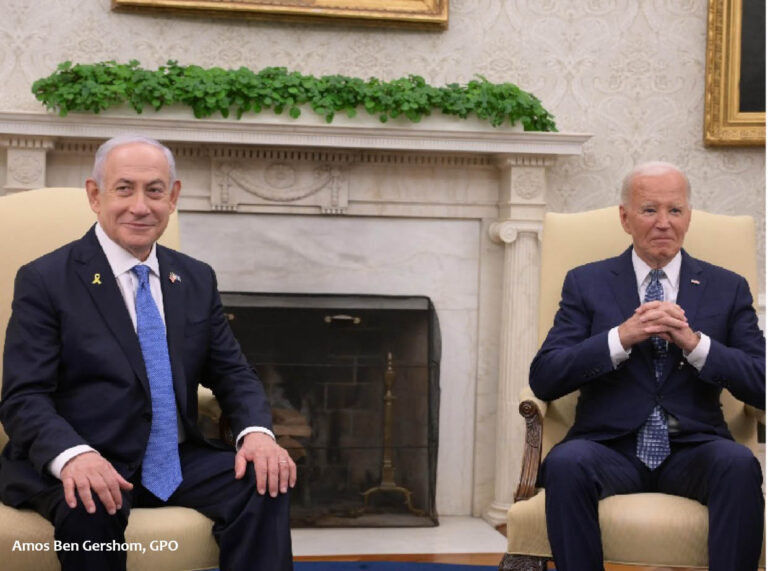
The US has spent months trying to pressure Israel into a long-term ceasefire with Hamas that would serve American interests by reducing the danger of regional war that could drag in the US. But Washington’s view of a ceasefire in Gaza and subsequent regional de-escalation fails to address three of Israel’s critical security needs: to ensure the IDF’s freedom of operation in Gaza to prevent Hamas from regrouping; to counter Hezbollah’s massive military-terrorist infrastructure and stop its 11-month-long assault on northern Israel; and to thwart Iran’s nuclear ambitions, which are intended to provide a protective cover to the entire jihadist Iranian axis.
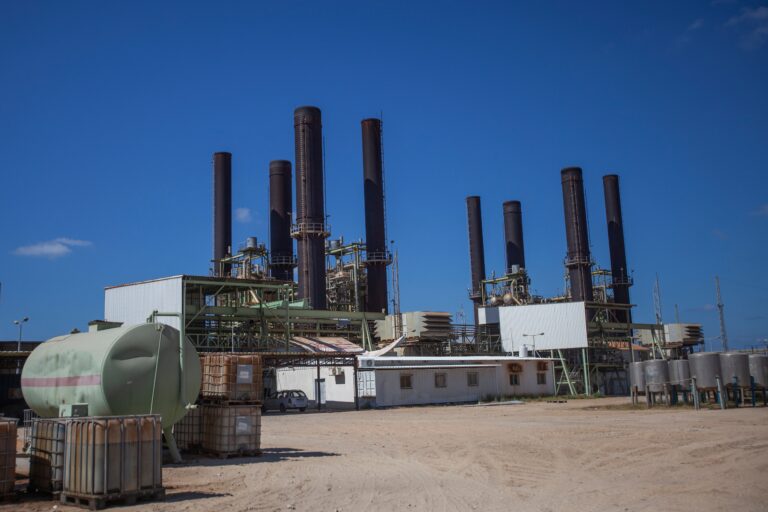
The Gaza Strip's heavy dependence on electricity and diesel supplied by Israel has turned from an Israeli strategic advantage into an economic and humanitarian burden for Israel. The reconstruction of postwar Gaza must include more independent energy generation capabilities in the form of solar PV expansion and the development of the Gaza Marine gas field. It must also include more grid connections to other electricity suppliers beside Israel, primarily Egypt. Otherwise, Israel will remain responsible for meeting the needs of millions of Gaza’s residents in the coming decades, regardless of who controls the Gaza Strip.
David Ben-Gurion's classic security concept made these assumptions: first, that Israel would never be able to force an absolute end to the conflict on its enemies; and second, that Israel cannot maintain a large army for long, so its security requires a reserve army and sufficient warning before war breaks out. This has resulted in a restless reality of short, intense rounds of war. The October 7 disaster prompted a sense that this concept had failed, and that it is time for Israel to adopt a new concept in which the enemy is completely defeated and no longer poses a threat. To a certain extent, the Iron Swords War is an attempt to eliminate the Hamas threat from Gaza once and for all, and possibly after that, the elimination of the Hezbollah threat as well. But can Israel eliminate Hamas (and Hezbollah)? Would attempting to do so be worth the practical price of the long war it would require? Would Israel’s society, economy, and state survive the attempt? Does the failure of Israel’s security concept on October 7 mean a new concept is required, or did the concept fail to be implemented properly on that Sabbath (and even more so since then)? In other words: Should the existing security concept be replaced or strengthened?
The current war, and Hezbollah's drone strikes, have made clear that Israeli air superiority does not apply to the "low sky" layer. The fact that the enemy is targeting the air defense itself stands out. The security establishment is working on finding solutions to the challenge, but development and procurement alone will not be enough. The basic premise of our air defense system has been undermined. The system must be reorganized on the basis of two understandings: first, that destroying Israeli air defense will be the enemy's first goal; and second, that the challenge of protecting the forces at the front requires different organizational and command and control means than the challenge of protecting the home front. As did the anti-aircraft units of the past, our tactical air defense at the front requires reorganization.
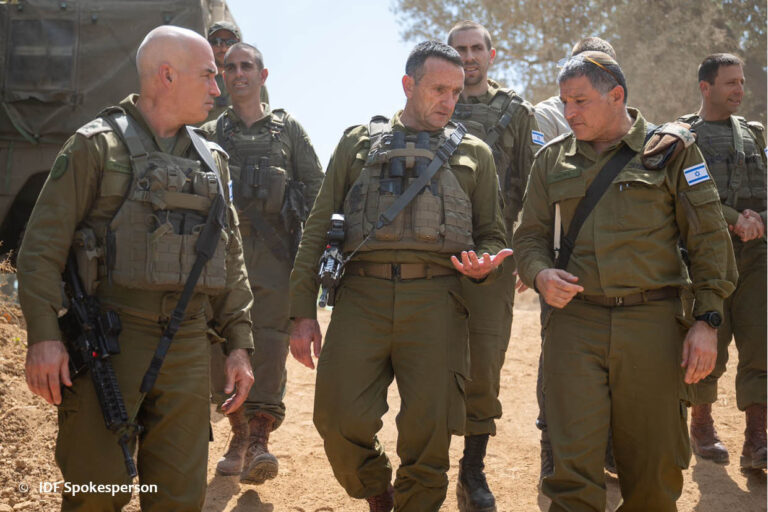
IDF Spokesperson
The current war of attrition in Israel’s north is not just a series of reaction equations. It is a race to learn about the enemy and prepare for a battle in which both sides will try to overwhelm the opposing military force. The exchanges of fire are providing Hezbollah with an opportunity to study the Israeli air defense system in detail. This is a serious risk that deserves to be given its due weight.
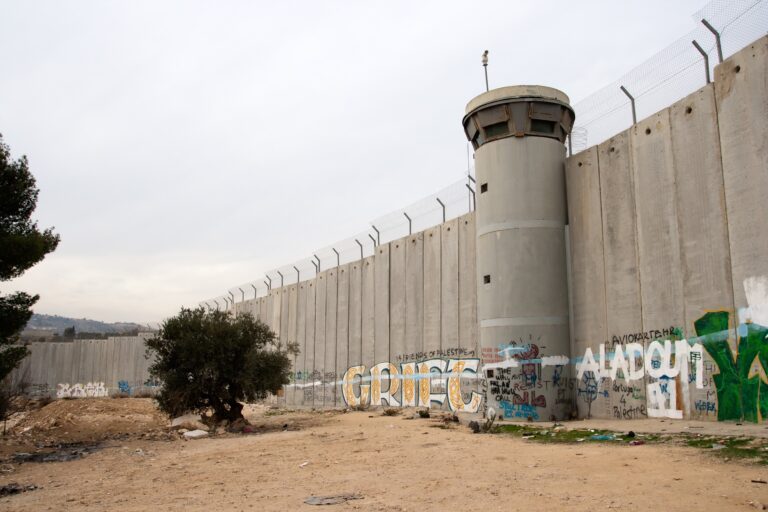
Israel’s flawed strategy of deterring and appeasing its adversaries has had a negative impact on military thinking. In recent decades, the border fence has turned from a tactical measure into a mental barrier. The fence was seen to distinguish between “their territory” and “our territory,” or between a dangerous space and an apparently safe one. The lesson of the failure of October 7 is not to erect stronger obstacles. We have built border barriers in the north and south many times over the decades, and they always fail. A border is a political concept, not a military one. The relevant military concept is a “front.” A front, on both sides of the border, is a challenging combat space that requires tactical independence for the forces, especially in the areas of combat gathering, fire support and air defense.
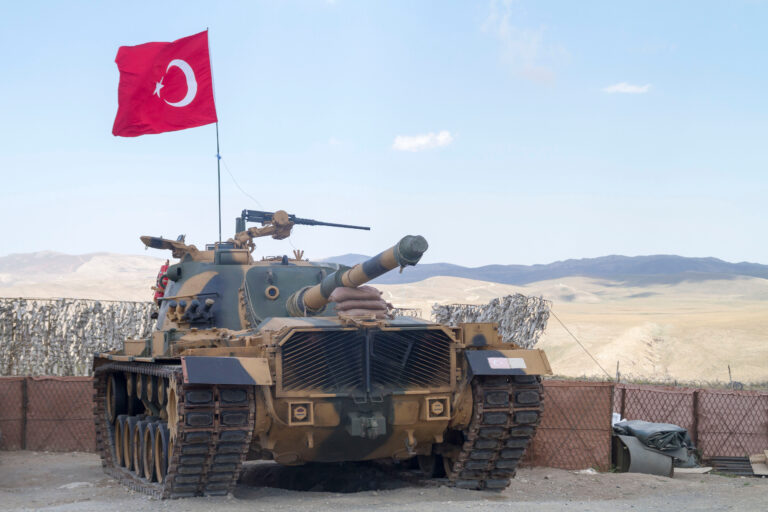
Erdoğan's threat that Turkey will enter Israel, as it did Libya and Nagorno-Karabakh, is one of the most serious statements in the history of Israel-Turkey relations. This article describes the political context and background of this threat and explores what might be behind it and where it may lead in the relations between the countries. It analyzes the political and economic challenges Erdoğan is facing, with a focus on Turkey's foreign policy in recent years. While Erdoğan's threats should be taken seriously, it is unlikely that they will materialize at this stage, though it is important to keep a close watch on Turkey's actions in the future.
What core intelligence challenges did Israel fail to meet in the lead-up to October 7? Israeli intelligence, in concert with policymakers, missed the disruptive terrorist “innovation” in Hamas’s strategy toward Israel. This error was facilitated by a related failure to implement existing intelligence across organizational levels. The calamitous intelligence failure that culminated in the events of October 7 illustrates Yakov Ben-Haim’s info-gap theory, which states that commitment to a policy paradoxically increases when the level of what needs to be known is lowered. This allows for the growth of a dangerous tolerance for gaps in information. In Israel’s case, this tolerance blinded the intelligence services and policymakers to disruptive changes in Hamas’s intentions, capabilities and application of resources.
In recent years, energy security has become a central issue for many countries, not least those that suffer from political and energy isolation. The Iron Swords War has greatly sharpened Israel’s need for a solution to the problem of damage to, or shortages in, electricity supply in times of crisis. The close relationship that has developed over the past decade between Israel, Greece and Cyprus enables and encourages projects of this kind. One project that has been on the table in recent years is an electrical cable that would connect the three countries. This is an ambitious and expensive project with quite a few question marks regarding its practicality. However, under the circumstances, it is essential to move this strategic issue from policy statements to action. It is time to make decisions and allocate budgets to take advantage of the political opportunity provided by the Israeli-Cypriot-Greek triangle to come up with the kind of energy solution Israel urgently needs.
An Israeli offensive in Lebanon has to be militarily decisive. The removal of the Hezbollah threat is the only possible enabler of a reliable agreement. The punishment approach, which some still preach, has been proven ineffective. Lebanese "state responsibility" rhymes with the discredited notion of a "weakened and deterred Hamas." The IDF, built for decades on the premise of fighting non-decisive stand-off operations, is not ready for a decisive war, especially after nine long and exhausting months. A supreme national effort to end the current campaign and renew the crushing power of the IDF is now urgently needed. The aim should be to defeat Hezbollah, including complementary efforts in the south, after a two- to three-year period of emergency preparations for the next war.

Accessibility Toolbar