Russia

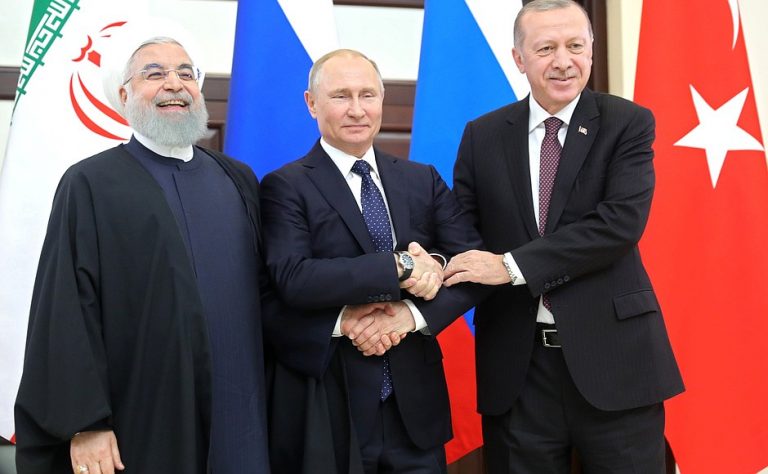
After a three-and-a-half-year marriage of convenience, Turkey and Russia have come to realize that they are fighting on opposite sides of two proxy wars: one in Syria and the other in Libya. This comes after Russia sold Turkey $2.5 billion worth of S-400 air defense systems, won a multibillion-dollar nuclear plant contract, signed up for a lucrative natural gas pipeline, and widened the gap between NATO and its part-time member Turkey.
US-Iran relations reached a nadir following the killing by US drone strike of Quds Force commander Qassem Soleimani. As Iran’s isolation grows, its link to Russia is likely to strengthen. Moscow can use Iran’s geopolitical weakness to its own economic advantage by making large sales of Russian military hardware to the Islamic Republic and encouraging deeper cooperation between the Eurasian Economic Union and Tehran. At the same time, Russia will use the death of Soleimani to constrain Iranian troop activities on the Syrian battlefield and will generally limit Damascus’s dependence on Iran.
From a foreign policy standpoint, Russia should be fairly secure this year. In the Middle East, its main competitors will remain divided; while on a global scale, the self-absorption of the US and the EU should give Moscow some breathing room. Internally, however, Russia will face major challenges. As its economy continues to lag, domestic protests should increase across the country, as will the need to improve quality of life.
The relationship between Russia and China is based on shared short-term strategic interests, but their differences lie just beneath the surface. Occasionally they erupt into the public eye, as occurred when Russia recently accused China of technology theft. The dynamic of the Russian-Chinese alliance is similar to that of Moscow’s alliances with Turkey and Iran, which also function by focusing on immediate interests and putting off serious differences as long as possible.
Iran is now assessing whether it should retaliate further against the US for the targeting of Qassem Soleimani, and if so, how. Its relationships with Russia and Turkey might look warm, but they are troubled. Neither is likely to leap to Tehran’s side in its clash with the US. Israel should exploit Iran’s fissures with Russia and Turkey to its advantage.
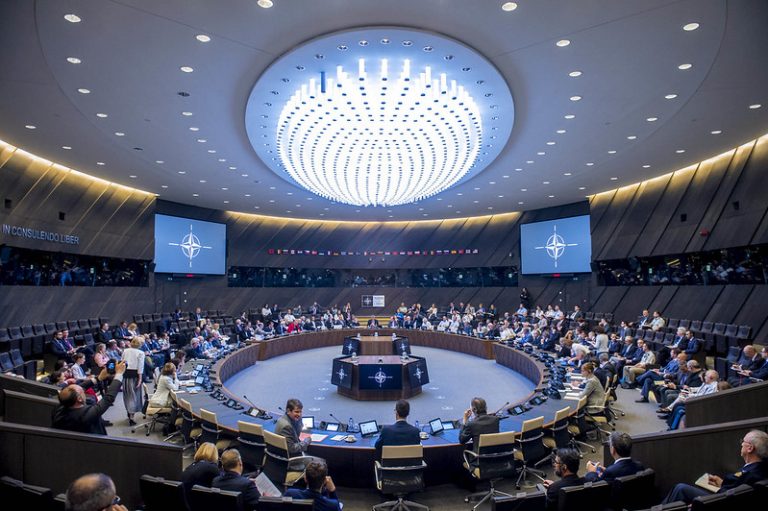
The recent urgent push by NATO to provide a defensive framework to Poland and the Baltic states is by no means a false alarm intended merely to shore up a sense of common purpose during a period of crisis. It reflects a serious threat that must be addressed.
Russian foreign policy since the mid-2000s tends to be perceived in contradictory terms: as either a negative for Russia or the product of a grand strategic vision on the part of the Russian leadership. It is also often falsely perceived as representing a break with the past. Moscow’s foreign policy moves need to be viewed with a balanced perspective and should be placed in their historical context.
The revolution that took place in the Czech Republic thirty years ago was not just the work of Vaclav Havel and his Charter 77 followers. The spark was a KGB coup directed by General Secretary Mikhail Gorbachev. A Kremlin coup also helped spur revolutionary change in Germany. The late 1980s saw unprecedented power struggles within the Soviet elite and Politburo under Gorbachev.

Accessibility Toolbar