
In May 2026, the PSCRP papers addressed a wide array of topics, including the developments in and around Russia, Armenia, and Central Asian states.
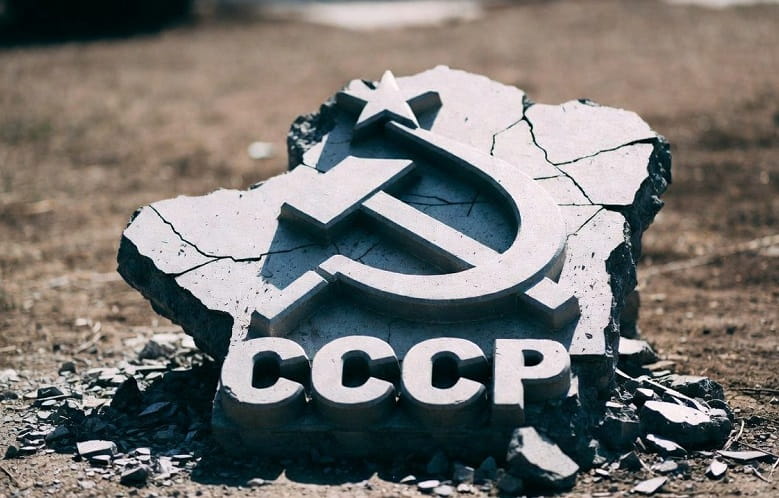
Gershon Kogan retrospectively analyzes the outcomes of the Soviet Union’s dissolution for its former member states, based on the economic and demographic statistics and institutional context. He concludes that the “single strongest predictor of post-Soviet modernization is (…) institutional anchor.” While the Belovezha Accords were a “ratification of disintegration already underway,” post-Soviet development has produced certain modernization gains, which have been “purchased at a demographic price that standard development metrics do not capture.” Freedom of movement produced huge demographic losses. There is no single post-Soviet development trajectory but rather three internally coherent pathways, which the author calls “Liberal Prosperity, Authoritarian Stability, and Demographic Expansion.” The opportunities for institutional and geopolitical choices available for a multiethnic state’s successors are inevitably uneven, and that is what Gershon Kogan considers to be the paper’s main conclusion.
Alexander Shpunt provides a thorough and structured overview of the recent crisis in state-church relations in Armenia. As root causes for the conflict, he lists the dismantling of the “theocratic-political symbiosis” between the Church and the former elites, ideological clash between the ideologies of “Historical” and “Real” Armenia, as well as geopolitical and electoral considerations (the AAC being at times perceived as a channel of external influence, and the incumbent elite’s actions being considered attempts at silencing the major opposition voice). Shpunt traces the crisis’s chronology from the 2015 constitutional referendum, which laid the legislative ground for authority misinterpretations, through the 2018 Velvet Revolution and the 2020 and 2023 defeats in the Karabakh wars, followed by the establishment of the Church-led “Tavush for Homeland” opposition movement, to the 2025 formulation of the “Real Armenia” ideology. The conflict escalated in 2025, when mass arrests of the Armenian clergy took place, and in 2026, when a “roadmap for Church Reforms” (including the demand for the incumbent Church leader’s removal) was formulated. The author specifically points to the roles of several external stakeholders, such as Russia, Turkey, Azerbaijan, the EU, and the Armenian global diaspora. Shpunt concludes his overview with several possible scenarios, including further escalation and institutional polarization, the canonical schism within the AAC, “institutional Cold War,” and peaceful diaspora-mediated de-escalation, although the latter does not seem the most feasible at the moment.
The authors from the PSCRP team present their view of what they consider a coordinated campaign against the incumbent Armenian authorities, orchestrated by Moscow. They point to Armenia’s NSS suspicions regarding the AAC officials’ role in potential undermining of the upcoming elections, paired with the public accusations against the Catholicos made by the Prime Minister. Subsequently, the PSCRP authors emphasize the alleged significant presence of Russia’s security services in Russia’s embassy in Yerevan, with “Rossotrudnichestvo,” Russia’s cultural outreach agency, acting as a soft-power provider. Furthermore, the analysis points to the potential role, reported by Azerbaijani outlets, of the former ICC prosecutor in attempts to “correct” the West’s policy toward Yerevan; reportedly, Ocampo’s efforts are backed by the Armenian diaspora, including oligarchs based in Russia. Finally, the authors note the recent filmed assassination warning against the incumbent Prime Minister, and Russia’s supposed use of regulatory pressure as a political instrument, with the regulatory agencies responsible for consumer safety and agriculture imposing restrictions on the Armenian goods several weeks before the scheduled election day.
Alexander Shpunt presents an original overview of the internal political situation in Russia in light of the upcoming State Duma elections. He deliberately abstains from drawing on non-Russian and Kremlin-opposed sources to grasp how Russia itself perceives the picture. Firstly, Shpunt points to the reduction of “quotas” traditionally allocated to the systemic parliamentary opposition for single-member constituencies. Then he evaluates the specific trajectories of each of the major parties in the Russian political field. The ruling party, “United Russia,” underwent substantial leadership restructuring in 2025, making it more centralized and compact. The party’s internal primary system transitioned to the country’s Public Services digital platform, enabling an increase in the number of rank-and-file party members participating in candidate selection, and the incumbent MPs are evaluated based on their legislative activity and the base of committed supporters. The Communist Party, enjoying an effective network of regional and local party branches, has recently engaged in confrontations with the Kremlin’s political management, openly criticizing the government’s socio-economic policy and restrictions, and the pressure on the regional branches has intensified. The Liberal Democratic Party has recently moved from personalized eccentric populism to a more systematic agenda, comprising the “Russian Question,” social priorities, and economic policy suggestions. The “Just Russia” party, which reverted to its original name in 2025, and which considers “angry patriots” its target electorate, is now facing existential uncertainty, and the upcoming election results will probably determine the very continued existence of this political project. The “New People” party, presenting itself as a “party of no prohibitions,” is now considered among the possible candidates for the second place in the race, especially after the merger with the “Party of Growth,” which brought it substantial business resources and attracted, to an even bigger extent, the “systemic liberal” electorate. The potential involvement of the SVO veterans in the electoral campaign may entail significant risks to political manageability, since this cohort is not disposed toward political compromise in the fight against “internal enemies.” Shpunt concludes that the upcoming elections may be viewed as a plebiscite on the very survival of the “systemic opposition” model.
Vladimir (Ze’ev) Khanin discusses the interim impacts of the Second Iran War on Moscow’s geopolitical considerations. As for now, Russia’s support to Iran remains minimal and mostly verbal. Moscow might view the war as an opportunity to receive unexpected additional dividends: the prolonged blockade of the Strait of Hormuz and destruction of oil and gas export facilities may expand the market for sanctioned Russian energy resources, and the massive use of Tomahawk missiles against Iran makes supplies of these missiles to Ukraine less likely. However, at the same time, the destroyed Iranian plants will cease to be sources of ammunition and weapons supplies for the Russian army, and the Kremlin’s refusal to condemn Iran’s actions, including those aimed against the UAE and Saudi Arabia, might damage Moscow’s position in the Gulf. Also, Iran’s direct military confrontation with the Gulf states can undermine the schemes of sanctioned goods supply developed by Iran and involving these countries.
The paper by Andrei Kazantsev-Vaisman discusses the new U.S. strategy for Central Asia, in light of the 2019-2025 Strategy’s expiration. In line with their traditional multi-vector foreign policy approaches, the Central Asian states currently seek to deepen dialogue and cooperation with the United States, but in terms not implying military and political confrontation with Russia or China. (Since Iran is now undergoing a major internal and external crisis, these countries may afford serious disagreements with Tehran’s opinion concerning their cooperation with the US and Israel). These desires now correspond with the Trump administration’s preference for flexible diplomacy based on business deals and not on outward geopolitical containment, being formulated as a strategy emphasizing infrastructure, transit, resources, and flexible diplomacy. The C5+1 summit in Washington in 2025, the growing role of the Middle Corridor in the functioning of Central Asian economies, and Kazakhstan and Uzbekistan’s significant role in the inaugural summit of the Board of Peace further demonstrate the prospects of this policy vector.
Finally, Alexander Shpunt presents his monthly overview of several new academic publications focused on the post-Soviet space.
In summer 2026, we are going to continue publishing timely and professional analytical commentaries on the ongoing developments in the post-Soviet area. Stay tuned!