Homepage

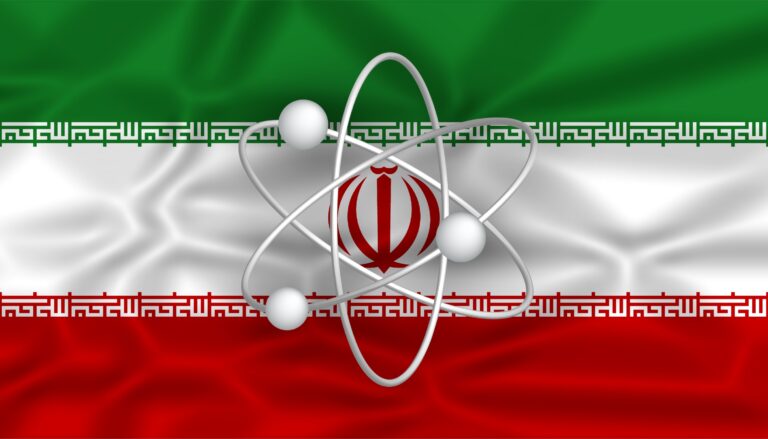
The US has spent months trying to pressure Israel into a long-term ceasefire with Hamas that would serve American interests by reducing the danger of regional war that could drag in the US. But Washington’s view of a ceasefire in Gaza and subsequent regional de-escalation fails to address three of Israel’s critical security needs: to ensure the IDF’s freedom of operation in Gaza to prevent Hamas from regrouping; to counter Hezbollah’s massive military-terrorist infrastructure and stop its 11-month-long assault on northern Israel; and to thwart Iran’s nuclear ambitions, which are intended to provide a protective cover to the entire jihadist Iranian axis.
Despite their disagreements, Russia and Iran currently have more reasons to cooperate than not. For one, both are waging wars against the West whether directly or through proxies. If either one of those conflicts were to be solved, then the West’s attention could be focused solely on the other.
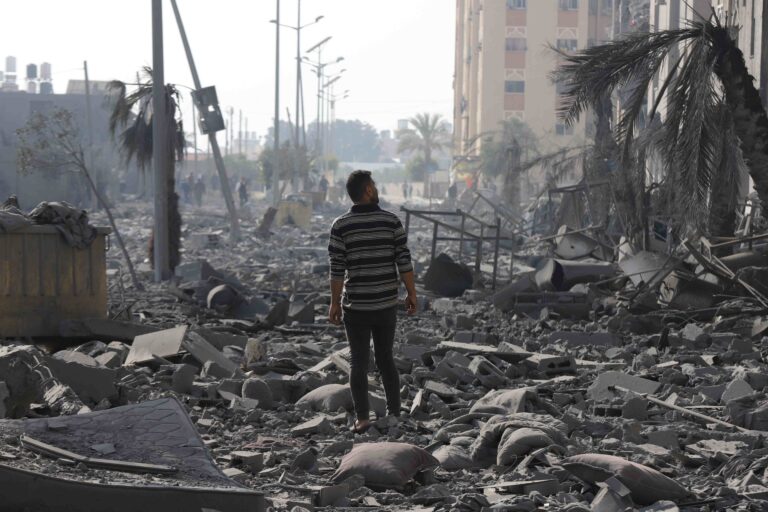
The Gaza Strip's heavy dependence on electricity and diesel supplied by Israel has turned from an Israeli strategic advantage into an economic and humanitarian burden for Israel. The reconstruction of postwar Gaza must include more independent energy generation capabilities in the form of solar PV expansion and the development of the Gaza Marine gas field. It must also include more grid connections to other electricity suppliers beside Israel, primarily Egypt. Otherwise, Israel will remain responsible for meeting the needs of millions of Gaza’s residents in the coming decades, regardless of who controls the Gaza Strip.
In July 2024, torrential rain poured down on North Korea. Thousands of homes were flooded, and more than 40,000 people in North Pyongang Province and other nearby provinces had to be evacuated. This was not the first natural disaster North Korea has experienced during the tenure of Kim Jong-un. Under his father's rule, drought, heavy rains, and a dysfunctional government that was unwilling to allow foreign non-governmental organizations to directly assist North Korean citizens led to the deaths of hundreds of thousands. Kim Jung-un's decision on how to cope with this summer’s natural disaster gives us indications of how he governs the country.
In the aftermath of October 7, there is a clear need to reexamine Israel’s principles of defense. It is already clear that a considerable military build-up and additional investments will be required. However, we must be careful not to repeat the mistakes of the past. More of the same – the restoration of a strategy based on deterrence, greater firepower, a wider order of forces, and more durable fortifications – may prove unsatisfactory and even distracting. This study seeks to contribute to the formulation of a sustainable strategy. We will do this not by citing principles that should be added to the concept of security but by addressing the type of discussion that is required. Along the way we will question some of the automatic responses to the crisis.
The Temple Mount, the Western Wall, the Church of the Holy Sepulcher - these are places of utmost importance to multiple religious groups, and they often give rise to bitter disputes and even acts of violence. The question of how to effectively govern and manage such sites is of paramount practical significance. Until recently, no systematic models of governance for contested sacred sites have been proposed. This article describes a typology of five governance models in terms of their attributes, advantages, and disadvantages so that decision-makers, scholars, religious figures, and other stakeholders can apply them as needed to different sacred sites.
Bulgaria is one of Israel’s most reliable partners in the world, particularly in southeastern Europe. The two countries enjoy excellent relations and cooperate in the fields of politics, security, economy, trade and tourism, as well as in the fight against antisemitism. Bulgaria exerts influence in the Balkan region and helps mitigate the negative impact on Israel deriving from Israel’s complicated relationship with Turkey. Bulgaria serves as a gateway through which to introduce Israeli policies, business initiatives, and energy projects to the Balkan region and Europe as a whole.
IDF Spokesperson
The current war of attrition in Israel’s north is not just a series of reaction equations. It is a race to learn about the enemy and prepare for a battle in which both sides will try to overwhelm the opposing military force. The exchanges of fire are providing Hezbollah with an opportunity to study the Israeli air defense system in detail. This is a serious risk that deserves to be given its due weight.

Accessibility Toolbar