Homepage

A US strike on Iran, even one that does not result in regime change, represents a strategic opportunity that aligns well with MAGA priorities. Weakening Iran would curb the China-Russia-Iran axis, secure energy dynamics, strengthen America’s position ahead of potential conflict with China, and reduce the long-term risk of a larger global war.
After fighting for two blood-soaked years and paying a heavy price during the Swords of Iron War (the War of Revival), Israel has succeeded in achieving major military and diplomatic gains. The most significant are the restoration of Israeli deterrence by forcing the aggressor to suffer grievous losses and the major diplomatic achievement of UN Resolution 2803. This resolution grants, for the first time, legitimate status and a path to resolving the Israeli-Palestinian conflict based on President Donald Trump’s "Deal of the Century." The plan has a realistic chance of being implemented while upgrading the existing status quo. It does not negate the establishment of Jewish settlements in the West Bank and even allows Israel, under certain conditions, to annex up to thirty percent of the territory. Thus, Hamas, which presents itself as a national-Islamic liberation organization, has effectively led the Security Council to recognize the possibility of Israeli annexation of a significant portion of Judea and Samaria.
The recent US military attack on Venezuela constitutes a turning point in the evolution of the international system. Contrary to claims that such actions are now “business as usual” in an anarchic world, the Americans’ unilateral and officially acknowledged use of military force for regime change without international authorization marks a profound erosion of the post-World War II international order. Unlike Cold War-era covert interventions, the Venezuelan case signals the breakdown of a key normative barrier separating indirect influence from overt coercion. This development undermines the legal and normative arguments employed by the West in response to Russia’s invasion of Ukraine, revealing a structural similarity in strategic methodology irrespective of political intent or outcome. The attack on Venezuela is part of a wider American grand strategy centered on consolidating control over the Western hemisphere while reducing global engagement, and it will accelerate the transition toward a fragmented, multipolar, and increasingly anarchic international system.
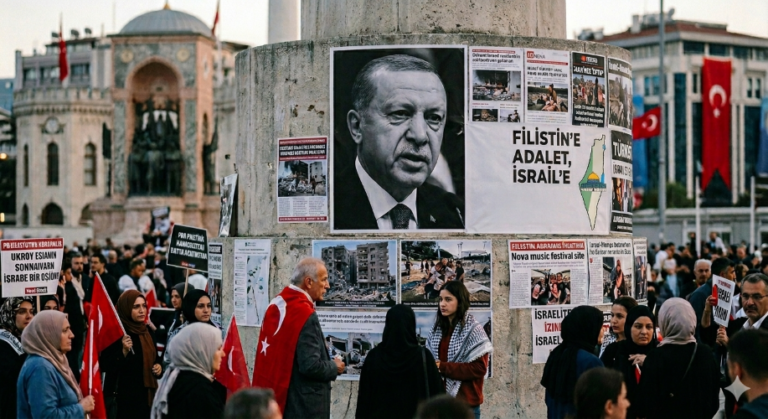
In recent years, Turkey has emerged as a rising regional power. It has independent defense industries, produces armed and unarmed UAVs, missiles, warships, and advanced weapons systems, and maintains an extensive military presence from Syria to the Horn of Africa. The Turkish vision was articulated by President Recep Tayyip Erdoğan in his annual New Year’s address for 2026, in which he described Turkey’s military buildup as a “major leap forward” encompassing all domains of defense. Erdoğan frames this process as a “historic opportunity” for Turkey to convert military achievements into lasting success. However, the very military power that was expected to strengthen Turkey’s regional and international standing has, in recent years, isolated the country, entangled it both domestically and externally, and pushed it backward rather than forward.
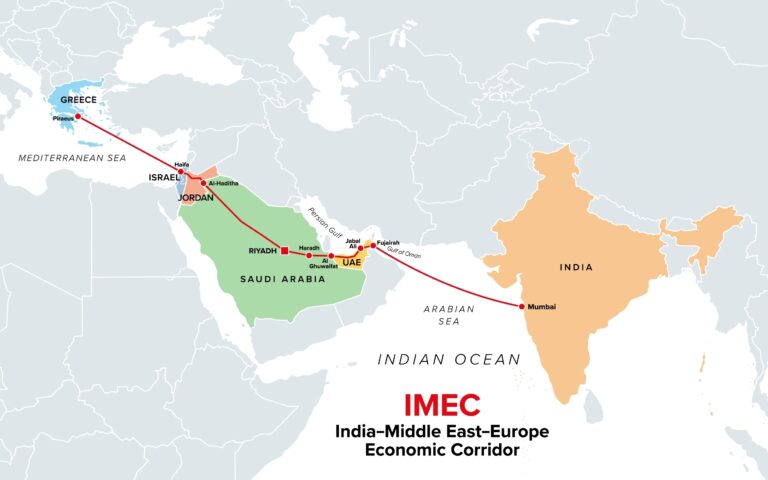
Israel’s recognition of Somaliland was not an isolated diplomatic move but part of a broader strategic process of rewiring the regional order in the Horn of Africa. The Israeli move, which challenges Iranian entrenchment and Turkish and Chinese dominance in the region, fits neatly with India’s concept of “maritime statecraft”. This convergence creates synergy between India’s legitimacy in the Global South and Israel’s technological and operational capabilities. Somaliland can serve as a testing ground for a non-formal regional order that strengthens the sovereignty and resilience of regional actors (particularly Ethiopia) while offering a stable alternative to centralized and coercive models.
On 22 December 2025, Israel, Greece and Cyprus had their tenth trilateral summit in Jerusalem. The three countries are endeavoring to steadily expand their cooperation, and the timing of the recent event is telling. Athens’s and Nicosia’s pragmatic approach to Jerusalem during the Gaza war and the Israel-Iran war served their national interests, and they are pursuing agreements with both the Israeli defense market and the energy sector. The Cypriot and Greek presidency of the EU in 2026 and 2027 can serve as an opportunity to recalibrate EU-Israeli relations following a period of disagreement and strain.
US involvement in Gaza does not reflect a loss of Israeli control but rather a new strategic framework that emerged after Israel's 2022 integration into CENTCOM. This shift enabled unprecedented regional coordination, real-time intelligence sharing, and a multilayered defensive posture against Iran and its proxies. Following the Gaza fighting, a joint US-Israel command structure was established, enhancing operational integration while preserving Israel’s independent decision-making. For years, Israel debated the idea of a formal defense treaty with the United States but hesitated due to the fear of losing strategic autonomy. The current arrangement effectively creates a hybrid model. While not a formal alliance, it provides many of its advantages, including stronger deterrence, coordinated defense, deeper strategic depth, and the capacity for joint action, while maintaining Israel’s freedom of action.

Accessibility Toolbar