Perspectives Papers

Perspectives Papers provide analysis from BESA Center research associates and other outside experts on the most important issues pertaining to Israel and the Middle East.

View Archive

The Gulf region’s onerous kafala or labor sponsorship system has been denounced as a form of modern slavery. Potential Qatari moves to become the first Gulf state to effectively abolish kafala could produce a rare World Cup that leaves a true legacy of social and economic change.
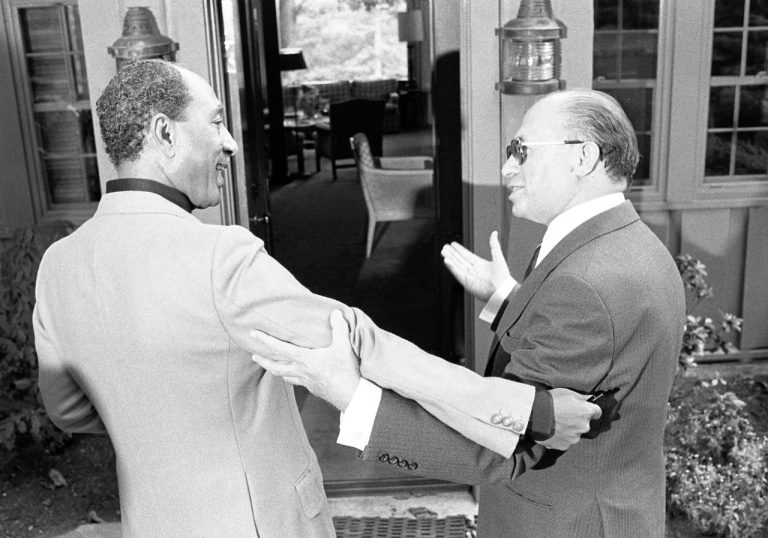
Forty years after Anwar Sadat’s historic visit to Jerusalem, most Israelis view the attendant Egyptian-Israeli peace treaty as conducive to Israel’s national security – yet they believe there are currently no leaders of Sadat’s and Menachem Begin’s stature on either side of the divide who are capable of effecting a similarly momentous breakthrough toward Israeli-Palestinian peace.
It is widely assumed that Menachem Begin and Anwar Sadat made peace despite their deep personal incompatibilities. But in fact, there were significant parallels in the lives of both men, and these may have facilitated their coming to an agreement. The similarities between them—their early careers in “underground” movements, their stints in prison, their struggles against the British and hatred of the Soviet Union, their years on the margins of power, and their clearly defined definitions of homeland—may have eased their final compromise.
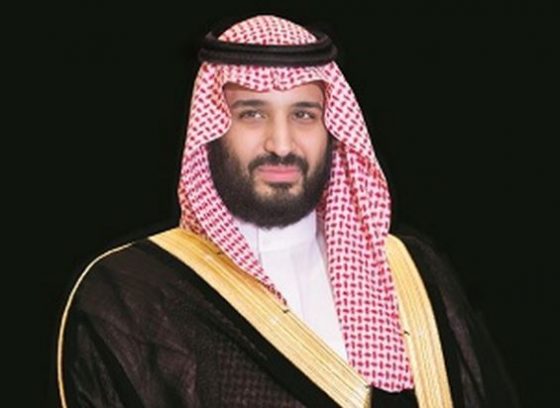
Saudi Crown Prince Muhammad bin Salman knows he has to transform the state into a war machine if the kingdom is to survive the Iranian onslaught. To do that, he has to amass power by removing the system of checks and balances of rival princely factions and tribal affiliations as well as a security system that is weakened by both. The question is whether he will be able to avoid the fate of the Shah, who transformed Iran into a regional power but fell victim to wall-to-wall opposition bred by his concentration of power.
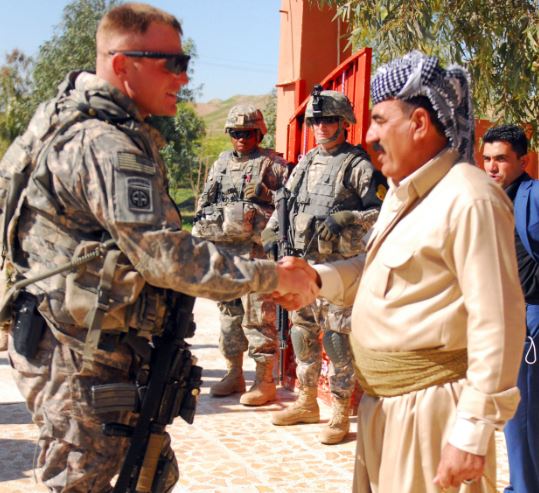
Turkish President Recep Tayyip Erdoğan perceives the Kurdish belt along Turkey’s Syrian and Iraqi borders as the country’s top security threat, and has recalibrated his policies accordingly. But he has a Kurdish constituency inside Turkey and will need their votes in 2019. During the upcoming presidential campaign, Erdoğan will have to find a miracle equilibrium: how to win Kurdish votes without losing nationalist Turkish votes?
A series of incidents involving Iranian ethnic and religious minorities raises the specter of the US and Saudi Arabia seeking to destabilize the Islamic Republic. Indications are that Iran has no intention of sitting back passively in the face of this threat. Beyond its support for Syrian President Bashar al-Assad, the Lebanese Shiite militia Hezbollah, and Shiite militias in Iraq, Tehran may be strengthening its relations with the Taliban in Afghanistan.
The ongoing collapse of Theresa May’s government in Britain raises the possibility of new elections in which Labour leader Jeremy Corbyn would be the likely winner. The red-green alliance between the European far left and Islamist parties threatens to create a dystopian scenario in which national identities are rapidly discarded and national security compromised by terrorism and separatism. This would represent a tremendous danger to the continent’s Jews, to Israel, and to the US.
In the campus war against Israel, the all too familiar refrain from student anti-Israel activists, many of whom form the loose coalition of groups and individuals spearheading the Boycott, Divestment, and Sanctions (BDS) campaign, is that their quarrel is only with Israel and its government’s policies, not with Jews themselves. But that specious defense continues to fall away, revealing base anti-Semitism. This represents a seismic shift. Jews are now being indicted not just for supporting Israel but for being Jewish.

Accessibility Toolbar