Perspectives Papers

Perspectives Papers provide analysis from BESA Center research associates and other outside experts on the most important issues pertaining to Israel and the Middle East.

View Archive

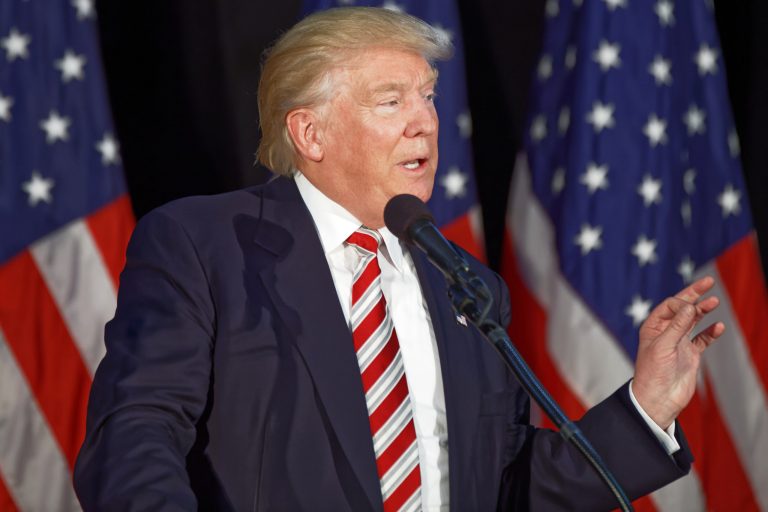
Israel is a very pro-American country, possibly more so than any other country in the world. As in the past, Israelis followed the US presidential election with great interest, amazed that the American political system had not produced more palatable presidential candidates. After eight years of a frosty relationship with the US Commander in Chief, many Israelis cautiously welcome the advent of Donald Trump.
To fight an enemy effectively, that enemy must be clearly defined. George W. Bush spoke of a war on terror, but conducted a crusade against tyranny. Barack Obama gave lip service to the freedom agenda, but employed a "realist", non-interventionist policy on most issues, was reluctant to speak of "enemies" beyond al-Qaida and IS, and never called the enemy by name. The Trump administration is reportedly planning to scrap the conceptual framework of Obama’s "CVE" – Countering Violent Extremism – and focus more explicitly on the Islamist threat, but it remains to be seen just how he defines that threat.
Many American detractors of Israel begin by citing that Israel receives the lion’s share of US military aid. The very suggestion conjures the demon of an all-powerful Israel lobby that has turned the US Congress into its pawn. But these figures, while reflecting official direct US military aid, are almost meaningless in comparison to the real costs and benefits of US military aid – above all, American boots on the ground. In reality, Israel receives only a small fraction of American military aid, and most of that was spent in the US to the benefit of the American economy.
EXECUTIVE SUMMARY: Donald Trump was intensely critical of China throughout his campaign, and tension between the two countries is likely to increase now that he occupies the White House – but only in the economic and diplomatic spheres. The Middle East, including Israel, could nevertheless be drawn into the conflict as a confrontation zone between the superpowers due to the region's natural resources, intersecting sea routes, and overall geostrategic importance.
The modern approach to many issues dictates that we try to control events around us, but war is chaotic by nature and does not yield to predetermined processes. The prudence with which the 2014 Gaza campaign was waged deserves the public's full confidence.
Two reports on cybersecurity – one commissioned by President Obama and the other by CSIS – have been placed on the desk of President Trump. They are different in their approach: one promotes an evolutionary policy based on procedural and "soft" tools, and the other espouses an activist approach domestically and a more combative one regarding foreign opponents. Both contain recommendations that may be relevant to Israel, including a national program to strengthen identity authentication mechanisms, a nationwide "protective umbrella," a national awareness campaign, and the transfer of government infrastructure to external cloud services. Israeli hi-tech industry could also be incorporated into the programs suggested in the reports, should they materialize.

Accessibility Toolbar