Perspectives Papers

Perspectives Papers provide analysis from BESA Center research associates and other outside experts on the most important issues pertaining to Israel and the Middle East.

View Archive

In the wake of the Israel-Gaza conflict in May, an American author was suspended by Twitter for comparing a Boston Globe cartoon to Nazi propaganda. New York Times writers who, in expressing their sorrow over the fact that “most of the children who died were Arabs,” are in fact admitting that they would be happier if most of the children who died were Israeli Jews.
India condemned in unequivocal terms Hamas’s indiscriminate rocket attacks on Israel during the recently concluded 11-day war and called Jerusalem’s response retaliatory, recognizing the Jewish state’s right to defend itself. This reflects a clear change in New Delhi’s thinking, which is opposed to all forms of violence that affect human lives.
The world just marked the 80th anniversary of the Farhud, the Arab-Nazi pogrom against the Jews of Baghdad and Basra that occurred on June 1-2, 1941. The term Arab-Nazi is entirely appropriate, not simply because these Arabs were fascist in mind and deed, but because they explicitly identified with Germany’s Nazi Party. Some of the rioters wore swastikas; more than a few marched in the Nuremberg torchlight parades. The Nazi ideology that motivated the Arab slaughterers of Jews in 1941—the desire to exterminate Jews from the face of the earth—motivates the Arabs and Muslims who assault Israelis and Jews today.
Presidential elections will be held in the Islamic Republic of Iran on June 18. Some commentators describe the elections as a “democracy-like” process based on political parties and the vote of the people. This view has nothing to do with reality. The Islamic regime is a totalitarian one-party system that conducts carefully managed elections for propaganda purposes. The popular vote is of no interest to the regime and has no impact on the outcome of Iran’s so-called elections.
A presidential election will take place in Iran on June 18, and it is rumored that Ali Khamenei prefers one candidate above the others: Chief Justice Ebrahim Raisi. While Raisi has never belonged to the IRGC, his election would nevertheless represent a victory for the hardliners. Despite his lack of religious credentials, Raisi is also considered a serious contender to succeed Khamenei as Supreme Leader.
The US Office of the Director of National Intelligence recently released its annual threat assessment, in which Iran is mentioned no fewer than 60 times as part of a “diverse array of threats” facing the US. Iran is moving toward its goal of full domination of Iraq and the expulsion of the last remaining US forces from that country, a result that would represent a great success for the Islamic Republic.
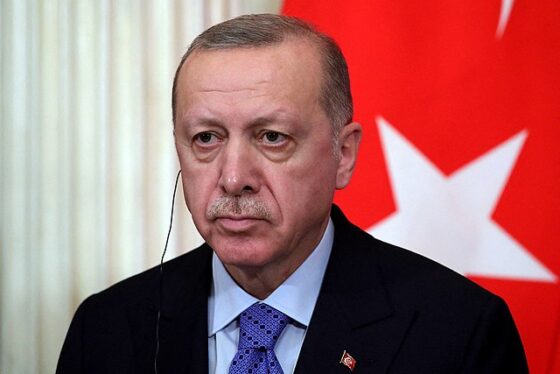
President Joe Biden’s use of the word “genocide” on Armenian Remembrance Day was not a game-changer in US-Turkish relations, which are plagued by more fundamental problems. But it enhances Turkey’s political isolation, weakens its arguments on whether a genocide did or did not occur in 1915-24, and further destabilizes whatever is left of Ankara’s soft power.

Accessibility Toolbar