Perspectives Papers

Perspectives Papers provide analysis from BESA Center research associates and other outside experts on the most important issues pertaining to Israel and the Middle East.

View Archive

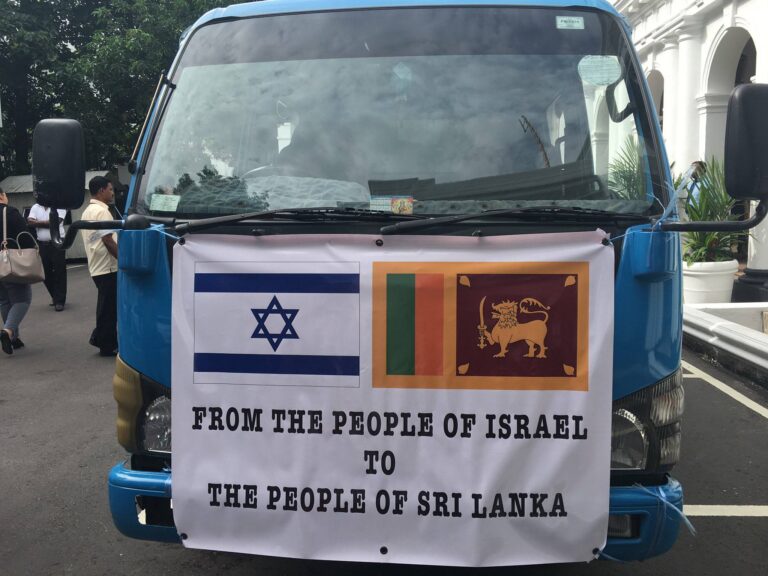
Following Indian premier Narendra Singh Modi’s historic visit to Israel in 2017, bilateral relations between India and Israel were elevated into a strategic partnership. But this was not Israel’s first successful diplomatic venture in South Asia. India’s tiny neighbor, Sri Lanka, had a strategic alliance with Israel long before India developed one. During the Cold War era, Sri Lanka was viewed as an Israeli success story in the region.
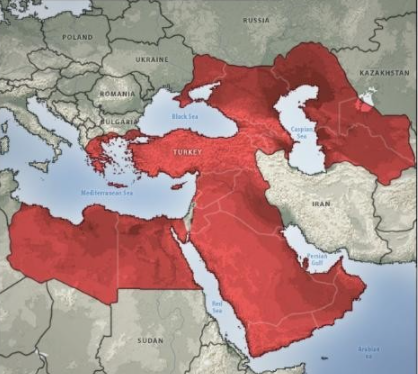
A nationalist Turkish television station with close ties to President Recep Tayyip Erdoğan has dug up a 12-year-old map that projects Turkey’s sphere of influence in 2050 as stretching from southeastern Europe on the northern coast of the Mediterranean and Libya on its southern shore across North Africa, the Gulf, and the Levant into the Caucasus and Central Asia.
Turkish president Recep Tayyip Erdoğan needed a military success story, and the rescue of 13 hostages held by the PKK in northern Iraq would have fit the bill. Unfortunately, the operation was a tragic failure. Erdoğan now accuses the Kurds, Kurdish political parties, opposition parties, and even the Biden administration of responsibility for the disaster.
Mitch McConnell embodies what it takes to govern, but Donald Trump represents what it takes to win. Separately, however, these archetypes can achieve neither. Yet unity may prove elusive as both sides, even when pursuing the same goals, have personal characteristics that oppose one another.
The magnitude of the terrorist threat in the Middle East has grown steadily since the outset of the so-called “Arab Spring.” The need to modernize intelligence in the service of counterterrorism is a matter of particular concern to the Persian Gulf states, which share the common goal of impeding the spread of Iran’s transnational terrorist network and reducing the damage caused by Iran-affiliated Shiite militias. The newly formed intelligence cooperation between Israel and several Arab states has already thwarted Iranian attacks.
It is far more difficult to evaluate the strengths and weaknesses of Israel than it is to do the same for a Western European country. Israel has a great deal of hard and soft power, but it also seriously underperforms in terms of diplomatic power and the combating of anti-Israel propaganda.
Iran’s hegemonic ambitions depend on an unbroken Shiite arc from Bahrain to Lebanon. It is for this reason that the Islamist regime considers the maintenance of its influence in Syria to be a top priority. If Iran is to be prevented from projecting its totalitarian imperialism throughout the region and beyond, it will have to lose its foothold in Syria.

Accessibility Toolbar