IDF

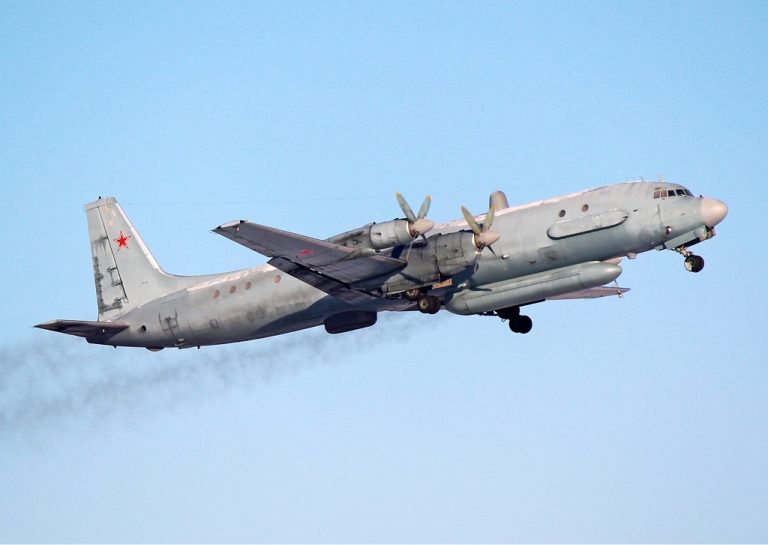
The downing of a Russian air force plane by Syrian government forces was a predictable consequence of the overcrowding of the Syrian battleground. The Russians might genuinely be angry at what happened, but from a geopolitical perspective, they understand that Israel will not abstain from further military interventions in Syria when needed. Israel’s national interest is at stake, and Jerusalem will not allow Iran to increase its already substantial presence.
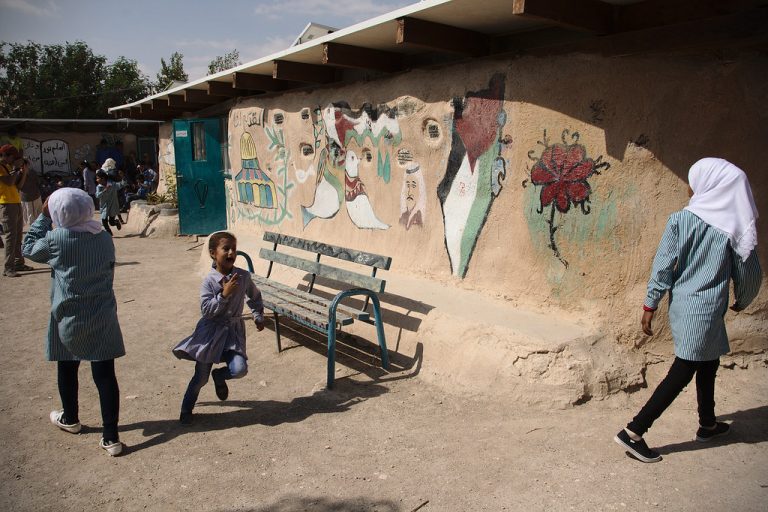
While there is little doubt that the Bedouin settlement of Khan Ahmar (on the Jerusalem-Dead Sea road) was illegally built, the decision to move its residents to an alternative site needs to be reassessed despite its approval by the Supreme Court. It involves much broader strategic questions than the necessity to enforce the rule of law in one particular case.
Israel claims its policy of demolishing terrorists’ homes is a justified security measure. Destroying the family home of terrorist Khalil Yussef Ali Jabarin despite the fact that his family tried to prevent his attack on Ari Fuld seems more an act of revenge than deterrence, and could generate serious blowback with major ramifications.
The accumulated deterrence achieved in the three previous rounds of wide-scale fighting between Israel and Hamas in 2008-9, 2012, and 2014 has come to a temporary halt. Israel must start preparing for a massive fourth round – a round in which Israel will, one hopes, replicate the cumulative deterrence it scored against the Arab States in 1973. This would mean subjecting Hamas to a threshold of pain sufficiently unbearable to induce it to stop fighting Israel altogether. 
Tehran’s recent decision to attempt direct clashes with Israel resulted in a resounding defeat on May 10, when the IDF destroyed 50 Iranian military targets in Syrian territory. Iran is now shifting gears back to its traditional proxy approach. While it appears reluctant to mobilize Hezbollah against Israel right now and risk a full-scale regional war, it is continuing to work on securing a military position in Syria to use for future aggression. Israel must maintain its flexibility and responsiveness in order to prevent the creation of a second Iranian mass missile front on the border.
The situation in the Gaza Strip since the 2005 disengagement debunks three fundamental assumptions that have become axiomatic in the Israeli security discourse: that total separation between Israelis and Palestinians will inevitably enhance security and stability; that the IDF will comfortably win any future confrontation in the evacuated territories; and that Israeli military activity in the previously held territories will enjoy massive international legitimacy and support.
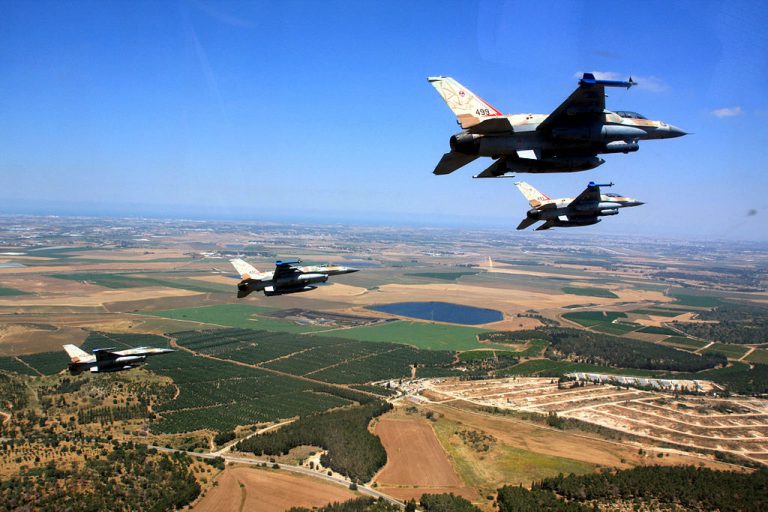
This study explores the evolution of the order of battle, material holdings and capability of the Israel Defense Forces (IDF) since their establishment seventy years ago. During this period, the IDF has transitioned from an ill-equipped and low-quality militia to a dominant regional military power. Recent cutbacks in the IDF’s order of battle notwithstanding, Israel can still deploy ground forces equipped with the world’s largest concentration of operational armored vehicles. It has an exceedingly advanced tactical air force capable of generating nearly 2,000 daily fast-jet combat sorties, and is protected by the world’s most advanced and dense national air defense system. It has an effective coastal navy that deploys exceptionally well-armed, advanced small combatants and attack submarines; it has a significant strategic and tactical nuclear capability; and it likely maintains the world’s third-largest inventory of nuclear weapons.

Accessibility Toolbar