Russia

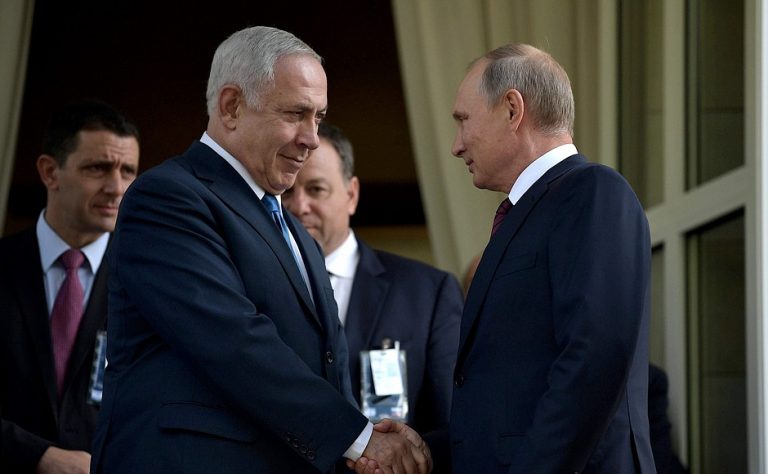
On July 8, Israel allegedly conducted an airstrike in Syrian territory that struck once again at the T4 base near Homs. Interestingly, Israel did not conduct any airstrikes to stop the concurrent advance of Syrian and Hezbollah forces southward. This might suggest that a grand bargain has been offered by Russia to Israel – one in which Moscow assures Jerusalem of an Iranian withdrawal in return for Israel’s acceptance of the consolidation of the Syrian state. This might explain Israel’s passivity, but it is by no means certain that Moscow will prevail on Tehran to withdraw from Syria.
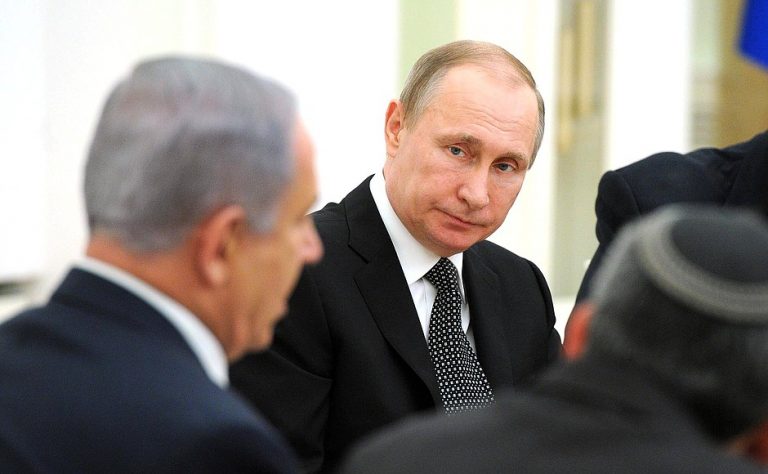
Why has Russia under Putin acknowledged Israel’s need to prevent the buildup of an Iranian military presence in Syria?  Putin’s vision is to cement an alliance of minorities against the Sunni majority in the Middle East. Israel could be a valuable participant in making that vision a reality – but only if Moscow works to rid Syria of the Iranian presence, joins forces to topple its Islamist regime, and weans the Alawite regime in Damascus away from Tehran.
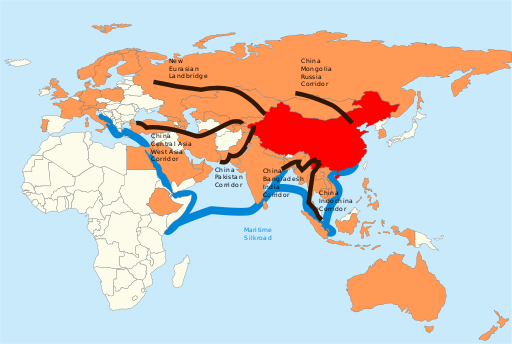
China and the US have different geopolitical imperatives, so tensions are bound to increase between the two powers. Russia’s position in the nascent confrontation will be important to watch, as it is simultaneously under pressure from the West and in the shadow of Chinese economic strength. Russia will likely see US-China competition as providing an opportunity to improve its own geopolitical position.
Intermittent Israeli strikes against Iranian positions in Syria have alarmed Russia, which is trying to solidify its military gains there. Active Israeli interference could bring down the highly unstable security architecture the Russians are working on in Syria. Moscow must balance between its war ally, Iran, and Israel, an important regional player – two states with radically different geopolitical imperatives.
Vladimir Putin easily won the recent election in Russia and secured another presidential term. The result cements him as one of the most powerful leaders in modern Russian history, but also poses questions for the day after on both the domestic and the international level. While the US administration has not yet clarified its approach vis-à-vis Russia and the EU remains largely divided, Putin is gaining ground – for example in the Syrian arena– and his popularity remains high at home. BESA joins the debate by posing the question: Putin in power until 2024: What does it mean?
In theory, Turkey’s relations with Russia have never been brighter. However, behind the nice façade lie a deep ideological divide, mutual mistrust, and diverging regional interests. Eight decades after Atatürk’s “transactional” Soviet initiative, Turkey’s Islamist leaders are ironically following a similar line. For Erdoğan, Russia is not just a strong trading partner and the top supplier of Turkey’s energy. It is also the eastern ground of his political acrobatics with the Western world.
Russia is experiencing an ever-growing number of reported HIV cases since the breakup of the Soviet Union. An estimated 1.5 million HIV cases are accompanied by a general decline in the Russian population that is expected to continue over the next several decades. A diminished population will directly affect Russia’s army, its military capabilities, and its economy, and thus its ability to position itself as a world power.
The Russia-West confrontation has, over the course of the past several years, reached its most tense point since the collapse of the Soviet Union. Differences between the two sides will only grow as neither side wants to make concessions on Syria, North Korea, Ukraine, Georgia, etc. However, there is also a strong possibility that the West is making significant headway in its competition with Russia over the former Soviet space.

Accessibility Toolbar